
Safety
General information, not medical advice
Your prescriber and the leaflet in your pack know your situation. This page does not.
- Follow your prescriber and the leaflet
- Don't start, stop, or change a dose on your own
- Doses and warnings differ by country and product
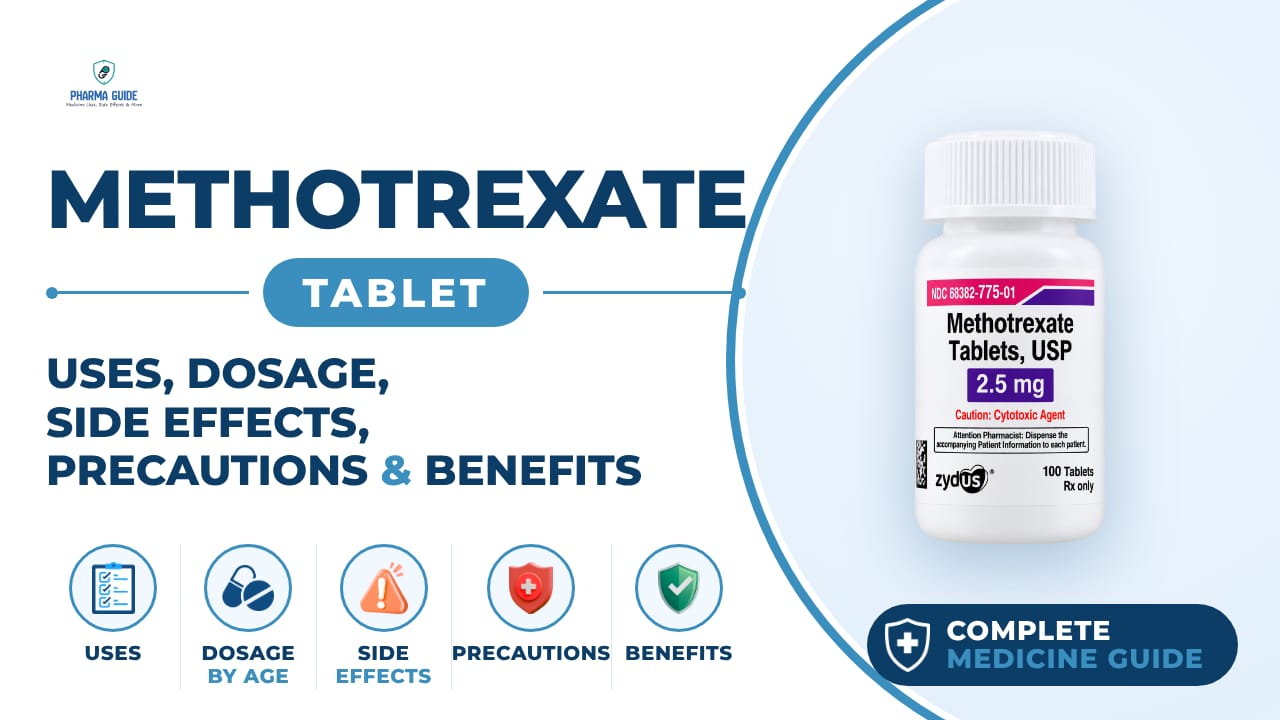
Methotrexate Tablet: Uses, Dosage, Side Effects, Precautions and Alternates
| Generic name | methotrexate |
|---|---|
| Drug class | Antimetabolites, Antipsoriatics, Antirheumatics, Other immunosuppressants |
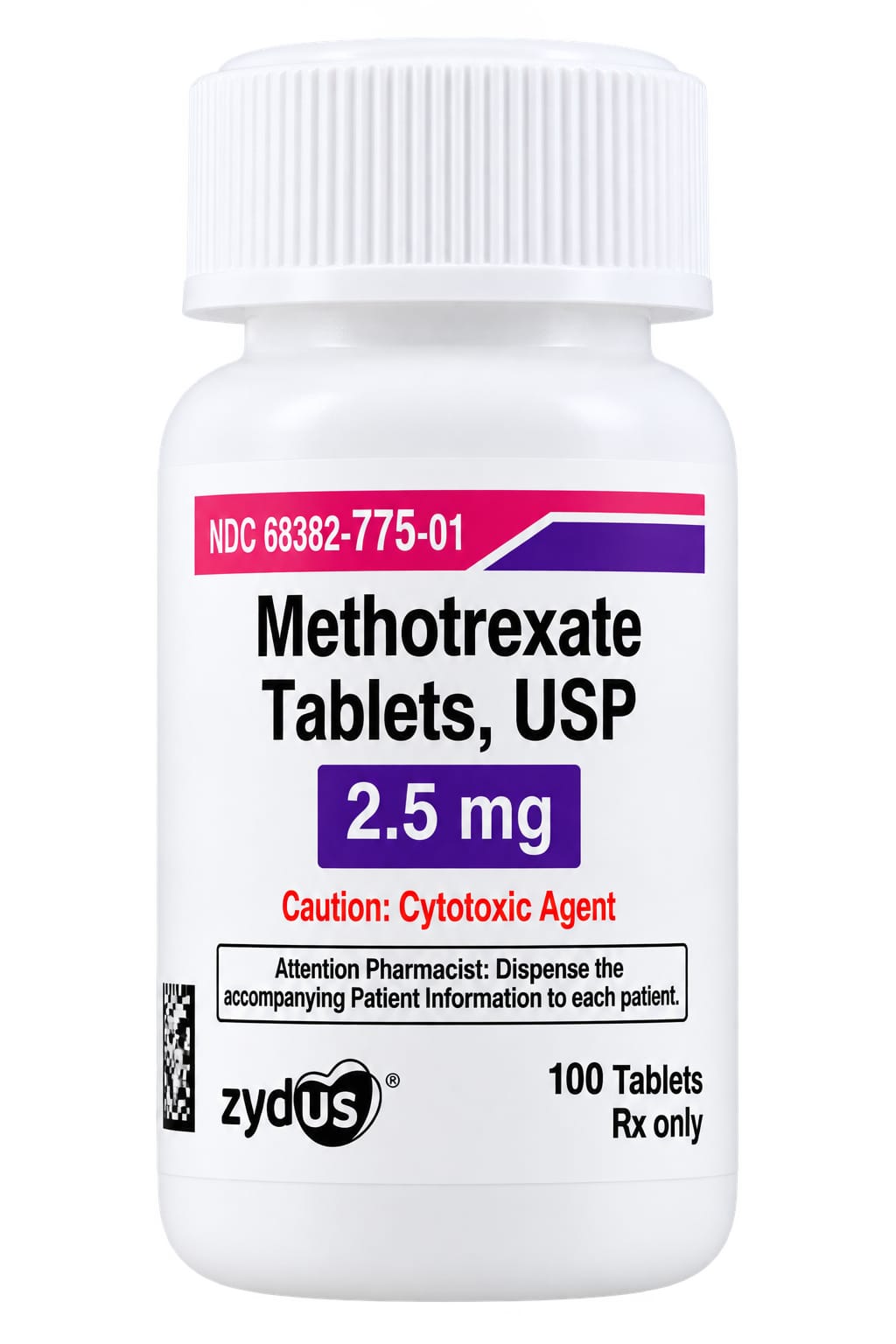
| Forms | Oral tablets (2.5 mg) |
Quick overview
Methotrexate Tablet (generic name: methotrexate) is a prescription medicine belonging to the antimetabolite, antipsoriatic, antirheumatic, and immunosuppressant drug classes. It is used to treat certain cancers, severe rheumatoid arthritis, juvenile idiopathic arthritis, and severe psoriasis that has not responded to other treatments. It works by slowing the growth of fast-multiplying cells and is available as oral tablets. This medicine requires careful dosing exactly as prescribed, since taking it more often than directed has caused serious harm and death.
What is Methotrexate Tablet
Methotrexate is a prescription medicine that interferes with the growth of certain cells in the body, especially cells that reproduce quickly, such as cancer cells, bone marrow cells, and skin cells. It is referred to as a cytotoxic medicine, most commonly used to kill cells in tumors.
Methotrexate Tablet uses
- Acute lymphoblastic leukemia (ALL) in adults and children, as part of combination chemotherapy
- Mycosis fungoides (cutaneous T-cell lymphoma) in adults
- Relapsed or refractory non-Hodgkin lymphoma in adults, as part of a combination regimen
- Rheumatoid arthritis in adults
- Polyarticular juvenile idiopathic arthritis in children
- Severe psoriasis in adults that has not improved with other treatments
- Meningeal leukemia in adults and children
- Gestational choriocarcinoma, chorioadenoma destruens, and hydatidiform mole
- Breast cancer, head and neck cancer, and lung cancer
- Lymphosarcoma
Benefits of Methotrexate Tablet
- Can help control severe, disabling psoriasis that has not responded to other treatments by slowing the fast growth of skin cells
- Can reduce pain, swelling, and joint damage in rheumatoid arthritis by calming an overactive immune system
- Can help kill or slow the growth of certain cancer cells as part of chemotherapy treatment
How Methotrexate Tablet works
Methotrexate blocks a substance the body needs to make DNA, which slows down how fast cells—including cancer cells and fast-growing skin or immune cells—can grow and divide. At low doses it calms the immune system and lowers inflammation; at higher doses it works as a chemotherapy medicine against cancer cells.
Methotrexate Tablet dosage
Take this medicine exactly as your doctor prescribed; the dose and schedule depend on your condition. For psoriasis, rheumatoid arthritis, and juvenile idiopathic arthritis, this medicine is usually taken only one time each week, not every day — taking it daily by mistake has caused severe side effects and death. Some people may be told to split their weekly dose into a few doses taken 12 hours apart, but still only once a week overall.
For cancer treatment, take the tablets at the same time of day and only on the days your doctor specifies. Swallow the tablets whole with a full glass of water; do not crush or chew them. The tablets may be taken with or without food.
If you are taking this medicine for an autoimmune condition, your doctor may have you take a folic acid or folinic acid supplement daily to help lower the chance of certain side effects such as mouth sores. If you are taking this medicine for cancer, do not take folic acid or folinic acid unless your doctor tells you to, since it may make the treatment less effective.
If you vomit shortly after taking a dose, check with your doctor about whether to take the dose again or wait for the next scheduled dose. Do not take a double dose if you miss one — contact your doctor or pharmacist for instructions. Older adults may need lower doses and closer monitoring because of reduced liver and kidney function and lower folate stores.
Wash your hands after handling this medicine, and caregivers should consider wearing disposable gloves when giving doses to reduce exposure.
| Age group | Dose |
|---|---|
| Under 2 years | Doctor-directed; indication-specific |
| 2–17 years | 10 mg/m² once weekly |
| 18–64 years | 7.5 mg once weekly initially |
| 65+ years | Individualized; usually started cautiously |
Available forms and strengths
- Oral tablets (2.5 mg)
Side effects of Methotrexate Tablet
Common
- Fever, chills, tiredness, not feeling well
- Low blood cell counts
- Mouth sores
- Nausea, stomach pain, upset stomach
- Abnormal liver function tests
- Hair loss
- Burning skin lesions
- Being more sensitive to light
Serious
- Signs of allergic reaction: hives, difficulty breathing, swelling of face or throat
- Severe skin reaction: fever, sore throat, burning eyes, skin pain, red or purple rash that spreads and causes blistering and peeling
- Sudden chest pain, wheezing, dry cough, cough with mucus, feeling short of breath
- Fever, chills, swollen lymph glands, night sweats, weight loss
- Blisters or ulcers in the mouth, red or swollen gums, trouble swallowing
- Vomiting, diarrhea, severe stomach pain that won't go away, severe constipation, vomiting blood, or blood in urine or stools
- Skin changes such as redness, warmth, swelling, or oozing
- Low blood cell counts: fever, chills, tiredness, mouth sores, skin sores, easy bruising, unusual bleeding, pale skin, cold hands and feet, feeling light-headed or short of breath
- Kidney problems: big change in urine output, shortness of breath, tiredness, swelling in legs/ankles/feet, weight gain
- Liver problems: swelling around the midsection, right-sided upper stomach pain, nausea, loss of appetite, dark urine, yellowing of skin or eyes
- Nerve problems: confusion, weakness, drowsiness, coordination problems, irritability, headache, neck stiffness, vision problems, loss of movement, seizure
- Signs of tumor cell breakdown: tiredness, weakness, muscle cramps, nausea, vomiting, diarrhea, fast or slow heart rate, tingling in hands/feet or around the mouth
- Serious infections that can be life-threatening
- Brain and spinal cord (nervous system) problems that can be severe and sometimes irreversible
- Secondary cancers, including new skin cancers or certain blood cancers
- Severe skin reactions including Stevens-Johnson Syndrome and toxic epidermal necrolysis
- Fertility problems in both men and women
Warnings and precautions
Taking this medicine every day instead of the prescribed schedule (such as once weekly) has caused deaths. Always confirm with your doctor or pharmacist exactly how often to take your dose. This medicine carries a boxed warning (the strongest safety warning) for harm to an unborn baby, allergic reactions, serious side effects, dosing errors, and toxicity from a preservative in some injectable forms.
This medicine increases the risk of serious, sometimes life-threatening infections, including reactivation of hepatitis B or tuberculosis. It can cause nervous system problems that may be severe, long-lasting, or permanent, and can occasionally cause death. New (secondary) cancers, including skin cancers and certain blood cancers, can occur in people taking this medicine.
This medicine can make skin much more sensitive to sunlight; limit sun exposure and use strong sunscreen and protective clothing during treatment. Do not receive live vaccines while taking this medicine, as it could lead to a serious infection. An overdose of this medicine can be fatal.
Methotrexate can cause serious harm or death to an unborn baby and should not be used during pregnancy to treat arthritis or psoriasis. It is sometimes used to treat cancer during pregnancy if the benefits outweigh the risks. Women should avoid pregnancy during treatment and for at least 3 to 6 months after the last dose, and men should use birth control for at least 3 months after their last dose.
Do not breastfeed while taking this medicine, and for at least 1 week after your last dose, because the drug passes into breast milk.
This medicine is removed from the body mainly through the kidneys, so people with kidney problems may need a lower dose and extra caution, and it should not be used in severe kidney impairment.
This medicine should not be used for psoriasis or rheumatoid arthritis in people with alcoholism or chronic liver disease, and it can cause liver damage, scarring, or cirrhosis, especially with long-term use.
Avoid drinking alcohol while taking this medicine, as it can increase the risk of liver damage.
This medicine may cause drowsiness, tiredness, loss of coordination, or blurred vision. Do not drive or use machinery if you experience these effects.
Storage
- Store methotrexate tablets at room temperature between 68°F and 77°F (20°C and 25°C).
- Keep the tablets away from light and out of the reach of children — accidental ingestion can be lethal for children.
- Store below 30°C.
- Do not use after the expiry date on the carton or blister foil.
- Do not use any pack that is damaged or shows signs of tampering.
- Do not throw away medicines via wastewater or household waste; ask your pharmacist how to dispose of medicines you no longer use.
When to see a doctor
- Get emergency help right away for signs of an allergic reaction such as hives, difficulty breathing, or swelling of the face or throat, or for a severe skin reaction with fever, sore throat, burning eyes, or a rash that spreads and blisters or peels.
- Call your doctor right away if you have diarrhea, mouth sores, cough, shortness of breath, upper stomach pain, dark urine, numbness or tingling, muscle weakness, confusion, seizures, or a spreading skin rash with blistering and peeling.
- If you think you have taken too much of this medicine, contact your healthcare provider immediately or go to the nearest hospital emergency room right away, even if you have no symptoms.
- Tell your healthcare provider right away if you develop a new fever or any signs of infection during treatment.
- Contact your doctor immediately if you or a caregiver notice new or worsening nervous system symptoms such as muscle weakness, vision changes, confusion, memory problems, personality changes, headache, paralysis, coma, or stroke-like episodes.
- Contact your doctor immediately if you start spitting up or coughing up blood.
Alternatives
- Leflunomide
- Hydroxychloroquine
- Mycophenolate mofetil
Watch the video
FAQs
How often should Methotrexate Tablet be taken for arthritis or psoriasis?
For psoriasis, rheumatoid arthritis, and juvenile idiopathic arthritis, it is usually taken only once a week, not daily. Taking it daily by mistake has caused severe side effects and death.
Can I take folic acid with Methotrexate Tablet?
If taking it for an autoimmune condition, your doctor may have you take folic acid or folinic acid daily to lower the chance of side effects like mouth sores. If taking it for cancer, do not take folic acid or folinic acid unless your doctor tells you to, since it may make treatment less effective.
Is Methotrexate Tablet safe during pregnancy?
No. Methotrexate can cause serious harm or death to an unborn baby and should not be used during pregnancy to treat arthritis or psoriasis. Women should avoid pregnancy during treatment and for at least 3 to 6 months after the last dose, and men should use birth control for at least 3 months after their last dose.
What should I do if I miss a dose of Methotrexate Tablet?
Do not take a double dose if you miss one. Contact your doctor or pharmacist for instructions on what to do.
Can I drink alcohol while taking Methotrexate Tablet?
Avoid drinking alcohol while taking this medicine, as it can increase the risk of liver damage.
General information, not medical advice
Your prescriber and the leaflet in your pack know your situation. This page does not.
- Follow your prescriber and the leaflet
- Don't start, stop, or change a dose on your own
- Doses and warnings differ by country and product
Sources
Video
Related medicines

Injectafer Injection: Uses, Dosage, Side Effects, Precautions and Alternates
Iron products
Injectafer (ferric carboxymaltose) treats iron deficiency anemia and heart failure-related iron deficiency via IV. Learn uses, dosage, side effects, and

Gliclazide Tablet: Uses, Dosage, Side Effects, Precautions and Alternates
Sulfonylurea (hypoglycemic/antidiabetic agent)
Gliclazide Tablet is a sulfonylurea for type 2 diabetes that boosts insulin release. Learn about dosage, side effects, warnings, and precautions.