
Safety
General information, not medical advice
Your prescriber and the leaflet in your pack know your situation. This page does not.
- Follow your prescriber and the leaflet
- Don't start, stop, or change a dose on your own
- Doses and warnings differ by country and product
Methylphenidate Tablet: Uses, Dosage, Side Effects, Precautions and Alternates
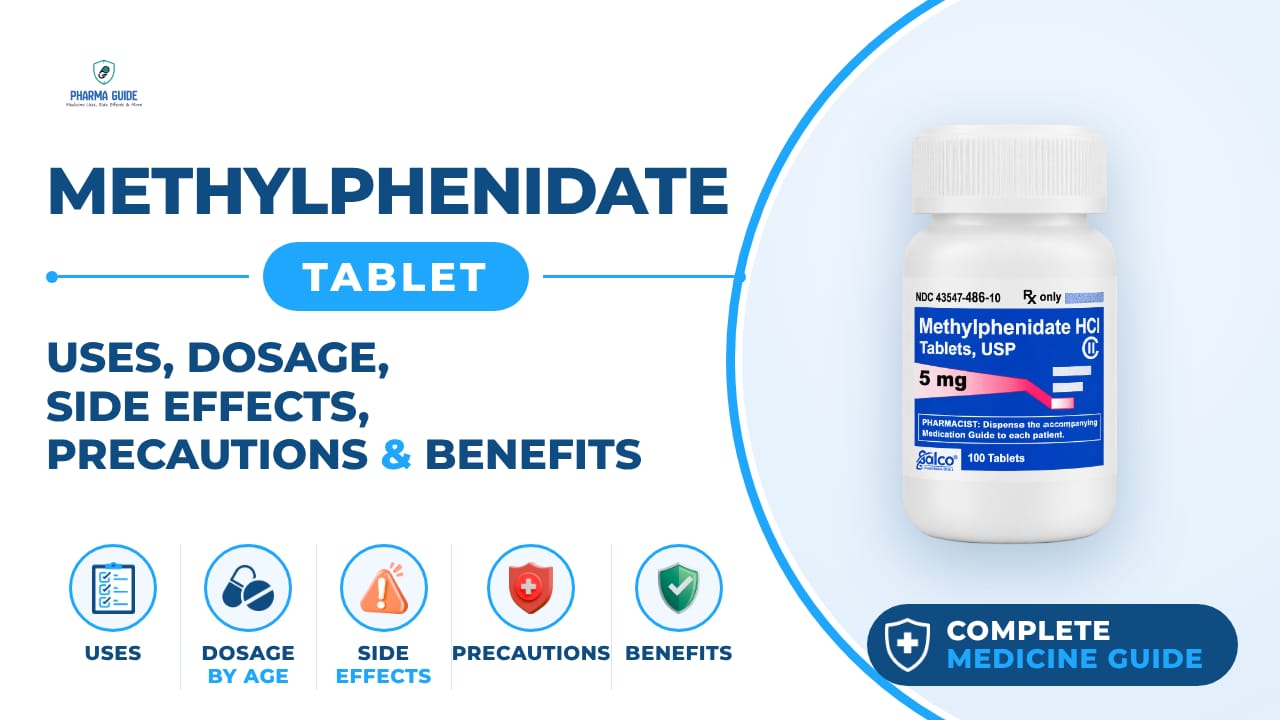
| Generic name | methylphenidate |
|---|---|
| Drug class | CNS stimulant (central nervous system stimulant) |
| Forms | Tablet, Tablet, Extended Release, Tablet, Extended Release, Chewable, Tablet, Chewable, Capsule, Extended Release, Solution |
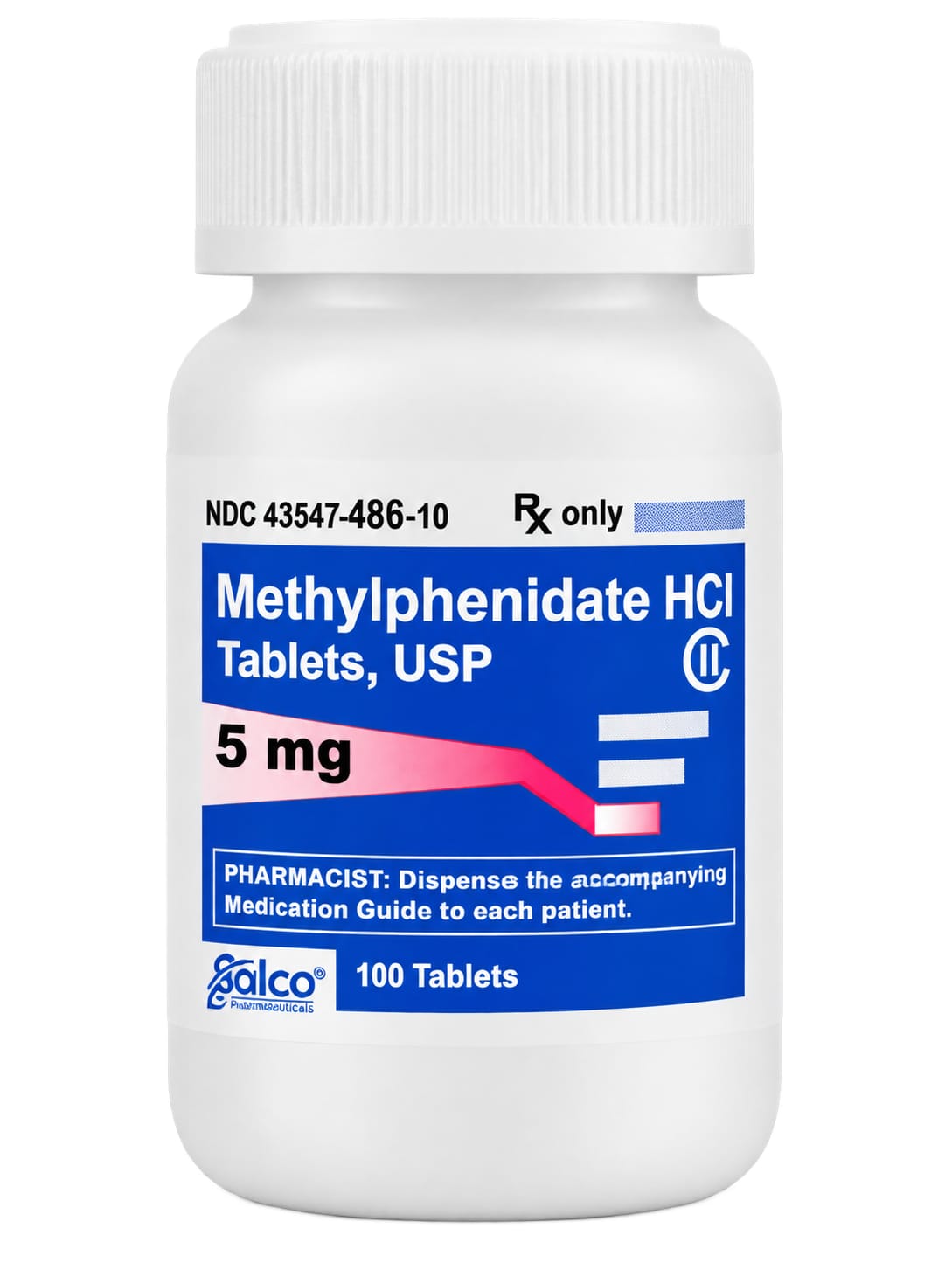
Quick overview
Methylphenidate Tablet (generic name: methylphenidate) is a central nervous system stimulant used to treat attention-deficit/hyperactivity disorder (ADHD), attention deficit disorder (ADD), and narcolepsy. It works by improving focus and reducing impulsive behavior, and by promoting wakefulness. It is available in several forms, including regular, extended-release, and chewable tablets, and must be used exactly as prescribed due to its potential for dependence and other serious risks.
What is Methylphenidate Tablet
Methylphenidate is a stimulant medicine that treats attention-deficit/hyperactivity disorder (ADHD) and narcolepsy. It works by improving focus and reducing impulsive behavior, and by promoting wakefulness. It belongs to the CNS stimulant (central nervous system stimulant) drug class.
Methylphenidate Tablet uses
- Attention deficit hyperactivity disorder (ADHD)
- Attention deficit disorder (ADD)
- Narcolepsy
Benefits of Methylphenidate Tablet
- Improves attention and focus
- Reduces impulsive and hyperactive behavior
- Helps manage certain sleep disorders by promoting wakefulness
How Methylphenidate Tablet works
Methylphenidate acts on brain chemicals involved in attention and impulse control, helping increase focus and reduce hyperactive or impulsive behavior. For narcolepsy, it helps keep you awake.
Methylphenidate Tablet dosage
Take this medicine by mouth with water, at the same time every day, exactly as your doctor tells you. It is usually best to take it 30 to 45 minutes before meals unless your care team says otherwise. Try not to take a dose too late in the day, since it can make it hard to sleep — the last dose of the day is usually taken several hours before bedtime.
If you are taking a chewable tablet, chew it well and swallow it with a full glass of water or other liquid to avoid choking. Extended-release tablets or capsules should be swallowed whole and should not be crushed, chewed, or broken. Some extended-release capsules can be opened and sprinkled onto a small amount of soft food like applesauce if you cannot swallow them whole; this mixture should be taken right away and not stored. Some long-acting forms can be taken with or without food.
With Concerta or Relexxii extended-release tablets, you may notice what looks like a tablet in your stool — this is just the empty tablet shell left after the medicine has been absorbed. Do not take this medicine more often than directed, and do not change your dose without talking to your care team. This medicine may be used in children as young as 6 years for certain conditions, but special precautions apply. Do not stop taking this medicine suddenly without checking with your doctor, as your condition may return or you may get unwanted effects.
| Age group | Dose |
|---|---|
| Under 6 Years | Not recommended unless prescribed by a specialist |
| 6–17 Years | Initial dose: 5 mg once or twice daily; adjusted gradually based on response |
| Adults (18–64 Years) | Initial dose: 10–20 mg/day; adjusted based on response (maximum depends on formulation) |
| Older Adults (65+ years) | Use with caution; dose individualized by specialist |
Available forms and strengths
- Tablet
- Tablet, Extended Release
- Tablet, Extended Release, Chewable
- Tablet, Chewable
- Capsule, Extended Release
- Solution
Side effects of Methylphenidate Tablet
Common
- Dry mouth
- Headache
- Loss of appetite with weight loss
- Nausea
- Stomach pain
- Trouble sleeping
- Dizziness
- Nervousness or irritability
- Increased sweating
Serious
- Allergic reactions—skin rash, itching, hives, swelling of the face, lips, tongue, or throat
- Heart attack—pain or tightness in the chest, shoulders, arms, or jaw, nausea, shortness of breath, cold or clammy skin, feeling faint or lightheaded
- Heart rhythm changes—fast or irregular heartbeat, dizziness, feeling faint or lightheaded, chest pain, trouble breathing
- Increase in blood pressure
- Serotonin syndrome—irritability, confusion, fast or irregular heartbeat, muscle stiffness, twitching muscles, sweating, high fever, seizure, chills, vomiting, diarrhea
- Mood and behavior changes—anxiety, nervousness, confusion, hallucinations, irritability, hostility, thoughts of suicide or self-harm, worsening mood, feelings of depression
- Prolonged or painful erection
- Raynaud syndrome—cool, numb, or painful fingers or toes that may change color from pale, to blue, to red
- Seizures
- Stroke—sudden numbness or weakness of the face, arm, or leg, trouble speaking, confusion, trouble walking, loss of balance or coordination, dizziness, severe headache, change in vision
- Sudden eye pain or change in vision such as blurry vision, seeing halos around lights, vision loss
Warnings and precautions
- This medicine can be habit-forming; misuse can lead to addiction, overdose, or death. Tell your doctor about any history of drug or alcohol problems.
- Stimulant medicines like this one have been linked to stroke, heart attack, and sudden death in people with high blood pressure, heart disease, or a heart defect.
- Do not take this medicine if you have used a certain type of antidepressant called an MAO inhibitor within the past 14 days, as this can cause a dangerous reaction.
- This medicine may cause new or worse mental health symptoms such as unusual thoughts or behavior, especially if you have a history of depression, mental illness, or bipolar disorder.
- This medicine may affect blood circulation, causing numbness, pain, or color changes in the fingers or toes.
- This medicine may slow growth and cause weight loss in children, so height and weight should be checked regularly during treatment.
- Tell your doctor if you are pregnant or planning to become pregnant. Becoming dependent on this medicine during pregnancy could lead to premature birth or low birth weight, so your doctor will weigh risks and benefits with you.
- Talk with your doctor before breastfeeding while using this medicine, since the medicine can pass into breast milk and may affect your baby.
- Tell your doctor if you have liver problems, as this may affect how this medicine is used.
- Avoid drinking alcohol while taking this medicine, since it can interact with the medicine and increase the risk of side effects.
- This medicine may cause dizziness, drowsiness, or changes in vision, so be careful driving or using machinery until you know how it affects you.
Storage
- Store at room temperature between 15 and 30 degrees C (59 and 86 degrees F).
- Protect from light and moisture.
- Keep container tightly closed.
- Keep out of the reach of children and pets.
- Get rid of any unused medication after the expiration date.
- Take the medication to a medication take-back program, or if not available, mix it with cat litter, dirt, or coffee grounds, seal it in a bag, and put it in the trash if the label says this is safe.
- Keep it in a safe place to protect it from theft; do not share it with anyone.
When to see a doctor
- Call your doctor right away if you notice signs of heart problems, such as chest pain, feeling light-headed, or shortness of breath.
- Get medical help right away if you notice signs of psychosis, such as paranoia, aggression, new behavior problems, or seeing or hearing things that are not real.
- Seek care right away if you notice unexplained wounds on your fingers or toes, or other signs of circulation problems.
- Get emergency help right away if you have an allergic reaction, such as hives, difficulty breathing, or swelling of the face, lips, tongue, or throat.
- Contact your care team right away if you have an erection lasting longer than 4 hours or if it becomes painful, as this can be a serious problem needing urgent treatment.
- Seek medical attention right away if you have symptoms of serotonin syndrome, such as agitation, hallucinations, fever, sweating, shivering, fast heart rate, muscle stiffness, twitching, loss of coordination, nausea, vomiting, or diarrhea.
- If you think you have taken too much of this medicine, contact a poison control center or emergency room right away, as an overdose can be fatal.
Alternatives
- Atomoxetine
- Lisdexamfetamine
- Amphetamine/Dextroamphetamine
Watch the video
FAQs
What is Methylphenidate Tablet used for?
It is used to treat attention-deficit/hyperactivity disorder (ADHD), attention deficit disorder (ADD), and narcolepsy by improving focus, reducing impulsive behavior, and promoting wakefulness.
How should Methylphenidate Tablet be taken?
Take it by mouth with water at the same time every day, usually 30 to 45 minutes before meals unless your doctor says otherwise. Avoid taking it too late in the day since it can make sleeping difficult. Extended-release tablets should be swallowed whole and not crushed, chewed, or broken, while chewable tablets should be chewed well and swallowed with a full glass of water.
What are the common side effects of Methylphenidate Tablet?
Common side effects include dry mouth, headache, loss of appetite with weight loss, nausea, stomach pain, trouble sleeping, dizziness, nervousness or irritability, and increased sweating.
Can children take Methylphenidate Tablet?
Yes, it may be used in children as young as 6 years for certain conditions, but special precautions apply, and height and weight should be checked regularly since it may slow growth and cause weight loss.
What precautions should be followed when taking Methylphenidate Tablet?
This medicine can be habit-forming and has been linked to stroke, heart attack, and sudden death in people with heart problems. It should not be taken with MAO inhibitors, may worsen mental health symptoms, and alcohol should be avoided while using it.
General information, not medical advice
Your prescriber and the leaflet in your pack know your situation. This page does not.
- Follow your prescriber and the leaflet
- Don't start, stop, or change a dose on your own
- Doses and warnings differ by country and product
Sources
Video
Related medicines

Injectafer Injection: Uses, Dosage, Side Effects, Precautions and Alternates
Iron products
Injectafer (ferric carboxymaltose) treats iron deficiency anemia and heart failure-related iron deficiency via IV. Learn uses, dosage, side effects, and

Gliclazide Tablet: Uses, Dosage, Side Effects, Precautions and Alternates
Sulfonylurea (hypoglycemic/antidiabetic agent)
Gliclazide Tablet is a sulfonylurea for type 2 diabetes that boosts insulin release. Learn about dosage, side effects, warnings, and precautions.