
Safety
General information, not medical advice
Your prescriber and the leaflet in your pack know your situation. This page does not.
- Follow your prescriber and the leaflet
- Don't start, stop, or change a dose on your own
- Doses and warnings differ by country and product
Metrogyl Tablet: Uses, Dosage, Side Effects, Precautions and Alternates
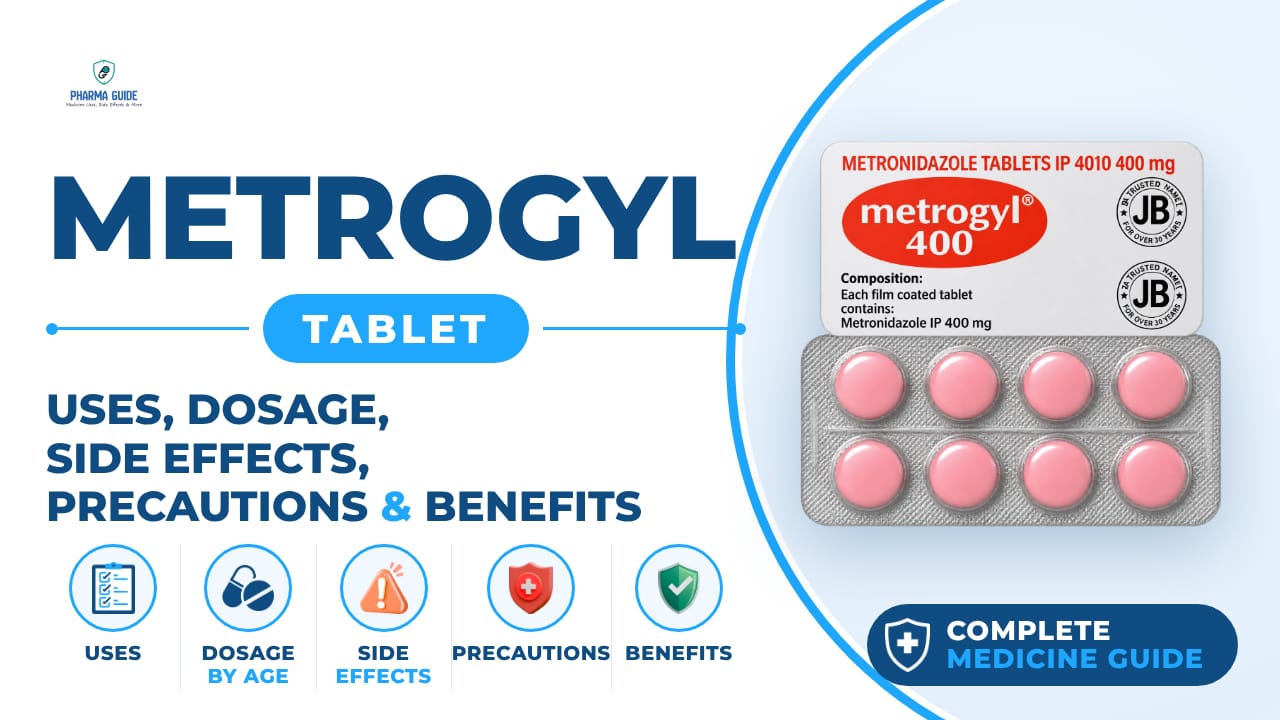
| Generic name | Metronidazole |
|---|---|
| Drug class | Nitroimidazole antibiotic (antiprotozoal and antibacterial) |
| Forms | Tablet |

Quick overview
Metrogyl Tablet contains metronidazole, an antibiotic from the nitroimidazole class that works against both bacteria and certain protozoa. It is a prescription medicine used to treat a range of infections affecting different parts of the body, including the stomach, intestines, mouth, skin, and genital tract. It also helps treat conditions such as amoebiasis, giardiasis, and trichomoniasis, and is sometimes used alongside other medicines to treat H. pylori infection.
What is Metrogyl Tablet
Metrogyl is a prescription antibiotic tablet containing metronidazole. It belongs to a group of medicines called nitroimidazoles and is used to treat infections caused by bacteria and other organisms such as protozoa.
Metrogyl Tablet uses
- Treats infections caused by bacteria and other organisms in different parts of the body
- Prevents or treats infections that may occur during surgery
- Treats infections of the blood, brain, lung, bones, genital tract, pelvic area, stomach and intestines
- Treats gum ulcers and other dental infections
- Treats infected leg ulcers and pressure sores
- Treats amoebiasis, giardiasis and trichomoniasis
- Treats anaerobic bacterial infections of the digestive tract, skin, mouth and reproductive system, including bacterial vaginosis
- Used with other medicines to treat Helicobacter pylori infection
Benefits of Metrogyl Tablet
- Bacterial Infection Treatment: Helps treat infections caused by susceptible anaerobic bacteria
- Parasitic Infection Support: Used for certain protozoal infections
- Dental Infection Relief: Helps treat some gum and tooth-related infections
- Stomach Infection Treatment: Used in some gastrointestinal infections
- Gynecological Infection Support: Helps manage certain bacterial vaginal infections
How Metrogyl Tablet works
Metrogyl works by getting into bacterial or parasite cells, where it damages their DNA and blocks them from making the genetic material they need. This stops the bacteria and parasites from multiplying and eventually kills them, clearing the infection.
Metrogyl Tablet dosage
Swallow the tablets whole with a full glass of water; do not chew, crush, or break them unless your doctor has told you to take half a tablet. Take the tablets during or after a meal to help reduce the chance of an upset stomach. If you take more than one dose a day, space the doses evenly through the day, and take the medicine at the same times each day to help you remember and to keep it working well.
Keep taking Metrogyl until you finish the course your doctor prescribed, even if you feel better sooner. Do not stop the medicine early, as this may let the infection come back or not clear fully. If you miss a dose, skip it if it's almost time for the next one; otherwise take it as soon as you remember, then continue as normal. Do not take a double dose to make up for a missed one. Metrogyl tablets are not recommended for children under 12 years of age.
| Age group | Dose |
|---|---|
| Under 2 Years | Use only if prescribed by a doctor |
| 2–12 Years | Dose based on body weight and infection type (commonly 20–30 mg/kg/day divided into doses) |
| 12 Years and Above | Usually 400–500 mg 2–3 times daily, depending on infection |
| Adults (18–64 Years) | Usually 400–500 mg 2–3 times daily, as prescribed |
| Older Adults (65+ Years) | Adult dose; adjustment may be needed based on health condition |
Available forms and strengths
Metrogyl is available as a tablet.
Side effects of Metrogyl Tablet
Common
- Nausea, vomiting, loss of appetite
- Diarrhoea, stomach discomfort, abdominal cramping or constipation
- Metallic or strange taste in the mouth, dry mouth
- Headache, dizziness
- Darker than usual urine
- Joint pain
- Oral thrush (white, furry, sore or inflamed tongue and mouth)
- Vaginal thrush (sore, itchy vagina with or without discharge)
- Skin rash, itching, flushing
- Stuffy or blocked nose
- Unusual urination patterns
- Hearing problems or ringing/buzzing in the ears
- Blurred or double vision
- Confusion, irritability, depression or sleeplessness
- Feeling of incoordination or uncoordinated movements
- Vertigo (spinning sensation)
Serious
- Allergic reaction: skin rash, itching, swelling of the face, lips or tongue, difficulty breathing or swallowing, hives
- Numbness, tingling, pain or weakness in the arms or legs, especially after long-term use
- Posterior Reversible Encephalopathy Syndrome (PRES): headache, confusion, visual disturbance and seizures
- Drug Reaction with Eosinophilia and Systemic Symptoms (DRESS): flu-like symptoms, rash with fever, enlarged lymph nodes, abnormal blood counts, raised liver enzymes
- Mental health changes: irrational thoughts, hallucinations, confusion, depression, thoughts of self-harm or suicide
- Yellowing of the skin or eyes (jaundice), dark urine
- Severe stomach pain reaching to the back (pancreatitis)
- Signs of a blood disorder: unusual bruising or bleeding, tiredness, paleness, frequent infections, sore throat or mouth ulcers
- Severe blistering of the lips, eyes, mouth, nose or genitals (Stevens-Johnson Syndrome)
- Fits (convulsions)
- Acute liver failure in people with Cockayne syndrome
Warnings and precautions
- Do not use this medicine if you are allergic to metronidazole or any of its ingredients, if you have or have had a blood disorder, or if you have a disease of the brain, spinal cord or nerves.
- People with Cockayne syndrome are at risk of severe or fatal liver failure with this medicine, so liver function should be monitored before, during and after treatment.
- Stop taking the medicine and tell your doctor right away if you develop stomach pain, loss of appetite, nausea, vomiting, fever, tiredness, yellowing of the skin or eyes, or dark urine.
- Do not complete less than the full prescribed course, even if you feel better, because this could let the infection come back or not clear up.
- Some people taking this medicine can have serious mental health effects, including irrational thoughts, hallucinations, confusion, depression, or thoughts of self-harm or suicide, even without a past history of these problems.
- Talk to your doctor if you are pregnant or planning to become pregnant, as they will discuss the risks and benefits with you before you start this medicine.
- Tell your doctor if you are breastfeeding or plan to, as the medicine can pass into breast milk and its use is not usually recommended while nursing.
- If you have kidney problems, tell your doctor before starting this medicine, as caution may be needed.
- Tell your doctor if you have liver problems, since this medicine can affect liver function and may need closer monitoring, especially in certain conditions like Cockayne syndrome.
- Do not drink alcohol or take any medicine containing alcohol while using this medicine and for at least 24 hours after finishing treatment, as it can cause nausea, vomiting, stomach cramps, headaches and flushing.
- Be careful driving or using machinery until you know how this medicine affects you, as it can cause dizziness, confusion, drowsiness or vision problems.
Storage
- Keep the tablets in the bottle until it is time to take them
- Store in a cool dry place where the temperature stays below 30°C
- Protect from light
- Do not store in the bathroom, near a sink, in the car, or on a window sill
- Keep out of reach of children, ideally in a locked cupboard at least one-and-a-half metres above the ground
- If the medicine is out of date or no longer needed, take it to a pharmacy for safe disposal
- Do not use after the expiry date
When to see a doctor
- Get medical help right away if you notice signs of a serious allergic reaction, such as skin rash, itching, swelling of the face, lips or tongue, or difficulty breathing or swallowing.
- Stop the medicine and get medical advice immediately if you have irrational thoughts, hallucinations, feel confused or depressed, including thoughts of self-harm or suicide.
- Seek medical help if you get headache, confusion, vision problems and seizures, which could be signs of a rare brain condition called Posterior Reversible Encephalopathy Syndrome (PRES).
- Get medical attention if you notice numbness, tingling or weakness in your arms or legs, especially after long-term use, as this needs to be checked by your doctor.
- Seek urgent medical care if you think you have taken too much of this medicine, even if you feel fine, as you may need urgent medical attention.
- Tell your doctor right away if you get flu-like symptoms, a rash with fever, swollen lymph nodes, or abnormal blood test results, as this may be a serious drug reaction.
Alternatives
- Tinidazole
- Ornidazole
- Rifaximin
Watch the video
FAQs
What is Metrogyl Tablet used for?
Metrogyl Tablet treats infections caused by bacteria and protozoa in the stomach, intestines, mouth, skin and genital tract. It also treats amoebiasis, giardiasis, trichomoniasis, and bacterial vaginosis, and is sometimes used with other medicines for H. pylori infection.
How should I take Metrogyl Tablet?
Swallow the tablets whole with a full glass of water during or after a meal to reduce stomach upset. Do not chew, crush, or break them unless advised. Take doses evenly spaced and at the same times each day, and complete the full prescribed course even if you feel better sooner.
Can I drink alcohol while taking Metrogyl Tablet?
No, you should not drink alcohol or take medicines containing alcohol while using Metrogyl and for at least 24 hours after finishing treatment, as it can cause nausea, vomiting, stomach cramps, headaches and flushing.
What are the common side effects of Metrogyl Tablet?
Common side effects include nausea, vomiting, loss of appetite, diarrhoea, stomach discomfort, metallic taste, dry mouth, headache, dizziness, darker urine, joint pain, oral or vaginal thrush, skin rash, and confusion or sleeplessness.
Is Metrogyl Tablet safe during pregnancy or breastfeeding?
You should talk to your doctor if you are pregnant or planning pregnancy, as risks and benefits will be discussed. It is not usually recommended while breastfeeding since the medicine can pass into breast milk.
General information, not medical advice
Your prescriber and the leaflet in your pack know your situation. This page does not.
- Follow your prescriber and the leaflet
- Don't start, stop, or change a dose on your own
- Doses and warnings differ by country and product
Sources
Video
Related medicines

Injectafer Injection: Uses, Dosage, Side Effects, Precautions and Alternates
Iron products
Injectafer (ferric carboxymaltose) treats iron deficiency anemia and heart failure-related iron deficiency via IV. Learn uses, dosage, side effects, and

Gliclazide Tablet: Uses, Dosage, Side Effects, Precautions and Alternates
Sulfonylurea (hypoglycemic/antidiabetic agent)
Gliclazide Tablet is a sulfonylurea for type 2 diabetes that boosts insulin release. Learn about dosage, side effects, warnings, and precautions.