
Safety
General information, not medical advice
Your prescriber and the leaflet in your pack know your situation. This page does not.
- Follow your prescriber and the leaflet
- Don't start, stop, or change a dose on your own
- Doses and warnings differ by country and product
Metron Tablet: Uses, Dosage, Side Effects, Precautions and Alternates
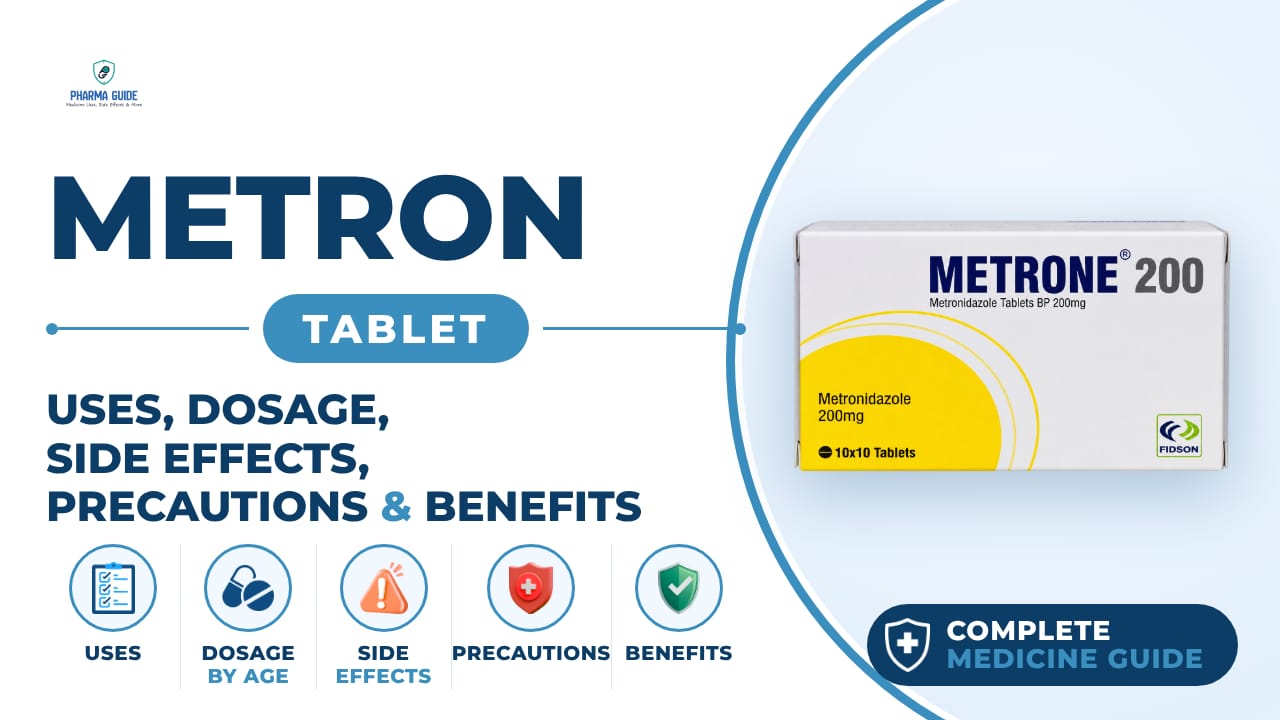
| Generic name | Metronidazole |
|---|---|
| Drug class | Nitroimidazole antibacterial and antiprotozoal drug |
| Forms | Tablet, Suspension, Infusion |
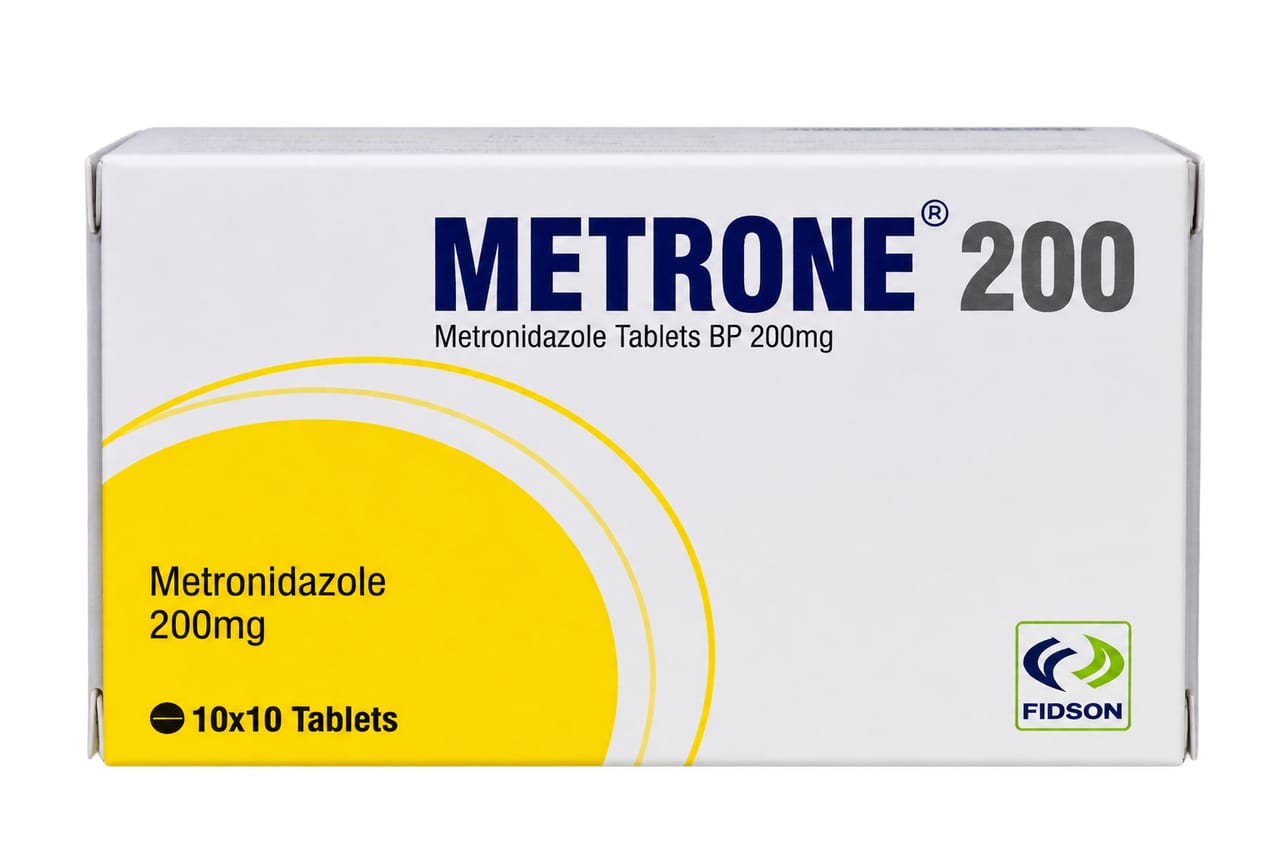
Quick overview
Metron Tablet contains Metronidazole, a nitroimidazole antibacterial and antiprotozoal medicine. It is used to treat infections of the stomach, intestines, liver, lungs, heart, vagina, and skin caused by bacteria and parasites. It works by damaging the DNA of harmful organisms to stop them from growing. It should be taken exactly as prescribed, with attention to precautions around alcohol, driving, pregnancy, and liver or kidney conditions.
What is Metron Tablet
Metron Tablet is an antibiotic medicine that contains Metronidazole. It treats infections of the stomach, intestines, liver, lungs, heart, vagina, and skin caused by bacteria and parasites.
Metron Tablet uses
- Bacterial infections
- Parasitic infections
- Amoebiasis
- Trichomoniasis
- Bacterial vaginosis
- Peritonitis
- Osteomyelitis
- Giardiasis
- Peptic ulcer disease
- Prophylaxis of sexually transmitted diseases
- Used with other antibiotics for surgical prophylaxis
Benefits of Metron Tablet
- Effectively treats a wide range of bacterial and parasitic infections
- Helps prevent infections after surgeries, reducing the risk of complications
- Fast-acting and highly effective in treating conditions like bacterial vaginosis and gastrointestinal infections
- Reduces symptoms and speeds recovery from infections caused by anaerobic bacteria and protozoa
How Metron Tablet works
This medicine works by damaging the DNA of harmful bacteria and parasites, stopping them from growing and multiplying, which helps clear the infection from the body.
Metron Tablet dosage
Take this medicine after food. Swallow the tablet whole; do not chew, cut, or crush it. Take it every day at the same time to help you remember and to keep it working well. Complete the full course of treatment even if you start feeling better. Do not stop the medicine on your own, as this may make it less effective for future infections.
If you miss a dose, take it as soon as you remember unless it is almost time for your next dose; do not take a double dose. In children below 3 years, this medicine is considered unsafe. In elderly patients, this medicine should be used with caution and may need dose adjustment.
| Age group | Dose |
|---|---|
| Under 2 Years | Use only if prescribed by a healthcare professional |
| 2–12 Years | Dose based on body weight and infection type (as prescribed) |
| 12 Years and Above | Usually 400–500 mg 2–3 times daily depending on infection |
| Adults (18–64 Years) | Usually 400–500 mg 2–3 times daily as prescribed |
| Older Adults (65+ Years) | Adult dose; adjustment may be needed based on health condition |
Available forms and strengths
- Tablet
- Suspension
- Infusion
Side effects of Metron Tablet
Common
- Dizziness
- Stomach ache
- Diarrhoea
- Metallic taste in the mouth
- Nausea or vomiting
- Loss of appetite
- Abdominal cramping
- Headache
- Dark urine
- Skin rash or itching
- Furry tongue or mouth irritation
Serious
- Seizures
- Numbness or tingling of hands/feet (peripheral neuropathy)
- Severe allergic reaction (swelling, difficulty breathing, hives)
- Persistent sore throat or fever
- Unusual bruising or bleeding
- Liver problems (such as yellowing of the skin or eyes)
- Encephalopathy
Warnings and precautions
- Do not take this medicine if you are allergic to it.
- With long-term treatment, seizures and aseptic meningitis have been reported.
- This medicine may cause encephalopathy and peripheral neuropathy.
- Avoid using this medicine when there is no suspected bacterial or parasitic infection, as it increases the risk of drug-resistant bacteria and parasites.
- Use with caution if you have liver or kidney problems, heart failure, or an H. pylori infection.
- Use carefully if you have a history of blood disorders such as low blood count, agranulocytosis, leucopenia, or neutropenia.
- It is not recommended during the first trimester of pregnancy.
- Long-term use may cause a new infection (superinfection).
- This medicine is considered safe to use during pregnancy, but check with your doctor before taking it.
- Use with caution while breastfeeding since it may pass into breast milk; consult your doctor, and watch your infant for diarrhoea or diaper rash.
- This medicine is considered safe in patients with kidney impairment and usually does not need a dose change, but check with your doctor.
- Use with caution if you have liver disease; a dose adjustment may be needed.
- Avoid alcohol while taking this medicine, as it can cause flushing, fast heartbeat, nausea, thirst, chest pain, and low blood pressure.
- It is considered unsafe to drive or operate machinery while taking this medicine, as it may affect your ability to do so safely.
Storage
- Store below 30°C.
- Stored at 10-30°C room temperature.
- Protect from light and heat.
- Keep away from children and pets.
- Dispose of properly in a suitable bag.
When to see a doctor
- Get medical help right away if you have a severe allergic reaction, such as swelling, difficulty breathing, or hives.
- Seek immediate medical attention for seizures or signs of liver problems such as yellowing of the skin or eyes.
- Tell your doctor if you notice numbness, tingling, or a burning feeling in your hands or feet.
- Contact your doctor if you have a persistent sore throat or fever, or unusual bruising or bleeding.
- If you still feel unwell after finishing your antibiotic course, tell your doctor.
- If you take too much of this medicine, contact your doctor right away or go to the nearest hospital.
Alternatives
- Rifaximin
- Ornidazole
- Secnidazole
- Tinidazole
Watch the video
FAQs
What is Metron Tablet used for?
Metron Tablet is used to treat infections of the stomach, intestines, liver, lungs, heart, vagina, and skin caused by bacteria and parasites, including amoebiasis, trichomoniasis, bacterial vaginosis, giardiasis, and peritonitis.
How does Metron Tablet work?
It works by damaging the DNA of harmful bacteria and parasites, stopping them from growing and multiplying, which helps clear the infection from the body.
Can I drink alcohol while taking Metron Tablet?
No, alcohol should be avoided while taking this medicine as it can cause flushing, fast heartbeat, nausea, thirst, chest pain, and low blood pressure.
Is Metron Tablet safe during pregnancy and breastfeeding?
It is not recommended during the first trimester of pregnancy, though it is generally considered safe later with doctor guidance. Use with caution while breastfeeding since it may pass into breast milk, and watch your infant for diarrhoea or diaper rash.
What are the common side effects of Metron Tablet?
Common side effects include dizziness, stomach ache, diarrhoea, metallic taste, nausea or vomiting, loss of appetite, headache, dark urine, and skin rash or itching.
General information, not medical advice
Your prescriber and the leaflet in your pack know your situation. This page does not.
- Follow your prescriber and the leaflet
- Don't start, stop, or change a dose on your own
- Doses and warnings differ by country and product
Sources
Video
Related medicines

Injectafer Injection: Uses, Dosage, Side Effects, Precautions and Alternates
Iron products
Injectafer (ferric carboxymaltose) treats iron deficiency anemia and heart failure-related iron deficiency via IV. Learn uses, dosage, side effects, and

Gliclazide Tablet: Uses, Dosage, Side Effects, Precautions and Alternates
Sulfonylurea (hypoglycemic/antidiabetic agent)
Gliclazide Tablet is a sulfonylurea for type 2 diabetes that boosts insulin release. Learn about dosage, side effects, warnings, and precautions.