
Safety
General information, not medical advice
Your prescriber and the leaflet in your pack know your situation. This page does not.
- Follow your prescriber and the leaflet
- Don't start, stop, or change a dose on your own
- Doses and warnings differ by country and product
Metronidazole Capsule: Uses, Dosage, Side Effects, Precautions and Alternates
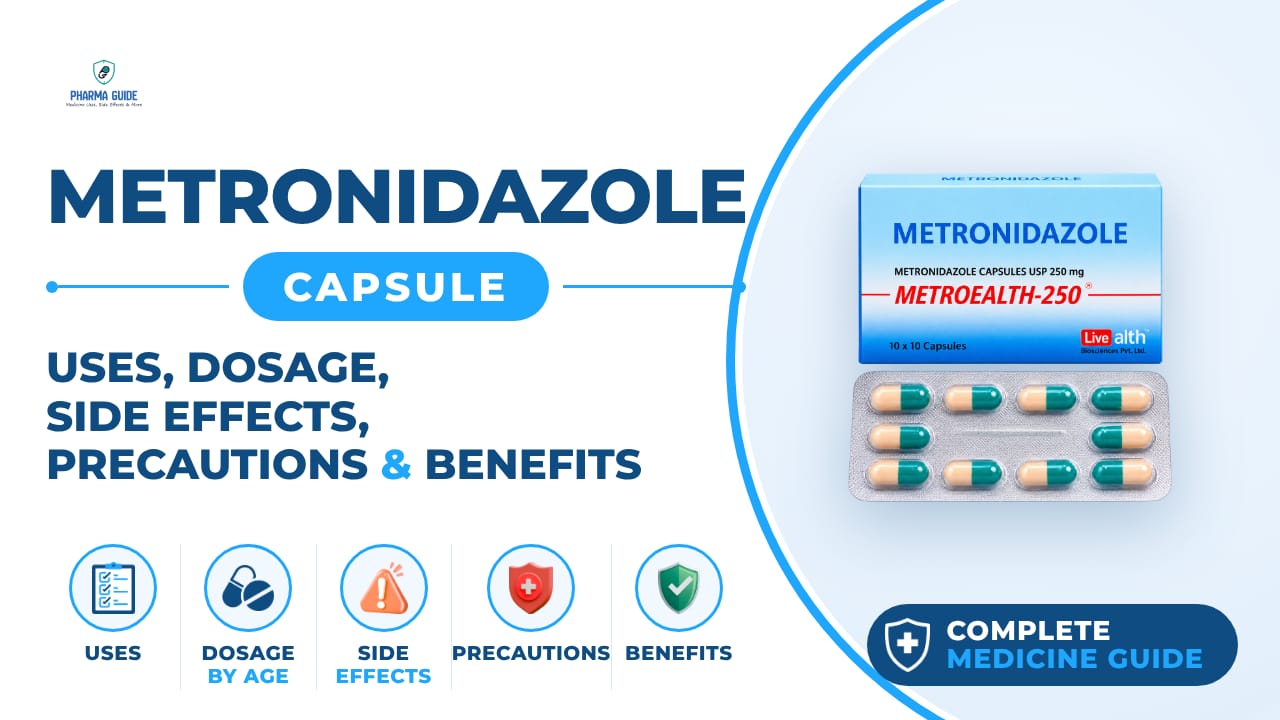
| Generic name | Metronidazole |
|---|---|
| Drug class | Nitroimidazole antimicrobial (antibiotic/amebicide) |
| Forms | Capsule, Tablet, Extended-release tablet, Oral suspension (liquid), Injection |

Quick overview
Metronidazole Capsule is a prescription antibiotic and amebicide belonging to the nitroimidazole class. It is used to treat certain infections caused by anaerobic bacteria and parasites, including trichomoniasis, amebiasis, and bacterial vaginosis. It works by damaging the DNA of susceptible organisms to stop their growth. It does not treat colds, flu, or other viral infections.
What is Metronidazole Capsule
Metronidazole is a prescription medicine that treats infections caused by certain bacteria and parasites. It belongs to a group of medicines called antibiotics (nitroimidazole antimicrobials). It does not treat colds, flu, or other virus infections.
Metronidazole Capsule uses
- Bacterial infections caused by anaerobic bacteria, including infections of the abdomen, skin, gynecologic area, lower respiratory tract, central nervous system, and bloodstream, as well as heart valve and bone or joint infections (as add-on therapy)
- Trichomoniasis, a sexually transmitted infection, in both men and women
- Amebiasis, including intestinal infection and liver abscess caused by amoeba parasites
- Bacterial vaginosis in women who are not pregnant
- Preventing infection after certain bowel surgery
Benefits of Metronidazole Capsule
- Helps treat certain anaerobic bacterial infections.
- Is effective against some protozoal infections, including trichomoniasis and amoebiasis.
- May be used for infections involving the abdomen, pelvis, skin, or dental tissues, when caused by susceptible organisms.
- Can help treat bacterial vaginosis and other susceptible genital infections.
- May be used alone or with other antibiotics for mixed bacterial infections.
How Metronidazole Capsule works
Metronidazole enters the bacteria or parasite and is broken down into substances that damage its DNA, which kills the organism. It does not work against the type of bacteria that usually cause common urine or chest infections.
Metronidazole Capsule dosage
Take capsules by mouth with a glass of water, at the same time each day as directed on your prescription label. Capsules can be taken with or without food; taking with a meal or snack may help if it upsets your stomach. Keep taking this medicine for the full length of treatment even if you start to feel better, unless your care team tells you to stop. Do not skip doses; try to take doses at evenly spaced times through the day to keep a steady amount of medicine in your body. Do not share this medicine with anyone else.
If you are being treated for a sexually transmitted infection, avoid sexual contact until treatment is finished; your partner may need treatment too. Talk to your care team about using this medicine in children, since precautions apply.
| Age group | Dose |
|---|---|
| Under 12 years | Usually weight-based dosing; an age-appropriate liquid formulation is generally preferred |
| 12–17 years | Commonly 400–500 mg 2–3 times daily, depending on the infection |
| 18–64 years | Commonly 500 mg every 8–12 hours, depending on the infection |
| 65+ years | Usually adult dosing, but use cautiously and consider liver function |
Available forms and strengths
- Capsule
- Tablet
- Extended-release tablet
- Oral suspension (liquid)
- Injection
Side effects of Metronidazole Capsule
Common
- Nausea, vomiting, diarrhea
- Headache
- Loss of appetite
- Upper stomach pain, cramping, constipation
- Metallic taste in mouth
- Dry mouth, furry tongue, or mouth/tongue irritation
Serious
- Allergic reactions such as skin rash, itching, hives, or swelling of the face, lips, tongue, or throat
- Dizziness, loss of balance or coordination, confusion, or trouble speaking
- Fever, neck pain or stiffness, sensitivity to light, headache, nausea, vomiting, and confusion, which may be signs of meningitis
- Heart rhythm changes such as fast or irregular heartbeat, feeling faint, chest pain, or trouble breathing
- Signs of liver injury, such as right upper belly pain, loss of appetite, nausea, light-colored stool, dark urine, or yellowing of skin or eyes
- Pain, tingling, numbness, or weakness in the hands or feet
- Severe skin reactions, including redness, blistering, peeling, or loosening of the skin, including inside the mouth
- Seizures
- Severe or continuing diarrhea with fever
- Sudden eye pain or vision changes, such as blurry vision, seeing halos, or vision loss
- Unusual vaginal discharge, itching, or odor (possible yeast infection)
- Signs of low white blood cell count, such as fever, chills, or sore throat
- Severe stomach pain spreading to the back with nausea and vomiting, which can signal pancreatitis
- Ringing in the ears or hearing changes
Warnings and precautions
- If treating trichomoniasis, this medicine should not be used during the first three months of pregnancy because it may harm the unborn baby.
- For other infections, discuss the benefits and risks with your doctor before use later in pregnancy.
- This medicine passes into breast milk at levels similar to those in the mother's blood.
- Some people choose to pump and discard their milk during treatment and for 48 hours after the last dose, feeding the baby stored milk or formula instead. Talk with your doctor about the best choice for you.
- If you have severe kidney disease, your body may process this medicine more slowly, raising the risk of side effects. Your doctor may need to adjust your dose or how often you take it.
- If you have severe liver disease, this medicine may build up in your body because your liver processes it more slowly. Your doctor may lower your dose or have you take it less often.
- Do not drink alcohol or use products containing alcohol during treatment and for at least three days after your last dose. Mixing alcohol with this medicine can cause stomach pain, nausea, vomiting, headache, or flushing of the face.
- May cause dizziness, drowsiness, confusion, blurred vision, or, rarely, seizures. Do not drive or operate machinery if affected.
- This medicine has caused cancer in laboratory animals, so it should only be used for the infections it is approved to treat.
- Do not take this medicine if you have used disulfiram (Antabuse) in the past two weeks, as the combination can cause dangerous psychotic reactions.
- This medicine should not be used by people with Cockayne syndrome, a rare genetic disorder, because it has caused severe, sometimes fatal, liver failure in these patients, sometimes within two days of starting.
- Serious and sometimes fatal skin reactions have occurred with this medicine. Stop taking it and seek medical attention if you develop any kind of rash.
- This medicine can cause nervous system problems such as seizures, encephalopathy, meningitis, and nerve damage. Stop taking it and contact your doctor right away if you notice symptoms like seizures, vision changes, weakness, numbness, tingling, unsteadiness, or slurred speech.
Storage
- Store at 20–25°C (68–77°F) or according to the product label.
- Keep in a cool, dry place away from excessive heat.
- Protect capsules from light and moisture.
- Keep in the original, tightly closed container until use.
- Avoid storing in bathrooms or other hot and humid areas.
- Keep out of reach and sight of children.
When to see a doctor
- Get emergency help right away for signs of a severe allergic reaction: swelling of the face, lips, or throat, difficulty breathing, or a sudden drop in blood pressure.
- Stop taking the medicine and seek medical attention if you develop a skin rash, blisters, peeling skin, mouth sores, facial or hand swelling, fever, or muscle and joint aches, since these can be signs of a severe skin reaction.
- Call your doctor promptly if you have severe stomach pain that spreads to your back along with nausea and vomiting, which could be a sign of pancreatitis.
- If you have Cockayne syndrome, stop the medicine and contact your doctor immediately if you notice signs of liver failure, such as nausea, upper right belly pain, pale stools, or yellowing of the skin or eyes.
- Call your doctor right away if you have nervous system symptoms such as memory loss, trouble focusing, fever, stiff neck, or pain or numbness in your hands or feet.
Alternatives
- Furazolidone
- Rifaximin
- Paromomycin
- Nitazoxanide
Watch the video
FAQs
What is Metronidazole Capsule used for?
It treats infections caused by anaerobic bacteria and certain parasites, including trichomoniasis, amebiasis, bacterial vaginosis, and infections of the abdomen, skin, gynecologic area, respiratory tract, bloodstream, bone, or joints. It can also help prevent infection after certain bowel surgery.
How should I take Metronidazole Capsule?
Take it by mouth with a glass of water at the same time each day, with or without food. Keep taking it for the full length of treatment even if you feel better, and try not to skip doses.
Can I drink alcohol while taking Metronidazole Capsule?
No. You should avoid alcohol or alcohol-containing products during treatment and for at least three days after your last dose, since mixing them can cause stomach pain, nausea, vomiting, headache, or facial flushing.
What are the serious side effects of Metronidazole Capsule?
Serious side effects include allergic reactions, dizziness or loss of coordination, signs of meningitis, heart rhythm changes, liver injury, nerve pain or numbness, severe skin reactions, seizures, severe diarrhea with fever, vision changes, and signs of low white blood cell count.
Is Metronidazole Capsule safe during pregnancy or breastfeeding?
For trichomoniasis, it should not be used during the first three months of pregnancy. For other infections, discuss risks and benefits with your doctor. It passes into breast milk, so some people pump and discard milk during treatment and for 48 hours after the last dose.
General information, not medical advice
Your prescriber and the leaflet in your pack know your situation. This page does not.
- Follow your prescriber and the leaflet
- Don't start, stop, or change a dose on your own
- Doses and warnings differ by country and product
Sources
- Cleveland Clinic: Metronidazole Capsules or Tablets
- Mayo Clinic: Metronidazole (oral route)
- Drugs.com: Metronidazole
- MedlinePlus: Metronidazole, oral tablet
Video
Related medicines

Injectafer Injection: Uses, Dosage, Side Effects, Precautions and Alternates
Iron products
Injectafer (ferric carboxymaltose) treats iron deficiency anemia and heart failure-related iron deficiency via IV. Learn uses, dosage, side effects, and

Gliclazide Tablet: Uses, Dosage, Side Effects, Precautions and Alternates
Sulfonylurea (hypoglycemic/antidiabetic agent)
Gliclazide Tablet is a sulfonylurea for type 2 diabetes that boosts insulin release. Learn about dosage, side effects, warnings, and precautions.