
Safety
General information, not medical advice
Your prescriber and the leaflet in your pack know your situation. This page does not.
- Follow your prescriber and the leaflet
- Don't start, stop, or change a dose on your own
- Doses and warnings differ by country and product
Miconazole Cream: Uses, Dosage, Side Effects, Precautions and Alternates
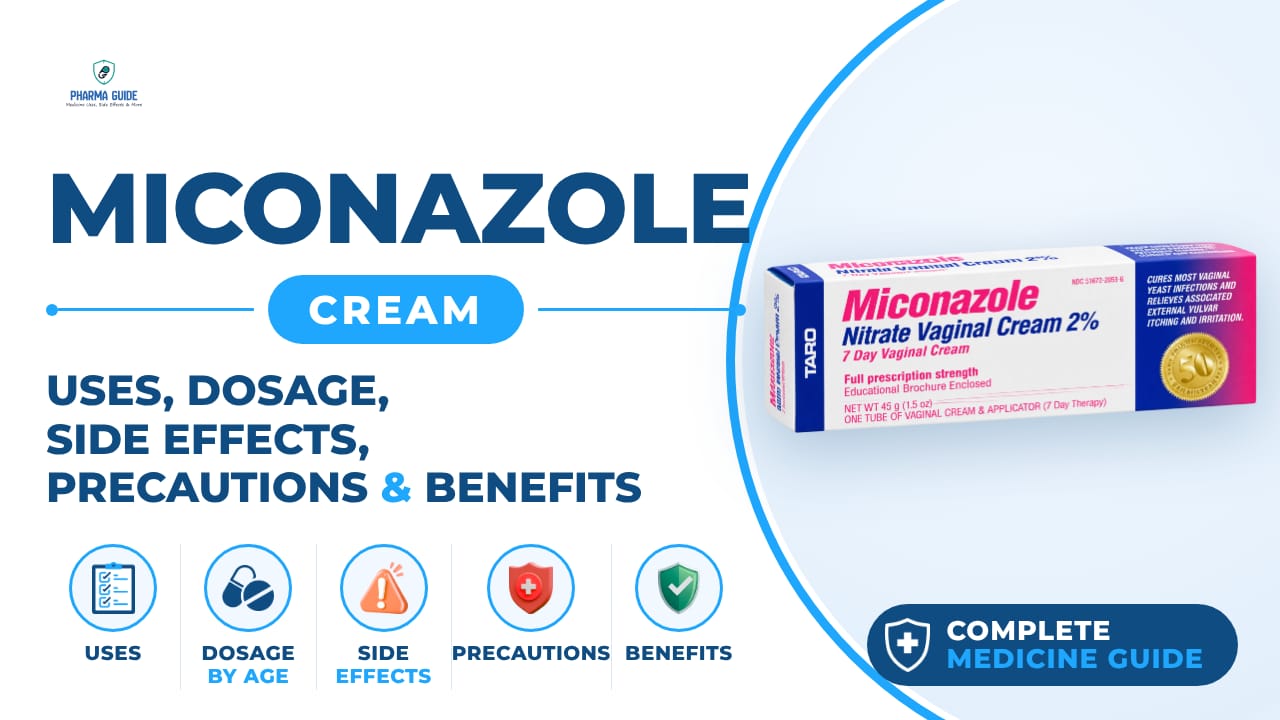
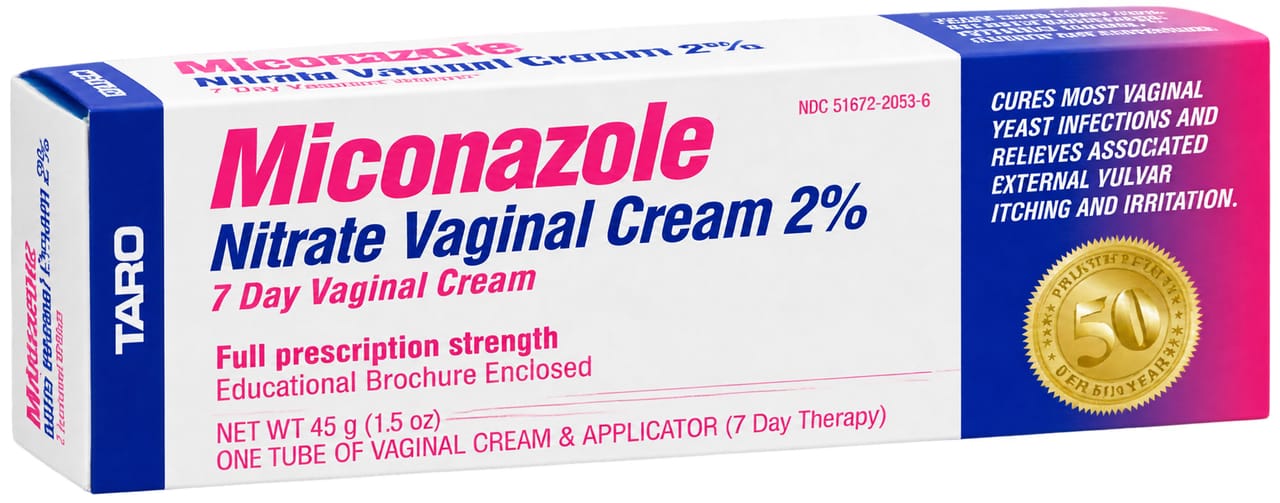
| Generic name | Miconazole nitrate |
|---|---|
| Drug class | Azole antifungal (imidazole class) |
| Forms | Cream, Vaginal cream with applicator, Ointment, Powder, Spray, Liquid solution, Vaginal suppository, Buccal tablet, Oral gel |
Quick overview
Miconazole cream is a topical antifungal medicine (azole/imidazole class) containing miconazole nitrate. It is used to treat fungal skin infections such as athlete's foot, jock itch, and ringworm, and a vaginal form is used for repeat vaginal yeast infections. It works directly on the skin or vaginal area to clear infection and relieve irritating symptoms, with minimal absorption into the bloodstream.
What is Miconazole Cream
Miconazole cream is a topical antifungal medicine used to treat fungal skin infections and, in a vaginal form, repeat vaginal yeast infections. It works directly on the skin or vaginal area to clear up infection and relieve irritating symptoms.
Miconazole Cream uses
- Treats repeat vaginal yeast infections
- Relieves external itching and irritation due to a repeat vaginal yeast infection
- Treats fungal skin infections such as athlete's foot, jock itch, and ringworm
Benefits of Miconazole Cream
- Treats fungal infections and prevents the infection from spreading
- Relieves itching, burning, soreness, and discomfort associated with fungal infections
- Supports the restoration of healthy skin by clearing the infection and allowing the skin to recover
- Provides localised treatment with minimal absorption into the bloodstream
How Miconazole Cream works
It stops fungi from making a substance called ergosterol, which they need for their outer cell wall. Without it, the fungal cell wall breaks down and the fungus dies.
Miconazole Cream dosage
Read the enclosed consumer information leaflet before using this product. For adults and children 12 years of age and over: insert one applicatorful into the vagina at bedtime for 7 nights in a row, or squeeze a small amount of external cream onto your fingertip and gently apply it to the itchy, irritated skin outside the vagina daily for up to 7 days as needed. For children under 12 years of age, ask a doctor.
Do not use tampons, douches, spermicides, or other vaginal products while using this medicine. Do not have vaginal intercourse while using this medicine. Condoms and diaphragms may be damaged by this product and may fail to prevent pregnancy or sexually transmitted diseases.
Wash your hands and clean the affected skin area thoroughly, then dry it completely before applying. Apply a thin layer of the cream to the infected area and the surrounding skin, and gently rub it in until evenly distributed. Wash your hands immediately after application to avoid spreading the infection to other areas of your body or to other people. Do not cover the treated area with tight dressings, bandages, or wraps unless your doctor tells you to. Continue using the medicine for the full recommended treatment period, even if symptoms improve earlier.
| Age group | Dose |
|---|---|
| Under 2 years | Use only if directed by a doctor |
| 2–11 years | Apply a thin layer twice daily, under adult supervision |
| 12–17 years | Apply a thin layer twice daily |
| Adults ≥18 years | Apply a thin layer twice daily |
Available forms and strengths
- Cream
- Vaginal cream with applicator
- Ointment
- Powder
- Spray
- Liquid solution
- Vaginal suppository
- Buccal tablet
- Oral gel
Side effects of Miconazole Cream
Common
- Mild burning or stinging where applied
- Redness or minor skin irritation
- Dryness or peeling of the treated skin
- Itching
- Vaginal irritation or burning
- Headache
- Abdominal cramping
Serious
- Severe skin blistering or open sores
- Intense burning, itching, or swelling that does not go away
- Signs of a severe allergic reaction, such as a rash, hives, swelling of the face, lips, or throat, and difficulty breathing
Warnings and precautions
- This vaginal product is for vaginal use only, and should not be used if you have never had a vaginal yeast infection diagnosed by a doctor.
- Ask a doctor before use if you have vaginal itching and discomfort for the first time, lower abdominal, back or shoulder pain, fever, chills, nausea, vomiting, or foul-smelling vaginal discharge, frequent vaginal yeast infections, or if you have been exposed to HIV.
- Ask a doctor or pharmacist before use if you take the blood-thinning medicine warfarin, since bleeding or bruising may occur.
- Only apply this medicine to affected skin and avoid contact with the eyes, nose, mouth, and other sensitive areas.
- Do not use the product if the packaging is damaged, the seal is broken, or the cream has changed colour or appearance.
- Complete the full course of treatment even if symptoms improve earlier.
- Do not use other creams, ointments, or cosmetics on the same area unless your healthcare provider advises it.
- Do not use this medicine if you have had an allergic reaction to other azole antifungal medicines.
- Pregnancy: Use with caution during pregnancy; talk to a health professional before use.
- Breastfeeding: Use with caution while breastfeeding; your doctor may advise stopping breastfeeding if needed.
- Kidney: Only use if a doctor has prescribed it for you if you have kidney problems.
- Liver: Only use if a doctor has prescribed it for you if you have liver disease.
- Alcohol: It is better to avoid alcohol while using this medicine.
- Driving: This medicine does not affect your ability to drive.
Storage
- Store at room temperature 15°-30°C (59°-86°F). Avoid heat over 30°C or 86°F.
- Do not use if seal over tube opening has been punctured or cannot be seen
- Store in a cool and dry place away from sunlight
When to see a doctor
- Stop use and ask a doctor if your symptoms do not get better in 3 days, last more than 7 days, or if you get a rash or hives, abdominal pain, fever, chills, nausea, vomiting, or foul-smelling vaginal discharge.
- If swallowed, get medical help or contact a poison control center right away.
- Seek emergency medical help right away if you have difficulty breathing or wheezing, swelling of the face, lips, mouth, tongue, or throat, severe skin rash or hives, dizziness or feeling faint, a racing heart, or fever or general ill feeling.
- Consult your doctor if the infection does not improve after two to four weeks of regular use, or if symptoms worsen.
- Stop using this medicine and contact your healthcare provider if your condition worsens, you develop signs of an allergic reaction, you experience severe irritation or discomfort, the infection does not improve after the recommended treatment period, or you develop new or unexpected symptoms.
Alternatives
- Clotrimazole cream
- Econazole cream
- Ketoconazole cream
- Terbinafine cream
Watch the video
FAQs
What is Miconazole Cream used for?
It treats fungal skin infections such as athlete's foot, jock itch, and ringworm, and a vaginal form is used for repeat vaginal yeast infections, relieving external itching and irritation.
How does Miconazole Cream work?
It stops fungi from making ergosterol, a substance needed for their outer cell wall. Without it, the fungal cell wall breaks down and the fungus dies.
How long should I use Miconazole Cream?
For vaginal use, insert one applicatorful at bedtime for 7 nights in a row, or apply external cream daily for up to 7 days as needed. Continue for the full recommended period even if symptoms improve earlier.
Can I have sex while using Miconazole Cream?
No, you should not have vaginal intercourse while using this medicine, and condoms and diaphragms may be damaged by the product and fail to prevent pregnancy or sexually transmitted diseases.
When should I see a doctor while using Miconazole Cream?
Stop use and ask a doctor if symptoms do not improve in 3 days, last more than 7 days, or if you develop a rash, hives, abdominal pain, fever, chills, nausea, vomiting, or foul-smelling vaginal discharge.
General information, not medical advice
Your prescriber and the leaflet in your pack know your situation. This page does not.
- Follow your prescriber and the leaflet
- Don't start, stop, or change a dose on your own
- Doses and warnings differ by country and product
Sources
- Central Texas Community Health Centers - Miconazole Nitrate label (DailyMed/FDA OTC label), Revised 4/2016
- Kaya.in - Miconazole Nitrate Uses, Benefits & Side Effects | Complete Antifungal Guide
- Apollo Pharmacy - Miconazole salt information page
Video
Related medicines

Injectafer Injection: Uses, Dosage, Side Effects, Precautions and Alternates
Iron products
Injectafer (ferric carboxymaltose) treats iron deficiency anemia and heart failure-related iron deficiency via IV. Learn uses, dosage, side effects, and

Gliclazide Tablet: Uses, Dosage, Side Effects, Precautions and Alternates
Sulfonylurea (hypoglycemic/antidiabetic agent)
Gliclazide Tablet is a sulfonylurea for type 2 diabetes that boosts insulin release. Learn about dosage, side effects, warnings, and precautions.