
Safety
General information, not medical advice
Your prescriber and the leaflet in your pack know your situation. This page does not.
- Follow your prescriber and the leaflet
- Don't start, stop, or change a dose on your own
- Doses and warnings differ by country and product
Micro-K Capsule: Uses, Dosage, Side Effects, Precautions and Alternates
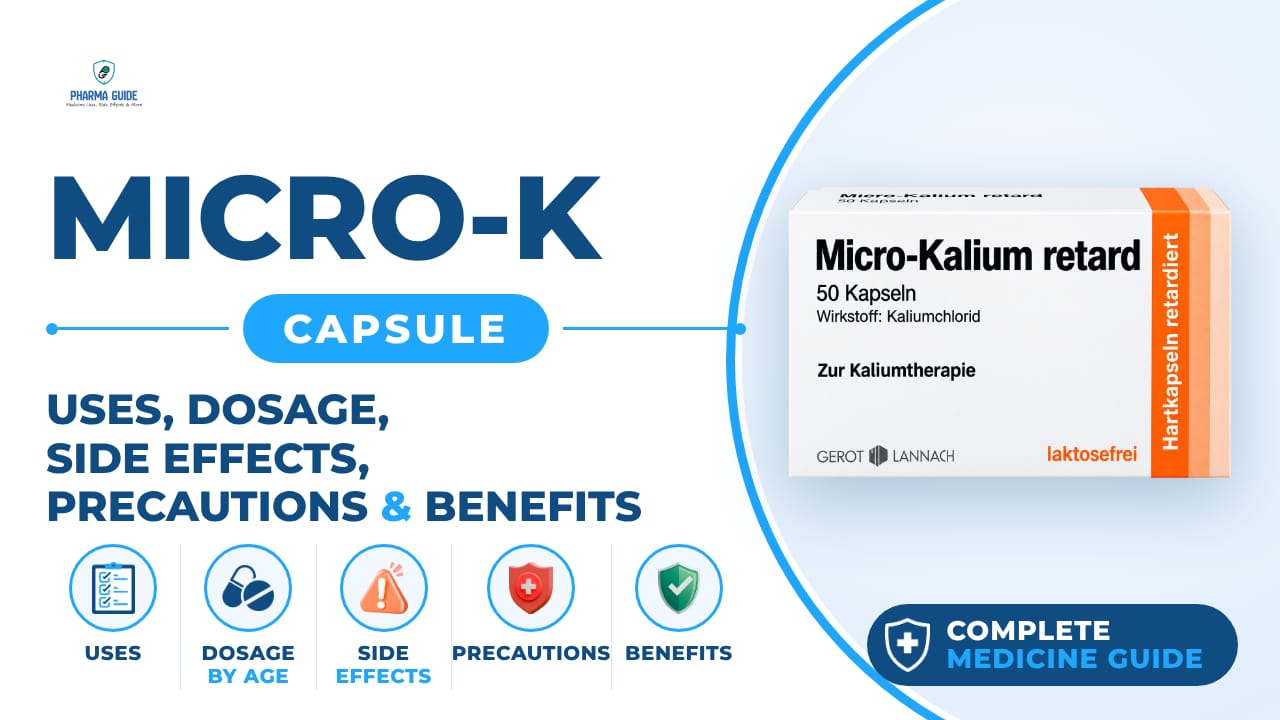
| Generic name | potassium chloride |
|---|---|
| Drug class | Minerals and electrolytes |
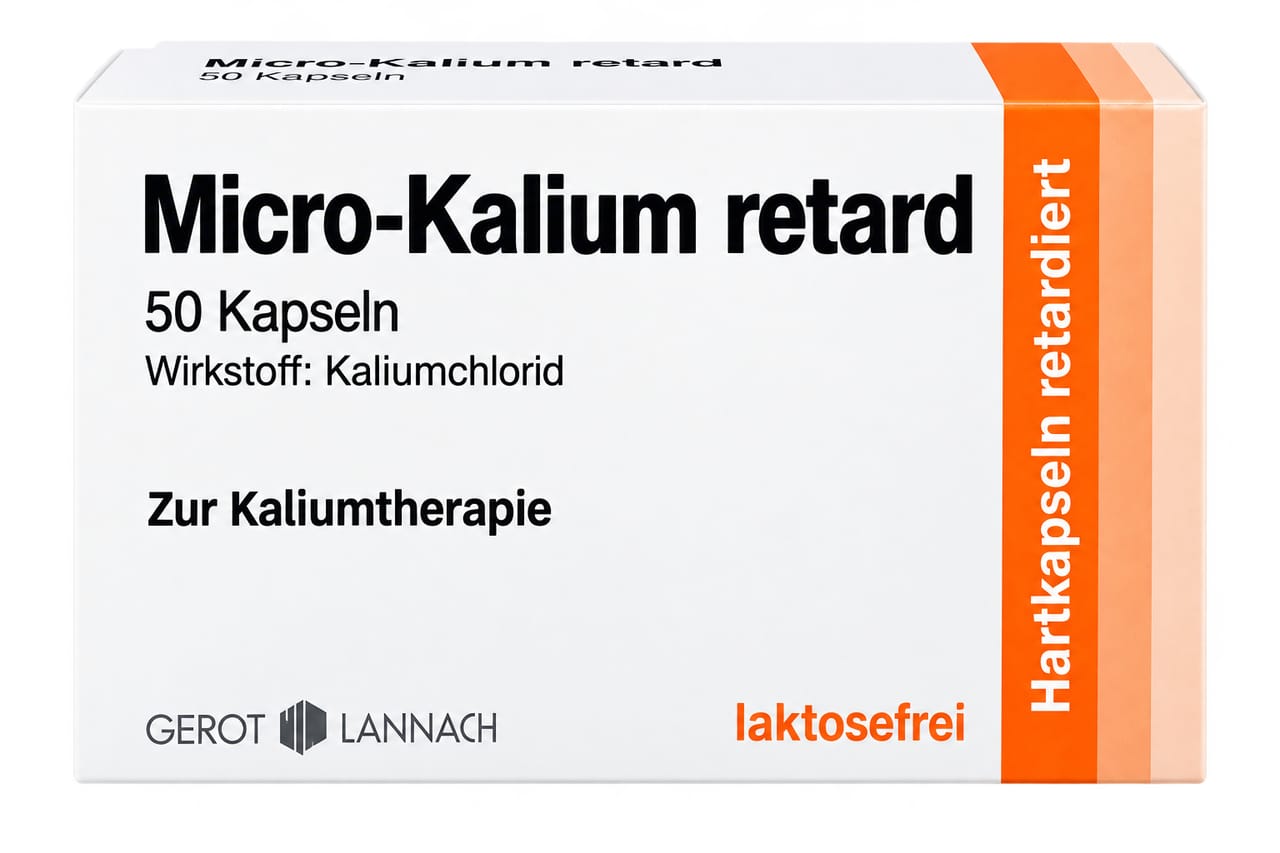
| Forms | capsule, extended release |
Quick overview
Micro-K Capsule (potassium chloride) is a mineral and electrolyte supplement used to treat or prevent low blood potassium levels (hypokalemia). It contains microencapsulated potassium chloride in an extended-release capsule that releases potassium gradually. The original brand has been discontinued in the U.S., but generic versions may be available. It is used under medical supervision due to risks associated with high or low potassium levels.
What is Micro-K Capsule
Micro-K is a mineral supplement used to treat or prevent low levels of potassium in the blood (hypokalemia). It contains microencapsulated potassium chloride in an extended-release capsule. The brand name Micro-K has been discontinued in the U.S., but generic versions may be available.
Micro-K Capsule uses
- Treatment of low blood potassium (hypokalemia) with or without metabolic alkalosis
- Treatment of hypokalemia related to digitalis intoxication
- Treatment of hypokalemic familial periodic paralysis
- Prevention of hypokalemia in patients at particular risk, such as those taking digitalis, with significant heart rhythm problems, liver cirrhosis with fluid buildup, certain hormone excess conditions, kidney conditions that cause potassium loss, and certain diarrheal conditions
- Supplementation in patients on diuretics who develop low potassium despite dietary changes
Benefits of Micro-K Capsule
- Helps prevent and treat low potassium levels (hypokalemia).
- Replaces potassium lost through diuretics, vomiting, diarrhea, or certain medical conditions.
- Supports a normal heart rhythm and cardiac function.
- Helps maintain proper muscle and nerve function.
- Supports normal fluid and electrolyte balance in the body.
- Its extended-release potassium chloride formulation releases potassium gradually over time.
How Micro-K Capsule works
Micro-K releases potassium chloride slowly over eight to ten hours from tiny coated particles. The coating lets fluid in gradually, dissolving the potassium chloride inside so it diffuses out slowly. This controlled release is designed to avoid too much potassium building up in one spot in the stomach or intestines. Potassium itself is an important mineral needed for nerve signals, muscle contractions (including the heart), and normal kidney function.
Micro-K Capsule dosage
Take by mouth as directed by your doctor. Take each dose with a meal and a full glass of water or other suitable liquid to help prevent stomach upset. Do not lie down for at least 10 minutes after taking this medication. Swallow the capsules whole; do not crush, chew, or suck on them. If you have trouble swallowing capsules or they seem to stick in your throat, tell your doctor.
If you have difficulty swallowing capsules, the contents may be sprinkled onto a spoonful of cool, soft food such as applesauce or pudding; swallow the mixture right away without chewing, then drink a glass of cool water or juice afterward. Do not prepare the food/medicine mixture ahead of time or store it for later use; the food should not be hot.
Take the medicine regularly and at the same time each day to get the most benefit. Do not increase your dose or take it more often than prescribed. If you miss a dose, take it as soon as you remember; if it is close to the time of your next dose, skip the missed dose and continue your regular schedule; do not double the dose.
| Age group | Dose |
|---|---|
| Under 18 years | Dose is individualized according to body weight and serum potassium; medical supervision required |
| 18–64 years – Prevention | Typically 20 mEq/day, often given in divided doses |
| 18–64 years – Treatment | Typically 40–100 mEq/day in divided doses, adjusted according to potassium levels |
| 65+ years | Use cautiously and individualize according to kidney function and serum potassium |
Available forms and strengths
- Capsule, extended release
Side effects of Micro-K Capsule
Common
- Nausea
- Vomiting
- Upset stomach
- Gas (flatulence)
- Diarrhea
- Abdominal discomfort
- Tingling in hands or feet
- An empty capsule shell may appear in your stool, which is harmless because the medicine has already been absorbed
- Skin rash (reported rarely)
Serious
- Difficult or painful swallowing
- Feeling as if the capsule is stuck in your throat
- Vomit that looks like coffee grounds
- Stomach or abdominal pain
- Black or tarry stools
- Signs of a serious allergic reaction: rash, itching or swelling (especially of the face, tongue, or throat), severe dizziness, trouble breathing
- Signs of high blood potassium (hyperkalemia), which can be serious and sometimes has no symptoms other than heart rhythm changes seen on an ECG
- Signs of low blood potassium such as irregular heartbeat or muscle weakness/cramps if the medicine isn't working
Warnings and precautions
- It is unlikely that potassium supplementation that does not cause high potassium levels would harm an unborn baby, but animal studies have not been done with this product. Tell your doctor if you are pregnant or plan to become pregnant.
- Potassium is a normal part of breast milk, and taking this supplement is not expected to change potassium levels in breast milk much, as long as body potassium is not too high. Consult your doctor before breastfeeding.
- This medicine is removed from the body mainly by the kidneys, so people with kidney problems are at higher risk of dangerously high potassium levels. Regular blood potassium checks are recommended, especially with kidney insufficiency or diabetic kidney disease, and doses need careful monitoring and adjustment.
- People with liver disease (such as cirrhosis with fluid buildup) may be at particular risk if low potassium develops, and elderly patients with reduced liver function may need cautious dose selection.
- This medicine can cause dangerously high blood potassium (hyperkalemia) and cardiac arrest, especially in people whose bodies cannot get rid of potassium normally, such as those with kidney disease. High potassium can develop quickly and may cause no symptoms.
- Do not take this medicine together with a potassium-sparing water pill (such as spironolactone, triamterene, or amiloride), because combining them can cause severely high potassium levels.
- ACE inhibitor medicines (such as captopril or enalapril) can cause the body to hold onto more potassium, so this supplement should only be used with ACE inhibitors under close medical monitoring.
- Solid potassium chloride capsules can cause ulcers, bleeding, blockage, or even a hole (perforation) in the stomach or intestines. Stop taking the medicine right away and get medical attention if you have severe vomiting, stomach pain, bloating, or signs of gastrointestinal bleeding.
- This medicine should not be used by people with high blood potassium (hyperkalemia), because it can cause the heart to stop. Certain conditions—such as kidney failure, severe acidosis, dehydration, extensive tissue injury like severe burns, adrenal gland problems, or taking a potassium-sparing diuretic—can lead to high potassium.
- This medicine should not be used by anyone who has a condition that delays or blocks capsules from passing through the digestive tract, including certain digestive nerve/muscle disorders or use of medicines with strong drying (anticholinergic) effects.
- In certain heart patients with an enlarged heart chamber pressing on the esophagus, this type of controlled-release potassium capsule has caused ulcers in the esophagus; a liquid form should be used instead in these patients.
- Do not increase your dose or take it more often than your doctor prescribes.
Storage
- Store at 20–25°C (68–77°F) at controlled room temperature.
- Keep in a cool, dry place away from excessive heat.
- Protect capsules from moisture and direct sunlight.
- Keep in the original, tightly closed container until use.
- Avoid storing in bathrooms or other hot and humid areas.
- Keep out of reach and sight of children.
When to see a doctor
- Tell your doctor right away if you have difficult or painful swallowing, or if it feels like the capsule is stuck in your throat.
- Get medical help right away if you vomit material that looks like coffee grounds, have stomach or abdominal pain, or have black or tarry stools — these can be signs of serious bleeding.
- Get medical help right away if you notice signs of a serious allergic reaction, such as rash, itching or swelling (especially of the face, tongue, or throat), severe dizziness, or trouble breathing.
- Contact your doctor at once if you notice tarry stools or any other sign of bleeding in your digestive tract.
- If someone has overdosed and has serious symptoms such as passing out or trouble breathing, get emergency medical help immediately. Otherwise, contact your local poison control center for guidance.
- Tell your doctor if your condition does not improve or if you notice symptoms of low blood potassium, such as an irregular heartbeat or muscle weakness/cramps.
Alternatives
- Potassium Chloride Effervescent Tablets
- Potassium Chloride Powder
- Potassium Chloride Oral Solution
- Slow-K
- Klor-Con
Watch the video
FAQs
What is Micro-K Capsule used for?
It treats or prevents low blood potassium (hypokalemia), including cases linked to digitalis intoxication, hypokalemic familial periodic paralysis, and potassium loss from diuretics or certain medical conditions.
How should Micro-K Capsule be taken?
Take it by mouth with a meal and a full glass of water, swallowing capsules whole without crushing or chewing. Do not lie down for at least 10 minutes after taking it, and take it regularly at the same time each day.
What is the typical dosage of Micro-K Capsule for adults?
For adults 18–64 years, prevention typically involves 20 mEq/day in divided doses, while treatment typically involves 40–100 mEq/day in divided doses, adjusted according to potassium levels.
What are the serious side effects of Micro-K Capsule?
Serious effects include difficult or painful swallowing, vomit resembling coffee grounds, stomach pain, black or tarry stools, signs of allergic reaction, and signs of high or low blood potassium.
Can Micro-K Capsule be taken with other medicines?
It should not be combined with potassium-sparing diuretics like spironolactone, triamterene, or amiloride due to risk of severely high potassium, and should be used cautiously with ACE inhibitors under medical supervision.
General information, not medical advice
Your prescriber and the leaflet in your pack know your situation. This page does not.
- Follow your prescriber and the leaflet
- Don't start, stop, or change a dose on your own
- Doses and warnings differ by country and product
Sources
Video
Related medicines
Magnesium Sulfate Injection: Uses, Dosage, Side Effects, Precautions and Alternates
Minerals and electrolytes
Magnesium Sulfate Injection treats low magnesium, prevents eclampsia seizures, and lowers high potassium. Learn uses, dosage, side effects, and precautions.
Pedialyte Liquid: Uses, Dosage, Side Effects, Precautions and Alternates
minerals and electrolytes
Pedialyte Liquid replaces fluids and electrolytes lost from diarrhea, vomiting, or sweating. Learn uses, dosage by age, side effects, and warnings.