
Safety
General information, not medical advice
Your prescriber and the leaflet in your pack know your situation. This page does not.
- Follow your prescriber and the leaflet
- Don't start, stop, or change a dose on your own
- Doses and warnings differ by country and product
Migraleve Tablet: Uses, Dosage, Side Effects, Precautions and Alternates
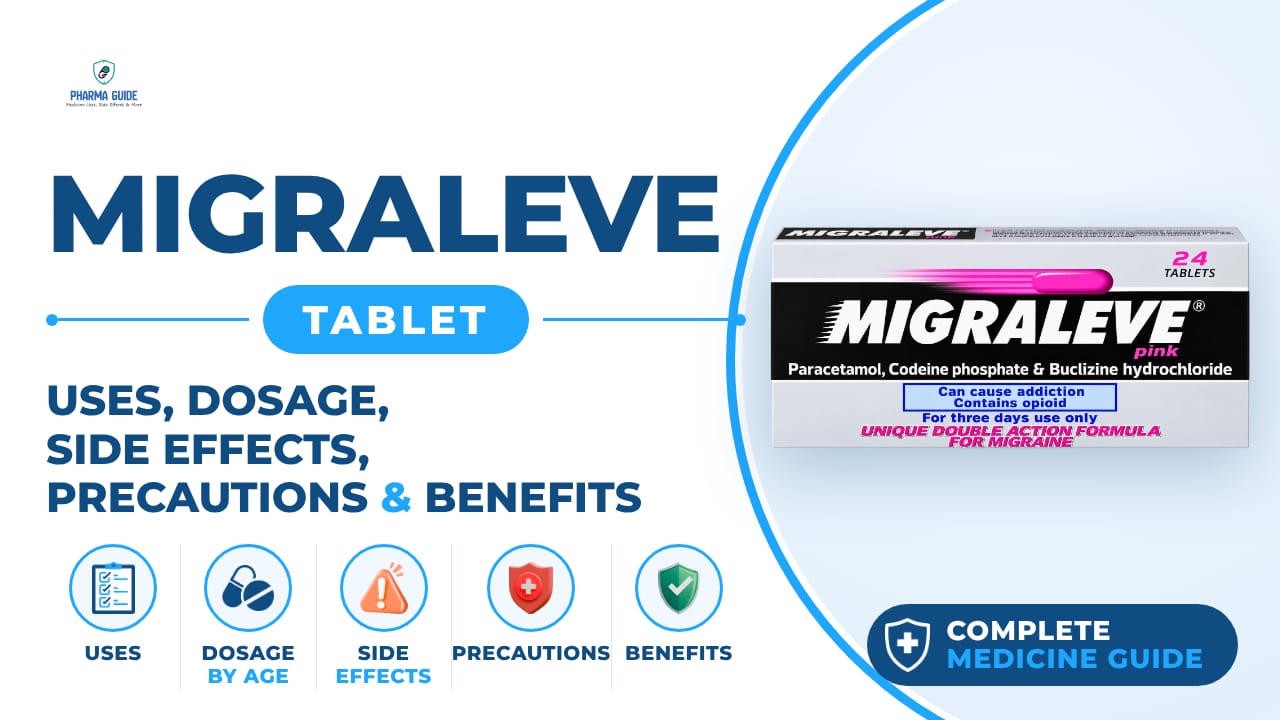
| Generic name | Paracetamol, codeine phosphate and buclizine (Migraleve Pink); paracetamol and codeine phosphate (Migraleve Yellow) |
|---|---|
| Drug class | Combination analgesic / opioid-containing antimigraine medicine |
| Forms | Tablet |
Quick overview
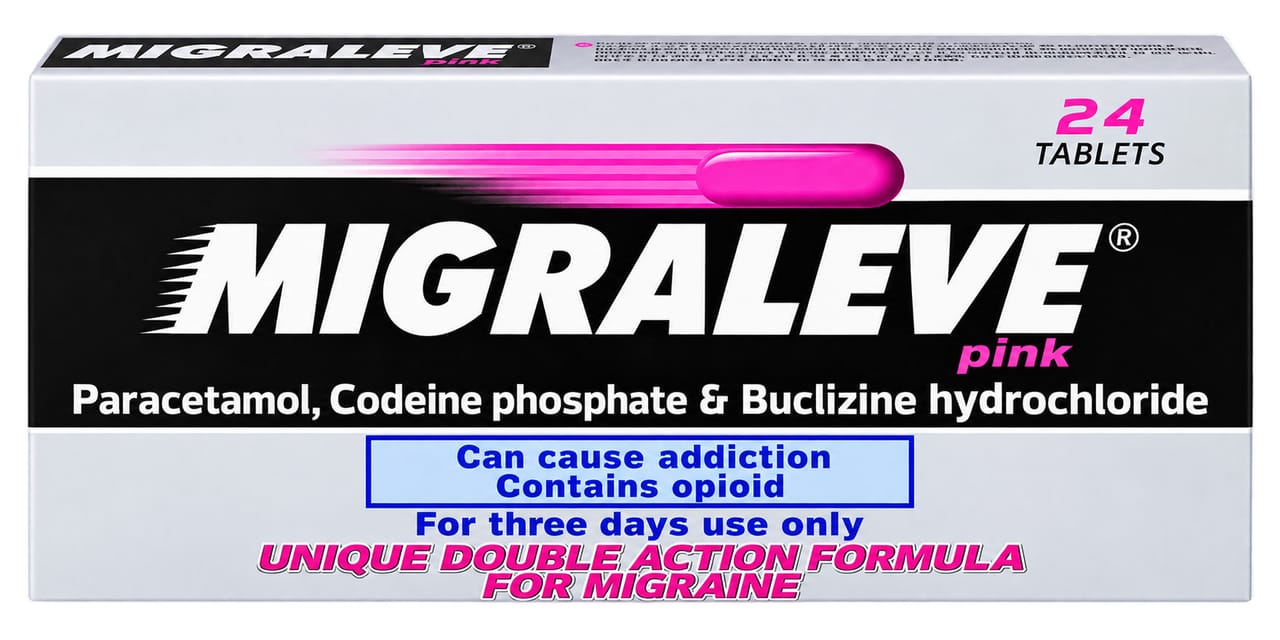
Migraleve Tablet is a combination medicine used to treat migraine attacks. It comes as two types of tablets, Pink and Yellow, that are used together to tackle different stages of a migraine. Migraleve Pink contains paracetamol, codeine phosphate and buclizine, while Migraleve Yellow contains paracetamol and codeine phosphate. It belongs to the combination analgesic / opioid-containing antimigraine medicine class.
What is Migraleve Tablet
Migraleve is a medicine used to treat migraine attacks. It comes as two types of tablets, Pink and Yellow, that are used together to tackle different stages of a migraine.
Migraleve Tablet uses
- Treating migraine attacks
- Relieving migraine head pain
- Relieving nausea and vomiting caused by migraines (Migraleve Pink)
Benefits of Migraleve Tablet
- Helps relieve moderate migraine headache pain when simpler painkillers are not enough.
- Helps reduce pain and discomfort during a migraine attack.
- Migraleve Pink also helps relieve nausea and vomiting associated with migraine.
- When taken at the first sign of migraine, the Pink tablets may help prevent the attack from developing further.
- Migraleve Yellow helps provide continued relief from migraine pain after the initial Pink dose.
- Combines paracetamol and codeine for pain relief, while Pink tablets also contain buclizine for nausea and vomiting.
How Migraleve Tablet works
Paracetamol reduces pain signals in the brain, while codeine is a mild opioid that works on opioid receptors in the brain and nervous system to add extra pain relief. In Migraleve Pink, buclizine also helps ease nausea and vomiting.
Migraleve Tablet dosage
Always start with a Pink tablet at the first sign of a migraine. Swallow tablets with a glass of water. Take a Yellow tablet dose 4 hours after the Pink dose, then continue with Yellow tablets every 4 hours as needed. Do not take this medicine less than four hours after taking other painkillers. Do not take anything else containing paracetamol while taking this medicine. Do not use for more than 3 days without talking to a doctor. This medicine is not recommended for children under 12 years old. If a dose is missed, take the next scheduled dose as needed; do not take a double dose to make up for a missed one.
| Age group | Dose |
|---|---|
| Under 12 years | Do not use because it contains codeine |
| 12–15 years | At migraine onset: 1 Migraleve Pink tablet; if needed, continue with 1 Migraleve Yellow tablet every 4 hours |
| 16–17 years | At migraine onset: 2 Migraleve Pink tablets; if needed, 2 Migraleve Yellow tablets every 4 hours |
| 18–64 years | At migraine onset: 2 Migraleve Pink tablets; if needed, 2 Migraleve Yellow tablets every 4 hours |
| 65+ years | Use cautiously; a lower dose may be appropriate, particularly with frailty or liver/kidney impairment |
Available forms and strengths
- Tablet
Side effects of Migraleve Tablet
Common
- Feeling sick
- Being sick
- Sleepiness
- Headache
- Reddening or flushing of the face
- Constipation
- Dry mouth
- Dizziness
- Increased sweating
- Feeling happy
- Rash
Serious
- Signs of a severe allergic reaction such as swelling of the face and throat, skin rash, breathing difficulties, or loss of consciousness
- Becoming unusually tired, unexplained bruising or bleeding, or getting more infections than usual
- Skin reddening, blisters and rash (serious skin reactions)
- Confusion, shallow breathing, or extreme sleepiness (signs of codeine toxicity)
- Addiction or withdrawal symptoms such as tremor, sweating, increased heart rate, feeling or being sick
- Difficulty passing urine
- Problems with movement or coordination
- Kidney problems
- Liver problems
- Breathing difficulty or thickened mucus
- Fits
- Acute inflammation of the pancreas in people who have had their gall bladder removed
- Adrenal glands not working properly, causing weakness, tiredness, weight loss, or low blood pressure
Warnings and precautions
- Do not take this medicine if you are pregnant. Ask your doctor or pharmacist for advice before taking any new medicine if you are pregnant or think you might be.
- Do not take this medicine while breastfeeding, because the codeine in it can pass into breast milk and harm the baby.
- Talk to your doctor or pharmacist before taking this medicine if you have kidney disease.
- Talk to your doctor or pharmacist before taking this medicine if you have liver disease or alcoholic liver disease.
- Avoid drinking alcohol while taking this medicine, as it raises the risk of liver damage with paracetamol and can make the drowsiness from codeine worse.
- This medicine can make you feel sleepy or dizzy. Do not drive or use machinery until you know how it affects you.
- This medicine can cause addiction and should only be used for three days at a time.
- This medicine contains paracetamol, so do not take any other medicine that also contains paracetamol.
- Do not take this medicine if your migraines have not been diagnosed by a doctor, if you are under 18 and have had your tonsils or adenoids removed for obstructive sleep apnoea, if you have recently developed shallow breathing, if you have a bowel obstruction or a bowel that does not work properly, if you have a head injury or raised pressure in the skull, or if you know you metabolise codeine into morphine very rapidly.
- Talk to your doctor or pharmacist before use if you have closed-angle glaucoma, difficulty passing urine, prostate disease, or a history of fits.
- Do not take this medicine less than four hours after taking other painkillers, and do not take more than the stated dose.
Storage
- Store below 25°C (77°F) or as directed on the product packaging.
- Keep in a cool, dry place away from excessive heat.
- Protect tablets from moisture and direct sunlight.
- Keep tablets in their original packaging until ready to use.
- Avoid storing in bathrooms or other hot and humid areas.
- Keep securely stored and out of reach and sight of children.
When to see a doctor
Seek medical advice if your migraine worsens, becomes unusually frequent, or does not improve, or if you develop marked drowsiness, confusion, persistent vomiting, constipation, or difficulty urinating.
Get urgent medical help for slow or difficult breathing, extreme sleepiness, loss of consciousness, severe allergic reaction, or suspected overdose. Seek immediate medical attention after taking too much Migraleve even if you feel well, because paracetamol overdose may cause delayed liver damage.
Alternatives
- Sumatriptan
- Aspirin
- Naproxen
- Ibuprofen
- Paracetamol (Acetaminophen)
Watch the video
FAQs
What is the difference between Migraleve Pink and Yellow tablets?
Migraleve Pink contains paracetamol, codeine phosphate and buclizine, while Migraleve Yellow contains only paracetamol and codeine phosphate. Pink is taken first at the start of a migraine to relieve pain and nausea, then Yellow tablets are taken every 4 hours for continued pain relief.
How do you take Migraleve Tablet for a migraine?
Take a Pink tablet at the first sign of migraine, then a Yellow tablet dose 4 hours later, continuing with Yellow tablets every 4 hours as needed. Do not use for more than 3 days without consulting a doctor.
Can children take Migraleve Tablet?
No, Migraleve is not recommended for children under 12 years old because it contains codeine.
What are the common side effects of Migraleve Tablet?
Common side effects include feeling or being sick, sleepiness, headache, facial flushing, constipation, dry mouth, dizziness, increased sweating, feeling happy, and rash.
Is it safe to drink alcohol while taking Migraleve Tablet?
No, alcohol should be avoided while taking Migraleve as it increases the risk of liver damage from paracetamol and can worsen drowsiness caused by codeine.
General information, not medical advice
Your prescriber and the leaflet in your pack know your situation. This page does not.
- Follow your prescriber and the leaflet
- Don't start, stop, or change a dose on your own
- Doses and warnings differ by country and product
Sources
Video
Related medicines

Injectafer Injection: Uses, Dosage, Side Effects, Precautions and Alternates
Iron products
Injectafer (ferric carboxymaltose) treats iron deficiency anemia and heart failure-related iron deficiency via IV. Learn uses, dosage, side effects, and

Gliclazide Tablet: Uses, Dosage, Side Effects, Precautions and Alternates
Sulfonylurea (hypoglycemic/antidiabetic agent)
Gliclazide Tablet is a sulfonylurea for type 2 diabetes that boosts insulin release. Learn about dosage, side effects, warnings, and precautions.