
Safety
General information, not medical advice
Your prescriber and the leaflet in your pack know your situation. This page does not.
- Follow your prescriber and the leaflet
- Don't start, stop, or change a dose on your own
- Doses and warnings differ by country and product
Milrinone Injection: Uses, Dosage, Side Effects, Precautions and Alternates
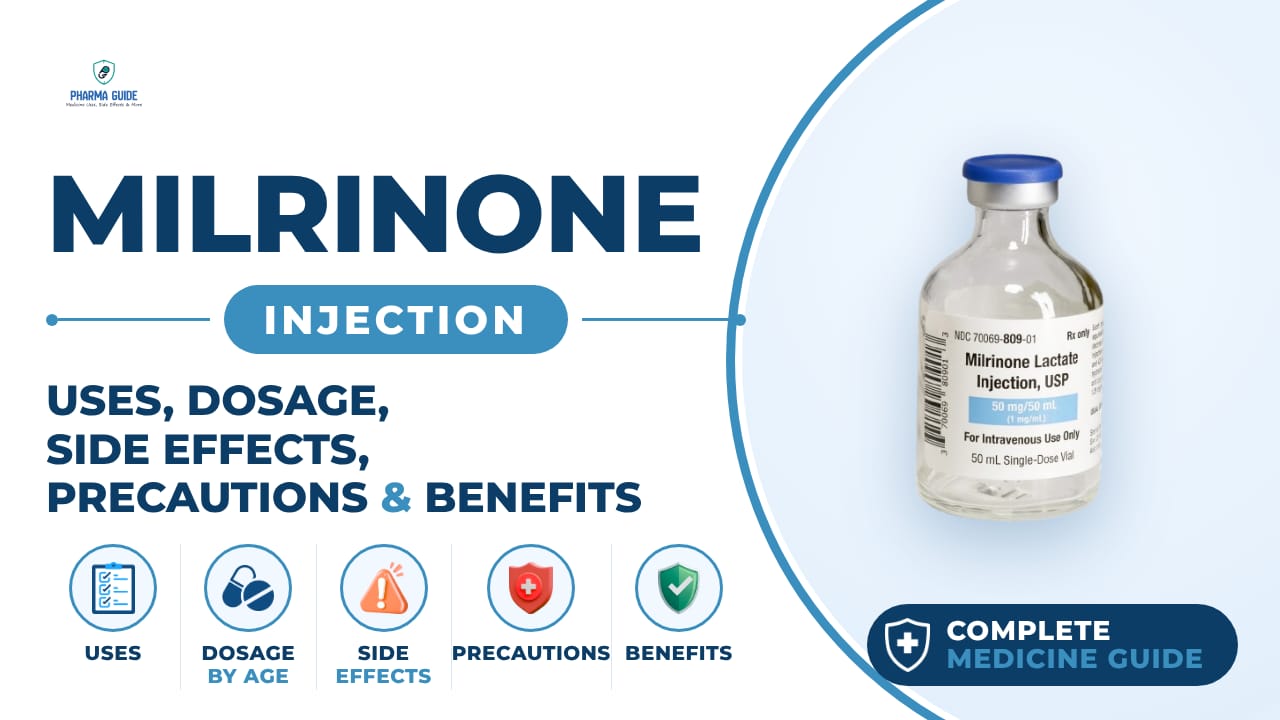
| Generic name | Milrinone lactate |
|---|---|
| Drug class | Bipyridine inotropic/vasodilator agent with phosphodiesterase inhibitor activity |
| Forms | Injection |
Quick overview
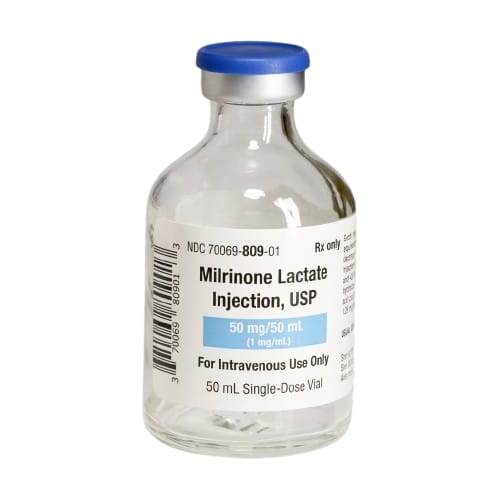
Milrinone Injection (milrinone lactate) is a bipyridine inotropic/vasodilator agent with phosphodiesterase inhibitor activity. It is given by injection into a vein to help a weak heart pump blood better for a short period of time. It is used for short-term treatment of acute decompensated heart failure, severe congestive heart failure, and to help maintain cardiac output after heart surgery. Treatment requires close monitoring and is not intended for long-term use.
What is Milrinone Injection
Milrinone is an injectable heart medicine that is distinct from digitalis glycosides or catecholamines. It is given by injection into a vein to help a weak heart pump blood better for a short period of time.
Milrinone Injection uses
- Short-term intravenous treatment of acute decompensated heart failure
- Short-term treatment of severe congestive heart failure
- Helps maintain the output of blood from the heart in patients following heart surgery
Benefits of Milrinone Injection
- Improves the efficiency with which the heart pumps blood around the body
- Produces improvements in hemodynamic function (better blood flow) usually within 5 to 15 minutes of starting treatment
- Improves left ventricular diastolic relaxation (how well the heart relaxes between beats)
How Milrinone Injection works
Milrinone works by increasing the force of your heart's contractions and by relaxing (widening) your blood vessels so blood can flow more easily, without acting like digitalis drugs or adrenaline-type drugs.
Milrinone Injection dosage
Milrinone is given as an injection into a vein, usually in a hospital setting. First an initial dose is given slowly over about 10 minutes. This is followed by a continuous infusion (drip) into the vein, which may last up to 48 hours. It is not recommended for use in children. Your doctor will adjust how it is given based on how severe your condition is and how you respond. Intravenous drug products should be inspected visually and should not be used if particulate matter or discoloration is present.
Use exactly as prescribed by your doctor or pharmacist.
Available forms and strengths
- Injection
Side effects of Milrinone Injection
Common
- Headaches, usually mild to moderate
- Skin rashes
- Low blood pressure (hypotension)
Serious
- Irregular heartbeat (ventricular or supraventricular arrhythmias, including nonsustained ventricular tachycardia)
- Chest pain or angina
- Light-headedness or dizziness
- Decreased amount of urine, swelling, weight gain, tiredness, or seizures (possible kidney problems)
- Yellowing of skin or eyes, dark urine, pain in the upper right side of the abdomen (possible liver problems)
- Rapid breathing and rapid heartbeat in infants
- Bronchospasm and anaphylactic shock (rare)
- Torsades de pointes (rare)
- Thrombocytopenia
Warnings and precautions
- This medicine has not been shown to be safe or effective for treating heart failure for longer than 48 hours. Long-term use has been linked to more hospital stays and deaths.
- This medicine can cause an increased rate of irregular heartbeats, including a fast heart rhythm from the lower chambers of the heart. Long-term use by mouth has been linked to a higher risk of sudden death, so patients must have their heart rhythm continuously monitored during treatment.
- This medicine should not be used in people with severe aortic or pulmonary valve blockages instead of having surgery to fix the blockage.
- A chemical reaction occurs if furosemide is injected into the same IV line as this medicine, causing a precipitate (solid particles) to form. These two medicines should never be given through the same line.
- This medicine should not be used in people who are allergic to it.
- This medicine should not be used during pregnancy unless the doctor and patient have discussed the risks and benefits, since there are no well-controlled studies in pregnant women.
- Caution should be used when giving this medicine to breastfeeding women because it is not known if it passes into breast milk.
- Tell your doctor if you have kidney disease, since the dose may need to be adjusted because impaired kidneys can cause the drug to stay in the body longer.
- Alcohol is not appropriate during acute severe heart failure requiring IV milrinone.
- It is not known how this medicine affects your ability to drive or use machinery. Ask your doctor when it is safe to return to driving or operating machinery.
Storage
- Store at 20° to 25°C (68° to 77°F) [See USP Controlled Room Temperature]. Avoid freezing.
- Exposure of pharmaceutical products to heat should be minimized. Avoid excessive heat.
- Milrinone-Baxter should be stored below 30°C. Do not freeze.
- For single use in one patient on one occasion only. Discard any remaining residue.
- Keep out of the reach and sight of children.
- Do not use this medicine after the expiry date.
When to see a doctor
- Call your doctor right away or go to the nearest hospital emergency department if you notice an irregular heartbeat, low blood pressure, light-headedness, dizziness, or chest pain.
- Get urgent medical help if you notice decreased urine, swelling, weight gain, tiredness, or seizures, which may be signs of kidney problems.
- Get urgent medical help if you notice yellowing of the skin or eyes, dark urine, or pain in the upper right side of your abdomen, which may be signs of liver problems.
- If too much medicine is given, you may develop low blood pressure. Contact your doctor or go to the Emergency Department right away, even if you feel fine.
Alternatives
- Dobutamine
- Dopamine in selected settings
- Levosimendan where available
Watch the video
FAQs
What is Milrinone Injection used for?
It is used for short-term intravenous treatment of acute decompensated heart failure, severe congestive heart failure, and to help maintain cardiac output after heart surgery.
How does Milrinone Injection work?
It increases the force of the heart's contractions and relaxes blood vessels so blood can flow more easily, without acting like digitalis drugs or adrenaline-type drugs.
How long can Milrinone Injection be used?
It has not been shown to be safe or effective for treating heart failure for longer than 48 hours, and long-term use has been linked to more hospital stays and deaths.
What are the serious side effects of Milrinone Injection?
Serious side effects include irregular heartbeat, chest pain, light-headedness, dizziness, possible kidney or liver problems, rapid breathing and heartbeat in infants, and rare reactions like bronchospasm, anaphylactic shock, torsades de pointes, and thrombocytopenia.
Can Milrinone be given with furosemide in the same IV line?
No, a chemical reaction occurs if furosemide is injected into the same IV line as milrinone, causing a precipitate to form, so these two medicines should never be given through the same line.
General information, not medical advice
Your prescriber and the leaflet in your pack know your situation. This page does not.
- Follow your prescriber and the leaflet
- Don't start, stop, or change a dose on your own
- Doses and warnings differ by country and product
Sources
Video
Related medicines

Injectafer Injection: Uses, Dosage, Side Effects, Precautions and Alternates
Iron products
Injectafer (ferric carboxymaltose) treats iron deficiency anemia and heart failure-related iron deficiency via IV. Learn uses, dosage, side effects, and

Gliclazide Tablet: Uses, Dosage, Side Effects, Precautions and Alternates
Sulfonylurea (hypoglycemic/antidiabetic agent)
Gliclazide Tablet is a sulfonylurea for type 2 diabetes that boosts insulin release. Learn about dosage, side effects, warnings, and precautions.