
Safety
General information, not medical advice
Your prescriber and the leaflet in your pack know your situation. This page does not.
- Follow your prescriber and the leaflet
- Don't start, stop, or change a dose on your own
- Doses and warnings differ by country and product
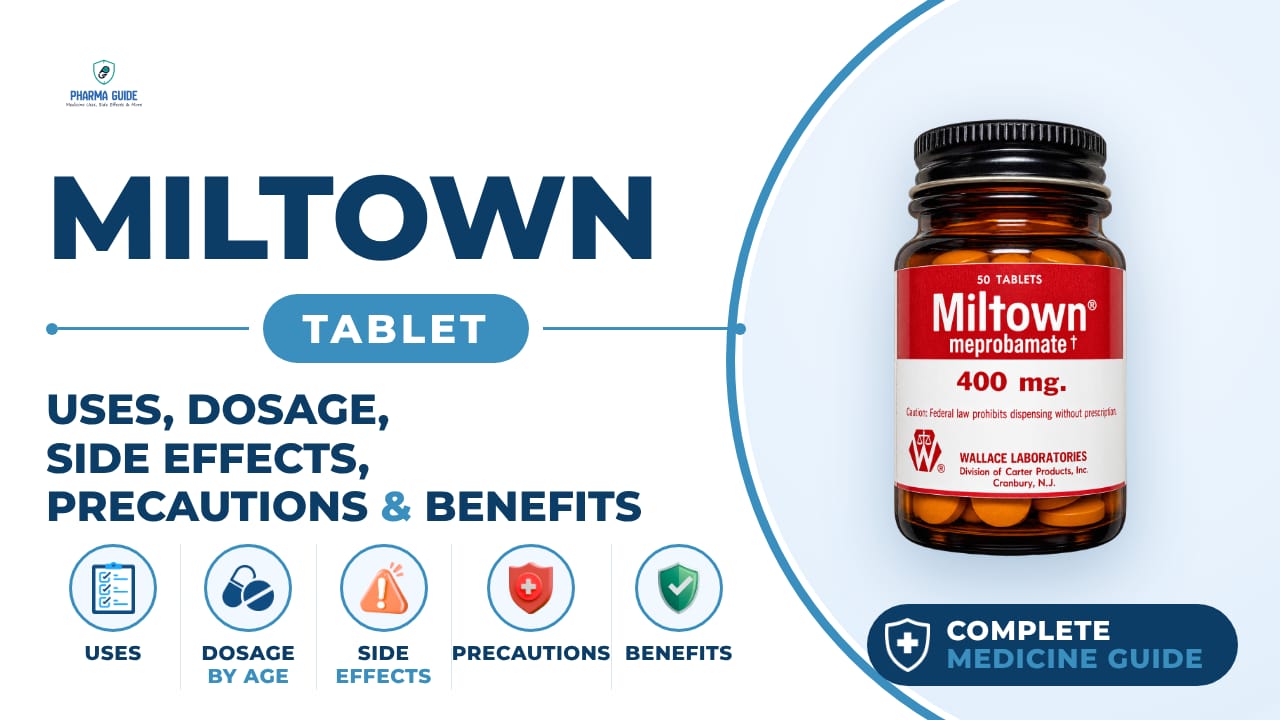
Miltown Tablet: Uses, Dosage, Side Effects, Precautions and Alternates
| Generic name | meprobamate |
|---|---|
| Drug class | Miscellaneous anxiolytics, sedatives and hypnotics (carbamate derivative) |
| Forms | Tablet |
Quick overview
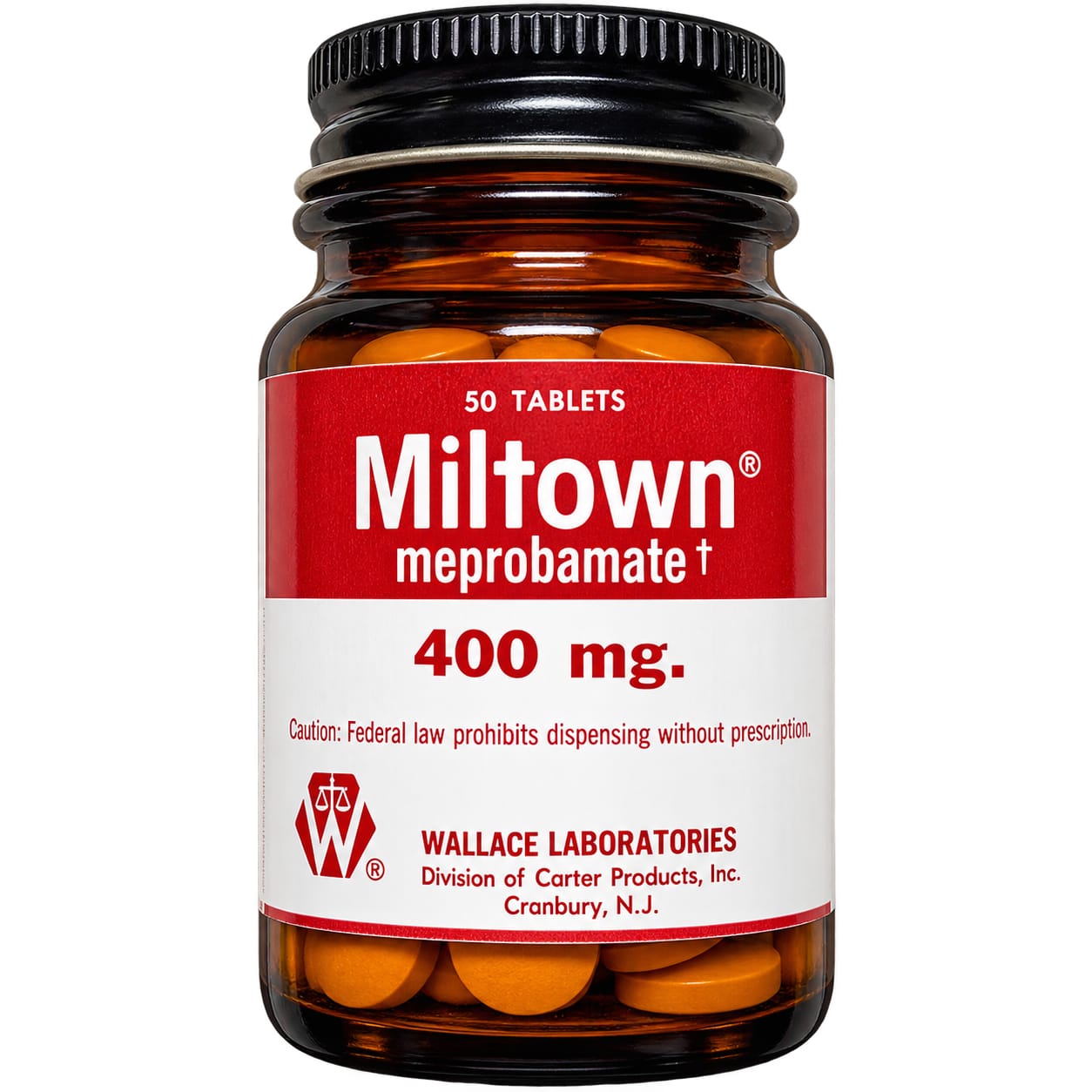
Miltown is a brand name for meprobamate, a prescription medicine that slows down activity in the brain and nervous system. It is used as an antianxiety medicine for short-term relief of anxiety symptoms and is classified as a controlled substance because it can be misused. The Miltown brand itself has been discontinued, but generic meprobamate tablets remain available by prescription.
What is Miltown Tablet
Miltown is a brand name for meprobamate, a prescription medicine that slows down activity in the brain and nervous system. It is used as an antianxiety medicine and is classified as a controlled substance because it can be misused. The Miltown brand has been discontinued, but generic meprobamate tablets are still available by prescription.
Miltown Tablet uses
- Relieving nervousness or tension (anxiety)
- Short-term relief of symptoms of anxiety
- Not meant for nervousness or tension caused by everyday life stress
- Treats short-term anxiety symptoms
- May reduce tension and nervousness
- Provides sedative effects
Benefits of Miltown Tablet
- Calms brain and nerve activity to reduce acute nervous tension and severe anxiety
- Acts on the central nervous system to help ease muscle spasms and tension associated with certain conditions
- Has historically been used for short-term management of insomnia or extreme restlessness
- Can reduce acute anxiety symptoms
- Has calming and muscle-relaxant effects
- May provide short-term symptom relief when specifically prescribed
How Miltown Tablet works
Meprobamate works by slowing down activity in different parts of the brain and nerves, which produces a calming effect.
Miltown Tablet dosage
Take this medicine only as directed by your doctor — do not take more, more often, or for longer than ordered, since doing so may lead to dependence. If you miss a dose, take it as soon as you remember, but if it's almost time for your next dose, skip the missed dose and go back to your regular schedule — do not double doses. If you have been taking this medicine regularly for a long time, do not stop suddenly without checking with your doctor first, since your dose may need to be reduced gradually. Make sure you know how this medicine affects you before driving, using machines, or doing anything else that requires alertness, since it may cause drowsiness or reduced alertness even the morning after a bedtime dose. Tell any doctor performing medical tests on you that you are taking this medicine, since it can affect the results of some tests.
| Age group | Dose |
|---|---|
| Under 18 years | Not recommended |
| 18–64 years | 400 mg, 3 times/day |
| 65+ years | Not recommended |
Available forms and strengths
Miltown Tablet is available as a tablet.
Side effects of Miltown Tablet
Common
- Clumsiness or unsteadiness
- Drowsiness
- Blurred vision or change in near or distant vision
- Diarrhea
- Dizziness or lightheadedness
- False sense of well-being
- Headache
- Nausea or vomiting
- Unusual tiredness or weakness
- Dry mouth
- Fainting or weakness
- Feeling of pins or needles under the skin
Serious
- Skin rash, hives, or itching
- Confusion
- Fast, pounding, or irregular heartbeat
- Sore throat and fever
- Unusual bleeding or bruising
- Unusual excitement
- Wheezing, shortness of breath, or troubled breathing
- Signs of overdose: severe confusion, severe drowsiness, severe weakness, slow or troubled breathing, slurred speech, staggering, slow heartbeat
- After stopping the medicine: clumsiness, confusion, seizures, hallucinations, increased dreaming, muscle twitching, nausea or vomiting, nervousness or restlessness, nightmares, trembling, trouble sleeping
- Severe allergic reactions including Stevens-Johnson syndrome
- Blood disorders such as agranulocytosis, aplastic anemia, or low white blood cell counts
- Dependence and withdrawal, which can be life-threatening if the medicine is stopped suddenly
Warnings and precautions
- Taking too much of this medicine, or combining it with alcohol or other central nervous system depressants, can cause unconsciousness and death.
- Long-term or high-dose use can lead to physical and psychological dependence, and suddenly stopping the medicine can cause severe or life-threatening withdrawal symptoms, including seizures.
- This medicine can cause severe allergic reactions and serious skin reactions, including Stevens-Johnson syndrome, which can be life-threatening.
- Misusing this medicine, meaning taking it in a way other than prescribed, can lead to serious effects including coma or death.
- This medicine may increase the risk of suicidal thoughts or actions in a small number of people.
- People with porphyria should not use this medicine, as it can make the condition worse.
- Elderly people may be especially sensitive to the effects of this medicine, increasing the chance of side effects.
- Meprobamate may cause harm to an unborn baby and has been linked to a higher risk of birth defects when used in the first trimester. Tell your doctor if you are pregnant or planning to become pregnant.
- Meprobamate passes into breast milk. There isn't enough research to know the risk to a nursing infant, so talk with your doctor about the benefits and risks before taking it while breastfeeding.
- If you have kidney disease, meprobamate may build up in your blood to higher levels, increasing the chance of side effects.
- If you have liver disease, meprobamate may build up in your blood to higher levels, increasing the chance of side effects.
- Do not drink alcohol while taking this medicine, since it increases the risk of drowsiness, dizziness, and dangerous central nervous system depression, which can even lead to death.
- This medicine can make you dizzy, lightheaded, drowsy, or less alert, even the morning after a bedtime dose, so know how it affects you before driving or doing anything else that requires alertness.
Storage
- Store the medicine in a closed container at room temperature, away from heat, moisture, and direct light.
- Keep from freezing.
- Keep out of the reach of children.
- Do not keep outdated medicine or medicine no longer needed.
- Meprobamate should be stored at room temperature, between 68 F and 77 F (20 C and 25 C). It can be exposed to temperatures between 59 F and 86 F (15 C and 30 C) for shorter periods of time, such as when transporting it. Store in a cool, dry place.
When to see a doctor
- Get emergency help right away if you think you or someone else has taken too much of this medicine. Signs include severe confusion, drowsiness or weakness, shortness of breath or slow/troubled breathing, slurred speech, staggering, and slow heartbeat.
- Stop taking this medicine and get help right away if you have signs of a serious allergic reaction, such as breathing problems or wheezing, racing heart, fever, swelling of the face/lips/mouth/tongue/throat, trouble swallowing, hives, dizziness, or fainting.
- Stop the medicine and call your doctor right away if you develop a skin rash, since it could be the start of a severe skin reaction. Get emergency help if you notice painful red or purple skin that looks burned, blisters in the mouth or genitals, red watery eyes, or flu-like symptoms.
- Call your doctor right away if you notice signs of a blood disorder, such as fever, shortness of breath, pale or yellowish skin, easy bruising or bleeding, frequent infections, unusual weakness, or a fast or abnormal heartbeat.
- Call your health care provider right away or go to the emergency room if you have signs of serious withdrawal, such as unusual movements, seizures, sudden severe mental changes, hallucinations, extreme activity or talking, or losing touch with reality.
- If you have thoughts of suicide or self-harm, seek immediate help, such as a crisis line or emergency services. Call your doctor right away if you notice new or worsening thoughts of suicide or death, or unusual changes in mood or behavior.
Alternatives
- Escitalopram
- Sertraline
- Buspirone
Watch the video
FAQs
What is Miltown Tablet used for?
Miltown (meprobamate) is used for short-term relief of anxiety symptoms, nervousness, and tension. It is not meant for anxiety caused by everyday life stress.
How does Miltown Tablet work?
Meprobamate works by slowing down activity in different parts of the brain and nerves, which produces a calming effect.
What is the dosage of Miltown Tablet for adults?
For adults aged 18–64 years, the typical dose is 400 mg, 3 times a day. It is not recommended for those under 18 or 65 and older.
What are the common side effects of Miltown Tablet?
Common side effects include clumsiness, drowsiness, blurred vision, diarrhea, dizziness, headache, nausea or vomiting, dry mouth, and unusual tiredness or weakness.
Is Miltown Tablet still available?
The Miltown brand itself has been discontinued, but generic meprobamate tablets remain available by prescription.
General information, not medical advice
Your prescriber and the leaflet in your pack know your situation. This page does not.
- Follow your prescriber and the leaflet
- Don't start, stop, or change a dose on your own
- Doses and warnings differ by country and product
Sources
Video
Related medicines

Injectafer Injection: Uses, Dosage, Side Effects, Precautions and Alternates
Iron products
Injectafer (ferric carboxymaltose) treats iron deficiency anemia and heart failure-related iron deficiency via IV. Learn uses, dosage, side effects, and

Gliclazide Tablet: Uses, Dosage, Side Effects, Precautions and Alternates
Sulfonylurea (hypoglycemic/antidiabetic agent)
Gliclazide Tablet is a sulfonylurea for type 2 diabetes that boosts insulin release. Learn about dosage, side effects, warnings, and precautions.