
Safety
General information, not medical advice
Your prescriber and the leaflet in your pack know your situation. This page does not.
- Follow your prescriber and the leaflet
- Don't start, stop, or change a dose on your own
- Doses and warnings differ by country and product
Minocin Capsule: Uses, Dosage, Side Effects, Precautions and Alternates
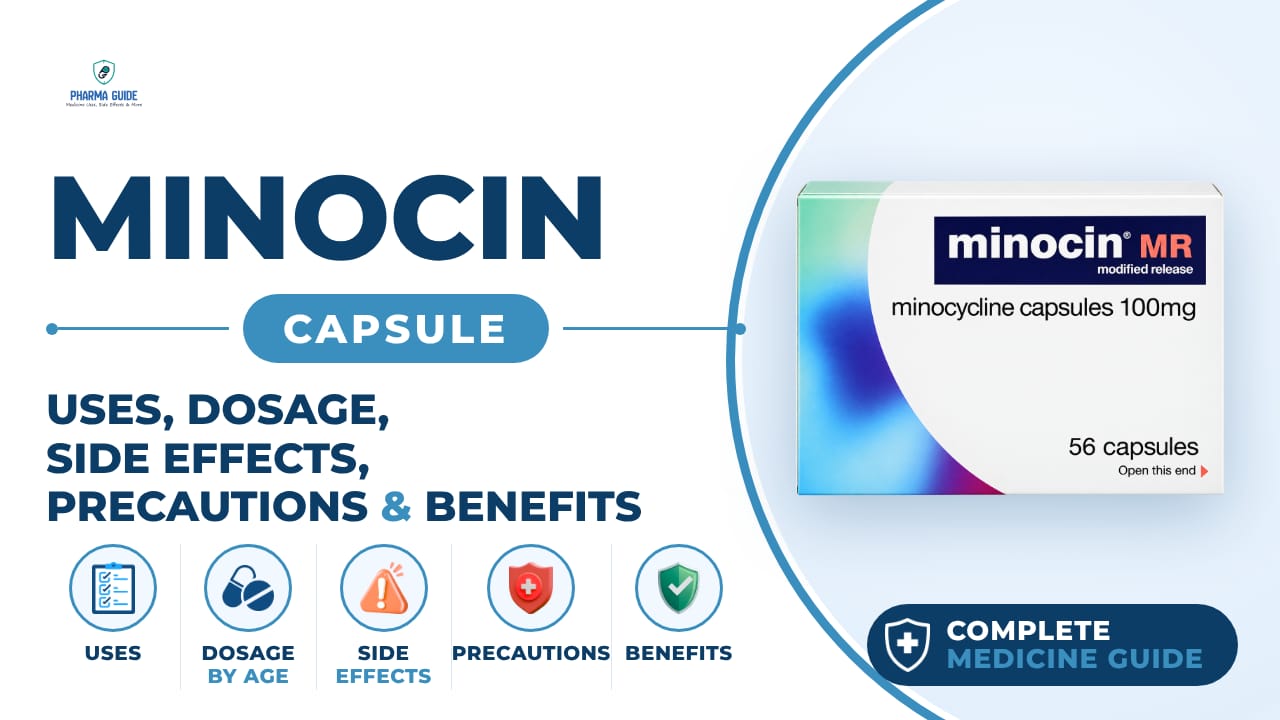
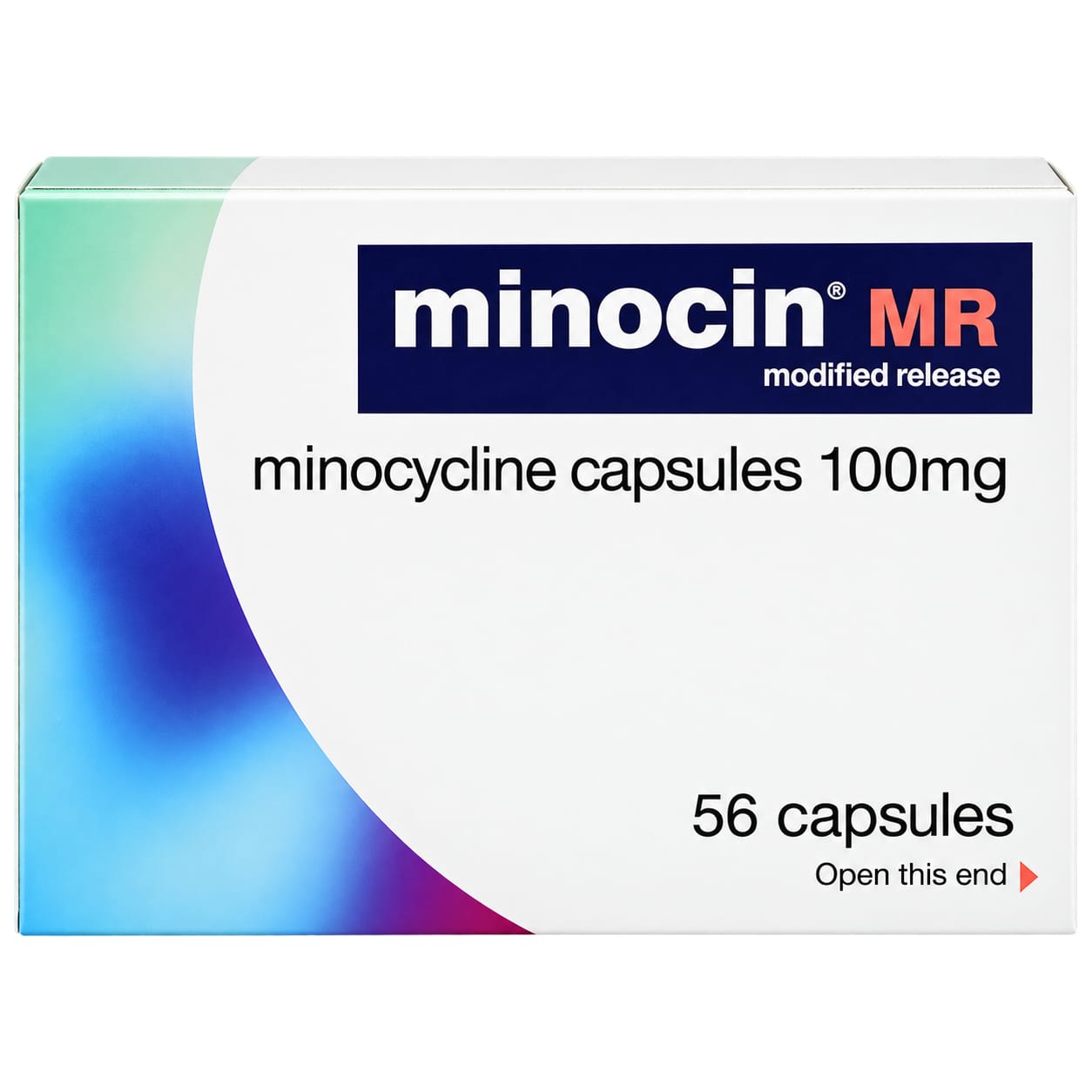
| Generic name | minocycline hydrochloride |
|---|---|
| Drug class | Tetracycline-class antibiotic |
| Forms | Pellet-filled capsules (50 mg and 100 mg) |
Quick overview
Minocin Capsule contains minocycline hydrochloride, a tetracycline-class antibiotic used to treat certain bacterial infections, including skin, respiratory, and urinary tract infections, as well as some sexually transmitted diseases. It is also used along with other treatments for severe acne. Minocin does not work against viral infections such as the common cold.
What is Minocin Capsule
Minocin is a tetracycline-class antibiotic medicine used to treat certain infections caused by bacteria. It does not work against infections caused by viruses, such as the common cold.
Minocin Capsule uses
- Infections of the skin
- Respiratory tract infections
- Urinary tract infections
- Some sexually transmitted diseases
- Severe acne (used along with other treatments)
- Rocky Mountain spotted fever, typhus fever, Q fever, rickettsialpox and tick fevers
- Chlamydia infections including lymphogranuloma venereum, trachoma, and inclusion conjunctivitis
- Gonorrhea infections when penicillin cannot be used
- Syphilis when penicillin cannot be used
- Chancroid, plague, tularemia, cholera, and other bacterial infections named in the prescribing information
Benefits of Minocin Capsule
- Treats susceptible bacterial infections
- Used for certain skin and respiratory infections
- May be prescribed for acne caused or worsened by susceptible bacteria
- Treats some infections caused by tetracycline-sensitive organisms
- Provides broad antibacterial activity
How Minocin Capsule works
Minocin works by stopping bacteria from making the proteins they need to grow and multiply, which stops the infection from spreading rather than directly killing the bacteria.
Minocin Capsule dosage
Take exactly as your doctor tells you to; skipping doses or not finishing treatment can make the medicine less effective and increase the chance that bacteria become resistant to it. Minocin can be taken with or without food. Swallow the capsule whole; do not crush or chew it. Take it with a full glass of liquid to lower the chance of irritation or ulcers in the esophagus (the tube connecting your mouth to your stomach). Avoid taking it right before lying down to reduce the risk of throat or esophagus irritation. If you forget a dose, take it as soon as you remember. Older adults should generally start at the lower end of the dosing range because of a higher chance of reduced liver, kidney, or heart function.
| Age group | Dose |
|---|---|
| Over 8–17 years | 4 mg/kg initially, then 2 mg/kg every 12 hours; should not exceed the usual adult dose |
| 18–64 years | Usually 200 mg initially, then 100 mg every 12 hours |
Available forms and strengths
- Pellet-filled capsules (50 mg and 100 mg)
Side effects of Minocin Capsule
Common
- Nausea
- Vomiting
- Upset stomach
- Diarrhea
- Lightheadedness
- Dizziness
- Spinning sensation (vertigo)
- Unsteadiness
- Drowsiness
- Tired feeling
- Joint or muscle pain
- Discoloration of skin or nails
- Skin rash or itching
- Mouth sores
- Swollen tongue
- Discoloration of gums
- Cough
- Increased skin sensitivity to sunlight (sunburn more easily)
- Vaginal itching or discharge
Serious
- Watery diarrhea
- Bloody stools
- Stomach cramps
- Unusual headaches
- Blurred vision
- Fever
- Rash
- Joint pain
- Feeling very tired
- Swollen lymph nodes
- Sudden vision loss, tunnel vision, eye pain or swelling, or seeing halos around lights
- Fast, irregular, or pounding heartbeats; fluttering in the chest; shortness of breath; sudden dizziness or passing out
- Severe headache, confusion, slurred speech, arm or leg weakness, trouble walking, loss of coordination, very stiff muscles, high fever, profuse sweating, or tremors
Warnings and precautions
- Minocin and other tetracycline antibiotics can cause permanent yellow-gray-brown tooth discoloration if used during tooth development, which occurs in the last half of pregnancy and in children up to age 8.
- A severe allergic reaction called DRESS syndrome, which can involve rash and internal organ problems and has been fatal in some cases, has occurred with minocycline. Stop the drug immediately if this is suspected.
- Minocin can cause an exaggerated sunburn reaction in sunlight, so protect your skin and avoid tanning beds and sunlamps.
- Antibiotic use, including Minocin, can lead to a serious intestinal infection called C. difficile-associated diarrhea, which can range from mild to life-threatening and can occur even months after stopping the drug.
- Minocin can cause increased pressure inside the skull (intracranial hypertension), with symptoms like headache, blurred vision, and vision loss; this risk is higher in overweight women of childbearing age and if combined with the acne drug isotretinoin.
- Taking Minocin with birth control pills may make the birth control less effective.
- Minocin should not be taken together with penicillin antibiotics because it may interfere with how well penicillin works.
- Taking the acne medicine isotretinoin together with Minocin should be avoided because both drugs can cause increased pressure inside the skull.
- Antacids containing aluminum, calcium, or magnesium, and iron-containing products can reduce how well Minocin is absorbed by the body.
- Minocin is not recommended during pregnancy because it may harm the unborn baby, including affecting bone growth and causing permanent tooth discoloration if taken during the last half of pregnancy.
- Minocin passes into breast milk and may harm the baby, so you should decide with your doctor whether to take the medicine or breastfeed, but not both.
- People with kidney problems should tell their doctor, since the drug can build up in the body and may need closer monitoring of kidney function.
- Minocin should be used carefully in people with liver problems, especially if they're also taking other medicines that can harm the liver.
- Minocin can cause dizziness, lightheadedness, or a spinning feeling, so you should not drive or use machinery if you experience these symptoms.
Storage
- Store at room temperature between 68°F to 77°F (20°C to 25°C)
- Keep away from light, moisture, and excess heat
- Dispense in a tight, light-resistant container
- Throw away any medicine that is outdated or no longer needed
- Keep out of the reach of children
When to see a doctor
- Stop taking Minocin and call your doctor right away if you have watery diarrhea, bloody stools, or stomach cramps, which could be signs of a serious intestinal infection.
- Stop taking Minocin and call your doctor if you develop unusual headaches, blurred vision, fever, rash, joint pain, feeling very tired, or swollen lymph nodes, as these may be signs of a serious reaction.
- Get medical help right away for sudden vision loss, blurred vision, tunnel vision, eye pain or swelling, or seeing halos around lights.
- Get medical help right away for fast, irregular, or pounding heartbeats, fluttering in the chest, shortness of breath, or sudden dizziness or passing out.
- Get medical help right away for severe headache, confusion, slurred speech, arm or leg weakness, trouble walking, loss of coordination, very stiff muscles, high fever, profuse sweating, or tremors.
- If you take too much Minocin, contact your doctor or your local poison control center right away.
- Stop Minocin and call your doctor if your skin turns red, which may be a sign of a bad sunburn reaction.
Alternatives
- Doxycycline
- Amoxicillin
- Azithromycin
Watch the video
FAQs
What is Minocin Capsule used for?
Minocin treats bacterial infections including skin, respiratory, and urinary tract infections, some sexually transmitted diseases, and is used along with other treatments for severe acne. It does not work against viral infections like the common cold.
How does Minocin Capsule work?
Minocin works by stopping bacteria from making the proteins they need to grow and multiply, which stops the infection from spreading rather than directly killing the bacteria.
How should Minocin Capsule be taken?
Take it exactly as prescribed, with or without food. Swallow the capsule whole with a full glass of liquid, and avoid lying down right after taking it to reduce the risk of esophagus irritation.
What are the common side effects of Minocin Capsule?
Common side effects include nausea, vomiting, upset stomach, diarrhea, dizziness, drowsiness, joint or muscle pain, skin discoloration, rash, mouth sores, and increased sensitivity to sunlight.
Can Minocin Capsule be taken during pregnancy?
Minocin is not recommended during pregnancy because it may harm the unborn baby, including affecting bone growth and causing permanent tooth discoloration if taken during the last half of pregnancy.
General information, not medical advice
Your prescriber and the leaflet in your pack know your situation. This page does not.
- Follow your prescriber and the leaflet
- Don't start, stop, or change a dose on your own
- Doses and warnings differ by country and product
Sources
Video
Related medicines

Injectafer Injection: Uses, Dosage, Side Effects, Precautions and Alternates
Iron products
Injectafer (ferric carboxymaltose) treats iron deficiency anemia and heart failure-related iron deficiency via IV. Learn uses, dosage, side effects, and

Gliclazide Tablet: Uses, Dosage, Side Effects, Precautions and Alternates
Sulfonylurea (hypoglycemic/antidiabetic agent)
Gliclazide Tablet is a sulfonylurea for type 2 diabetes that boosts insulin release. Learn about dosage, side effects, warnings, and precautions.