
Safety
General information, not medical advice
Your prescriber and the leaflet in your pack know your situation. This page does not.
- Follow your prescriber and the leaflet
- Don't start, stop, or change a dose on your own
- Doses and warnings differ by country and product
Mirapex Tablet: Uses, Dosage, Side Effects, Precautions and Alternates
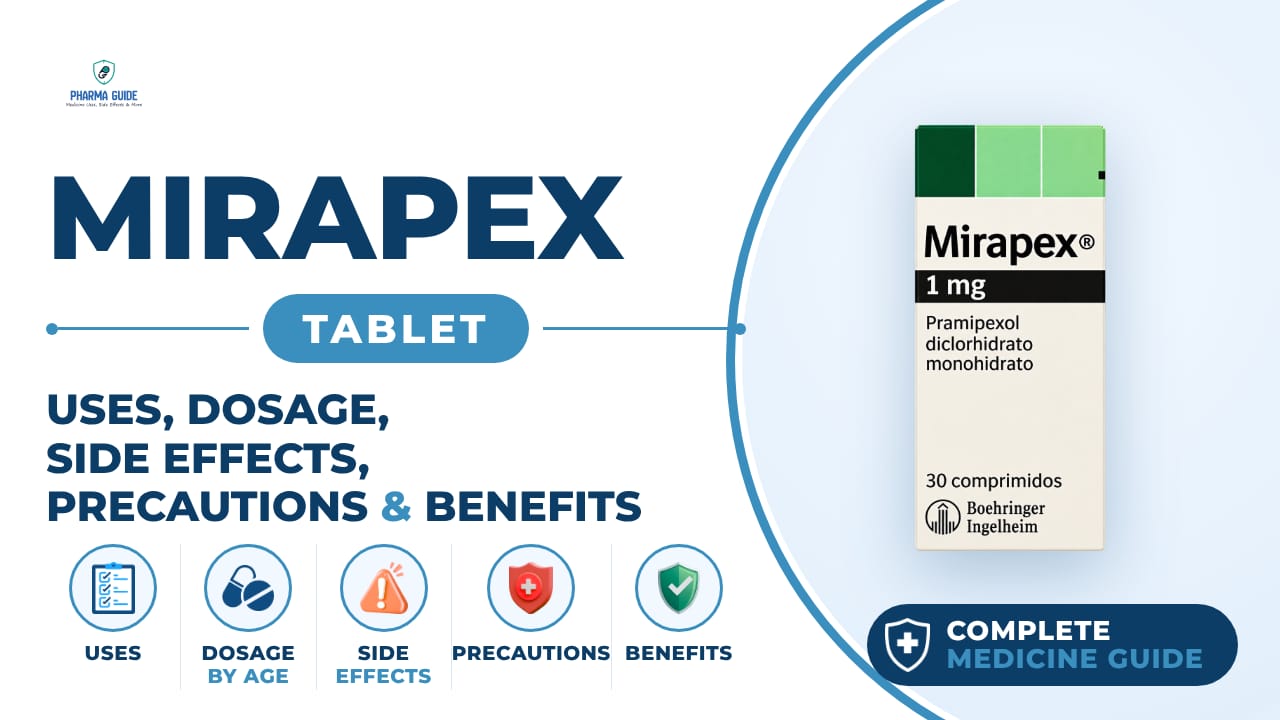
| Generic name | pramipexole dihydrochloride |
|---|---|
| Drug class | nonergot dopamine agonist |
| Forms | Tablet |
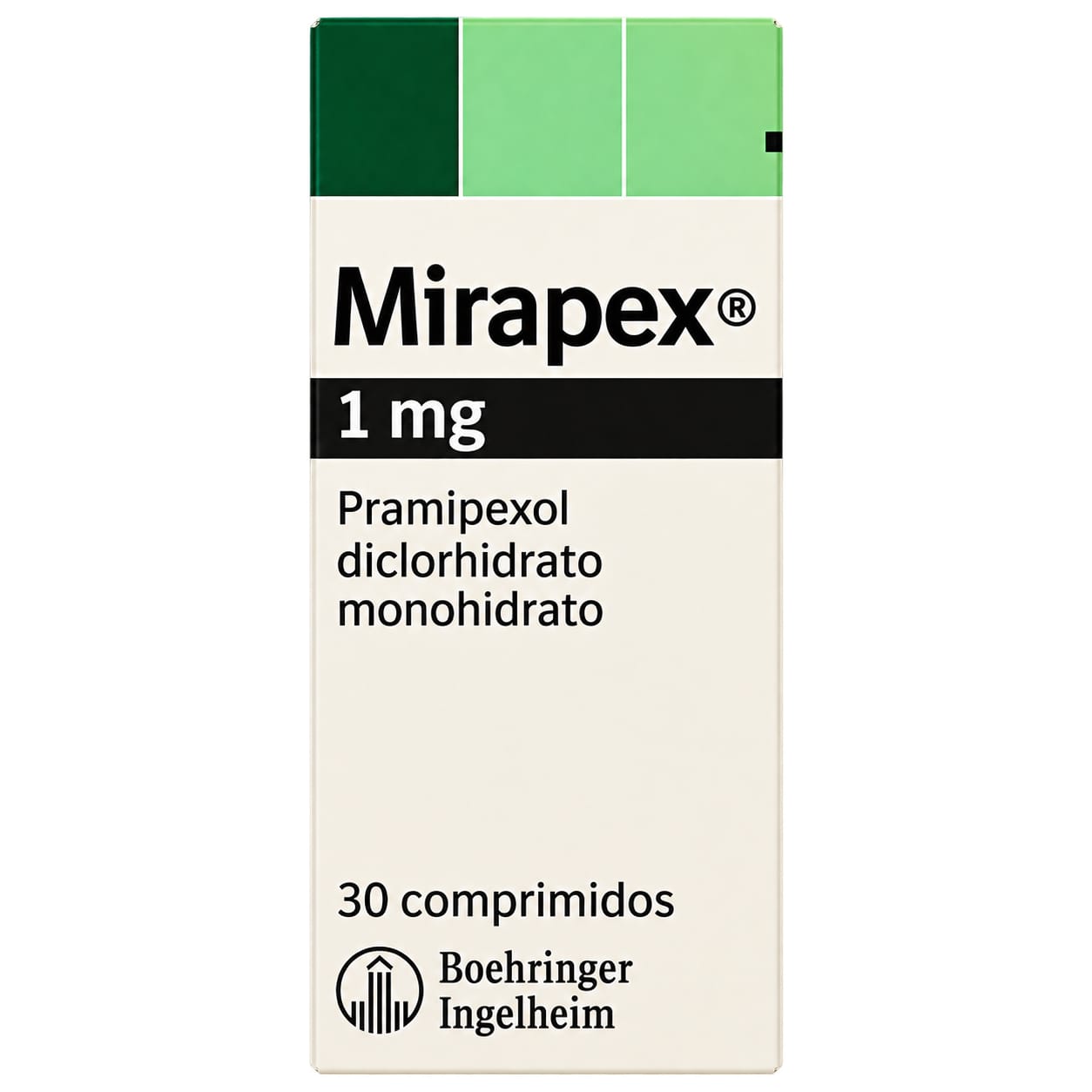
Quick overview
Mirapex Tablet contains pramipexole dihydrochloride, a nonergot dopamine agonist. It is used to treat the signs and symptoms of idiopathic Parkinson's disease and moderate-to-severe primary restless legs syndrome (RLS). Mirapex works by stimulating dopamine receptors in the brain. It should be used exactly as prescribed, and the dose should not be stopped suddenly.
What is Mirapex Tablet
Mirapex is a prescription medicine that acts like dopamine, a natural chemical in the body. It is used to treat Parkinson's disease and restless legs syndrome.
Mirapex Tablet uses
- Treatment of the signs and symptoms of idiopathic Parkinson's disease
- Treatment of moderate-to-severe primary Restless Legs Syndrome (RLS)
Benefits of Mirapex Tablet
- Improves activities of daily living and motor performance scores in Parkinson's disease, both in early disease and in advanced disease taken with levodopa
- Reduces 'off' time in advanced Parkinson's disease patients also taking levodopa
- Improves RLS symptom severity scores and overall clinical impression compared with placebo
- Allowed a reduction in levodopa dose in many advanced Parkinson's disease patients
How Mirapex Tablet works
Mirapex works by stimulating dopamine receptors in the brain, which is believed to help control the movement problems of Parkinson's disease. How it helps restless legs syndrome is not fully understood, but it is thought to be related to a mild dopamine system problem in the brain.
Mirapex Tablet dosage
Take MIRAPEX tablets only as prescribed by your doctor. It can be taken with or without food; taking it with food may lower the chance of nausea. If you miss a dose, do not double your next dose — skip the missed dose and take your next regular dose. Do not stop taking MIRAPEX suddenly; if you have Parkinson's disease and need to stop, the dose should be lowered slowly over about a week. Extended-release tablets must be swallowed whole and should not be chewed, crushed, or divided. For restless legs syndrome, the dose is taken once daily, 2-3 hours before bedtime.
| Age group | Dose |
|---|---|
| Under 18 years | Not recommended |
| 18–64 years | 0.125 mg, 3 times daily initially; gradually increased as prescribed |
| 65+ years | 0.125 mg, 3 times daily initially; dose adjusted by doctor |
Available forms and strengths
- Tablet
Side effects of Mirapex Tablet
Common
- Nausea
- Dizziness
- Sleepiness (somnolence)
- Constipation
- Insomnia
- Dry mouth
- Muscle weakness (asthenia)
- Confusion
- Abnormal movements (dyskinesia)
- Headache
- Fatigue
- Swelling of the feet and ankles (peripheral edema)
Serious
- Suddenly falling asleep during daily activities, including while driving
- Hallucinations (seeing, hearing, feeling, or tasting things that are not there)
- Low blood pressure on standing (orthostatic hypotension) with dizziness, nausea, fainting, or sweating
- Intense urges such as gambling, compulsive eating, compulsive shopping, or increased sex drive
- Unexplained muscle pain, tenderness, or weakness (possible rhabdomyolysis)
- Posture changes you cannot control, such as bending of the neck or spine
- Withdrawal symptoms such as fever, confusion, and severe muscle stiffness if the drug is stopped abruptly
- Increased risk of melanoma (a type of skin cancer) in people with Parkinson's disease
Warnings and precautions
- This medicine can cause you to suddenly fall asleep during daily activities like driving, talking, or eating, sometimes without any warning signs.
- This medicine can cause low blood pressure when standing up, especially when starting treatment or increasing the dose.
- Hallucinations can occur, and the risk is higher in older patients.
- Some people taking this medicine have reported intense urges to gamble, spend money, eat, or have increased sexual urges that they could not control.
- People with Parkinson's disease have a higher risk of developing melanoma, a type of skin cancer, so regular skin checks are recommended.
- Stopping this medicine suddenly or lowering the dose too quickly can cause a serious reaction with fever, muscle stiffness, and confusion.
- Withdrawal symptoms such as apathy, anxiety, depression, fatigue, insomnia, sweating, and pain can occur when the dose is lowered or the medicine is stopped.
- It is not known if Mirapex will harm an unborn baby. Tell your doctor if you are pregnant or planning to become pregnant.
- It is not known whether this medicine passes into human breast milk. You and your doctor should decide whether you will take the medicine or breastfeed.
- This medicine is removed from the body by the kidneys, so people with kidney problems may need a lower dose.
- Liver problems have not been specifically studied with this medicine, but since it is mostly removed by the kidneys, liver problems are not expected to affect it much.
- Do not drink alcohol while taking this medicine, as it can increase the chance of feeling sleepy or falling asleep when you should be awake.
- Do not drive or do anything that requires you to be alert until you know how this medicine affects you, since it can cause sudden sleepiness.
Storage
- Store at room temperature (25°C/77°F; excursions permitted to 15°-30°C/59°-86°F)
- Protect from light
- Store in a safe place out of the reach of children
- For extended-release tablets, protect from exposure to high humidity
When to see a doctor
- Tell your doctor right away if you fall asleep while doing activities such as talking, eating, or driving, or if you feel sleepier than normal.
- Get medical help right away if you have signs of an allergic reaction, such as hives, trouble breathing, or swelling of the face, lips, tongue, or throat.
- Contact your doctor if you experience unexplained muscle pain, tenderness, or weakness.
- Talk to your doctor if you or your family notice new or increased gambling urges, sexual urges, or other unusual urges.
- If you have Parkinson's disease and are stopping this medicine, tell your doctor right away and do not restart it without talking to them first.
Alternatives
- Ropinirole
- Levodopa/Carbidopa
- Rasagiline
Watch the video
FAQs
What is Mirapex Tablet used for?
Mirapex is used to treat the signs and symptoms of idiopathic Parkinson's disease and moderate-to-severe primary restless legs syndrome (RLS).
How does Mirapex Tablet work?
Mirapex works by stimulating dopamine receptors in the brain, which helps control movement problems in Parkinson's disease. For RLS, it is thought to be related to a mild dopamine system problem in the brain.
Can I stop taking Mirapex suddenly?
No, you should not stop taking Mirapex suddenly. If you have Parkinson's disease and need to stop, the dose should be lowered slowly over about a week, as sudden stopping can cause a serious reaction with fever, muscle stiffness, and confusion.
What are the serious side effects of Mirapex?
Serious side effects include suddenly falling asleep during daily activities, hallucinations, low blood pressure on standing, intense urges like gambling or compulsive eating, unexplained muscle pain or weakness, uncontrolled posture changes, and an increased risk of melanoma.
Can I drink alcohol while taking Mirapex?
No, you should not drink alcohol while taking Mirapex, as it can increase the chance of feeling sleepy or falling asleep when you should be awake.
General information, not medical advice
Your prescriber and the leaflet in your pack know your situation. This page does not.
- Follow your prescriber and the leaflet
- Don't start, stop, or change a dose on your own
- Doses and warnings differ by country and product
Sources
- https://www.accessdata.fda.gov/drugsatfda_docs/label/2008/020667s014s017s018lbl.pdf
- https://www.accessdata.fda.gov/drugsatfda_docs/label/2021/022421s022lbl.pdf
- file:///C:/Users/hasee/Downloads/20110408_3736d691-e8b9-4fdd-aeca-9e96cf907c51.pdf
Video
Related medicines

Injectafer Injection: Uses, Dosage, Side Effects, Precautions and Alternates
Iron products
Injectafer (ferric carboxymaltose) treats iron deficiency anemia and heart failure-related iron deficiency via IV. Learn uses, dosage, side effects, and

Gliclazide Tablet: Uses, Dosage, Side Effects, Precautions and Alternates
Sulfonylurea (hypoglycemic/antidiabetic agent)
Gliclazide Tablet is a sulfonylurea for type 2 diabetes that boosts insulin release. Learn about dosage, side effects, warnings, and precautions.