
Safety
General information, not medical advice
Your prescriber and the leaflet in your pack know your situation. This page does not.
- Follow your prescriber and the leaflet
- Don't start, stop, or change a dose on your own
- Doses and warnings differ by country and product
Mirvaso Gel: Uses, Dosage, Side Effects, Precautions and Alternates
| Generic name | brimonidine tartrate |
|---|---|
| Drug class | Topical anti-rosacea agent (alpha-2 adrenergic receptor agonist) |
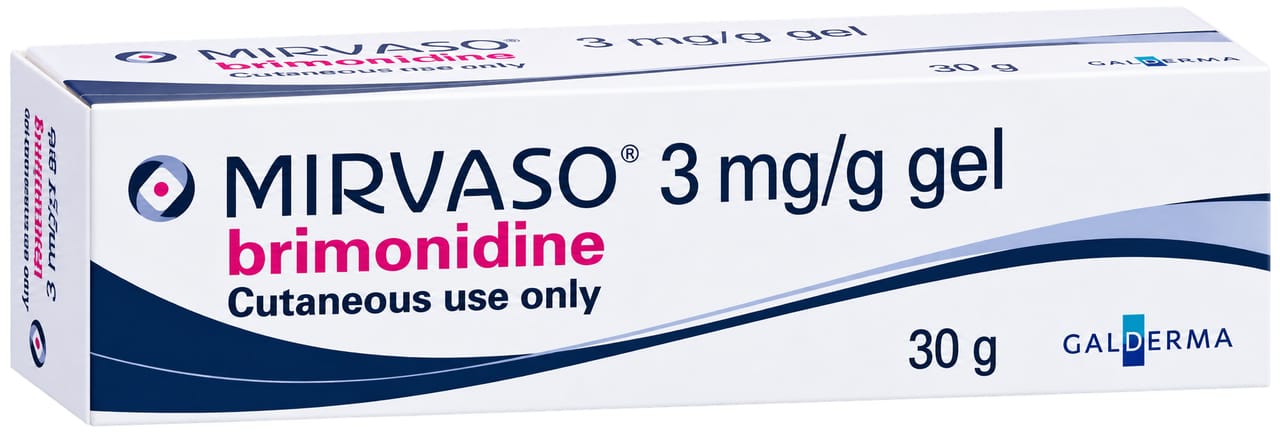
| Forms | Gel (tubes of 2, 10, or 30 grams, or an airless pump system containing 30 g of gel) |
Quick overview
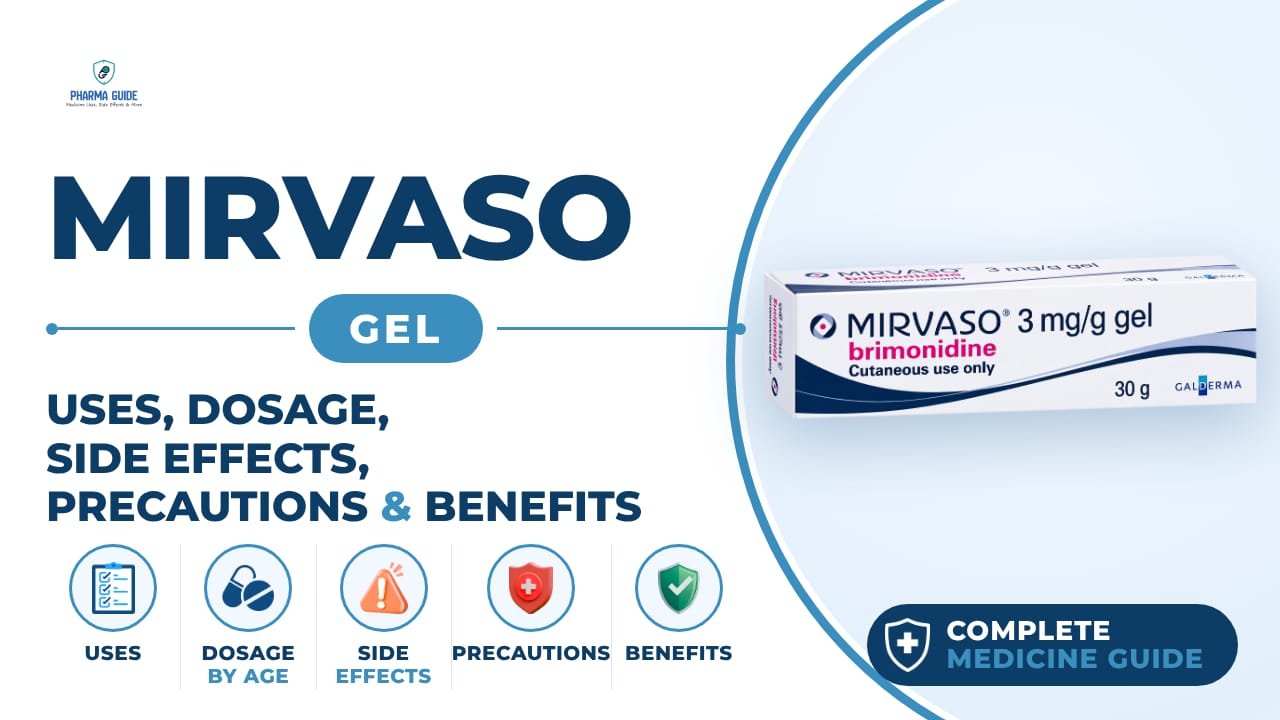
Mirvaso Gel contains brimonidine tartrate, a topical alpha-2 adrenergic receptor agonist. It is applied to the skin of the face and is used in adults to treat persistent facial redness caused by rosacea. It works by temporarily narrowing superficial facial blood vessels, and is applied once daily.
What is Mirvaso Gel
Mirvaso is a gel medicine applied to the skin of the face. It contains brimonidine, which belongs to a group of medicines called alpha agonists. It is used in adults to treat facial redness caused by rosacea.
Mirvaso Gel uses
- Treats persistent facial redness (erythema) caused by rosacea in adults
- Reduces persistent facial redness from rosacea
- Temporarily constricts superficial facial blood vessels
- Helps improve visible facial erythema
Benefits of Mirvaso Gel
- Reduces facial redness
- Can start working quickly, with some people noticing improvement within 30 minutes
- Effects can last up to 12 hours
- Only needs to be applied once a day
- Applied directly to the skin rather than taken as a pill
How Mirvaso Gel works
Rosacea redness happens because small blood vessels in the facial skin widen and increase blood flow. Mirvaso works by narrowing these blood vessels again, which reduces the extra blood flow and redness.
Mirvaso Gel dosage
Apply Mirvaso once a day only, unless your doctor tells you otherwise. Apply to clean, dry facial skin at the forehead, chin, nose, and each cheek, spreading the gel smoothly and evenly in a very thin layer.
Start with a small (pea-sized) amount; your doctor or nurse may tell you to gradually increase the amount if your redness does not improve much, but do not go above the maximum recommended amount.
Avoid the eyes, eyelids, lips, mouth, and inside of the nose; if gel gets into these areas, rinse with plenty of water. Do not apply other skin products or cosmetics right before using Mirvaso; wait until the gel has dried first. Wash your hands right after applying the gel.
Do not use on open wounds, sunburned, windburned, dry, chapped, or irritated skin.
If you miss a dose, apply it as soon as you remember, but skip it if it is almost time for your next dose — do not double up.
Only for use on facial skin; do not swallow and do not use in the eyes, mouth, nose, or vagina. Not for use in children or adolescents under 18 years old.
| Age group | Dose |
|---|---|
| Under 18 years | Safety and effectiveness are not established; no standard pediatric dose |
| 18–39 years | Apply a pea-sized amount once daily to each of the 5 facial areas: forehead, chin, nose, and each cheek |
| 40–64 years | Same adult dosage: pea-sized amount to each of 5 facial areas once daily |
| 65–74 years | Generally follows the standard adult dosage; no routine age-based adjustment |
Available forms and strengths
- Gel (tubes of 2, 10, or 30 grams, or an airless pump system containing 30 g of gel)
Side effects of Mirvaso Gel
Common
- Mild skin redness or burning
- Flushing (warmth, redness, or tingly feeling)
- Pale or lighter skin where the medicine was applied
- Itching
- Worsening of rosacea
Serious
- Dizziness or feeling light-headed
- Slow heartbeats
- Severe skin redness, burning, or other irritation
- Signs of allergic reaction: hives, difficulty breathing, swelling of face, lips, tongue, or throat
- Low blood pressure
Warnings and precautions
- It is not known whether Mirvaso will harm an unborn baby. Using Mirvaso during pregnancy is not recommended. Tell your doctor if you are or may become pregnant.
- It is not known whether this medicine passes into breast milk, so you should not breast-feed while using it.
- Tell your doctor if you have kidney problems or have had them in the past, before using Mirvaso.
- Tell your doctor if you have liver problems or have had them in the past, before using Mirvaso.
- Tell your doctor if you drink alcohol regularly, as this could affect your treatment with Mirvaso.
- Mirvaso is not expected to significantly affect your ability to drive or use machines.
- Do not use Mirvaso on irritated skin or open wounds, and avoid contact with the eyes and lips.
- Tell your doctor before using Mirvaso if you have coronary artery disease, circulation problems, heart disease or a blood vessel disorder, Raynaud's syndrome, depression, low blood pressure, Sjögren's syndrome, or scleroderma, or if you plan to have laser surgery or take heart or blood pressure medication.
- Do not use Mirvaso with certain antidepressant or Parkinson's disease medicines (such as selegiline, moclobemide, imipramine, mianserin, or maprotiline), as this can cause a drop in blood pressure.
- Some people find their redness comes back worse than before, usually within the first two weeks of treatment. This often goes away on its own after stopping. Test a small area before restarting treatment, and if redness or burning does not happen, you can continue; if it worsens, stop and contact your doctor.
- Do not exceed the maximum daily dose, as using more could cause skin irritation or other side effects, including low blood pressure, drowsiness, or sleepiness.
- Keep this medicine out of reach of children — swallowing it can cause serious medical problems in a child.
Storage
- Store at room temperature away from moisture and heat
- Keep this medicine out of the sight and reach of children
- Do not use after the expiry date shown on the carton and tube
- This medicine does not require any special storage condition
- Store below 30°C and do not freeze
- Do not throw away any medicines via wastewater or household waste; ask your pharmacist how to dispose of medicines you no longer use
When to see a doctor
- Get emergency medical help right away if you have signs of a serious allergic reaction, such as hives, difficulty breathing, or swelling of the face, lips, tongue, or throat.
- Stop using the medicine and call your doctor right away if you have dizziness, light-headedness, slow heartbeats, or severe skin redness, burning, or irritation.
- If a child or anyone else swallows this medicine and has dizziness, vomiting, tiredness or drowsiness, irregular heartbeats, small pupils, slow or difficult breathing, floppiness, low body temperature, or convulsions, contact your doctor immediately or go to a hospital emergency department. Bring the medicine pack with you.
- If you develop severe skin irritation or inflammation, skin rash, skin pain, dry skin, warm skin sensation, tingling, pins-and-needles feeling, or swelling of the face, stop treatment and talk to your doctor.
Alternatives
- Oxymetazoline topical cream
- Azelaic acid
- Metronidazole topical
- Ivermectin topical
Watch the video
FAQs
What is Mirvaso Gel used for?
Mirvaso Gel is used in adults to treat persistent facial redness (erythema) caused by rosacea by temporarily constricting superficial facial blood vessels.
How often should Mirvaso Gel be applied?
Mirvaso should be applied once a day only, unless your doctor tells you otherwise, to clean, dry facial skin at the forehead, chin, nose, and each cheek in a thin layer.
How quickly does Mirvaso Gel work and how long does it last?
Some people notice improvement within 30 minutes, and the effects can last up to 12 hours.
What are the common side effects of Mirvaso Gel?
Common side effects include mild skin redness or burning, flushing, pale or lighter skin where applied, itching, and worsening of rosacea.
Can Mirvaso Gel be used during pregnancy?
Using Mirvaso during pregnancy is not recommended because it is not known whether it will harm an unborn baby, so you should tell your doctor if you are or may become pregnant.
General information, not medical advice
Your prescriber and the leaflet in your pack know your situation. This page does not.
- Follow your prescriber and the leaflet
- Don't start, stop, or change a dose on your own
- Doses and warnings differ by country and product
Sources
Video
Related medicines

Injectafer Injection: Uses, Dosage, Side Effects, Precautions and Alternates
Iron products
Injectafer (ferric carboxymaltose) treats iron deficiency anemia and heart failure-related iron deficiency via IV. Learn uses, dosage, side effects, and

Gliclazide Tablet: Uses, Dosage, Side Effects, Precautions and Alternates
Sulfonylurea (hypoglycemic/antidiabetic agent)
Gliclazide Tablet is a sulfonylurea for type 2 diabetes that boosts insulin release. Learn about dosage, side effects, warnings, and precautions.