
Safety
General information, not medical advice
Your prescriber and the leaflet in your pack know your situation. This page does not.
- Follow your prescriber and the leaflet
- Don't start, stop, or change a dose on your own
- Doses and warnings differ by country and product
Mitoxantrone Injection: Uses, Dosage, Side Effects, Precautions and Alternates
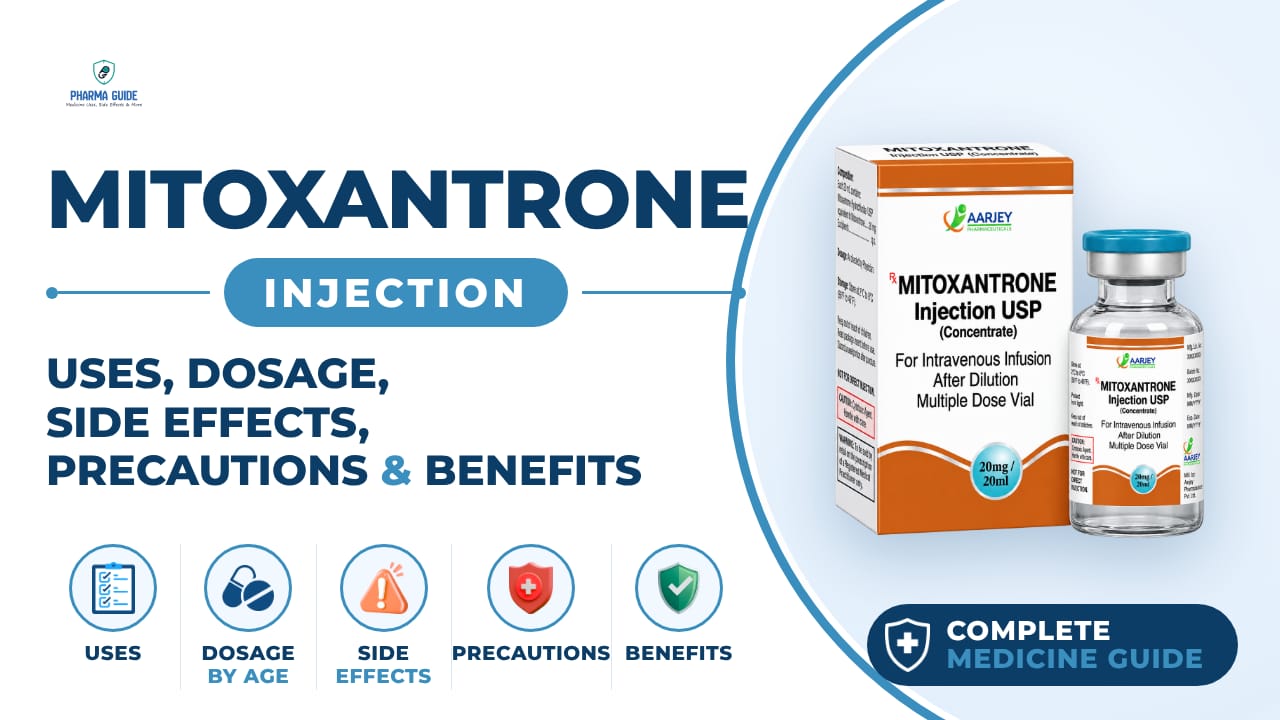
| Generic name | mitoxantrone |
|---|---|
| Drug class | anthracenedione |
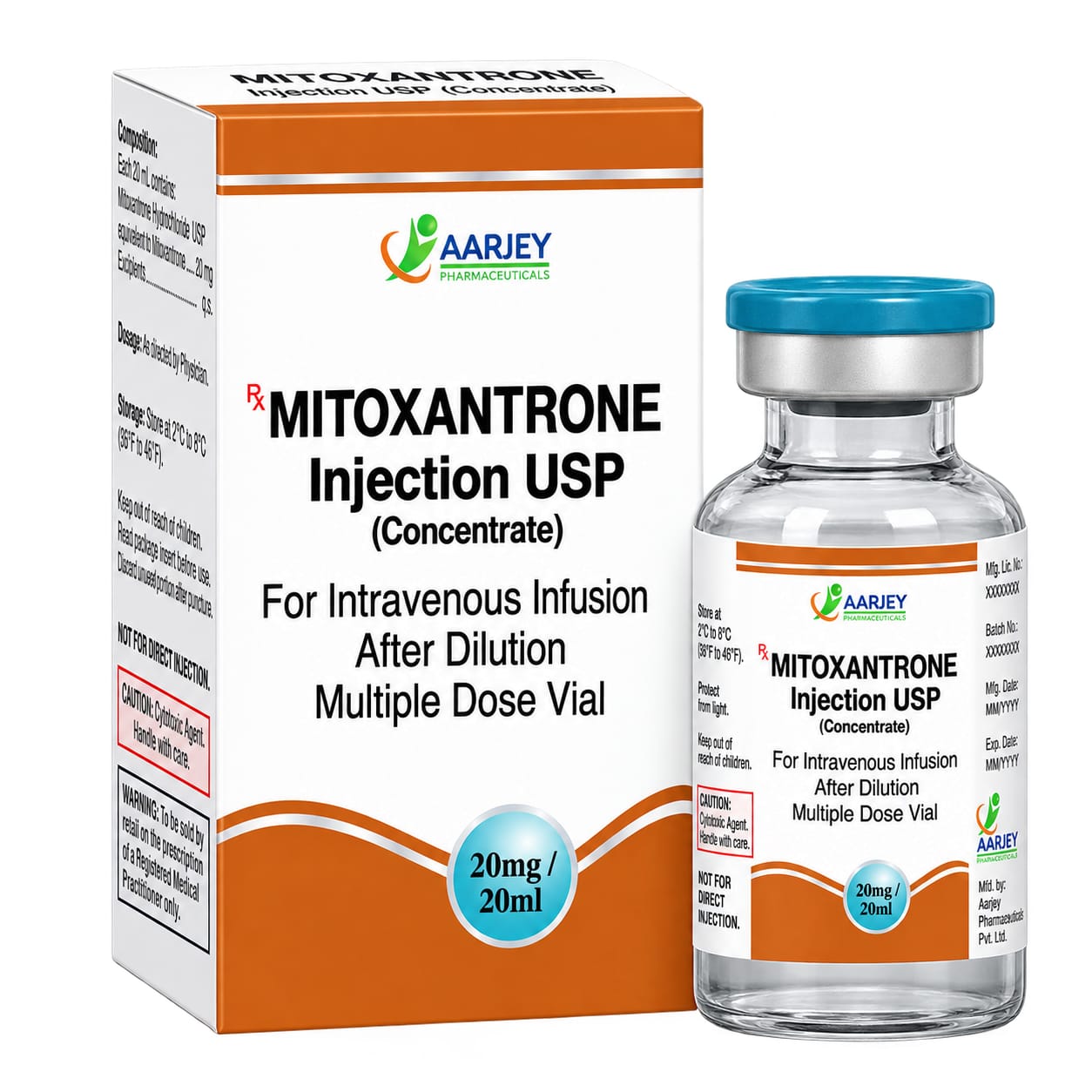
| Forms | Injection concentrate for intravenous use |
Quick overview
Mitoxantrone Injection (generic name: mitoxantrone) is a chemotherapy medicine belonging to the anthracenedione class. It is given into a vein by a doctor or nurse in a hospital or clinic and is used for certain forms of multiple sclerosis, advanced prostate cancer, and some types of leukemia. It works by blocking certain immune cells and by interfering with DNA inside cancer cells. This medicine carries important warnings related to heart damage, infection risk, and other serious effects.
What is Mitoxantrone Injection
Mitoxantrone injection is a chemotherapy medicine given into a vein by a doctor or nurse in a hospital or clinic. It is used for certain forms of multiple sclerosis as well as advanced prostate cancer and some types of leukemia.
Mitoxantrone Injection uses
- Treats adults with relapsing-remitting multiple sclerosis (MS)
- Treats progressive relapsing MS
- Treats secondary progressive MS
- Used with steroid medications to relieve pain in advanced prostate cancer that did not respond to other treatments
- Used with other medications to treat certain types of leukemia (acute nonlymphocytic leukemia)
- Sometimes used to treat non-Hodgkin's lymphoma
Benefits of Mitoxantrone Injection
- Can reduce relapses and disability in patients with worsening forms of MS
- Can help relieve pain in advanced prostate cancer
- Helps treat certain leukemias as part of combination therapy
- Used in certain leukemia treatment regimens
- May be used in selected advanced prostate cancer regimens
- Interferes with cancer-cell DNA replication
- Helps slow growth of rapidly dividing malignant cells
- Can be combined with other anticancer medicines
How Mitoxantrone Injection works
Mitoxantrone treats MS by blocking certain immune cells from reaching the brain and spinal cord where they could cause damage. In cancer, it works by attaching to the DNA inside cancer cells, causing breaks that stop the cells from growing and spreading.
Mitoxantrone Injection dosage
Mitoxantrone is given as a liquid into a vein (intravenously) by a doctor or nurse in a hospital or clinic. For MS, it is usually given once every 3 months for about 2 to 3 years, for a total of 8 to 12 doses. For prostate cancer, it is usually given once every 21 days. For leukemia, the schedule depends on your condition and response to treatment.
If used for MS, it controls the disease but does not cure it — continue treatments even if you feel well unless your doctor says otherwise. Call your doctor right away if you cannot keep an appointment to receive a dose. This medicine must never be given under the skin, into a muscle, into an artery, or into the spinal fluid.
| Age group | Dose |
|---|---|
| 18–64 years | Common oncology regimens use 12 mg/m² IV, with schedule depending on the cancer type and treatment protocol |
Available forms and strengths
Injection concentrate for intravenous use.
Side effects of Mitoxantrone Injection
Common
- Nausea
- Vomiting
- Diarrhea
- Constipation
- Heartburn
- Loss of appetite
- Sores on the mouth and tongue
- Runny or stuffed nose
- Thinning or loss of hair
- Changes in the area around or under fingernails and toenails
- Missed or irregular menstrual periods
- Extreme tiredness
- Weakness
- Headache
- Back pain
- Temporary blue-green color of urine
- Slight blue color of the whites of the eyes
Serious
- Unusual bleeding or bruising
- Small red or purple dots on the skin
- Hives, itching, or rash
- Difficulty swallowing
- Shortness of breath
- Fainting or dizziness
- Pale skin
- Yellowing of the skin or eyes
- Seizures
- Redness, pain, swelling, burning, or blue discoloration at the injection site
- Signs of infection such as fever, chills, sore throat, cough, or painful urination
- Signs of heart problems such as trouble breathing, chest pain, swelling of legs or ankles, or irregular or fast heartbeat
Warnings and precautions
- This medicine must be given only under the care of a doctor experienced in chemotherapy. It should never be injected under the skin, into a muscle, or into an artery, and must never be given into the spinal fluid, as this can cause severe, sometimes permanent, nerve injury.
- This medicine can seriously lower white blood cell counts, raising the risk of dangerous infection. Regular blood tests are needed before and during treatment.
- This medicine can damage the heart at any time during treatment or even months to years later. This damage can be serious and sometimes fatal, and can happen even in people with no heart disease risk factors. Regular heart tests are required before treatment, before each dose (for MS), and yearly afterward.
- There is a lifetime dose limit for this medicine because of the heart damage risk, so your doctor will track your total amount received over time.
- This medicine can raise the risk of developing leukemia, a cancer of the white blood cells, especially with high doses or when combined with certain other chemotherapy drugs.
- This medicine may cause serious harm to an unborn baby. Women who can become pregnant should use birth control during treatment and have a pregnancy test before each dose for MS treatment. Tell your doctor right away if you become pregnant.
- Do not breastfeed while receiving this medicine because it passes into breast milk and could seriously harm the baby.
- Kidney function should be monitored as part of chemotherapy care.
- People with liver disease should tell their doctor, since this medicine is processed by the liver and can build up to higher, potentially more harmful levels if the liver isn't working normally. Patients with MS who have liver problems usually should not receive this medicine.
- Alcohol is best avoided or discussed with the oncology team, particularly when liver function is abnormal.
- Fatigue, dizziness, or weakness during chemotherapy can make driving unsafe.
Storage
This medicine is given in a clinic or hospital setting, so it is not stored by you at home.
When to see a doctor
- Call your doctor right away if you notice signs of infection, such as fever, chills, sore throat, cough, or frequent or painful urination.
- Call your doctor right away if you have trouble breathing, chest pain, swelling of your legs or ankles, or an irregular or fast heartbeat, as these may be signs of heart problems.
- Call your doctor immediately if you notice unusual bleeding or bruising, small red or purple spots on the skin, hives, itching, rash, difficulty swallowing, shortness of breath, fainting, dizziness, pale skin, yellowing of the skin or eyes, seizures, or redness, pain, swelling, burning, or blue discoloration at the injection site.
- If an overdose occurs, contact your local poison control center right away, and call emergency services if the person has collapsed, had a seizure, has trouble breathing, or cannot be woken up.
Alternatives
- Doxorubicin
- Daunorubicin
- Idarubicin
Watch the video
FAQs
What is Mitoxantrone Injection used for?
It is used to treat relapsing-remitting, progressive relapsing, and secondary progressive multiple sclerosis, advanced prostate cancer pain (with steroids), certain leukemias, and sometimes non-Hodgkin's lymphoma.
How is Mitoxantrone Injection given?
It is given as a liquid into a vein by a doctor or nurse in a hospital or clinic. For MS, it is usually given once every 3 months for 2 to 3 years, for prostate cancer once every 21 days, and for leukemia the schedule depends on the individual's condition.
What are the serious risks of Mitoxantrone Injection?
It can cause serious, sometimes permanent heart damage, lower white blood cell counts and raise infection risk, and increase the risk of developing leukemia, especially at high doses or combined with certain other chemotherapy drugs.
Why does urine turn blue-green with this medicine?
A temporary blue-green color of urine and a slight blue color of the whites of the eyes are listed as common side effects of Mitoxantrone Injection.
Can Mitoxantrone Injection be given by injection under the skin?
No, it must never be given under the skin, into a muscle, into an artery, or into the spinal fluid, as this can cause severe, sometimes permanent nerve injury.
General information, not medical advice
Your prescriber and the leaflet in your pack know your situation. This page does not.
- Follow your prescriber and the leaflet
- Don't start, stop, or change a dose on your own
- Doses and warnings differ by country and product
Sources
Video
Related medicines

Injectafer Injection: Uses, Dosage, Side Effects, Precautions and Alternates
Iron products
Injectafer (ferric carboxymaltose) treats iron deficiency anemia and heart failure-related iron deficiency via IV. Learn uses, dosage, side effects, and

Gliclazide Tablet: Uses, Dosage, Side Effects, Precautions and Alternates
Sulfonylurea (hypoglycemic/antidiabetic agent)
Gliclazide Tablet is a sulfonylurea for type 2 diabetes that boosts insulin release. Learn about dosage, side effects, warnings, and precautions.