
Safety
General information, not medical advice
Your prescriber and the leaflet in your pack know your situation. This page does not.
- Follow your prescriber and the leaflet
- Don't start, stop, or change a dose on your own
- Doses and warnings differ by country and product
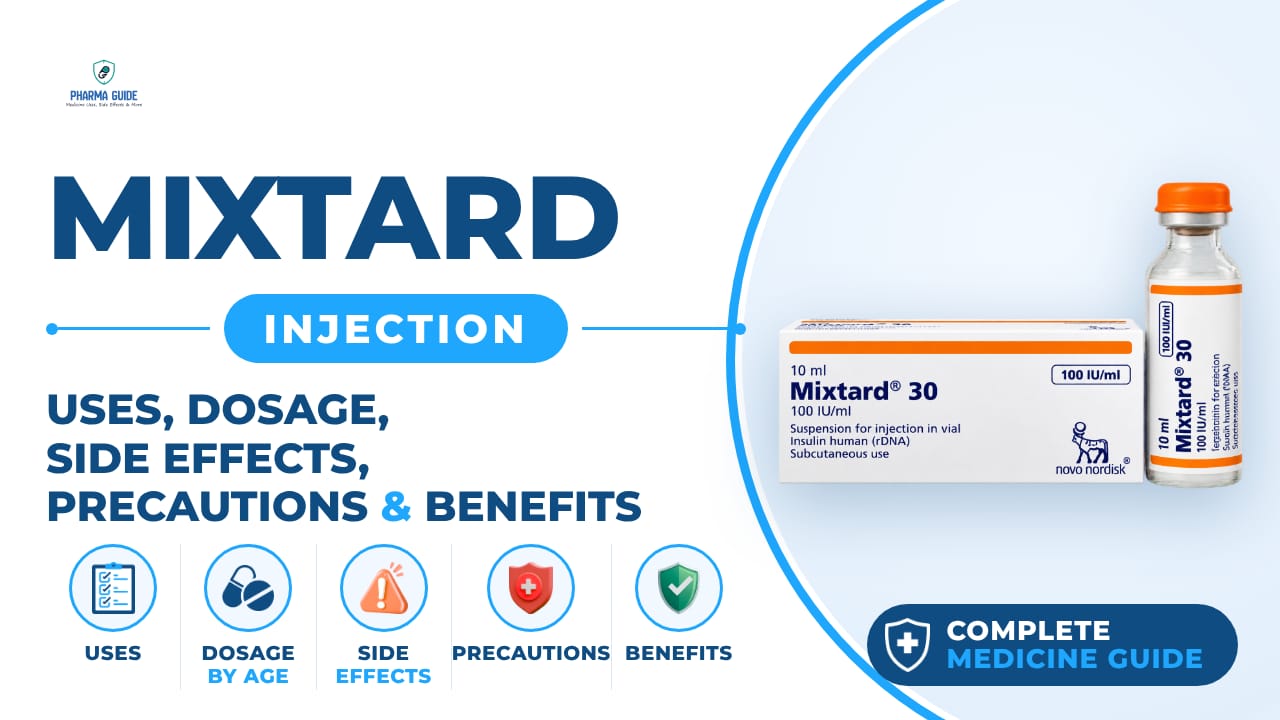
Mixtard Injection: Uses, Dosage, Side Effects, Precautions and Alternates
| Generic name | Human insulin (isophane and soluble insulin mix) |
|---|---|
| Drug class | Insulin used to treat diabetes |
| Forms | Suspension for injection (vials), Cartridges (Penfill), Pre-filled pens (InnoLet or FlexPen) |
Quick overview
Mixtard Injection contains human insulin, a mix of fast-acting soluble insulin and longer-acting isophane insulin, used to treat diabetes mellitus. It is available as vials, cartridges (Penfill), or pre-filled pens (InnoLet or FlexPen) in different strengths. It is given by injection under the skin to help control blood glucose levels in type 1 and type 2 diabetes.
What is Mixtard Injection
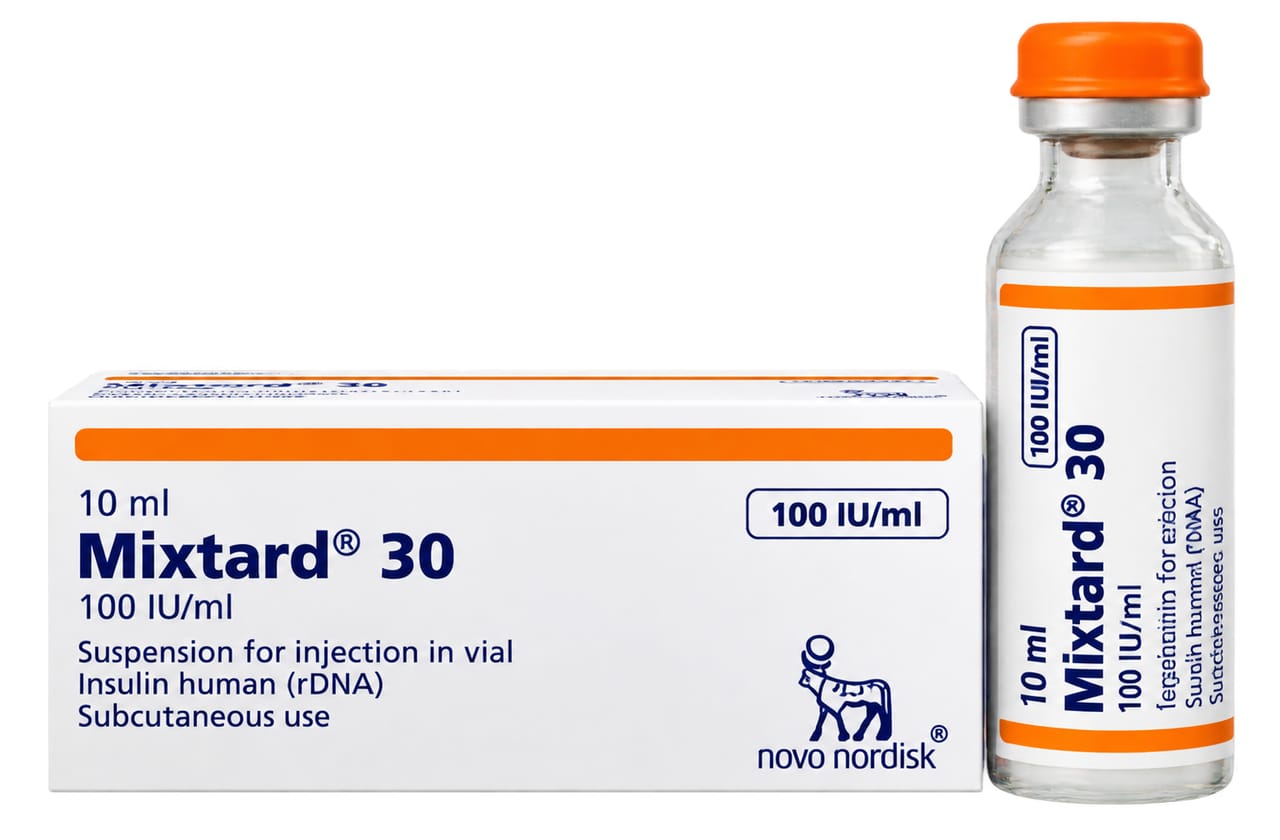
Mixtard is a suspension for injection that contains human insulin. It is available as vials, cartridges (Penfill) or pre-filled pens (InnoLet or FlexPen). It contains both fast-acting (soluble) and long-acting (isophane) insulin in different ratios depending on the strength (Mixtard 30, 40, or 50).
Mixtard Injection uses
- Treatment of diabetes mellitus
- Treatment of type 1 diabetes (insulin-dependent diabetes)
- Treatment of type 2 diabetes when oral antidiabetic agents are no longer effective
- Stabilization of early diabetes and emergency cases of diabetes
Benefits of Mixtard Injection
- Helps control blood glucose levels similarly to other human insulin
- Effective for both type 1 and type 2 diabetes
- Provides a rapid initial effect together with a longer-lasting effect
How Mixtard Injection works
Mixtard is a replacement insulin similar to the insulin your pancreas normally makes. It contains a fast-acting part that starts working within about 30 minutes, and a slower, longer-lasting part. Together, this helps move glucose from the blood into your cells, which lowers blood sugar and reduces the symptoms and complications of diabetes.
Mixtard Injection dosage
Mixtard is given by injection under the skin (subcutaneously), never into a vein or muscle. It is injected into the thigh, abdominal wall, buttocks, or upper arm/shoulder area. Injecting into the abdomen leads to faster absorption than other sites. Change the injection site each time to reduce the risk of skin lumps or pitting. Pinch a fold of skin before injecting to avoid injecting into muscle by accident, and hold the needle in place for at least 6 seconds after injecting to make sure the full dose goes in.
Roll the vial between your hands before injecting until the liquid looks evenly white and cloudy. It should be given about 30 minutes before a meal, and you should eat a meal or snack containing carbohydrates within 30 minutes of the injection. It is usually given once or twice a day. Blood glucose should be checked regularly to find the right dose.
Do not use if the resuspended insulin does not look uniformly white and cloudy. Do not share an injection pen, cartridge, or syringe with another person, even if the needle is changed.
Use exactly as prescribed by your doctor or pharmacist.
Available forms and strengths
- Suspension for injection (vials)
- Cartridges (Penfill)
- Pre-filled pens (InnoLet or FlexPen)
- Available as Mixtard 30, 40, or 50
Side effects of Mixtard Injection
Common
- Hypoglycaemia (low blood sugar)
- Itching, skin rash
- Weight gain
- Swelling and pain at the injection site
- Sweating, dizziness, shaking
- Abdominal and stomach pain
- Tingling of hands or feet
- Dry mouth
- Diarrhoea
- Sore throat
- Headache
- Sneezing
- Fever
- Body pain
- Nausea and vomiting
- Drowsiness
- Confusion
Serious
- Severe hypoglycaemia leading to unconsciousness, which may cause permanent brain damage or even death
- Systemic allergic reactions such as generalized rash, itching, sweating, gastrointestinal disturbances, angioedema, difficulty breathing, palpitations, and low blood pressure
- Lipodystrophy (lumps or pitting) at the injection site
Warnings and precautions
- Do not use if you are allergic to human insulin or any of its ingredients.
- Do not use if you have low blood sugar (hypoglycaemia) or if you suspect it is starting.
- Never inject into a vein or muscle — this medicine is for injection under the skin only.
- Do not use if the protective cap on the vial is loose or missing, or if the insulin does not look evenly white and cloudy after mixing.
- Do not stop taking this injection without consulting your doctor, even if your sugar levels are normal.
- Never share an injection pen, cartridge, or syringe with another person, even if the needle has been changed.
- Untreated high blood sugar in type 1 diabetes can lead to diabetic ketoacidosis, a potentially fatal condition.
- Insulin does not cross the placenta, so there are no special restrictions on treating diabetes during pregnancy, but blood glucose should be monitored closely. Insulin needs often drop in the first trimester and rise in the second and third trimesters.
- This medicine is considered safe while breastfeeding, but your doctor may need to adjust your dose or diet.
- Use with caution if you have kidney problems, as your dose may need to be reduced.
- Use with caution if you have liver problems, as your dose may need to be reduced.
- Drinking alcohol is not recommended during treatment because it can raise the risk of a build-up of lactic acid in the blood, and it may also affect how well this medicine controls your blood sugar.
- Low blood sugar can affect your ability to concentrate and react, which can be risky when driving or operating machinery.
Storage
- Store in a refrigerator
- Do not freeze
- Keep away from the reach of children and pets
When to see a doctor
- Get medical help right away if you notice signs of a serious allergic reaction, such as skin rash, itching or swelling of the face, tongue or throat, severe dizziness, or difficulty breathing.
- Seek immediate medical attention if you suspect you have taken too much of this medicine.
- Severe low blood sugar can cause unconsciousness; if this happens, someone should give an injection of glucagon or you may need urgent glucose treatment from a healthcare professional.
Alternatives
- Humulin 70/30
- Novolin 70/30
- Humalog Mix 75/25
Watch the video
FAQs
What is Mixtard Injection used for?
Mixtard Injection is used to treat diabetes mellitus, including type 1 diabetes and type 2 diabetes when oral antidiabetic agents are no longer effective. It is also used to stabilize early diabetes and in emergency cases of diabetes.
How should Mixtard Injection be given?
Mixtard is given by injection under the skin (subcutaneously) into the thigh, abdominal wall, buttocks, or upper arm/shoulder area, never into a vein or muscle. It should be given about 30 minutes before a meal, and you should eat a meal or snack with carbohydrates within 30 minutes of the injection.
What are the common side effects of Mixtard Injection?
Common side effects include hypoglycaemia, itching, skin rash, weight gain, swelling and pain at the injection site, sweating, dizziness, shaking, abdominal pain, tingling of hands or feet, dry mouth, diarrhoea, headache, nausea, and drowsiness.
Can Mixtard Injection be used during pregnancy or breastfeeding?
Insulin does not cross the placenta, so there are no special restrictions on treating diabetes during pregnancy, but blood glucose should be monitored closely. It is also considered safe while breastfeeding, though your doctor may need to adjust your dose or diet.
Is it safe to drink alcohol while using Mixtard Injection?
Drinking alcohol is not recommended during treatment because it can raise the risk of a build-up of lactic acid in the blood and may affect how well this medicine controls your blood sugar.
General information, not medical advice
Your prescriber and the leaflet in your pack know your situation. This page does not.
- Follow your prescriber and the leaflet
- Don't start, stop, or change a dose on your own
- Doses and warnings differ by country and product
Sources
Video
Related medicines

Injectafer Injection: Uses, Dosage, Side Effects, Precautions and Alternates
Iron products
Injectafer (ferric carboxymaltose) treats iron deficiency anemia and heart failure-related iron deficiency via IV. Learn uses, dosage, side effects, and

Gliclazide Tablet: Uses, Dosage, Side Effects, Precautions and Alternates
Sulfonylurea (hypoglycemic/antidiabetic agent)
Gliclazide Tablet is a sulfonylurea for type 2 diabetes that boosts insulin release. Learn about dosage, side effects, warnings, and precautions.