
Safety
General information, not medical advice
Your prescriber and the leaflet in your pack know your situation. This page does not.
- Follow your prescriber and the leaflet
- Don't start, stop, or change a dose on your own
- Doses and warnings differ by country and product
Modafinil Tablet: Uses, Dosage, Side Effects, Precautions and Alternates
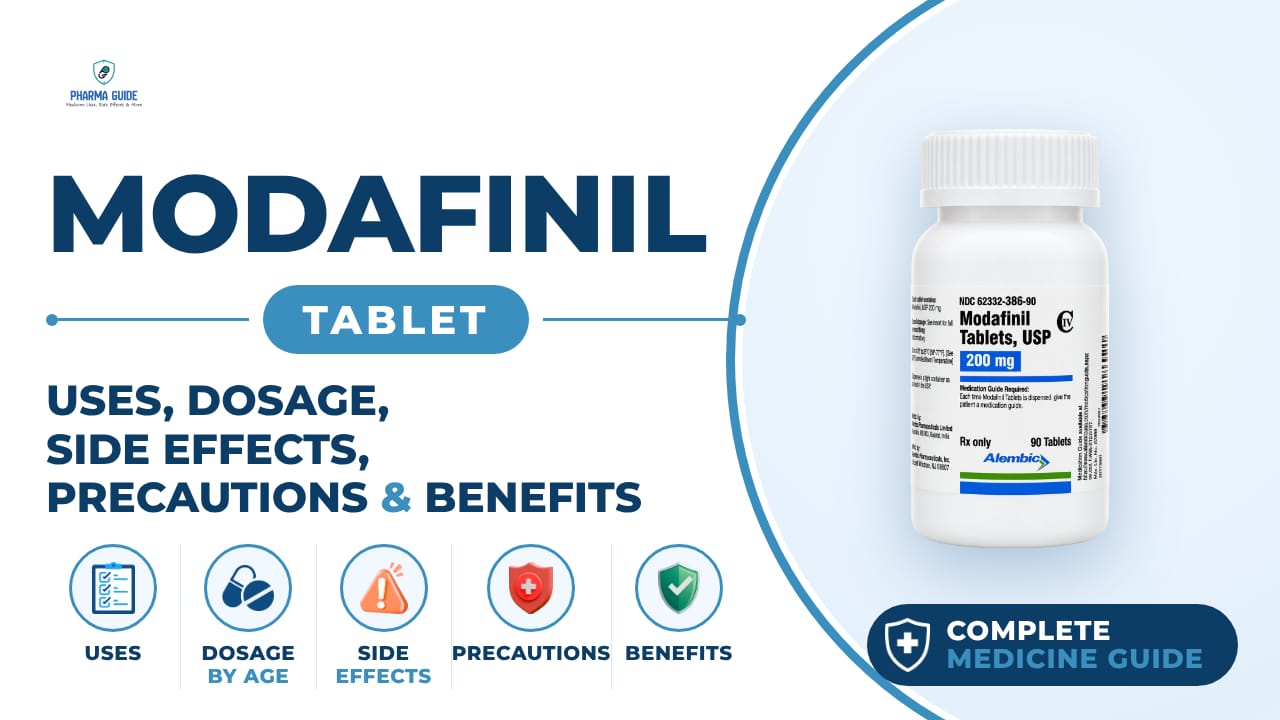
| Generic name | modafinil |
|---|---|
| Drug class | Stimulants |
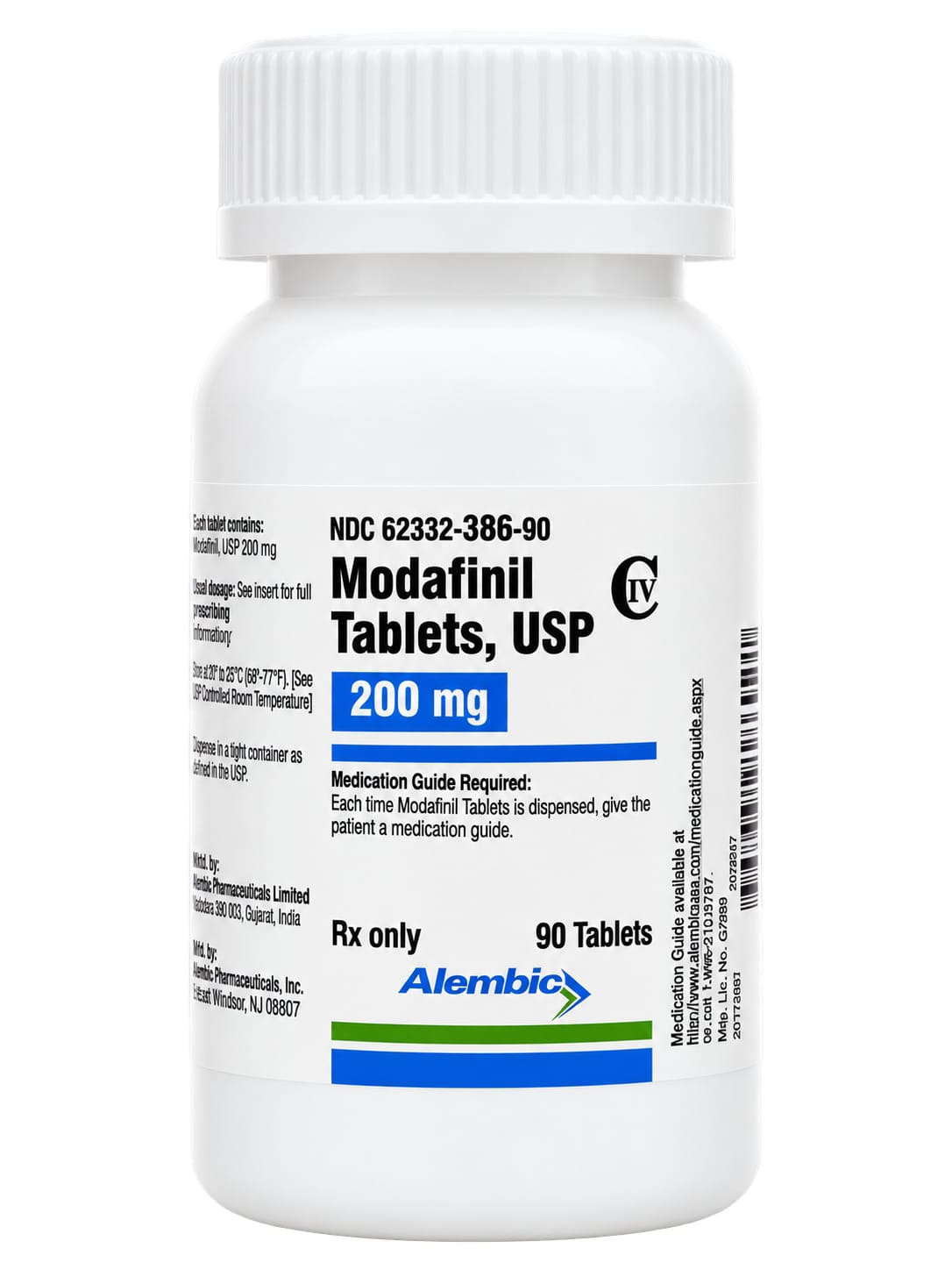
| Forms | Tablet (100 mg and 200 mg) |
Quick overview
Modafinil Tablet (generic name: modafinil) is a prescription stimulant medicine that helps people with certain sleep conditions stay awake during the day. It is used for narcolepsy, obstructive sleep apnea, and shift work sleep disorder. It does not cure these conditions and only works as long as you keep taking it.
What is Modafinil Tablet
Modafinil is a prescription medicine that helps people with certain sleep conditions stay awake during the day. It treats narcolepsy, obstructive sleep apnea, and shift work sleep disorder. It does not cure these conditions and only works as long as you keep taking it.
Modafinil Tablet uses
- Narcolepsy (a sleep disorder causing extreme daytime sleepiness)
- Obstructive sleep apnea/hypopnea syndrome (along with treatment for the airway blockage)
- Shift work sleep disorder (sleepiness from working irregular hours, like nights)
Benefits of Modafinil Tablet
- Helps improve wakefulness during the day for people with narcolepsy, sleep apnea, or shift work sleep disorder
How Modafinil Tablet works
Modafinil promotes wakefulness, similar to amphetamines, by stimulating the brain. Scientists don't know exactly how it works, but it may raise levels of a brain chemical called dopamine by stopping nerves from reabsorbing it.
Modafinil Tablet dosage
Take this medicine by mouth with water. Take it at the same time every day as directed on your prescription label. You can take it with or without food. If it upsets your stomach, take it with food. Keep taking it unless your care team tells you to stop. Do not change the time of day you take it without talking to your doctor first.
This medicine does not replace getting enough sleep and should not be used for occasional sleepiness that hasn't been diagnosed as narcolepsy, sleep apnea, or a shift work sleep problem. If you have sleep apnea and use a CPAP machine at night, keep using it along with this medicine.
If you miss a dose, take it as soon as you remember. If it's almost time for your next dose, just take that one — do not double up. This medicine is only for you; do not share it with others. Talk to your care team about use in children, as special care may be needed.
Use exactly as prescribed by your doctor or pharmacist.
Available forms and strengths
- Tablet (100 mg and 200 mg)
Side effects of Modafinil Tablet
Common
- Anxiety
- Nervousness
- Headache
- Nausea
- Trouble sleeping (insomnia)
- Upper respiratory tract infection
Serious
- Allergic reactions or swelling—skin rash, itching or hives, swelling of the face, eyes, lips, tongue, arms, or legs, trouble swallowing or breathing
- Increase in blood pressure
- Mood and behavior changes—anxiety, nervousness, confusion, hallucinations, irritability, hostility, thoughts of suicide or self-harm, worsening mood, feelings of depression
- Rash, fever, and swollen lymph nodes
- Redness, blistering, peeling, or loosening of the skin, including inside the mouth
- Chest pain or discomfort
- Dark urine, yellow eyes or skin
- Unusual bleeding or bruising
- Fast or pounding heartbeat
- Trouble urinating, increased thirst and urination
- Confusion, memory problems, rapidly changing moods
- Shortness of breath, sore throat
- Uncontrolled movements of the face, mouth, or tongue
Warnings and precautions
- This medicine can cause serious skin reactions that may appear weeks or months after you start taking it. Contact your care team right away if you get fever or flu-like symptoms along with a rash, especially one that turns into blisters or peeling skin, or a red rash with facial swelling or swollen lymph nodes.
- This medicine can cause a serious, life-threatening allergic reaction called anaphylaxis. Stop taking it and call your doctor right away if you get a rash, itching, hives, hoarseness, trouble breathing or swallowing, or swelling of your hands, face, or mouth.
- This medicine may cause serious allergic reactions that affect organs like the heart, liver, or blood cells. Stop taking it and see your doctor right away if you notice chest pain, fever and chills, dark urine, headache, rash, stomach pain, unusual tiredness, unusual bleeding or bruising, or yellow eyes or skin.
- Birth control pills, patches, implants, shots, vaginal rings, and IUDs may not work as well while you're taking this medicine. Use another form of birth control, such as condoms or spermicide, while taking it and for one month after your last dose.
- This medicine can be misused or lead to dependence. Keep it in a safe place, don't share it, and never sell or give it away, as that is dangerous and against the law.
- If you've been taking this medicine for a long time or in large doses, don't stop suddenly without checking with your doctor first, since you may need to taper off gradually.
- Tell your doctor if you are pregnant or planning to become pregnant. There isn't enough research on how this medicine affects pregnant women, and your doctor may want you to join a pregnancy registry if you take this medicine.
- There isn't enough research on how this medicine affects breastfeeding infants. Talk with your doctor to weigh the benefits against the possible risks before using it while breastfeeding.
- Tell your care team if you have kidney disease before starting this medicine.
- Tell your care team if you have liver disease. If you have severe liver disease, this medicine should be used with caution and you may need a lower dose.
- Be careful to limit how much alcohol you drink while taking this medicine, since drinking alcohol can increase the risk of dizziness or fainting.
- This medicine may affect your coordination, reaction time, judgment, or cause dizziness or blurred vision. Don't drive or use machines until you know how it affects you.
Storage
- Store at room temperature between 20 and 25 degrees C (68 and 77 degrees F).
- Store the medicine in a closed container, away from heat, moisture, and direct light. Keep from freezing.
- Keep out of the reach of children and pets.
- Get rid of any unused medication after the expiration date.
- Take the medication to a medication take-back program; check with your pharmacy or law enforcement to find a location.
- If you cannot return the medication, check the label or package insert to see if it should be thrown out in the garbage or flushed down the toilet. If not sure, ask your care team. If safe to trash, take it out of the container, mix it with cat litter, dirt, coffee grounds, or another unwanted substance, seal it in a bag or container, and put it in the trash.
- Do not keep outdated medicine or medicine no longer needed.
When to see a doctor
- Get emergency help right away if you show signs of overdose, such as agitation, excitement, fast or pounding heartbeat, increased blood pressure, or trouble sleeping.
- Call your care team right away if you have mood or behavior changes like anxiety, confusion, hallucinations, hostility, irritability, worsening depression, or thoughts of suicide or self-harm.
- Stop using this medicine and call your doctor right away if you notice skin blistering, peeling, or loosening, red skin lesions, severe acne or rash, skin sores or ulcers, or fever or chills.
- If you think you've taken too much of this medicine, contact a poison control center or go to an emergency room right away.
Alternatives
- Pitolisant
- Solriamfetol
- Armodafinil
Watch the video
FAQs
What is Modafinil Tablet used for?
It is used to treat narcolepsy, obstructive sleep apnea/hypopnea syndrome (along with treatment for airway blockage), and shift work sleep disorder.
How does Modafinil Tablet work?
Modafinil promotes wakefulness similarly to amphetamines by stimulating the brain. It may raise levels of the brain chemical dopamine by stopping nerves from reabsorbing it, though the exact mechanism isn't fully known.
What are the common side effects of Modafinil Tablet?
Common side effects include anxiety, nervousness, headache, nausea, trouble sleeping (insomnia), and upper respiratory tract infection.
Can I drink alcohol while taking Modafinil Tablet?
You should limit alcohol while taking this medicine, since drinking alcohol can increase the risk of dizziness or fainting.
Does Modafinil Tablet affect birth control?
Yes, birth control pills, patches, implants, shots, vaginal rings, and IUDs may not work as well while taking this medicine. Use another form of birth control, like condoms or spermicide, during treatment and for one month after your last dose.
General information, not medical advice
Your prescriber and the leaflet in your pack know your situation. This page does not.
- Follow your prescriber and the leaflet
- Don't start, stop, or change a dose on your own
- Doses and warnings differ by country and product
Sources
Video
Related medicines

Injectafer Injection: Uses, Dosage, Side Effects, Precautions and Alternates
Iron products
Injectafer (ferric carboxymaltose) treats iron deficiency anemia and heart failure-related iron deficiency via IV. Learn uses, dosage, side effects, and

Gliclazide Tablet: Uses, Dosage, Side Effects, Precautions and Alternates
Sulfonylurea (hypoglycemic/antidiabetic agent)
Gliclazide Tablet is a sulfonylurea for type 2 diabetes that boosts insulin release. Learn about dosage, side effects, warnings, and precautions.