
Safety
General information, not medical advice
Your prescriber and the leaflet in your pack know your situation. This page does not.
- Follow your prescriber and the leaflet
- Don't start, stop, or change a dose on your own
- Doses and warnings differ by country and product
Mometasone Cream: Uses, Dosage, Side Effects, Precautions and Alternates
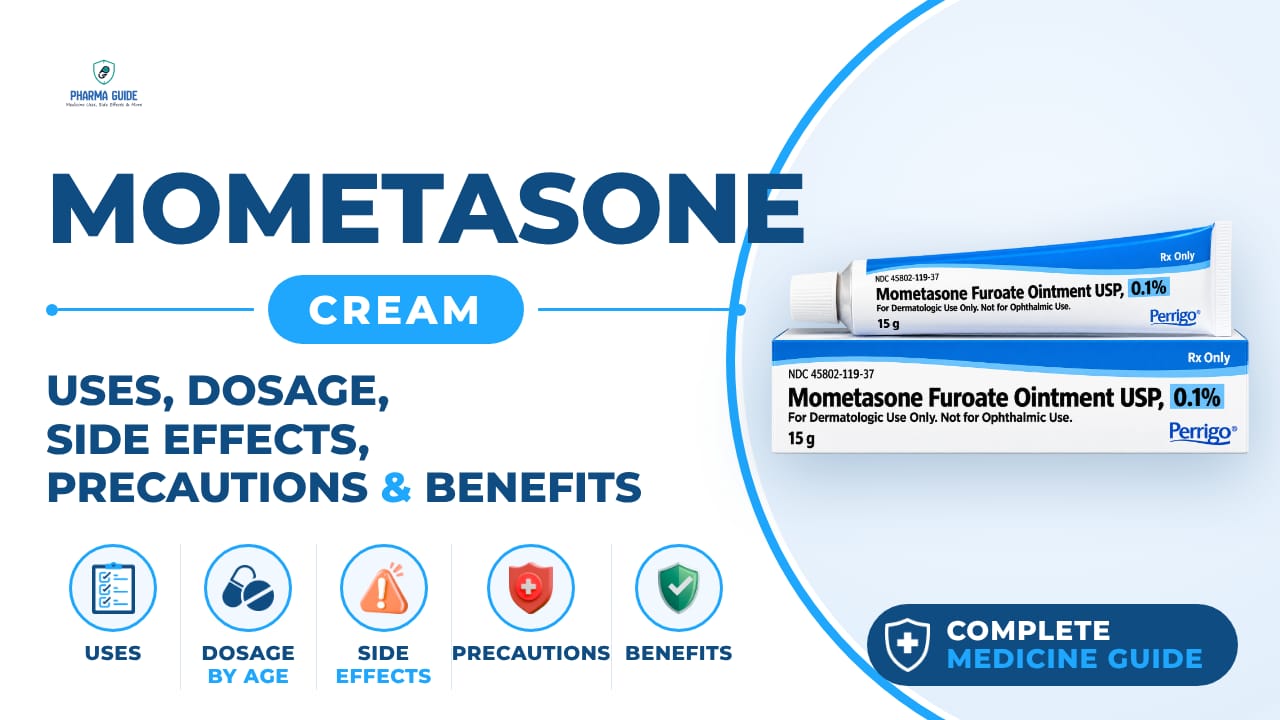
| Generic name | Mometasone furoate |
|---|---|
| Drug class | Topical corticosteroid |
| Forms | Cream, Ointment, Lotion, Solution, Nasal spray, Inhaler |
Quick overview
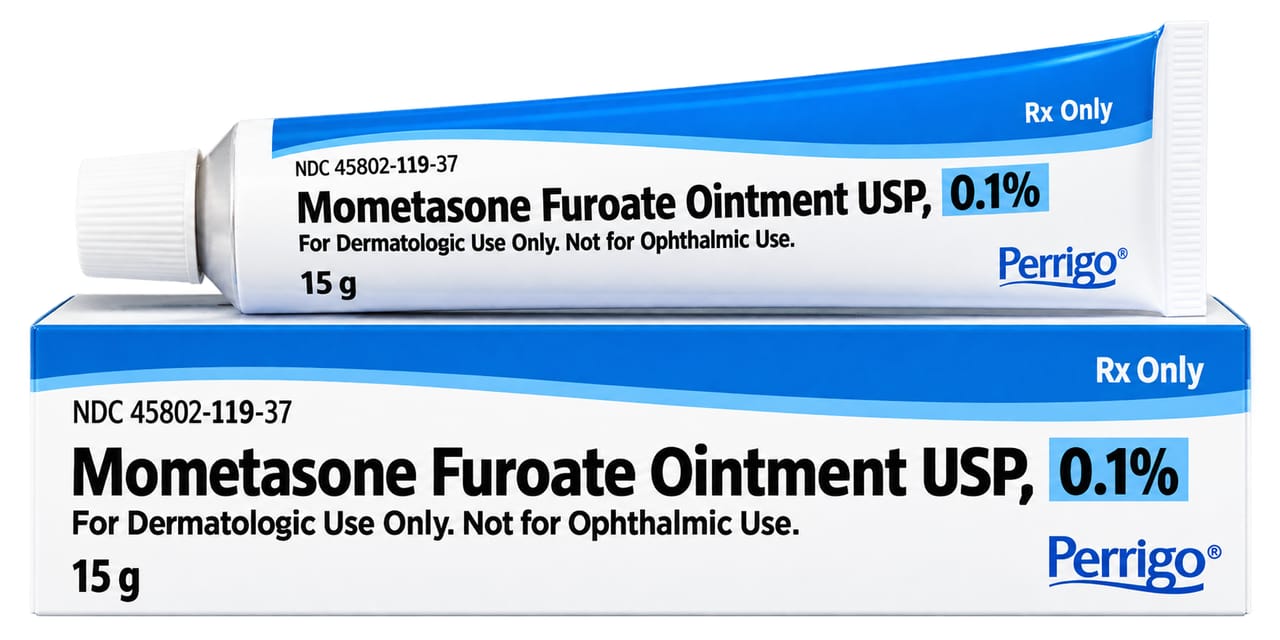
Mometasone Cream (mometasone furoate) is a prescription topical corticosteroid used to reduce redness and itchiness from certain skin conditions. It is classed as a strong, potent corticosteroid applied directly to the skin. It is commonly used for psoriasis (excluding widespread plaque psoriasis) and dermatitis, including eczema and seborrheic dermatitis. It works by reducing inflammation within skin cells.
What is Mometasone Cream
Mometasone Cream is a prescription topical corticosteroid (steroid) medicine. It is classed as a strong (potent) corticosteroid that is put on the skin to reduce redness and itchiness caused by certain skin conditions.
Mometasone Cream uses
- Reducing redness and itchiness caused by psoriasis (excluding widespread plaque psoriasis)
- Reducing redness, itching, and swelling caused by dermatitis, including atopic dermatitis (eczema) and seborrheic dermatitis
Benefits of Mometasone Cream
- Reduces redness and itchiness from psoriasis and dermatitis
- Helps manage flare-ups and minimize scaling in psoriasis
- Reduces swelling (inflammation) in the skin to help manage eczema symptoms
How Mometasone Cream works
Mometasone works by entering skin cells and binding to specific receptors inside them. This action reduces inflammation by blocking the release of certain chemicals that cause swelling, prevents too many immune cells from gathering at the site of inflammation, and reduces leakiness of blood vessels and scar tissue formation.
Mometasone Cream dosage
Apply a thin layer to the affected area once a day and gently rub or massage it in until absorbed. Use only a small amount; one fingertip unit is enough to cover an area about twice the size of an adult's hand. Do not apply more cream or more often than your doctor or pharmacist has advised.
Do not use on your face for more than 5 days unless your doctor tells you otherwise. Do not use on children for more than 5 days unless a doctor says it is okay. Do not put the cream under a child's diaper or nappy, as this increases how much is absorbed through the skin.
Check with your doctor before covering treated areas with a bandage or plaster; treated areas on the face or in children should not be covered. Do not use on large areas of the body every day for many weeks or months.
Avoid using in or around your eyes, including the eyelids. Wash your hands after applying, and avoid touching your eyes.
If you forget a dose, apply it as soon as you remember and then continue as before; do not double up. Do not stop long-term use suddenly, as this can cause redness, stinging, or burning; your doctor may reduce how often you use it gradually before stopping.
| Age group | Dose |
|---|---|
| Under 2 Years | Use only if prescribed by a doctor |
| 2 Years and Above | Apply a thin layer to affected area once daily |
| Adults (18–64 Years) | Apply a thin layer once daily as prescribed |
| Older Adults (65+ years) | Apply a thin layer once daily; use with caution on sensitive skin |
Available forms and strengths
- Cream
- Ointment
- Lotion
- Solution
- Nasal spray
- Inhaler
Side effects of Mometasone Cream
Common
- Mild burning or stinging sensation after application
- Itching or tingling
- Changes in skin color (lighter or darker patches)
- Skin irritation or sensitivity
- Dryness of the skin
Serious
- Skin thinning, stretch marks, or softening of the skin
- Adrenal gland suppression, which may cause fatigue, dizziness, nausea, or unexplained weight loss
- Skin infections, which may present as increased redness, swelling, or yellow discharge
- Pus-filled bumps or boils (furunculosis), particularly with psoriasis
- Excessive hair growth
- Inflammation or infection of the hair follicles
- Rosacea-like redness of the facial skin including spots and visible blood vessels
- Steroid withdrawal reaction with redness, burning or stinging, intense itching, peeling skin, or oozing sores after stopping long-term use
- Blurred vision or other visual disturbances
- Delayed growth in children and teenagers with long-term use
Warnings and precautions
- Do not use on other skin problems such as rosacea, acne, skin thinning, dermatitis around the mouth, genital itching, nappy rash, cold sores, shingles, chickenpox, warts, ulcerated skin, wounds, or other skin infections, as it could make them worse.
- Using this cream on psoriasis may make the condition worse in some cases, so your progress should be reviewed regularly by your doctor.
- If your skin becomes irritated or more sensitive after using this cream, stop using it and tell your doctor.
- If your condition gets worse while using the cream, this could mean you have an allergic reaction, an infection, or need a different treatment, so contact your doctor.
- If your condition comes back within 2 weeks of stopping treatment, do not restart the cream without checking with your doctor first, unless already advised to do so.
- Contact your doctor if you notice blurred vision or other changes in your eyesight.
- Using large amounts, on large areas, or for a long time can affect your hormones, and in children this may affect growth and development.
- Stopping long-term use suddenly can cause a withdrawal reaction with redness, burning, or stinging of the skin.
- This cream is not recommended for children under 2 years of age.
- Tell your doctor about all other medicines you use, especially those containing cobicistat, ritonavir (for HIV), or itraconazole (for fungal infections), as these can interact with this cream.
If you are pregnant, think you may be pregnant, or are planning to have a baby, ask your doctor or pharmacist for advice before using this medicine. It should be used during pregnancy only if the potential benefit justifies the potential risk to the baby, and should not be used extensively, in large amounts, or for prolonged periods.
If you are breast-feeding or planning to breast-feed, ask your doctor or pharmacist for advice before using this medicine. Caution should be used because corticosteroids taken by mouth or injection can pass into breast milk, and it is not clear if this also happens with the cream.
No special precautions are needed for patients with kidney problems. No special precautions are needed for patients with liver problems. There are no restrictions on food, drink, or alcohol while using this cream. This medicine is not expected to affect your ability to drive or use machines.
Storage
- Keep this medicine out of the sight and reach of children
- Do not use after the expiry date stated on the tube and carton
- This medicinal product does not require any special storage conditions
- Do not refrigerate or freeze
- Discard the opened tube with any remaining cream after 12 weeks
- Do not throw away medicines via wastewater or household waste; ask your pharmacist how to dispose of medicines you no longer use
When to see a doctor
- Get emergency medical help right away if you notice swelling of the lips, tongue, throat, or face.
- Get emergency medical help right away if you have difficulty breathing, wheezing, or choking.
- Get emergency medical help right away if your skin turns pale, grey, or blue, especially on the palms or soles.
- Get emergency medical help right away if you have severe dizziness, confusion, or you lose consciousness.
- Seek urgent medical care if you experience these or other persistent symptoms.
Alternatives
- Hydrocortisone Cream
- Betamethasone Cream
- Fluocinonide Cream
Watch the video
FAQs
What is Mometasone Cream used for?
It is used to reduce redness and itchiness from psoriasis (excluding widespread plaque psoriasis) and to reduce redness, itching, and swelling from dermatitis, including eczema and seborrheic dermatitis.
How often should I apply Mometasone Cream?
Apply a thin layer to the affected area once a day, rubbing it in gently until absorbed. Use only a small amount, as one fingertip unit covers an area about twice the size of an adult's hand.
Can I use Mometasone Cream on my face?
Do not use on your face for more than 5 days unless your doctor tells you otherwise.
What are the side effects of Mometasone Cream?
Common side effects include mild burning or stinging, itching, skin color changes, irritation, and dryness. Serious side effects can include skin thinning, adrenal gland suppression, skin infections, and steroid withdrawal reactions.
Can children use Mometasone Cream?
It is not recommended for children under 2 years of age. For children 2 years and above, it should be used only as prescribed and not for more than 5 days unless a doctor advises otherwise.
General information, not medical advice
Your prescriber and the leaflet in your pack know your situation. This page does not.
- Follow your prescriber and the leaflet
- Don't start, stop, or change a dose on your own
- Doses and warnings differ by country and product
Sources
Video
Related medicines
Amcinonide Lotion: Uses, Dosage, Side Effects, Precautions and Alternates
Topical corticosteroid
Amcinonide Lotion is a high-potency corticosteroid for eczema, dermatitis, and psoriasis. Learn uses, dosage, side effects, and precautions.
Amcinonide Cream: Uses, Dosage, Side Effects, Precautions and Alternates
Topical corticosteroid
Amcinonide Cream is a high-potency corticosteroid that relieves itching, redness, and inflammation from eczema, dermatitis, and psoriasis.