
Safety
General information, not medical advice
Your prescriber and the leaflet in your pack know your situation. This page does not.
- Follow your prescriber and the leaflet
- Don't start, stop, or change a dose on your own
- Doses and warnings differ by country and product
Montelukast + Levocetirizine Tablet: Uses, Dosage, Side Effects, Precautions and Alternates
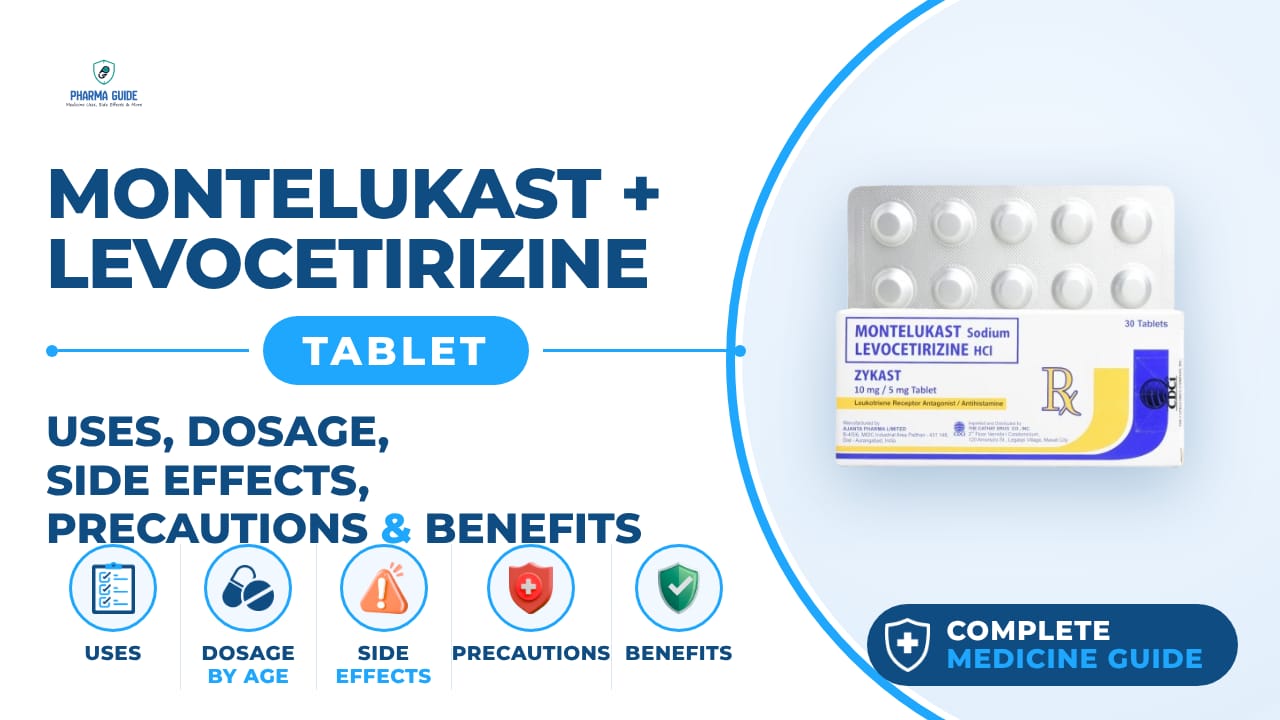
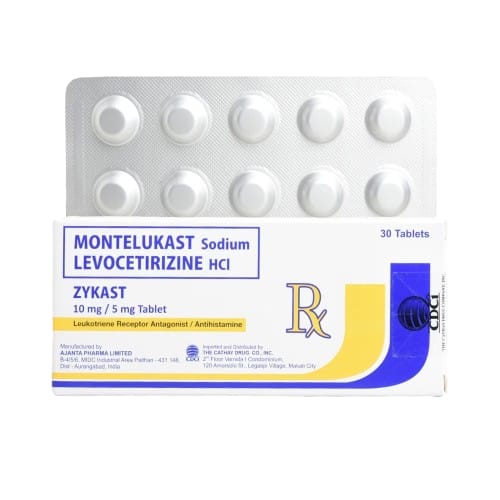
| Generic name | Montelukast, Levocetirizine |
|---|---|
| Drug class | Antiallergic (leukotriene receptor antagonist + antihistamine combination) |
| Forms | Oral tablets, Chewable tablets, Dispersible tablets, Syrup |
Quick overview
Montelukast + Levocetirizine Tablet combines a leukotriene receptor antagonist (montelukast) with an antihistamine (levocetirizine) to treat allergic rhinitis symptoms when an antihistamine alone is not enough. It relieves sneezing, runny or blocked nose, and itchy, watery eyes caused by seasonal or year-round allergens. It may also be used alongside regular asthma treatment but does not replace a reliever or controller inhaler.
What is Montelukast + Levocetirizine Tablet
This medicine combines two drugs, montelukast and levocetirizine, used together to treat allergic rhinitis symptoms when an antihistamine alone is not enough.
Montelukast + Levocetirizine Tablet uses
- Seasonal allergic rhinitis (hay fever): relieves sneezing, a runny or blocked nose, and itchy, watery eyes caused by pollen and other seasonal allergens
- Perennial allergic rhinitis: manages year-round nasal allergy symptoms triggered by indoor allergens such as dust mites and pet dander
- Allergic rhinitis with nasal congestion: helps reduce nasal blockage, sneezing, and a runny nose when both medicines are considered necessary
- Allergic rhinitis with eye symptoms: eases itching and watering of the eyes that occur along with nasal allergy symptoms
- Allergic rhinitis in people with coexisting asthma: may be prescribed as an add-on to regular asthma treatment; it does not replace a reliever or controller inhaler
Benefits of Montelukast + Levocetirizine Tablet
- Relieves allergic rhinitis symptoms through two complementary actions
- May work better than montelukast alone for reducing nasal congestion and runny nose
How Montelukast + Levocetirizine Tablet works
Levocetirizine is an antihistamine that blocks histamine, the chemical that causes sneezing, runny nose, itching, and watery eyes. Montelukast blocks leukotrienes, chemicals released during allergic inflammation that increase swelling and mucus production in the nose and narrow the airways. Together, they target two different pathways involved in allergic rhinitis.
Montelukast + Levocetirizine Tablet dosage
This medicine must be taken at the same time each day to work properly, even if symptoms seem better. It may be taken with or without food. Children should receive this medicine only in the dose and dosage form prescribed by a doctor, since higher-strength tablets meant for adults should not be given to young children.
If you miss a dose, take it as soon as you remember, but if it is nearly time for your next dose, skip the missed one and continue your regular schedule; do not take two doses at once. People with asthma should keep their prescribed rescue inhaler available, since this combination does not replace an inhaler or other controller medicines.
| Age group | Dose |
|---|---|
| Under 6 Years | Use only if prescribed by a doctor |
| 6–11 Years | Dose based on product strength and medical advice |
| 12 Years and Above | Montelukast 10 mg + Levocetirizine 5 mg once daily (usually in the evening) |
| Adults (18–64 Years) | Montelukast 10 mg + Levocetirizine 5 mg once daily |
Available forms and strengths
- Oral tablets
- Chewable tablets
- Dispersible tablets
- Syrup
Montelukast 10 mg + Levocetirizine 5 mg
Side effects of Montelukast + Levocetirizine Tablet
Common
- Drowsiness or sleepiness
- Fatigue
- Headache
- Dry mouth
- Abdominal pain
- Nausea
- Diarrhoea
- Vomiting
Serious
- Mood or behavioural changes
- Swelling of the face or throat
- Severe difficulty breathing
- Serious skin reaction
- Agitation, anxiety, or thoughts of self-harm
- Signs of blood vessel disease such as pins and needles, numbness in arms or legs, flu-like symptoms, rash, or sinus pain or swelling
Warnings and precautions
- Do not take this medicine if you are allergic to levocetirizine, cetirizine, montelukast, or any other ingredient in the product.
- Tell your doctor if you are taking rifampicin, phenobarbital, ritonavir, theophylline, sedatives, or other medicines that depress the central nervous system, since these may need monitoring or dose adjustment.
- This medicine may cause some people to become agitated, disoriented, irritable, or have other unusual behavior, including suicidal thoughts. Report any troubling thoughts or behavior changes to the doctor right away, especially if they are new or getting worse.
- Patients with asthma should always keep their prescribed rescue inhaler available, since this combination does not substitute for an inhaler or other controller medicine.
- Do not take this medicine during pregnancy unless your doctor advises it. Your doctor will only recommend it after carefully weighing the possible benefits and risks.
- Do not take this medicine while breastfeeding unless your doctor advises it. Watch the baby for unusual sleepiness, irritability, or poor feeding.
- Tell your doctor if you have kidney disease. This medicine should not be used in people with end-stage kidney disease, very low kidney function, or those on dialysis.
- Tell your doctor if you have liver disease before taking this medicine.
- Avoid alcohol while taking this medicine, as it can increase drowsiness and reduce mental alertness.
- This medicine may cause drowsiness, sleepiness, fatigue, or dizziness. Avoid driving, operating machinery, or doing tasks that need full alertness until you know how it affects you.
Storage
- Keep out of the reach of children.
- Do not keep outdated medicine or medicine no longer needed.
- Ask your healthcare professional how you should dispose of any medicine you do not use.
- Store the medicine in a closed container at room temperature, away from heat, moisture, and direct light. Keep from freezing.
- Store the chewable tablets, oral granules, and tablets in its original package or container.
When to see a doctor
- Stop taking the medicine and get emergency medical help if you develop mood or behavior changes, swelling of the face or throat, severe difficulty breathing, or a serious skin reaction.
- Get medical help right away if you have feelings of pins and needles or numbness in your arms or legs, flu-like symptoms, rash, or pain or swelling around the sinuses, as these could be signs of a rare blood vessel condition.
- If you take more than the prescribed dose and have symptoms like drowsiness, stomach pain, headache, vomiting, excessive thirst, restlessness, or agitation, contact your doctor or the nearest emergency medical centre right away.
Alternatives
- Montelukast Tablet
- Levocetirizine Tablet
- Cetirizine Tablet
- Desloratadine Tablet
Watch the video
FAQs
What is Montelukast + Levocetirizine Tablet used for?
It is used to treat allergic rhinitis symptoms such as sneezing, runny or blocked nose, and itchy, watery eyes caused by seasonal or year-round allergens, when an antihistamine alone is not enough. It may also be used alongside regular asthma treatment but does not replace a reliever or controller inhaler.
What is the usual dose of Montelukast + Levocetirizine Tablet for adults?
For adults and those 12 years and above, the usual dose is Montelukast 10 mg + Levocetirizine 5 mg once daily, usually taken in the evening at the same time each day.
What are the common side effects of Montelukast + Levocetirizine Tablet?
Common side effects include drowsiness or sleepiness, fatigue, headache, dry mouth, abdominal pain, nausea, diarrhoea, and vomiting.
Can I drink alcohol while taking Montelukast + Levocetirizine Tablet?
Alcohol should be avoided while taking this medicine, as it can increase drowsiness and reduce mental alertness.
Does this medicine replace an asthma inhaler?
No, patients with asthma should keep their prescribed rescue inhaler available, since this combination does not substitute for an inhaler or other controller medicine.
General information, not medical advice
Your prescriber and the leaflet in your pack know your situation. This page does not.
- Follow your prescriber and the leaflet
- Don't start, stop, or change a dose on your own
- Doses and warnings differ by country and product
Sources
Video
Related medicines

Injectafer Injection: Uses, Dosage, Side Effects, Precautions and Alternates
Iron products
Injectafer (ferric carboxymaltose) treats iron deficiency anemia and heart failure-related iron deficiency via IV. Learn uses, dosage, side effects, and

Gliclazide Tablet: Uses, Dosage, Side Effects, Precautions and Alternates
Sulfonylurea (hypoglycemic/antidiabetic agent)
Gliclazide Tablet is a sulfonylurea for type 2 diabetes that boosts insulin release. Learn about dosage, side effects, warnings, and precautions.