
Safety
General information, not medical advice
Your prescriber and the leaflet in your pack know your situation. This page does not.
- Follow your prescriber and the leaflet
- Don't start, stop, or change a dose on your own
- Doses and warnings differ by country and product
Montelukast Tablet: Uses, Dosage, Side Effects, Precautions and Alternates
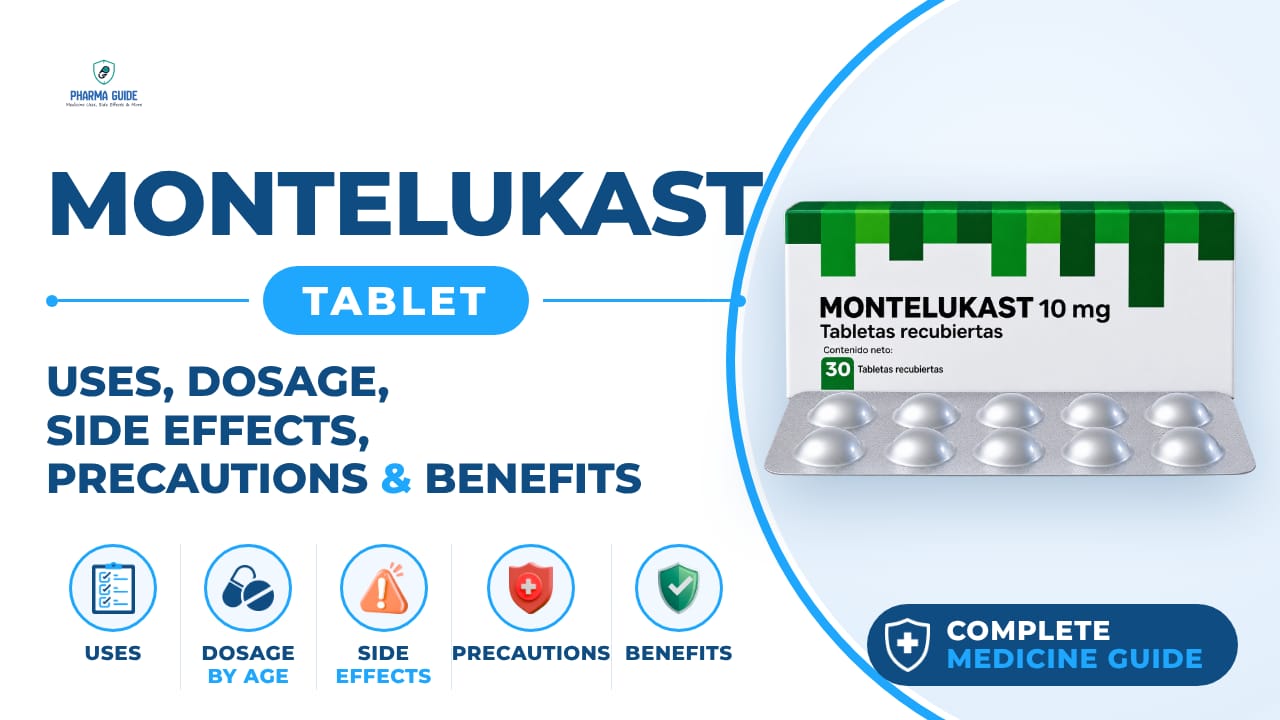
| Generic name | Montelukast |
|---|---|
| Drug class | Leukotriene receptor antagonist (also called a leukotriene modifier) |
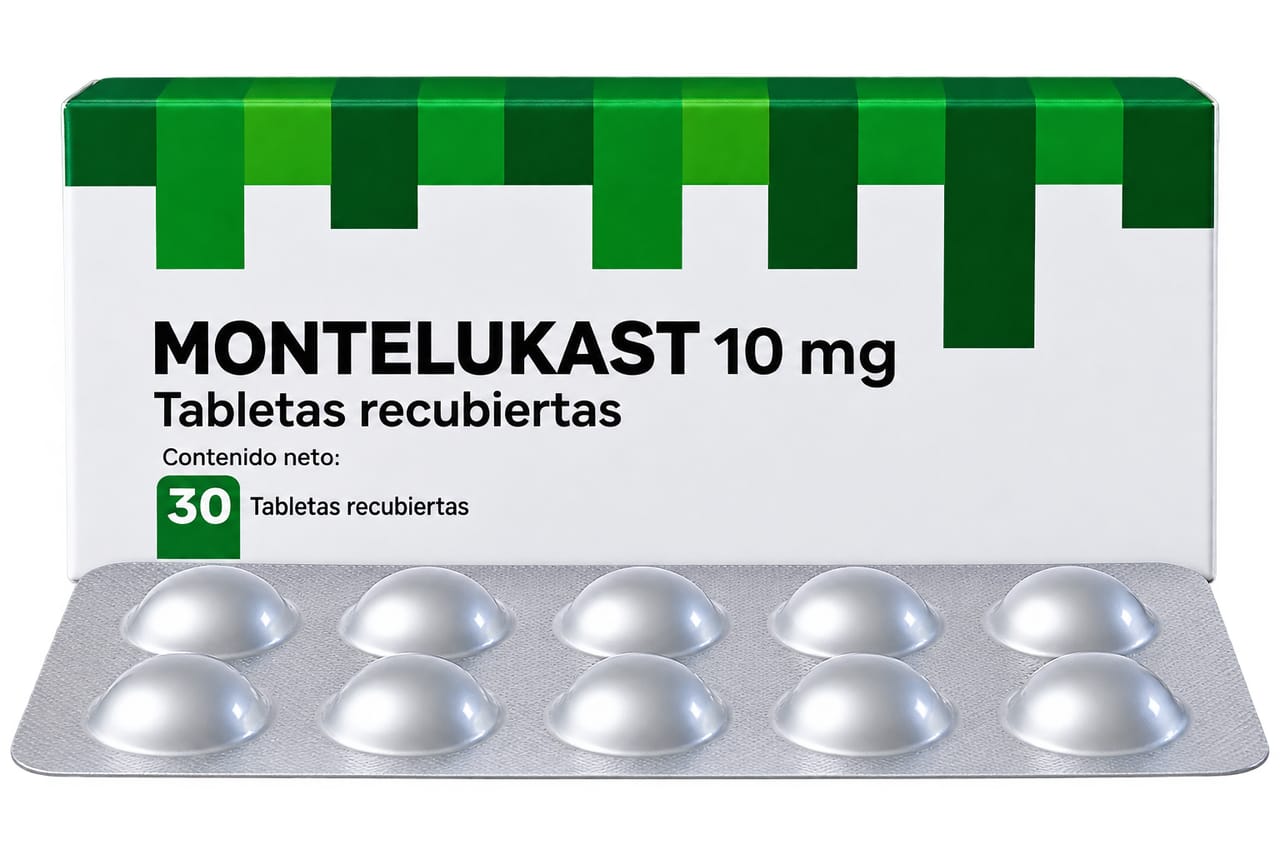
| Forms | Oral tablet, Chewable tablet, Oral granules (packet/powder) |
Quick overview
Montelukast is a prescription leukotriene receptor antagonist used long-term to control chronic asthma symptoms, prevent exercise-induced breathing problems, and treat seasonal or year-round allergic rhinitis symptoms. It works by blocking leukotrienes, substances that cause airway inflammation, swelling, and narrowing. It is taken once daily and is not a fast-acting rescue treatment for sudden asthma attacks. It is available as a regular tablet, chewable tablet, and oral granules.
What is Montelukast Tablet
Montelukast is a prescription medicine that helps reduce inflammation in the airways and nose. It belongs to a drug class called leukotriene receptor antagonists, also known as leukotriene modifiers. It is used long-term to control asthma and allergy symptoms, not to treat sudden attacks.
Montelukast Tablet uses
- Prevent and treat chronic asthma symptoms such as wheezing, chest tightness, coughing, and difficulty breathing
- Prevent exercise-induced bronchoconstriction (narrowing of the airways caused by exercise)
- Treat symptoms of seasonal allergic rhinitis (hay fever), such as sneezing and runny or stuffy nose, when other treatments have not worked or cannot be used
- Treat symptoms of perennial (year-round) allergic rhinitis when other treatments have not worked or cannot be used
Benefits of Montelukast Tablet
- Helps reduce the number of asthma attacks and asthma symptoms over time
- Helps prevent breathing difficulty triggered by exercise when taken before activity
- Reduces sneezing, runny nose, and other allergy symptoms in people who cannot use other allergy treatments
How Montelukast Tablet works
Montelukast blocks the action of leukotrienes, substances in the body that cause airway inflammation, swelling, and narrowing. By blocking these substances, it helps keep airways open and reduces allergy and asthma symptoms. It generally starts working within about 2 hours, though it may take a few days of regular use to notice symptom improvement.
Montelukast Tablet dosage
Montelukast is usually taken once a day, with or without food. For asthma, it is usually taken in the evening. For exercise-induced breathing problems, take a single dose at least 2 hours before exercise, and do not take another dose within 24 hours. For allergic rhinitis, it can be taken at any time of day, but try to take it at the same time each day.
Swallow the regular tablet whole with a glass of water; it should not be crushed, split, or chewed. The chewable tablet must be chewed before swallowing. Oral granules can be swallowed directly or mixed with a small amount of soft food or baby formula or breast milk (not with any other liquid), and the mixture must be used within 15 minutes and not stored for later use.
This medicine is not a fast-acting rescue treatment for a sudden asthma attack or breathing emergency; keep using your prescribed rescue inhaler as directed by your doctor. If you already take montelukast daily for asthma or allergies, do not take an extra dose before exercise. Continue taking other asthma medicines as prescribed; do not stop or change doses without your doctor's advice.
If you miss a dose, skip it and take your next dose at the regular time; do not take two doses at once or more than one dose in 24 hours.
| Age group | Dose |
|---|---|
| Under 1 year | Not recommended |
| 1–5 years | 4 mg once daily |
| 6–14 years | 5 mg once daily |
| 15 years & older | 10 mg once daily |
| Adults | 10 mg once daily |
Available forms and strengths
- Oral tablet
- Chewable tablet
- Oral granules (packet/powder)
Side effects of Montelukast Tablet
Common
- Stomach pain
- Diarrhea
- Fever or flu-like symptoms
- Ear pain or a full feeling in the ear, trouble hearing
- Headache
- Runny or stuffy nose, sinus pain, cough, sore throat
- Heartburn
- Tiredness
- Joint pain
Serious
- Signs of an allergic reaction: hives, blisters, severe itching, difficulty breathing, swelling of the face, lips, tongue, or throat
- Signs of blood vessel inflammation (a rare condition sometimes called Churg-Strauss syndrome): flu-like symptoms, severe sinus pain, skin rash, numbness or a pins-and-needles feeling in the arms or legs
- New or worsening mental health changes: agitation, aggression, anxiety, depression, confusion, memory or attention problems, hallucinations, sleep problems, vivid dreams, sleepwalking, suicidal thoughts or actions, tremors, or uncontrolled muscle movements
- Serious skin reactions such as blistering, peeling, or shedding skin
- Signs of liver problems: nausea, tiredness, itchy skin, dark urine, yellowing of the skin or eyes
- Low platelet counts (may cause unusual bruising or bleeding)
Warnings and precautions
- Montelukast carries a boxed warning, the FDA's most serious type of warning, about the risk of serious behavior or mood changes, including depression, aggressive behavior, hallucinations, memory problems, and suicidal thoughts or actions. It should only be used when the benefits outweigh these risks.
- Do not use montelukast to treat a sudden asthma attack; it is not a fast-acting rescue medicine and must be taken daily to work properly.
- If your asthma symptoms get worse quickly or your rescue inhaler is not working as well as usual, get medical help right away.
- If you are allergic to aspirin or NSAIDs and they make your asthma worse, continue to avoid these medicines while taking montelukast.
- Do not stop an oral steroid medicine suddenly when starting montelukast; follow your doctor's instructions for gradually reducing the steroid dose.
- The chewable tablet may contain phenylalanine, which could be harmful for people with phenylketonuria (PKU).
- Montelukast has not been shown to increase the risk of birth defects, but you should discuss the benefits and risks with your doctor if you are pregnant or planning to become pregnant.
- Montelukast passes into breast milk, but it is not known to cause harm to a breastfed child. Talk to your doctor about the benefits and risks if you are breastfeeding.
- Tell your doctor if you have or have had liver disease. Rare but serious liver problems have been reported, especially in people with a history of heavy alcohol use or other liver conditions.
- There are no known direct interactions between montelukast and alcohol, but drinking heavily may increase the risk of liver problems.
Storage
- Store at room temperature away from moisture and heat
- Keep in the original container, tightly closed, and out of the reach and sight of children
- Store away from light and excess heat and moisture; do not store in the bathroom
- Do not open a packet of oral granules until you are ready to use it
- Keep from freezing
- Do not keep outdated medicine or medicine that is no longer needed
- Dispose of unneeded medication in a way that keeps it away from children, pets, and others; do not flush it down the toilet; use a medicine take-back program if available, or ask your pharmacist how to dispose of it
When to see a doctor
- Stop taking montelukast and call your doctor right away if you notice any unusual changes in mood or behavior, such as agitation, confusion, depression, sleep problems, compulsive behaviors, hallucinations, or suicidal thoughts or actions.
- Tell your doctor right away if you have signs of blood vessel inflammation, including flu-like symptoms, severe sinus pain, a skin rash, or numbness or a pins-and-needles feeling in your arms or legs.
- Get emergency medical help if you have signs of a severe allergic reaction, such as hives, blisters, severe itching, difficulty breathing, or swelling of the face, lips, tongue, or throat.
- If you think you have taken too much montelukast, contact your doctor or your local poison control center right away; if the person has collapsed, had a seizure, has trouble breathing, or cannot be woken up, seek emergency help immediately.
- If you or someone you know is having suicidal thoughts, seek support immediately from emergency services or a crisis helpline.
Alternatives
- Zafirlukast (Accolate)
- Cetirizine
- Desloratadine
- Diphenhydramine
- Levocetirizine
- Loratadine
- Singulair (brand-name version of montelukast)
Watch the video
FAQs
What is Montelukast tablet used for?
It is used long-term to prevent and treat chronic asthma symptoms, prevent exercise-induced bronchoconstriction, and treat seasonal or year-round allergic rhinitis symptoms when other treatments have not worked or cannot be used.
Can Montelukast be used to stop a sudden asthma attack?
No, montelukast is not a fast-acting rescue treatment for a sudden asthma attack or breathing emergency. You should keep using your prescribed rescue inhaler as directed by your doctor.
How long does it take for Montelukast to start working?
It generally starts working within about 2 hours, though it may take a few days of regular use to notice symptom improvement.
What is the dosage of Montelukast for adults?
Adults and those 15 years and older usually take 10 mg once daily.
What are the serious side effects of Montelukast?
Serious side effects include signs of allergic reaction, blood vessel inflammation, new or worsening mental health changes including suicidal thoughts, serious skin reactions, liver problems, and low platelet counts. Montelukast carries a boxed warning about the risk of serious behavior or mood changes.
General information, not medical advice
Your prescriber and the leaflet in your pack know your situation. This page does not.
- Follow your prescriber and the leaflet
- Don't start, stop, or change a dose on your own
- Doses and warnings differ by country and product
Sources
Video
Related medicines

Injectafer Injection: Uses, Dosage, Side Effects, Precautions and Alternates
Iron products
Injectafer (ferric carboxymaltose) treats iron deficiency anemia and heart failure-related iron deficiency via IV. Learn uses, dosage, side effects, and

Gliclazide Tablet: Uses, Dosage, Side Effects, Precautions and Alternates
Sulfonylurea (hypoglycemic/antidiabetic agent)
Gliclazide Tablet is a sulfonylurea for type 2 diabetes that boosts insulin release. Learn about dosage, side effects, warnings, and precautions.