
Safety
General information, not medical advice
Your prescriber and the leaflet in your pack know your situation. This page does not.
- Follow your prescriber and the leaflet
- Don't start, stop, or change a dose on your own
- Doses and warnings differ by country and product
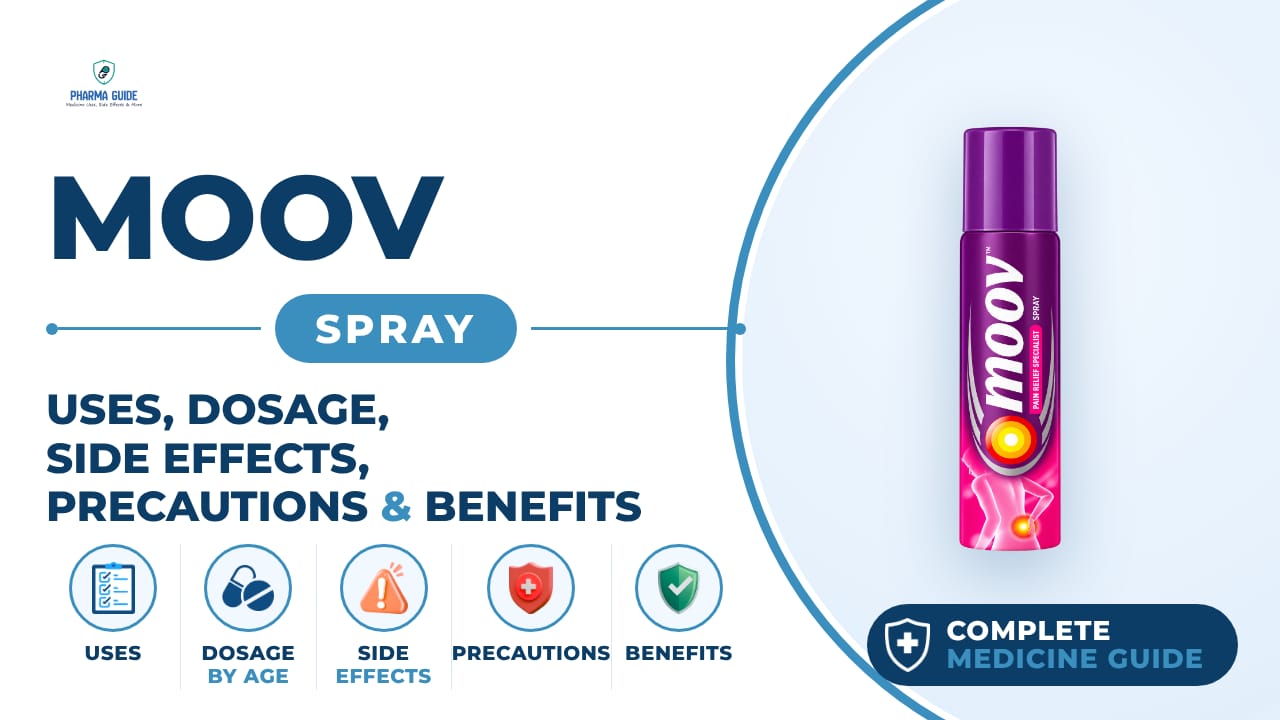
Moov Spray: Uses, Dosage, Side Effects, Precautions and Alternates
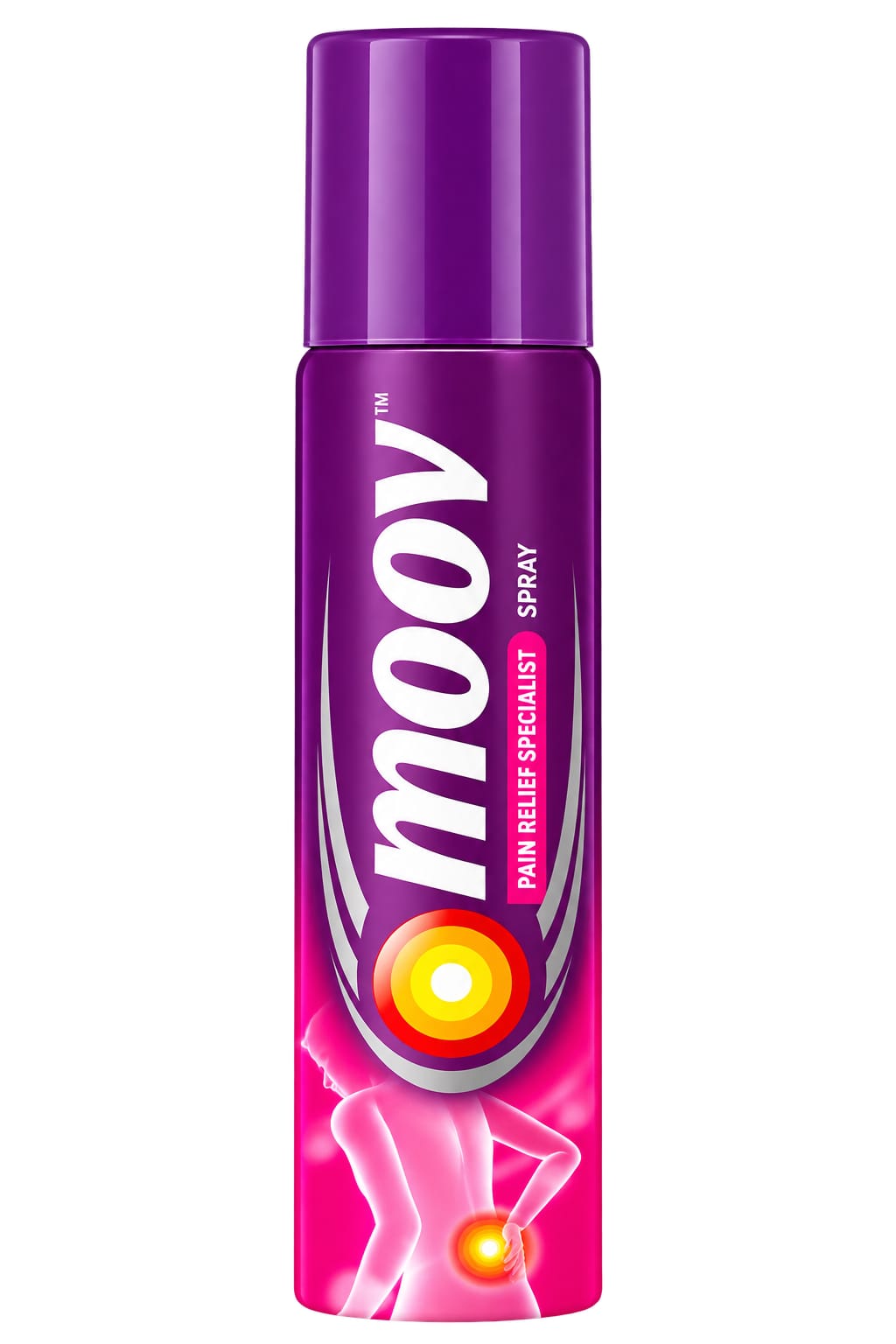
| Generic name | Diclofenac Diethylamine, Methyl Salicylate, Menthol, Linseed Oil |
|---|---|
| Drug class | Topical NSAID + counter-irritant combination |
| Forms | Spray |
Quick overview
Moov Spray combines Diclofenac Diethylamine, Methyl Salicylate, Menthol, and Linseed Oil, a topical NSAID and counter-irritant combination. It is applied directly to the skin to provide fast relief from muscle pain, joint discomfort, and sports injuries. The spray works by reducing inflammation at the site of application while providing a cooling, soothing sensation.
What is Moov Spray
Moov Spray is a topical pain-relief spray used for fast relief from muscle pain, joint discomfort and sports injuries. It is applied directly to the skin over the painful area.
Moov Spray uses
- Temporary relief of localized muscle and joint pain such as backache
- Neck/shoulder pain
- Sprains
- Strains
- Sports injuries and minor aches due to inflammation
- Muscle pain
- Joint discomfort
- Inflammation
- Stiffness
Benefits of Moov Spray
- Relieves muscle pain and stiffness instantly
- Eases joint discomfort with deep-penetrating action
- Provides a cooling sensation to soothe aches and soreness
- Enhances recovery from sports injuries or physical strain
- Reduces swelling and inflammation effectively
- Fast localized pain relief
- Reduces inflammation and swelling in sprains/strains
- Soothes muscle stiffness and back/neck pain
- Easy spray application for hard-to-reach areas
How Moov Spray works
Diclofenac and methyl salicylate are anti-inflammatory ingredients that reduce inflammation and pain where the spray is applied. Menthol gives a cooling feeling that eases pain, while linseed oil helps soften the skin and makes the spray easier to massage in.
Moov Spray dosage
For external use only. Spray from a short distance onto the affected area and allow it to dry; gently massage if needed. Avoid applying on broken or irritated skin. Wash your hands after use.
| Age group | Dose |
|---|---|
| Under 12 Years | Use only if prescribed by a healthcare professional |
| 12–17 Years | Apply/spray a small amount to the affected area as directed on the product label |
| Adults (18–64 Years) | Spray onto the affected area as directed, usually several times daily |
| Older Adults (65+ Years) | Use the lowest effective amount as directed; monitor skin sensitivity |
Available forms and strengths
- Spray
Side effects of Moov Spray
Common
- Skin irritation
- Redness
- Burning/stinging sensation
- Itching
- Rash
- Dryness
- Sensation of burning
- Sensation of stinging
Serious
- Nephrotoxic (kidney harm)
- Constipation
- Diarrhoea
- Pancreatic inflammation
- Liver damage
- Fluid retention
- Stomach pain
- Irregular heartbeat (arrhythmia)
- Nausea or vomiting
Warnings and precautions
- Pregnant women should use this spray only with a doctor's advice, especially avoiding it in late pregnancy, and should stop and tell their doctor if they notice any discomfort.
- There is no research on whether this spray causes side effects in breastfeeding women, so it isn't known if it is safe to use while breastfeeding.
- Check the exact Moov Spray formulation before use.
- Do not spray on cuts, wounds, infected, or irritated skin.
- There is no known interaction with alcohol since the spray is used on the skin, not swallowed.
- Avoid contact with eyes, mouth, and other sensitive areas.
- The spray is highly flammable, so keep it away from open flames and do not puncture or burn the can, even after it's empty.
- Avoid contact with the eyes, mouth, nose and genital areas; rinse with water right away if the spray accidentally gets on these areas. Do not use on cuts, wounds, or skin affected by infection or eczema.
- Do not use heating pads or tight bandages along with this spray, and be careful if you are allergic to NSAIDs or salicylates, or if you have asthma that gets worse with painkillers.
- Do not use this product on people with certain conditions unless a doctor says it's okay, including fluid retention (edema), stomach infection, gastrointestinal bleeding, kidney disease, skin rash, history of heart attack or stroke, asthma, anemia, heart failure, liver disease, peptic ulcer, dermatitis, depression, epilepsy, phenylketonuria (PKU), or known allergy.
- Do not use this spray together with certain other medicines, such as ketorolac, methotrexate, apixaban, altretamine, busulfan, celecoxib, ramipril, adefovir, amitriptyline, amoxapine, or warfarin, as this combination may cause severe side effects.
Storage
- Store in a cool, dry place
- Do not expose to heat or store above 50°C
- Do not pierce or burn, even after use
- Store at room temperature, protected from direct sunlight and moisture
- Keep container tightly closed; do not puncture or incinerate aerosol can
- Keep out of reach of children
When to see a doctor
- Stop using the spray and get medical help right away if you notice a rash, swelling of the face or lips, wheezing, or trouble breathing.
- If the spray gets in your eyes, rinse immediately with plenty of water and seek medical advice.
- If someone swallows the spray, seek medical advice immediately.
- If a rash appears or does not go away, talk to a doctor.
- If you think you or someone else has used too much of this spray, contact a doctor or go to the nearest emergency department right away, and bring the pack with you.
Alternatives
- Ketoprofen Gel
- Ibuprofen Gel
- Diclofenac Gel
- Volini Gel/Spray
Watch the video
FAQs
What is Moov Spray used for?
Moov Spray is used for temporary relief of localized muscle and joint pain such as backache, neck/shoulder pain, sprains, strains, sports injuries, and minor aches due to inflammation.
How does Moov Spray work?
Diclofenac and methyl salicylate reduce inflammation and pain at the site of application, menthol provides a cooling feeling that eases pain, and linseed oil softens the skin to help the spray massage in easily.
How should Moov Spray be applied?
Moov Spray is for external use only. Spray from a short distance onto the affected area, allow it to dry, and gently massage if needed. Avoid applying on broken or irritated skin, and wash your hands after use.
What are the common side effects of Moov Spray?
Common side effects include skin irritation, redness, burning or stinging sensation, itching, rash, and dryness.
Is Moov Spray safe during pregnancy?
Pregnant women should use Moov Spray only with a doctor's advice, especially avoiding it in late pregnancy, and should stop and inform their doctor if they notice any discomfort.
General information, not medical advice
Your prescriber and the leaflet in your pack know your situation. This page does not.
- Follow your prescriber and the leaflet
- Don't start, stop, or change a dose on your own
- Doses and warnings differ by country and product
Sources
Video
Related medicines

Injectafer Injection: Uses, Dosage, Side Effects, Precautions and Alternates
Iron products
Injectafer (ferric carboxymaltose) treats iron deficiency anemia and heart failure-related iron deficiency via IV. Learn uses, dosage, side effects, and

Gliclazide Tablet: Uses, Dosage, Side Effects, Precautions and Alternates
Sulfonylurea (hypoglycemic/antidiabetic agent)
Gliclazide Tablet is a sulfonylurea for type 2 diabetes that boosts insulin release. Learn about dosage, side effects, warnings, and precautions.