Morphine Sulfate Injection: Uses, Dosage, Side Effects, Precautions and Alternates
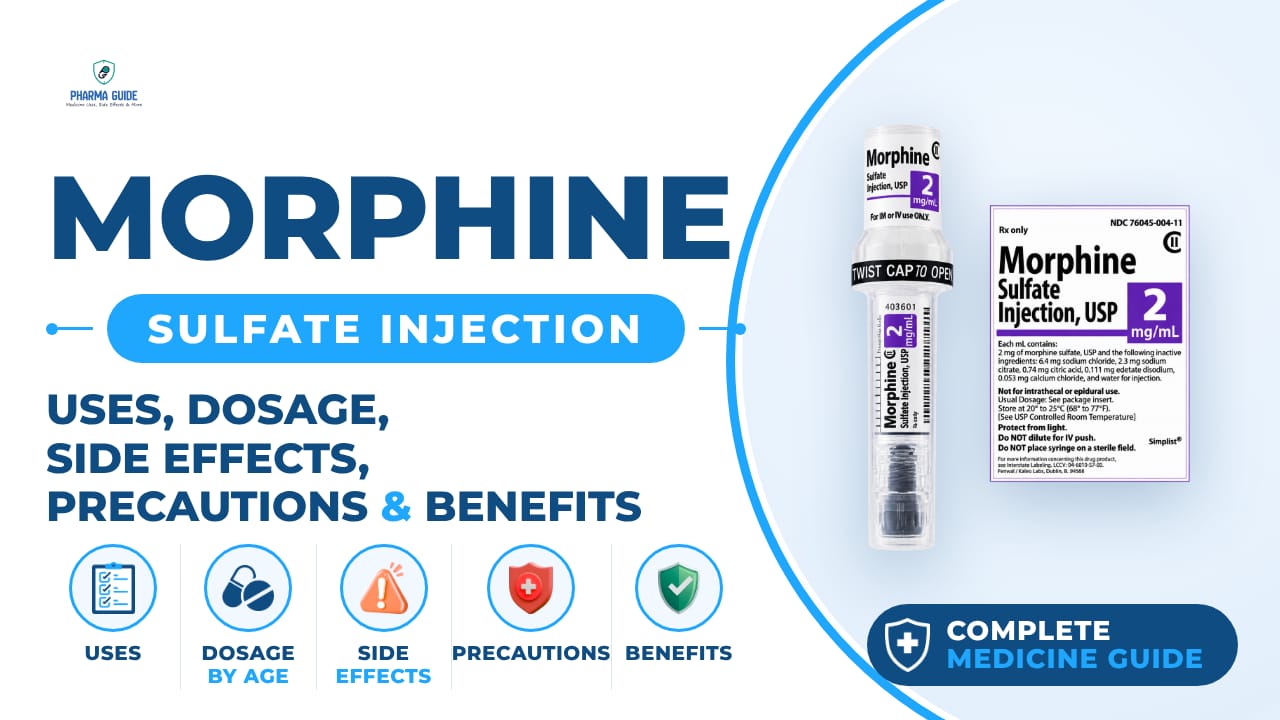
| Generic name | Morphine sulfate (morphine sulfate pentahydrate) |
|---|---|
| Drug class | Opioid agonist analgesic |
| Forms | Solution for injection, Injection, solution, concentrate (for use after dilution), Preservative-free injection for intrathecal or epidural infusion |
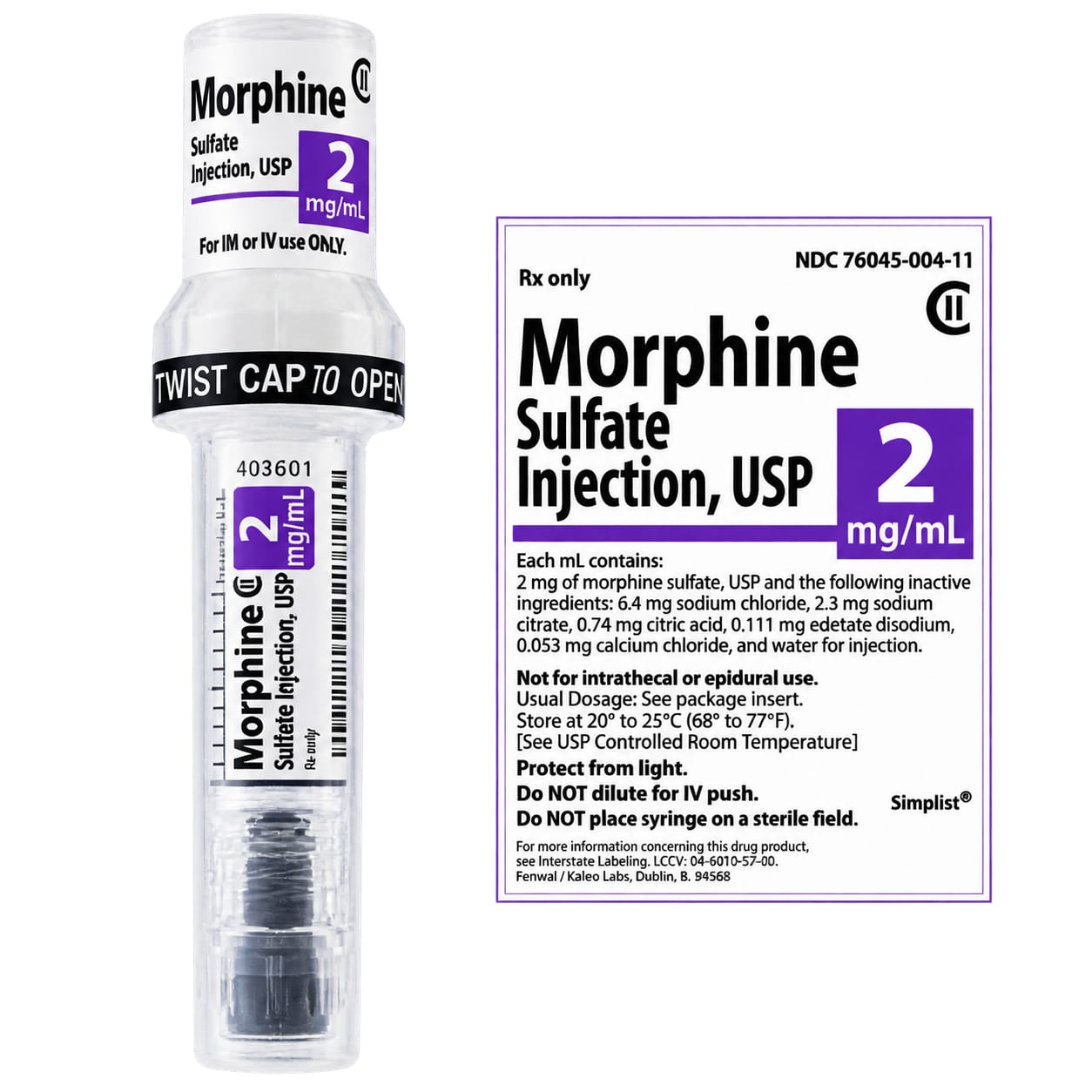
Quick overview
Morphine Sulfate Injection is a strong opioid agonist analgesic given by injection to relieve moderate to severe pain that other, non-opioid pain relievers cannot control. Depending on the product, it may be given into a vein, muscle, under the skin, or into the space around the spine. It is used for conditions such as severe chronic pain, cancer pain, pain after surgery, and shortness of breath linked to acute pulmonary edema. It carries serious risks, including life-threatening slowed breathing and the potential for addiction, abuse, and misuse.
What is Morphine Sulfate Injection
Morphine Sulfate Injection contains morphine sulfate (morphine sulfate pentahydrate), an opioid agonist analgesic. It is a strong opioid pain medicine given as an injection. Depending on the product, it may be given into a vein, muscle, under the skin, or into the space around the spine.
Morphine Sulfate Injection uses
- Relief of moderate to severe pain not helped by non-opioid pain relievers
- Management of severe long-term (chronic) pain, including pain linked to terminal cancer
- Control of pain after surgery
- Use before surgery to calm the patient and help with anesthesia
- Management of intractable chronic pain through intrathecal or epidural infusion pumps
- Relief of shortness of breath linked to acute left ventricular and pulmonary edema
Benefits of Morphine Sulfate Injection
- Provides strong pain relief for severe pain
- Can be given by different routes and by continuous infusion for steady pain control
- When given by pump into the spine, gives targeted pain relief with a smaller amount of medicine and may cause fewer or milder side effects
How Morphine Sulfate Injection works
Morphine works by attaching to certain receptors (called mu-opioid receptors) in the brain, spinal cord, and other tissues. This action mainly produces pain relief, along with other effects on the body.
Morphine Sulfate Injection dosage
This medicine is given by a healthcare professional as an injection or infusion. Some products are given into a vein, muscle, or under the skin; others are only for use in a vein, or only into the space around the spine (intrathecal or epidural). When given into a vein, it is usually given slowly; rapid injection increases the risk of serious side effects. The subcutaneous (under the skin) route is not suitable for patients with swelling (oedema).
Facilities for oxygen, breathing support, and an opioid antidote should be available during and right after injection. Patients given the medicine into the spine must be watched in a fully equipped and staffed setting for at least 24 hours after the first dose. When stopping the medicine after regular use, the dose should be lowered slowly rather than stopped suddenly, to prevent withdrawal.
| Age group | Dose |
|---|---|
| Newborns & infants | Specialist/pediatric dosing only, based on weight and clinical condition |
| Children under 12 years | Weight-based dosing under specialist supervision |
| 12–17 years | Individualized dosing based on weight, pain severity, and previous opioid exposure |
| 18–64 years | Initial injection dose is individualized; commonly 2.5–10 mg, depending on route and patient response |
| 65+ years | Usually lower initial doses, with cautious adjustment because sensitivity and adverse-effect risks can be higher |
Available forms and strengths
- Solution for injection
- Injection, solution, concentrate (for use after dilution)
- Preservative-free injection for intrathecal or epidural infusion
Side effects of Morphine Sulfate Injection
Common
- Sedation and drowsiness
- Lightheadedness
- Dizziness
- Nausea
- Vomiting
- Constipation
- Dry mouth
- Sweating (hyperhidrosis)
- Dysphoria (feeling unwell or uneasy) or euphoria (feeling high)
Serious
- Serious, life-threatening or fatal slowed breathing (respiratory depression) or stopped breathing (apnea)
- Circulatory depression, shock, and cardiac arrest
- Severe low blood pressure (hypotension)
- Sleep-related breathing problems such as central sleep apnea
- Seizures
- Serotonin syndrome when taken with certain other medicines
- Adrenal insufficiency
- Severe skin reaction (acute generalised exanthematous pustulosis)
- Addiction, abuse, and misuse leading to overdose and death
- Neonatal opioid withdrawal syndrome in babies of mothers who used it long-term
Warnings and precautions
- Morphine can cause serious, life-threatening, or fatal slowed breathing, especially when starting treatment or after a dose increase. Patients must be watched closely.
- Morphine can lead to addiction, abuse, and misuse, which can cause overdose and death, even at recommended doses.
- Using morphine with benzodiazepines or other central nervous system depressants, including alcohol, can cause deep sedation, slowed breathing, coma, and death.
- When given into the space around the spine, a single dose may cause slowed breathing that can appear right away or be delayed up to 24 hours, so patients must be observed for at least 24 hours.
- Morphine should not be stopped suddenly in a person who is physically dependent, because this can cause serious withdrawal symptoms; the dose should be lowered slowly.
- Accidental swallowing or exposure, especially by children, can cause a fatal overdose.
- Morphine should only be used in pregnancy when the benefits clearly outweigh the risks to the baby.
- Long-term use during pregnancy can cause a life-threatening withdrawal condition in the newborn.
- Morphine passes into breast milk and breastfeeding is not recommended while receiving it.
- Withdrawal symptoms can occur in breastfed babies when the mother stops taking it.
- In people with reduced kidney function, morphine may last longer and build up in the body.
- Continuous infusions are not allowed in these patients, and doses should be started lower and increased slowly with close monitoring.
- In people with reduced liver function, morphine may last longer and build up in the body.
- Continuous infusions are not allowed in these patients, and doses should be started lower and increased slowly with close monitoring.
- Do not drink alcohol while using morphine.
- Taking morphine with alcohol can cause deep sedation, slowed breathing, coma, and death.
- Morphine may cause drowsiness and reduce coordination and mental or physical ability.
- Do not drive or operate machinery until you know how the medicine affects you.
Storage
- Store below 25°C and protect from light (DBL Morphine Sulfate).
- Store at 20 to 25°C (68 to 77°F) and protect from light (Hospira Morphine Sulfate Injection).
- Do not use if the solution is darker than pale yellow, discolored in another way, or contains a precipitate.
- Once opened, the solution should be used within 24 hours to avoid the risk of microbial contamination.
- When the dosing requirement is completed, discard any unused portion in an appropriate manner.
- Patients and caregivers should be given information on safe storage and disposal of unused medicine.
When to see a doctor
- Get emergency help right away for signs of overdose such as slowed or stopped breathing, extreme drowsiness that leads to stupor or coma, cold and clammy skin, or pinpoint pupils.
- Seek medical care if you notice signs of a serious skin reaction, which usually appear within the first 10 days of treatment.
- Contact your doctor if you notice signs of opioid use disorder, such as strong urges to take the medicine or difficulty controlling its use.
Alternatives
- Tramadol Injection
- Nalbuphine Injection
- Buprenorphine Injection
- Ketorolac Injection
- Diclofenac Injection
- Paracetamol (Acetaminophen) IV
Watch the video
FAQs
What is Morphine Sulfate Injection used for?
It is used to relieve moderate to severe pain not helped by non-opioid pain relievers, manage severe chronic pain including cancer pain, control pain after surgery, calm patients before surgery, manage intractable chronic pain via spinal pumps, and relieve shortness of breath linked to acute pulmonary edema.
How is Morphine Sulfate Injection given?
It is given by a healthcare professional into a vein, muscle, under the skin, or into the space around the spine, depending on the product. Intravenous doses are given slowly, and the subcutaneous route is not suitable for patients with swelling.
What are the serious risks of Morphine Sulfate Injection?
Serious risks include life-threatening or fatal slowed breathing, circulatory depression, severe low blood pressure, seizures, serotonin syndrome, adrenal insufficiency, severe skin reactions, addiction, abuse, misuse, and neonatal opioid withdrawal syndrome.
Can Morphine Sulfate Injection be used during pregnancy or breastfeeding?
It should only be used in pregnancy when benefits clearly outweigh risks, as long-term use can cause a life-threatening withdrawal condition in the newborn. Breastfeeding is not recommended since morphine passes into breast milk and can cause withdrawal symptoms in the baby.
What should I avoid while using Morphine Sulfate Injection?
Avoid alcohol and other central nervous system depressants, as combining them with morphine can cause deep sedation, slowed breathing, coma, and death. Also avoid driving or operating machinery until you know how the medicine affects you.
Sources
Video
Related medicines

Mefenamic Acid Capsule: Uses, Dosage, Side Effects, Precautions and Alternates
Nonsteroidal anti-inflammatory drug (NSAID)
Mefenamic Acid Capsule is an NSAID for mild to moderate pain and menstrual cramps. Learn uses, dosage, side effects, and important safety warnings.

Augmentin Syrup: Uses, Dosage, Side Effects, Precautions and Alternates
Penicillins / beta-lactamase inhibitors
Augmentin Syrup combines amoxicillin and clavulanic acid to treat bacterial infections. Learn about dosage, side effects, and precautions before use.