
Safety
General information, not medical advice
Your prescriber and the leaflet in your pack know your situation. This page does not.
- Follow your prescriber and the leaflet
- Don't start, stop, or change a dose on your own
- Doses and warnings differ by country and product
Motegrity Tablet: Uses, Dosage, Side Effects, Precautions and Alternates
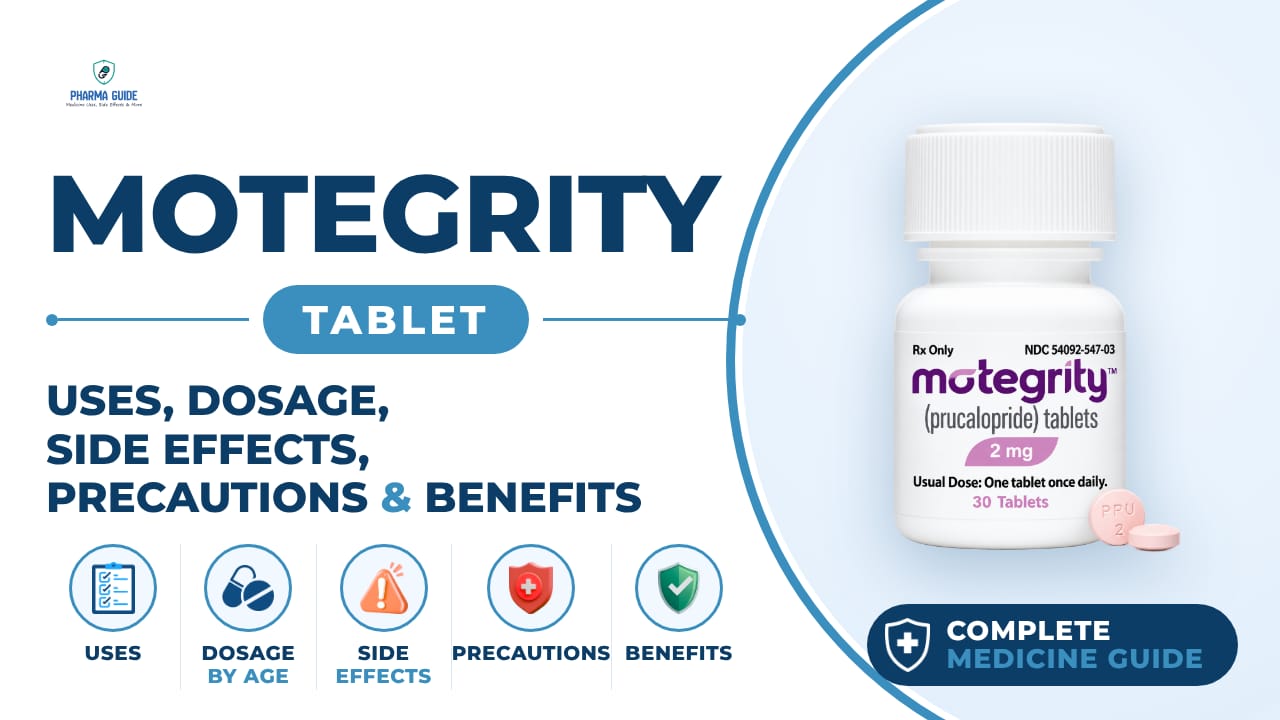
| Generic name | prucalopride |
|---|---|
| Drug class | Serotonin-4 (5-HT4) receptor agonist (serotoninergic neuroenteric modulator) |
| Forms | Tablet (1 mg), Tablet (2 mg) |
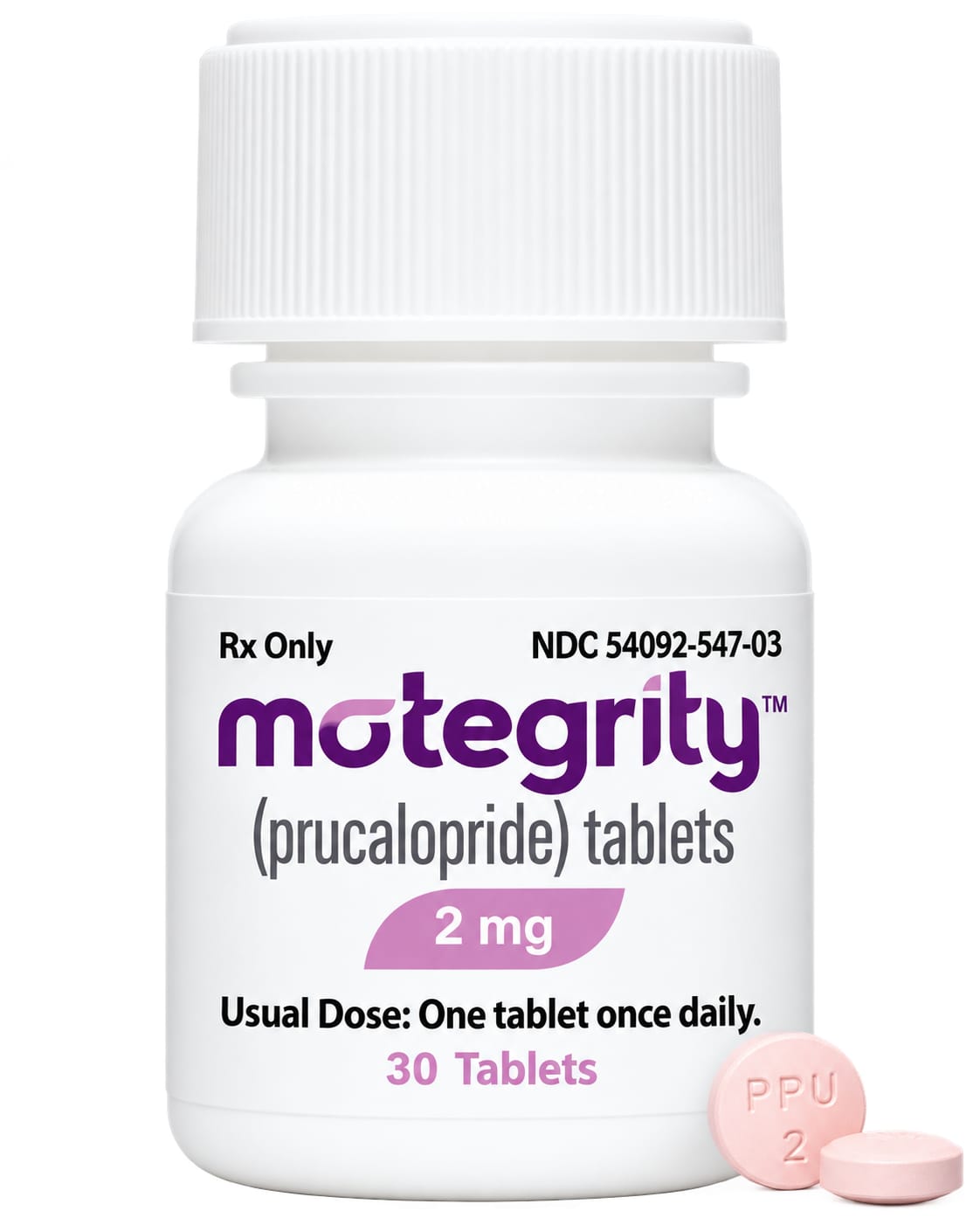
Quick overview
Motegrity Tablet contains prucalopride, a serotonin-4 (5-HT4) receptor agonist used to treat chronic idiopathic constipation (CIC) in adults, especially when other treatments like laxatives haven't worked. It is taken once daily by mouth and is not approved for use in anyone younger than 18 years old. It works on serotonin receptors in the colon to help move stool through the digestive tract more easily.
What is Motegrity Tablet
Motegrity is a prescription tablet used to treat chronic idiopathic constipation, which is long-term constipation that has no known cause. It is not approved for use in anyone younger than 18 years old.
Motegrity Tablet uses
- Chronic idiopathic constipation (CIC) in adults, especially when other constipation treatments like laxatives haven't worked
- Sometimes used off-label for gastroparesis, irritable bowel syndrome (IBS), or opioid-induced constipation
Benefits of Motegrity Tablet
- Helps restore regular bowel movements when standard laxatives fail
- Can help normalize the number of complete bowel movements per week
- Some people notice their first bowel movement within 24 hours of the first dose
- Full effects are typically noticed within about one week of daily use
How Motegrity Tablet works
Motegrity acts on serotonin receptors in the colon, helping the gut muscles contract more to move food and waste through the digestive tract, making it easier for stool to pass.
Motegrity Tablet dosage
Take by mouth once a day, with or without food. Try to take it at the same time each day to help you remember. Use it regularly to get the most benefit. Tell your doctor if you don't get relief from constipation after 3 to 4 days. Follow your doctor's instructions about any restrictions on food, beverages, or activity while taking this medicine.
| Age group | Dose |
|---|---|
| Under 18 years | Safety and effectiveness not established; no approved pediatric dosage |
| 18–64 years | Standard dose: 2 mg once daily; maximum 2 mg daily |
| 65–74 years | Standard U.S. dose: 2 mg once daily; maximum 2 mg daily, adjusted for severe renal impairment |
| 75 years and older | Standard U.S. dose: 2 mg once daily; maximum 2 mg daily, with careful kidney-function monitoring |
Available forms and strengths
- Tablet (1 mg)
- Tablet (2 mg)
Side effects of Motegrity Tablet
Common
- Headache
- Abdominal pain or stomach cramps
- Nausea
- Diarrhea
- Bloating and gas/flatulence
- Dizziness
- Fatigue
- Vomiting
Serious
- New or worsening depression, mood changes, or thoughts of suicide or self-harm
- Severe allergic reaction: skin rash, hives, itching, or swelling of the face, lips, tongue, or throat; difficulty breathing
Warnings and precautions
- Do not use this medicine if you have a blockage or tear in your intestines, severe inflammatory bowel disease (such as Crohn's disease or ulcerative colitis), or toxic megacolon.
- Watch for new or worsening depression, unusual changes in mood or behavior, or thoughts of suicide or self-harm, especially in the first few weeks of treatment.
- Watch for signs of a severe allergic reaction, including rash, hives, itching, or swelling of the face, lips, tongue, or throat.
- This medicine is not approved for use in anyone younger than 18 years old, and it isn't known if it's safe or effective in children.
- It's not known if Motegrity is safe to take during pregnancy. Animal studies have not shown developmental problems, but there isn't enough human data. Talk to your doctor if you are pregnant or planning to become pregnant.
- Motegrity passes into breast milk, but it isn't known what effects this may have on a nursing infant. Talk to your doctor before breastfeeding while taking this medicine, and watch the infant for diarrhea.
- People with severe kidney disease need a lower dose of this medicine, since it can build up in the body and increase the risk of side effects. Tell your doctor if you have kidney problems.
- No routine dosage adjustment is required for mild, moderate, or severe hepatic impairment under U.S. prescribing information.
- There are no known direct interactions between Motegrity and alcohol, but both can cause nausea, vomiting, and headache, so drinking alcohol while taking this medicine may increase the risk of these side effects.
- This medicine may cause dizziness and could affect your ability to safely drive or operate machinery. Use caution until you know how it affects you.
Storage
- Store in the original container at room temperature, away from light and moisture
- Do not store in the bathroom
- Keep all medications away from children and pets
- Do not flush medications down the toilet or pour them into a drain unless instructed to do so
- Properly discard this product when it is expired or no longer needed; consult your pharmacist or local waste disposal company
When to see a doctor
- Get emergency medical help right away if you have signs of a severe allergic reaction, such as hives, trouble breathing, or swelling of the face, lips, tongue, or throat.
- Stop taking this medicine and call your doctor right away if you have unusual changes in mood or behavior, ongoing or worsening depression, or thoughts about suicide or hurting yourself.
- If you have thoughts of hurting yourself, seek emergency help right away.
Alternatives
- Lactulose
- Amitiza
- Linzess
- Prucalopride
Watch the video
FAQs
What is Motegrity used for?
Motegrity is used to treat chronic idiopathic constipation (CIC) in adults, especially when other treatments like laxatives haven't worked. It's sometimes used off-label for gastroparesis, IBS, or opioid-induced constipation.
How is Motegrity Tablet taken?
Motegrity is taken by mouth once a day, with or without food, ideally at the same time each day. Tell your doctor if you don't get relief from constipation after 3 to 4 days.
How long does it take for Motegrity to work?
Some people notice their first bowel movement within 24 hours of the first dose, and full effects are typically noticed within about one week of daily use.
What are the common side effects of Motegrity?
Common side effects include headache, abdominal pain or stomach cramps, nausea, diarrhea, bloating and gas, dizziness, fatigue, and vomiting.
Who should not take Motegrity?
Motegrity should not be used by people with a blockage or tear in the intestines, severe inflammatory bowel disease like Crohn's disease or ulcerative colitis, or toxic megacolon. It is also not approved for anyone younger than 18 years old.
General information, not medical advice
Your prescriber and the leaflet in your pack know your situation. This page does not.
- Follow your prescriber and the leaflet
- Don't start, stop, or change a dose on your own
- Doses and warnings differ by country and product
Sources
Video
Related medicines

Injectafer Injection: Uses, Dosage, Side Effects, Precautions and Alternates
Iron products
Injectafer (ferric carboxymaltose) treats iron deficiency anemia and heart failure-related iron deficiency via IV. Learn uses, dosage, side effects, and

Gliclazide Tablet: Uses, Dosage, Side Effects, Precautions and Alternates
Sulfonylurea (hypoglycemic/antidiabetic agent)
Gliclazide Tablet is a sulfonylurea for type 2 diabetes that boosts insulin release. Learn about dosage, side effects, warnings, and precautions.