
Safety
General information, not medical advice
Your prescriber and the leaflet in your pack know your situation. This page does not.
- Follow your prescriber and the leaflet
- Don't start, stop, or change a dose on your own
- Doses and warnings differ by country and product
Movantik Tablet: Uses, Dosage, Side Effects, Precautions and Alternates
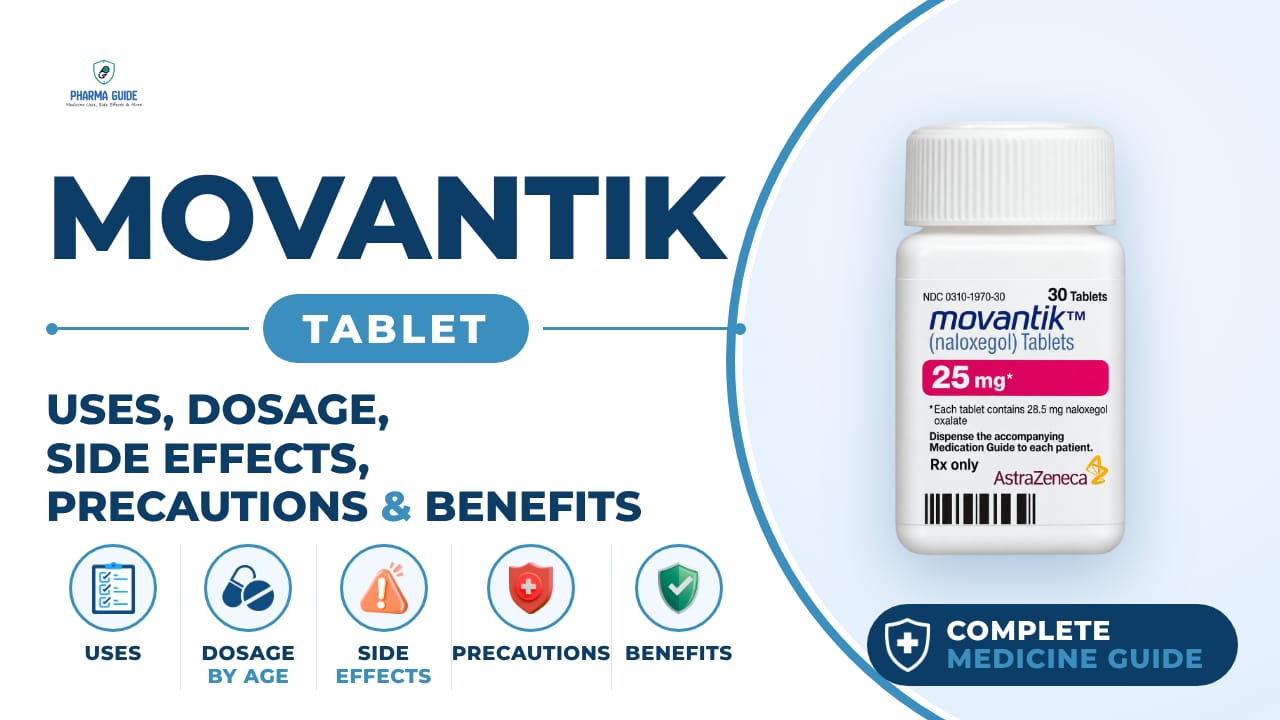
| Generic name | naloxegol |
|---|---|
| Drug class | Peripheral opioid receptor antagonist |
| Forms | Tablet |
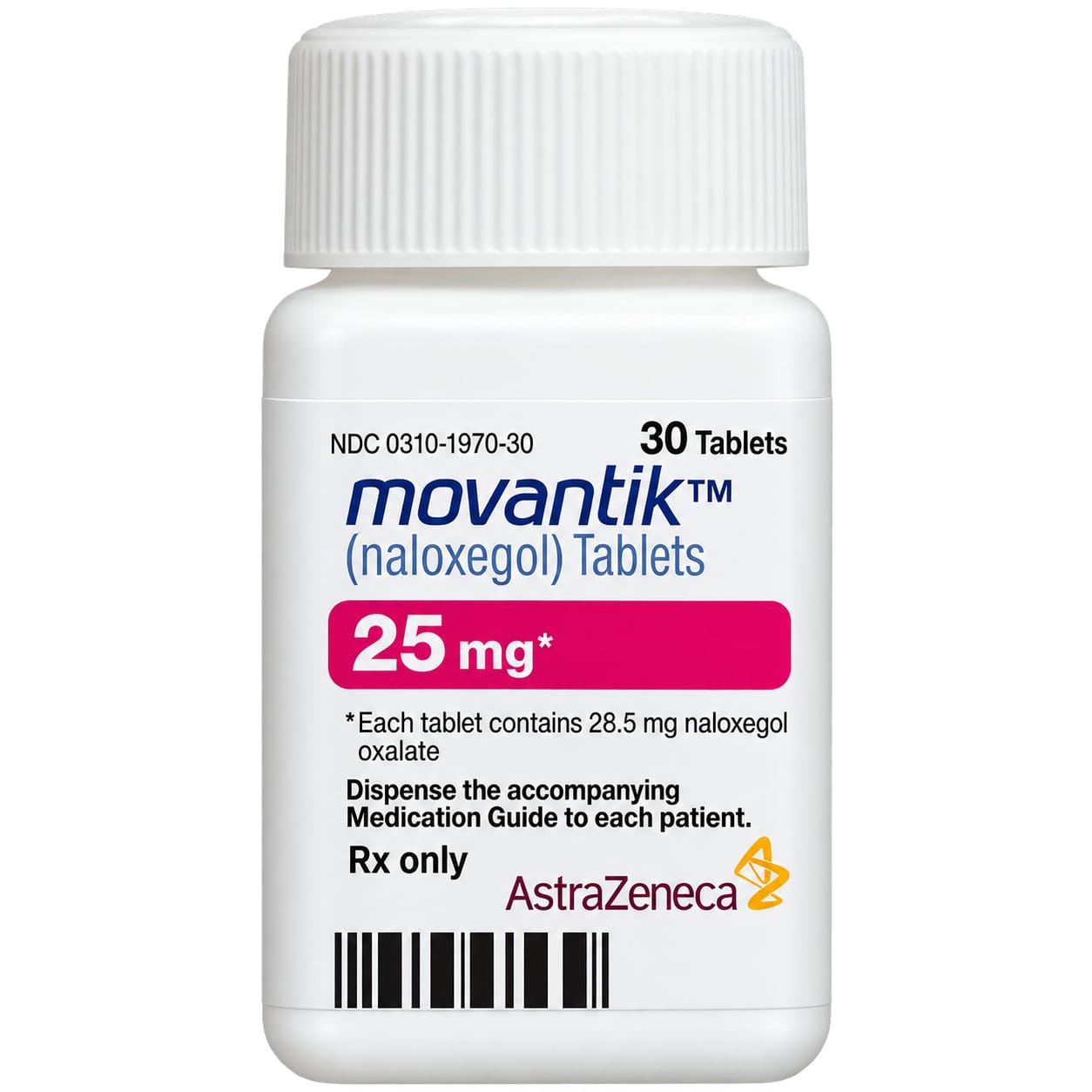
Quick overview
Movantik Tablet (naloxegol) is a prescription medicine used to treat constipation caused by prescription opioid pain medicines in adults with chronic pain not caused by active cancer. It belongs to the peripheral opioid receptor antagonist drug class. Movantik works by blocking certain opioid effects in the gut without reducing the opioid's pain-relieving effects.
What is Movantik Tablet
Movantik is a prescription medicine used to treat constipation caused by prescription opioid pain medicines in adults with long-lasting (chronic) pain that is not caused by active cancer. It blocks certain effects of opioid medication in the gut without reducing the pain-relieving effects of the opioid.
Movantik Tablet uses
- Treats constipation caused by opioid pain medicine (opioid-induced constipation) in adults with chronic pain not caused by cancer
- Used in people who have been taking opioid pain medicine for at least 4 weeks
- Treats opioid-induced constipation (OIC) in adults
- Used for constipation caused by opioid pain medicines
- Helps manage constipation when opioid treatment is continued
Benefits of Movantik Tablet
- Reduces constipation caused by opioid pain medicine
- Works without reducing the pain-relieving effects of the opioid
- Helps increase bowel movement frequency
- Relieves constipation caused by opioid medicines
- Helps reduce straining during bowel movements
- May improve abdominal discomfort associated with opioid-induced constipation
- Works by blocking opioid effects in the gut while generally preserving pain relief
How Movantik Tablet works
Movantik blocks opioids from attaching to receptors in the gut, which reduces the constipating effects of the opioid. Because the medicine is designed to stay mostly outside the brain and central nervous system, it is not expected to interfere with the opioid's pain-relieving effects.
Movantik Tablet dosage
Movantik is taken once per day, usually in the morning. Take it on an empty stomach, at least 1 hour before or 2 hours after your first meal of the day. If you cannot swallow the tablet whole, it can be crushed into powder, mixed with water, and drunk right away; the glass should then be refilled with more water, swirled, and drunk to get the full dose. It can also be given through a nasogastric (NG) feeding tube following specific instructions from your doctor or pharmacist.
Stop taking other laxatives before starting this medicine; a laxative may be added back if needed after 3 days of treatment if symptoms continue. Call your doctor if symptoms do not improve after 3 days of treatment. After you stop taking your opioid pain medication, you should also stop taking this medicine. Avoid eating grapefruit or drinking grapefruit juice while taking this medicine.
If you miss a dose, take it as soon as you can, but skip it if it is almost time for your next dose; do not take two doses at one time.
| Age group | Dose |
|---|---|
| Under 18 years | Not established; not recommended |
| 18–64 years | 25 mg once daily on an empty stomach |
| 65 years and older | 25 mg once daily; dose may be reduced to 12.5 mg if needed |
Available forms and strengths
- Tablet
Side effects of Movantik Tablet
Common
- Nausea
- Vomiting
- Stomach pain
- Diarrhea
- Gas
- Headache
Serious
- Signs of an allergic reaction: hives, difficult breathing, swelling of face, lips, tongue, or throat
- Symptoms of opioid withdrawal: anxiety, feeling irritable, sweating, chills, yawning, stomach pain, diarrhea
- Severe stomach pain that will not go away
- Severe diarrhea
- Tear in the stomach or intestinal wall (perforation)
Warnings and precautions
- Do not use this medicine if you have, or have ever had, a blockage in your stomach or intestines.
- This medicine can cause opioid withdrawal symptoms such as anxiety, irritability, sweating, chills, yawning, stomach pain, and diarrhea. Tell your doctor if these occur.
- If you take methadone for pain, you may be more likely to have stomach pain and diarrhea while on this medicine.
- Severe stomach pain and diarrhea can occur within a few days of starting treatment and can lead to hospitalization.
- Do not take this medicine together with certain strong antibiotics or antifungal medicines, as this combination is not allowed and can be dangerous.
- Avoid grapefruit or grapefruit juice while taking this medicine, as it can increase side effects.
- This medicine is not approved for use in anyone younger than 18 years old.
- Using this medicine during pregnancy may cause opioid withdrawal symptoms in you or your unborn baby. Tell your doctor right away if you become pregnant during treatment.
- Breastfeeding is not recommended while taking this medicine because it may cause opioid withdrawal in the baby.
- Tell your doctor if you have kidney problems; people with reduced kidney function usually need to start on the lower dose.
- Tell your doctor if you have liver problems. This medicine should be avoided in people with severe liver impairment.
Storage
- Store at room temperature between 68°F to 77°F (20°C to 25°C)
- Safely throw away medicine that is out of date or that you no longer need
- Keep out of the reach of children
When to see a doctor
- Stop taking this medicine and call your doctor right away if you have severe stomach pain and/or diarrhea, which can lead to serious medical problems.
- Stop taking this medicine and get emergency medical help right away if you have stomach pain that gets worse or does not go away, as this can be a sign of a tear in the stomach or intestinal wall.
- Get emergency medical help if you have signs of an allergic reaction such as hives, difficulty breathing, or swelling of the face, lips, tongue, or throat.
- If you take too much of this medicine, call your doctor or go to the nearest emergency room right away.
Alternatives
- Naldemedine
- Lubiprostone
- Polyethylene Glycol
Watch the video
FAQs
What is Movantik Tablet used for?
Movantik is a prescription medicine used to treat constipation caused by prescription opioid pain medicines in adults with chronic pain not caused by active cancer.
How does Movantik work?
Movantik blocks opioids from attaching to receptors in the gut, reducing the constipating effects of the opioid, while staying mostly outside the brain and central nervous system so it does not interfere with the opioid's pain-relieving effects.
How should I take Movantik Tablet?
Movantik is taken once per day, usually in the morning, on an empty stomach, at least 1 hour before or 2 hours after your first meal. If you cannot swallow it whole, it can be crushed, mixed with water, and drunk right away.
What are the common side effects of Movantik?
Common side effects include nausea, vomiting, stomach pain, diarrhea, gas, and headache.
Can I eat grapefruit while taking Movantik?
No, you should avoid eating grapefruit or drinking grapefruit juice while taking this medicine, as it can increase side effects.
General information, not medical advice
Your prescriber and the leaflet in your pack know your situation. This page does not.
- Follow your prescriber and the leaflet
- Don't start, stop, or change a dose on your own
- Doses and warnings differ by country and product
Sources
- https://www.drugs.com/movantik.html
- file:///C:/Users/hasee/Downloads/20210219_f49c6978-ca7b-4a66-919b-757f8f92ef64.pdf
- https://ir.nektar.com/news-releases/news-release-details/movantiktm-naloxegol-tablets-treatment-opioid-induced
Video
Related medicines
Naloxegol Tablet: Uses, Dosage, Side Effects, Precautions and Alternates
Peripheral opioid receptor antagonist
Naloxegol tablet treats opioid-induced constipation in adults by blocking opioid effects in the gut without reducing pain relief. Learn dosage, side effects,

Injectafer Injection: Uses, Dosage, Side Effects, Precautions and Alternates
Iron products
Injectafer (ferric carboxymaltose) treats iron deficiency anemia and heart failure-related iron deficiency via IV. Learn uses, dosage, side effects, and