
Safety
General information, not medical advice
Your prescriber and the leaflet in your pack know your situation. This page does not.
- Follow your prescriber and the leaflet
- Don't start, stop, or change a dose on your own
- Doses and warnings differ by country and product
Naloxegol Tablet: Uses, Dosage, Side Effects, Precautions and Alternates
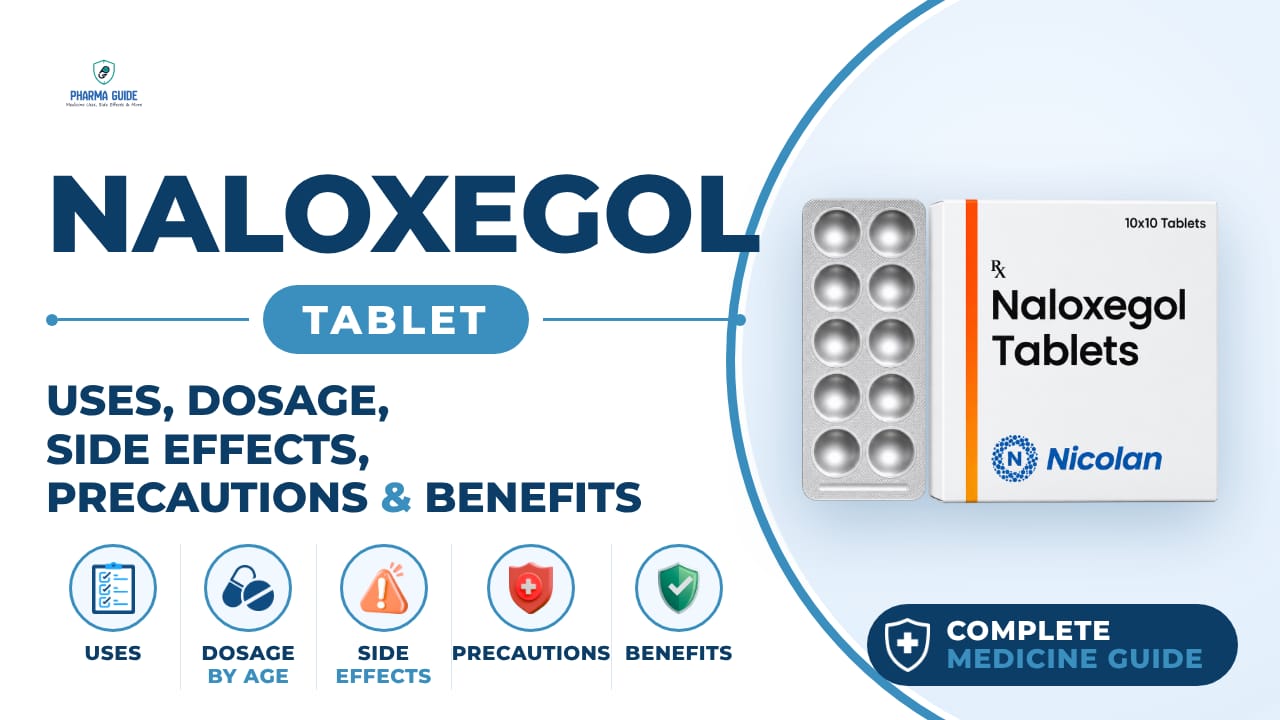
| Generic name | Naloxegol |
|---|---|
| Drug class | Peripheral opioid receptor antagonist |
| Forms | Tablet |
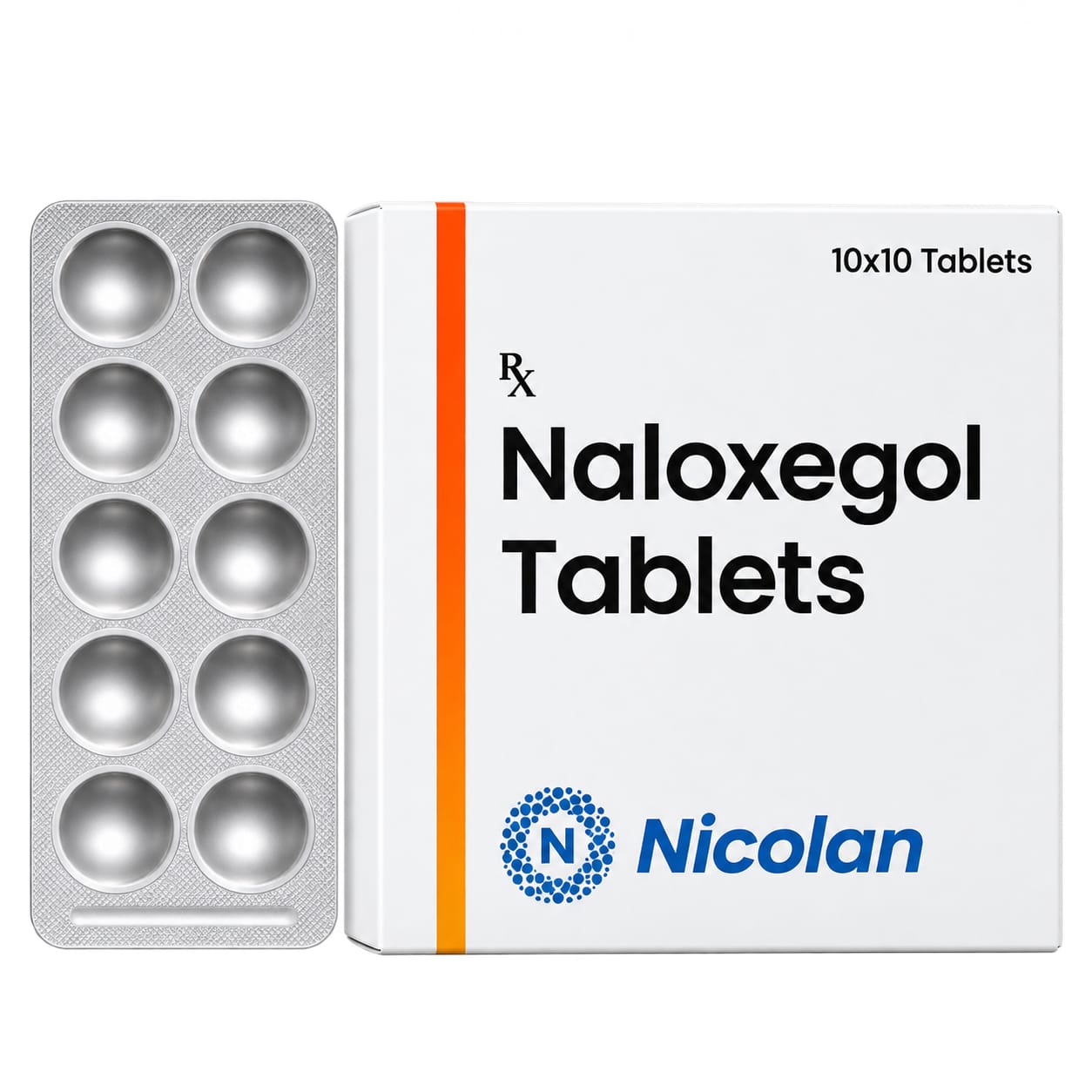
Quick overview
Naloxegol is a prescription tablet used to treat constipation caused by opioid (narcotic) pain medicines in adults. It works in the gut to block the constipating effects of opioids without reducing their pain-relieving effects in the brain. It is taken once daily on an empty stomach, and dosing may be adjusted based on age and kidney function.
What is Naloxegol Tablet
Naloxegol is a prescription tablet belonging to the peripheral opioid receptor antagonist drug class. It is used to treat constipation caused by opioid (narcotic) pain medicines in adults.
Naloxegol Tablet uses
- Treats constipation caused by taking prescription opioid pain medicines in adults with long-term pain not caused by cancer, or pain from past cancer or its treatment, who do not need weekly increases in opioid dose
- Treats opioid-induced constipation (OIC) in adults
- Helps relieve constipation associated with chronic non-cancer pain treatment
- Improves bowel movement frequency
- Helps reduce difficulty passing stools caused by opioid medications
Benefits of Naloxegol Tablet
- Relieves opioid-induced constipation without reducing the pain-relieving effects of opioid medicines, because it rarely crosses into the brain
- Specifically targets opioid-induced constipation
- Helps restore more regular bowel movements
- May increase the frequency of spontaneous bowel movements
- Can reduce constipation-related discomfort and straining
How Naloxegol Tablet works
Naloxegol blocks the effects of opioids in the gut, which helps the intestinal muscles move stool and produce a bowel movement, without reversing the opioid's pain relief in the brain.
Naloxegol Tablet dosage
Take on an empty stomach, at least 1 hour before your first meal of the day or 2 hours after a meal. Swallow the tablet whole; do not crush, break, or chew it unless you have trouble swallowing. If you have trouble swallowing, the tablet may be crushed and mixed with water and taken right away, with an extra rinse of the glass to get the full dose. It can also be given through a nasogastric feeding tube if needed, following specific mixing instructions.
Stop other laxatives before starting this medicine; your doctor may allow laxatives again if this medicine is not working well enough after a few days. Stop taking this medicine if you stop taking your opioid pain medicine. Do not take more often or for longer than your doctor has directed. Use in children must be determined by a doctor, as safety and effectiveness in children have not been established.
| Age group | Dose |
|---|---|
| Under 18 years | Safety and effectiveness not established; no approved pediatric dosage |
| 18–74 years | Standard dose: 25 mg once daily; reduced dose 12.5 mg once daily when indicated |
| 75 years and older | Standard dose: 25 mg once daily; reduced dose 12.5 mg once daily when indicated, with careful kidney-function monitoring |
Available forms and strengths
Naloxegol is available as a tablet.
Side effects of Naloxegol Tablet
Common
- Abdominal or stomach pain
- Diarrhea
- Nausea and vomiting
- Headache
- Gas or bloating
- Increased sweating
- Stuffy or runny nose
Serious
- Symptoms of opioid withdrawal: anxiety, chills, sweating, irritability, stomach pain, diarrhea, yawning
- Severe stomach pain or severe diarrhea that does not go away
- Tear (perforation) in the stomach or bowel wall
- Allergic reaction: rash, hives, swelling of face, lips, tongue, or throat
- Bloody, black, or tarry stools
- Vomiting material that looks like coffee grounds
- Trouble breathing
Warnings and precautions
- Do not use this medicine if you have a known or suspected blockage in your stomach or intestines.
- Avoid grapefruit and grapefruit juice while taking this medicine, since it can raise naloxegol levels and increase side effects.
- Do not take this medicine with certain antibiotics or antifungal medicines such as clarithromycin, itraconazole, or ketoconazole, as this can cause or worsen opioid withdrawal symptoms.
- This medicine can rarely cause a tear (perforation) in the stomach or bowel wall.
- This medicine is not approved for use in anyone younger than 18 years old.
- This medicine is not recommended during pregnancy unless necessary, because the baby could have opioid withdrawal symptoms. Talk with your doctor about the risks and benefits.
- Breastfeeding is not recommended while taking this medicine.
- People with moderate to severe kidney disease should use this medicine with caution, since the body may remove it more slowly, increasing its effects.
- Tell your doctor if you have liver disease before taking this medicine.
- It is not known how this medicine interacts with alcohol, so check with your doctor before drinking.
- Naloxegol is not generally considered sedating, but dizziness or other adverse effects may affect driving ability.
Storage
- Store the medicine in a closed container at room temperature, away from heat, moisture, and direct light.
- Keep from freezing.
- Keep out of the reach of children.
- Do not keep outdated medicine or medicine no longer needed.
- Ask your healthcare professional how you should dispose of any medicine you do not use.
- Store at room temperature between 20 and 25 degrees C (68 and 77 degrees F).
When to see a doctor
- Get emergency help right away if you have signs of an allergic reaction, such as hives, trouble breathing, or swelling of the face, lips, tongue, or throat.
- Call your doctor right away if you have severe stomach pain or severe diarrhea that does not go away.
- Check with your doctor right away if you have severe stomach pain that does not go away, as this could be a sign of a tear in the stomach or bowel.
- Tell your doctor if you notice symptoms of opioid withdrawal such as anxiety, chills, sweating, irritability, stomach pain, diarrhea, or yawning.
- If you think you have taken too much of this medicine, contact a poison control center or emergency room right away.
Alternatives
- Lactulose
- Amitiza
- Relistor
- Movantik
Watch the video
FAQs
What is Naloxegol tablet used for?
Naloxegol is used to treat constipation caused by opioid (narcotic) pain medicines in adults, including those with chronic non-cancer pain or pain from past cancer or its treatment.
How should I take Naloxegol tablet?
Take it on an empty stomach, at least 1 hour before your first meal or 2 hours after a meal. Swallow the tablet whole; do not crush, break, or chew it unless you have trouble swallowing, in which case it can be crushed and mixed with water.
What are the common side effects of Naloxegol?
Common side effects include abdominal or stomach pain, diarrhea, nausea and vomiting, headache, gas or bloating, increased sweating, and stuffy or runny nose.
Can I drink grapefruit juice while taking Naloxegol?
No, you should avoid grapefruit and grapefruit juice while taking this medicine, since it can raise naloxegol levels and increase side effects.
What should I do if I notice signs of opioid withdrawal while taking Naloxegol?
Tell your doctor if you notice symptoms of opioid withdrawal such as anxiety, chills, sweating, irritability, stomach pain, diarrhea, or yawning.
General information, not medical advice
Your prescriber and the leaflet in your pack know your situation. This page does not.
- Follow your prescriber and the leaflet
- Don't start, stop, or change a dose on your own
- Doses and warnings differ by country and product
Sources
Video
Related medicines
Movantik Tablet: Uses, Dosage, Side Effects, Precautions and Alternates
Peripheral opioid receptor antagonist
Movantik Tablet (naloxegol) treats opioid-induced constipation in adults with chronic pain. Learn uses, dosage, side effects, and precautions.

Injectafer Injection: Uses, Dosage, Side Effects, Precautions and Alternates
Iron products
Injectafer (ferric carboxymaltose) treats iron deficiency anemia and heart failure-related iron deficiency via IV. Learn uses, dosage, side effects, and