
Safety
General information, not medical advice
Your prescriber and the leaflet in your pack know your situation. This page does not.
- Follow your prescriber and the leaflet
- Don't start, stop, or change a dose on your own
- Doses and warnings differ by country and product
Moxifloxacin Tablet: Uses, Dosage, Side Effects, Precautions and Alternates
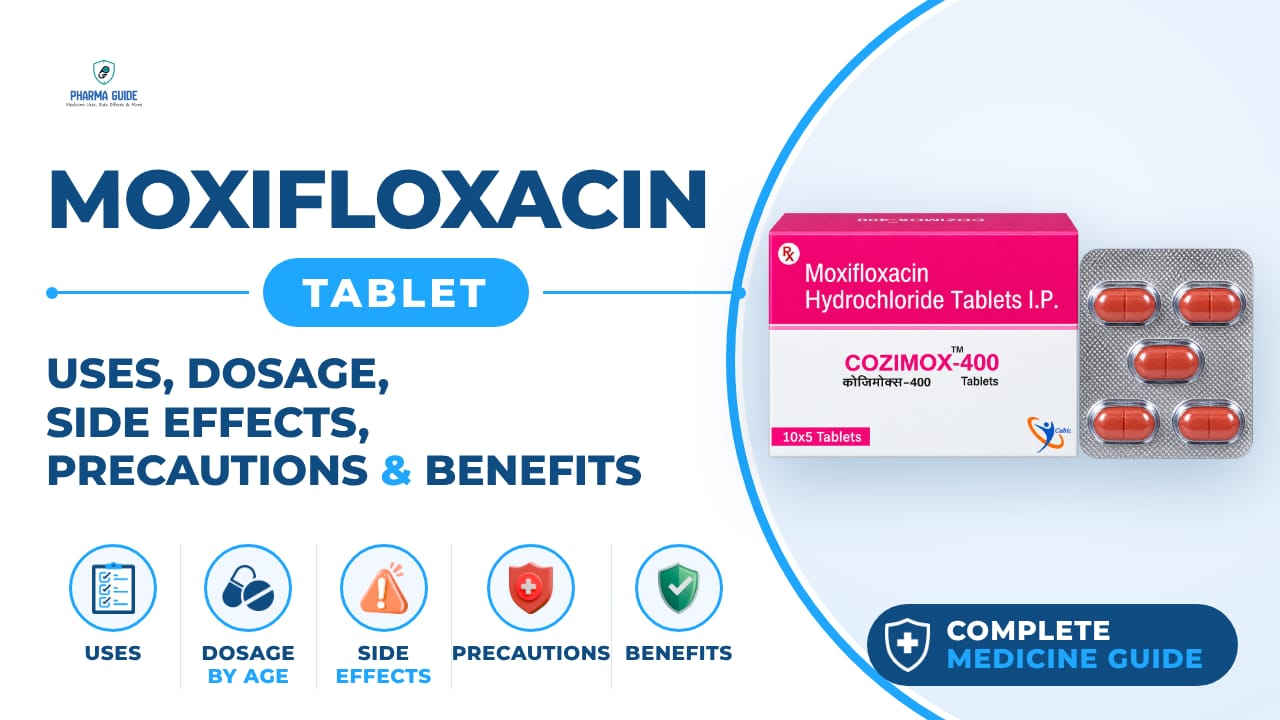
| Generic name | Moxifloxacin |
|---|---|
| Drug class | Quinolone (fluoroquinolone) antibiotic |
| Forms | Tablet, Oral suspension, Intravenous (IV) solution |
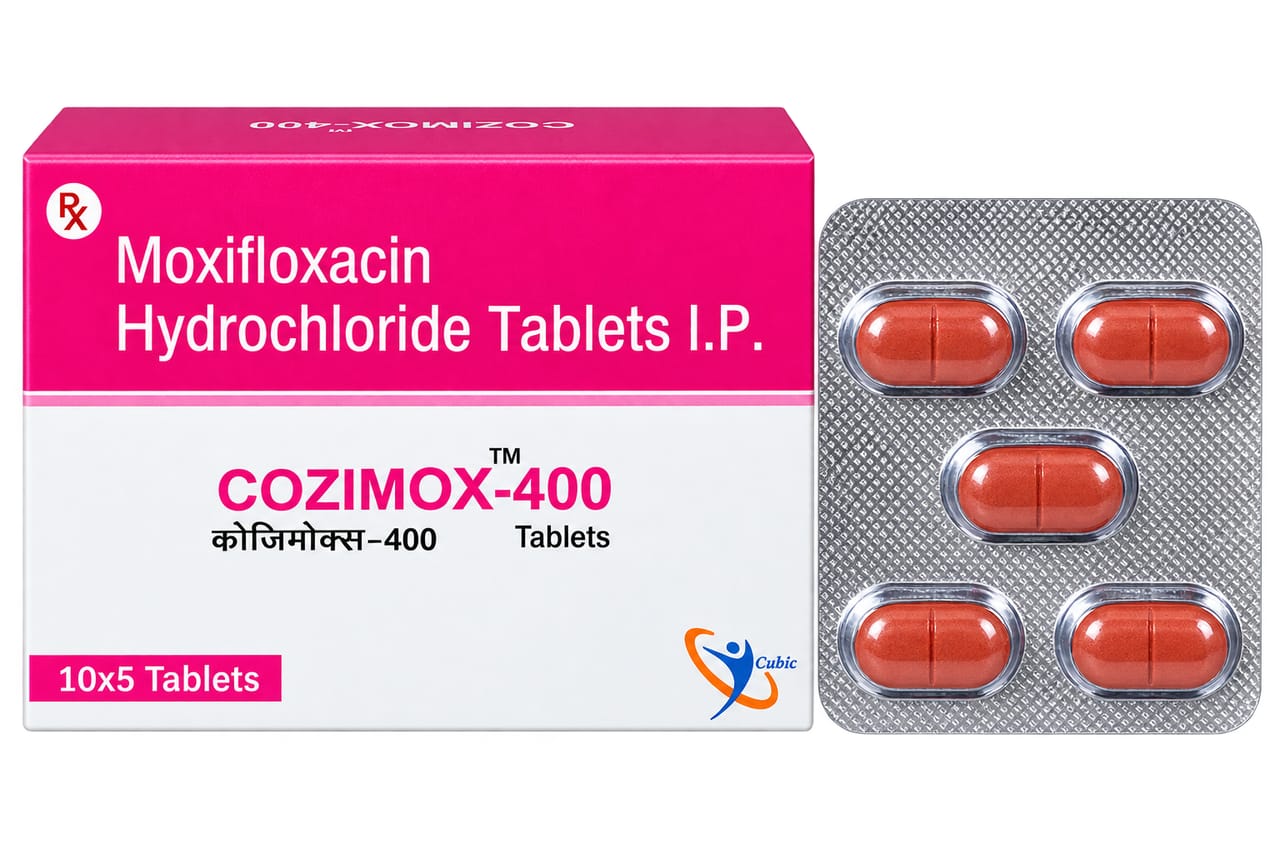
Quick overview
Moxifloxacin Tablet is a quinolone (fluoroquinolone) antibiotic used to treat bacterial infections in many parts of the body, including pneumonia, respiratory tract infections, skin and soft tissue infections, abdominal infections, acute bacterial sinus infections, and acute worsening of chronic bronchitis. It is also used to treat and help prevent plague. It works by killing bacteria or stopping their growth and will not work against colds, flu, or other viral infections. It is taken once daily, with or without food.
What is Moxifloxacin Tablet
Moxifloxacin is an antibiotic used to treat bacterial infections in many different parts of the body. It belongs to a group of medicines called quinolone (fluoroquinolone) antibiotics. It works by killing bacteria or stopping their growth. It will not work for colds, flu, or other infections caused by viruses.
Moxifloxacin Tablet uses
- Treats bacterial infections in many parts of the body
- Treats pneumonia and other respiratory tract infections
- Treats skin and soft tissue infections
- Treats abdominal (stomach area) infections
- Treats acute bacterial sinus infections
- Treats acute worsening of chronic bronchitis
- Treats and helps prevent plague (including pneumonic and septicemic plague)
Benefits of Moxifloxacin Tablet
- Fights a wide range of bacterial infections
- Taken once a day, with or without food
- You may start to feel better within the first few days of treatment
How Moxifloxacin Tablet works
Moxifloxacin kills the bacteria that cause infection or stops them from growing. It does this by blocking the bacteria's ability to copy and repair their DNA, so they cannot reproduce and survive.
Moxifloxacin Tablet dosage
Take this medicine only as directed by your doctor. Do not take more of it, more often, or for longer than ordered. Swallow the tablet whole with a glass of water. Do not split, crush, or chew it. This medicine may be taken with or without food. Take this medicine at the same time each day.
Drink plenty of fluids while taking this medicine to help prevent some unwanted effects. If you take antacids containing aluminum or magnesium, iron supplements, multivitamins, didanosine, sucralfate, or zinc, do not take them at the same time as this medicine. Take these products at least 4 hours before or 8 hours after moxifloxacin, as they can keep it from working properly.
Keep taking this medicine for the full treatment time, even if you feel better after the first few doses. Stopping too soon may mean your infection does not clear up. This medicine comes with a Medication Guide. Read and follow the instructions carefully.
If you miss a dose, take it as soon as possible. But if it is almost time for your next dose, skip the missed dose and go back to your regular schedule. Do not take two doses to make up for a missed one.
| Age group | Dose |
|---|---|
| Under 18 years | Not routinely recommended; use only under specialist medical guidance |
| 18–64 years | 400 mg once daily |
| 65+ years | 400 mg once daily, with medical assessment |
Available forms and strengths
- Tablet
- Oral suspension
- Intravenous (IV) solution
Side effects of Moxifloxacin Tablet
Common
- Nausea
- Vomiting
- Stomach pain
- Diarrhea
- Constipation
- Heartburn
- Headache
- Dizziness
- Changes in taste
Serious
- Severe, watery, or bloody diarrhea that may occur up to 2 months or more after treatment
- Serious allergic reactions, including anaphylaxis (itching, hives, hoarseness, trouble breathing or swallowing, swelling of the hands, face, or mouth)
- Tendon pain, swelling, or rupture
- Numbness, tingling, or burning pain in the hands, arms, legs, or feet (nerve damage)
- Seizures, confusion, hallucinations, or mood or behavior changes
- Fast, slow, or irregular heartbeat; fainting or loss of consciousness
- Aortic aneurysm (sudden chest, stomach, or back pain, trouble breathing, cough, or hoarseness)
- Peeling or blistering of the skin
- Yellowing of the skin or eyes, pale skin, dark urine, or light-colored stool
- Low blood sugar (extreme thirst or hunger, shakiness, sweating, blurred vision)
- Unusual bleeding or bruising
- Severe sunburn or skin reaction from sunlight
Warnings and precautions
- Tell your doctor if you are pregnant or plan to become pregnant. Moxifloxacin is generally avoided during pregnancy unless the benefits outweigh the risks, as animal studies have shown it may harm the developing baby. If you become pregnant while taking it, call your doctor.
- Moxifloxacin passes into breast milk. Talk to your doctor before using it while breastfeeding, as the benefits should be weighed against the risks to the baby.
- Tell your doctor if you have kidney disease. Use with caution, as it may make side effects worse, and a dose adjustment may be needed. Kidney problems can also increase the risk of tendon problems.
- Tell your doctor if you have liver disease, including cirrhosis. Use with caution. People with severe liver problems should avoid moxifloxacin or use it carefully, as it may worsen liver function.
- Discuss with your healthcare professional the use of this medicine with alcohol.
- This medicine may make some people dizzy, lightheaded, drowsy, or less alert. Do not drive or do anything that could be dangerous until you know how this medicine affects you.
- Taking moxifloxacin raises the risk of tendon swelling (tendinitis) or a tendon tearing (rupture) during treatment or for up to several months afterward. The risk is highest in people over 60, those taking steroids, and those with kidney, heart, or lung transplants. Stop taking it and get help if you have tendon pain, swelling, or a snap or pop in a tendon area.
- Moxifloxacin may cause nerve damage that may not go away even after you stop taking it. Stop the medicine and call your doctor if you have numbness, tingling, pain, burning, or weakness in your arms or legs.
- Moxifloxacin may affect your brain or nervous system and cause serious side effects, even after the first dose. Stop the medicine and call your doctor if you have seizures, tremors, dizziness, hallucinations, mood changes, or thoughts of hurting yourself.
- Moxifloxacin can worsen muscle weakness in people with myasthenia gravis and cause severe trouble breathing or death. Tell your doctor if you have this condition; it should not be used in people with it.
- Moxifloxacin may cause serious diarrhea that can happen 2 months or more after you stop taking it. Do not take any diarrhea medicine without checking with your doctor first, as it may make things worse.
- Moxifloxacin may increase your risk of an aortic aneurysm (a bulge in the wall of the body's largest artery).
- Moxifloxacin should not be given to children younger than 18 years old, as it may cause problems with bones, joints, and the tissues around joints.
- This medicine may make your skin more sensitive to sunlight. Stay out of direct sunlight when possible, wear protective clothing and sunglasses, use sunscreen, and avoid sunlamps or tanning beds.
Storage
- Store the medicine in a closed container at room temperature, away from heat, moisture, and direct light. Keep from freezing.
- Keep the medication in the container it came in, tightly closed.
- Keep out of the reach and sight of children.
- Do not keep outdated medicine or medicine no longer needed.
- Do not flush this medication down the toilet. Use a medicine take-back program.
- Ask your healthcare professional how you should dispose of any medicine you do not use.
When to see a doctor
- Call your doctor right away if you have signs of a serious allergic reaction such as itching, hives, hoarseness, trouble breathing, trouble swallowing, or swelling of your hands, face, or mouth after taking this medicine.
- Stop taking moxifloxacin and get emergency medical treatment if you hear or feel a snap or pop in a tendon area, bruise after an injury to a tendon area, or cannot move or bear weight on the affected area.
- Check with your doctor immediately if you notice warning signs of serious side effects such as black tarry stools, blistering or peeling skin, bloody or cloudy urine, chills, fever, severe stomach pain, unusual bleeding or bruising, or yellow skin or eyes.
- In case of an overdose, call your local poison control center. If the person has collapsed, had a seizure, has trouble breathing, or cannot be awakened, call emergency services right away.
Alternatives
- Levofloxacin
- Ciprofloxacin
- Ofloxacin
- Azithromycin
- Clarithromycin
- Doxycycline
- Amoxicillin
Watch the video
FAQs
What is Moxifloxacin Tablet used for?
It treats bacterial infections including pneumonia, respiratory tract infections, skin and soft tissue infections, abdominal infections, acute bacterial sinusitis, acute worsening of chronic bronchitis, and plague.
How should I take Moxifloxacin Tablet?
Swallow the tablet whole with water, with or without food, at the same time each day. Do not split, crush, or chew it, and complete the full course even if you feel better.
What is the typical dosage of Moxifloxacin Tablet?
For adults aged 18-64 and those 65 and older, the usual dose is 400 mg once daily. It is not routinely recommended for those under 18 years.
What are the serious side effects of Moxifloxacin Tablet?
Serious side effects include tendon pain or rupture, nerve damage, seizures or mood changes, irregular heartbeat, aortic aneurysm symptoms, severe diarrhea, and allergic reactions like anaphylaxis.
Can Moxifloxacin Tablet affect tendons?
Yes, it raises the risk of tendinitis or tendon rupture during or after treatment, especially in people over 60, those on steroids, or those with kidney, heart, or lung transplants.
General information, not medical advice
Your prescriber and the leaflet in your pack know your situation. This page does not.
- Follow your prescriber and the leaflet
- Don't start, stop, or change a dose on your own
- Doses and warnings differ by country and product
Sources
- Mayo Clinic — Moxifloxacin (oral route) (https://www.mayoclinic.org/drugs-supplements/moxifloxacin-oral-route/description/drg-20072313)
- MedlinePlus — Moxifloxacin (https://medlineplus.gov/druginfo/meds/a600002.html)
- StatPearls — Moxifloxacin (https://www.ncbi.nlm.nih.gov/books/NBK599511/)
Video
Related medicines
Ciprofloxacin Tablet: Uses, Dosage, Side Effects, Precautions and Alternates
Quinolone / Fluoroquinolone antibiotic
Ciprofloxacin Tablet treats bacterial infections like UTIs and sinusitis. Learn uses, dosage, side effects, and warnings before starting this fluoroquinolone

Injectafer Injection: Uses, Dosage, Side Effects, Precautions and Alternates
Iron products
Injectafer (ferric carboxymaltose) treats iron deficiency anemia and heart failure-related iron deficiency via IV. Learn uses, dosage, side effects, and