
Safety
General information, not medical advice
Your prescriber and the leaflet in your pack know your situation. This page does not.
- Follow your prescriber and the leaflet
- Don't start, stop, or change a dose on your own
- Doses and warnings differ by country and product
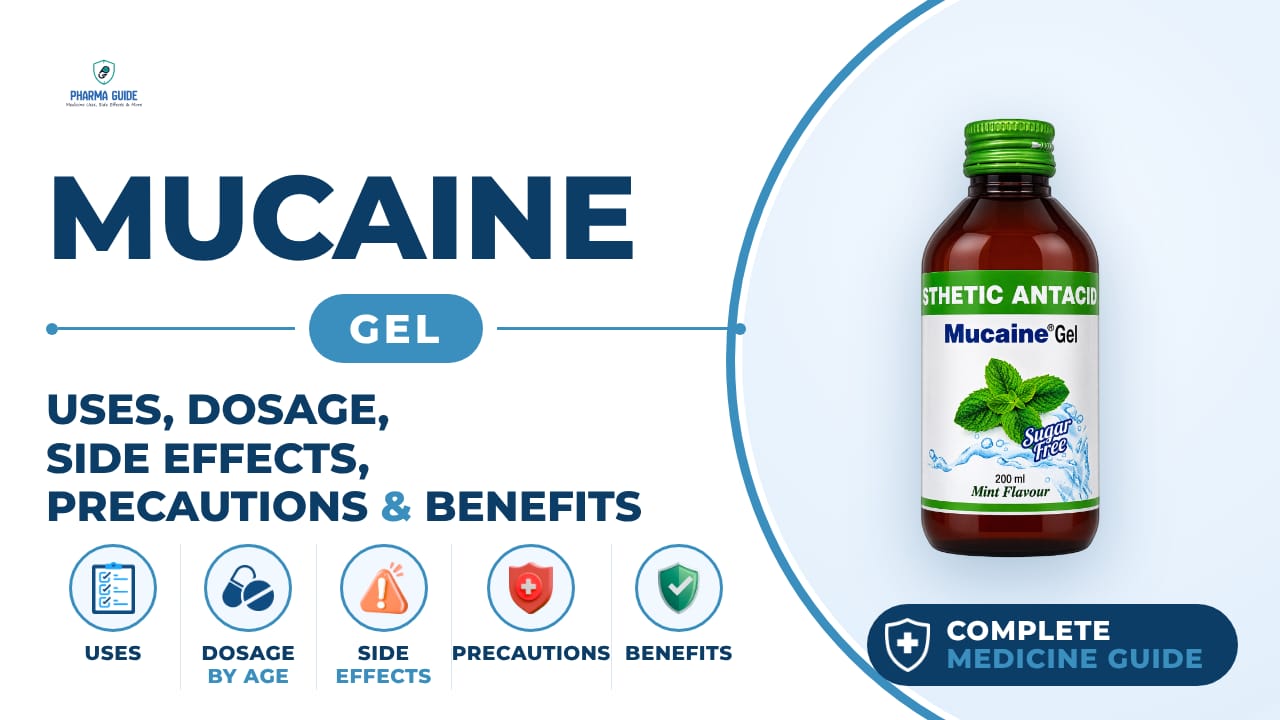
Mucaine Gel: Uses, Dosage, Side Effects, Precautions and Alternates
| Generic name | Aluminium Hydroxide; Magnesium Hydroxide; Oxetacaine |
|---|---|
| Drug class | Anesthetic Antacid Gel |
| Forms | Oral Gel, Oral Suspension |
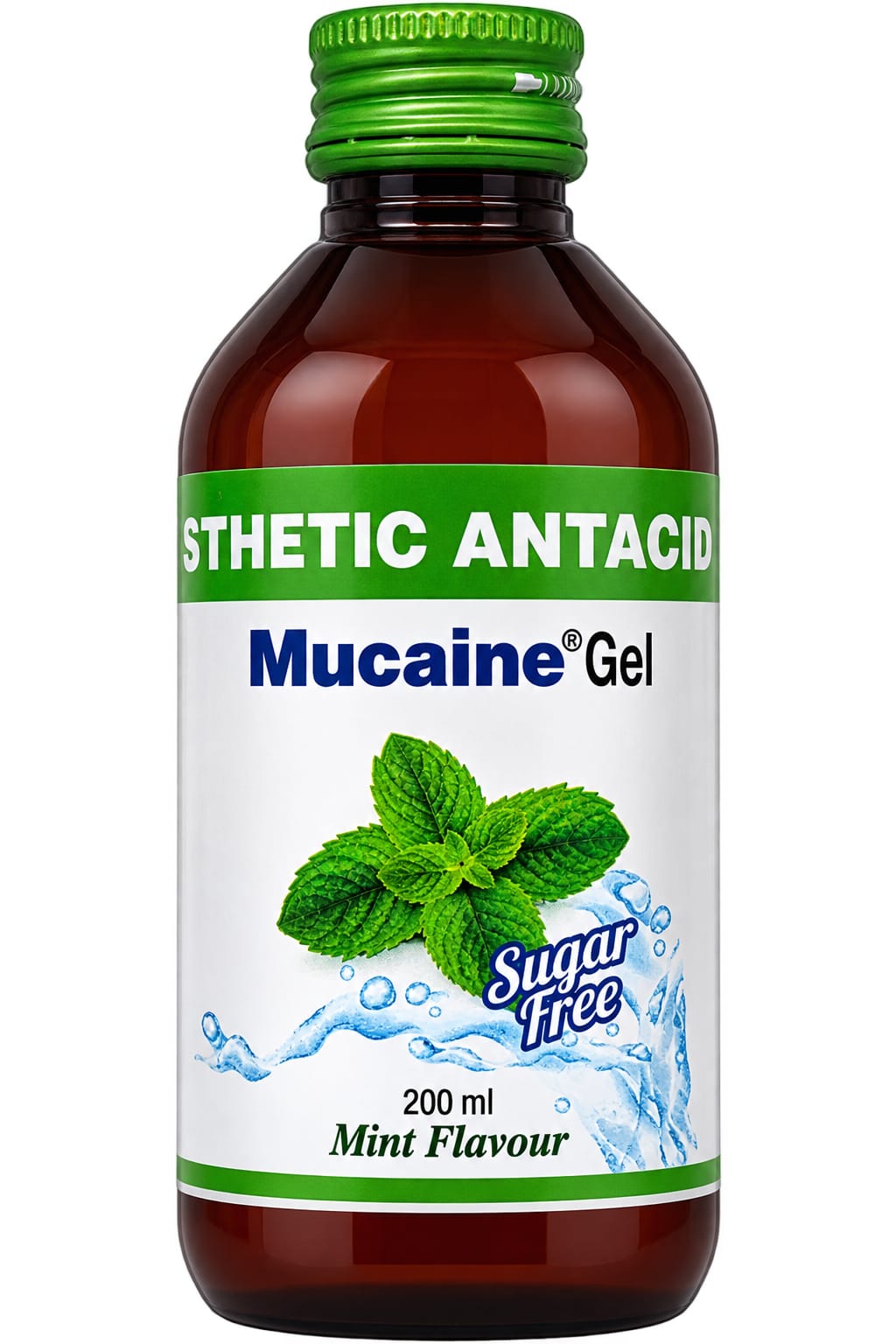
Quick overview
Mucaine Gel is a combination medicine containing Aluminium Hydroxide, Magnesium Hydroxide, and Oxetacaine, classified as an anesthetic antacid gel. It is used to relieve heartburn, acidity, upset stomach, and discomfort associated with stomach ulcers and gastritis. The medicine combines antacid action with a local anesthetic to provide soothing, longer-lasting relief from acid-related pain and irritation.
What is Mucaine Gel
Mucaine Gel is a combination medicine containing Aluminium Hydroxide, Magnesium Hydroxide, and Oxetacaine. It is used to relieve symptoms such as heartburn, acidity, and upset stomach, and to ease stomach discomfort associated with stomach ulcers and gastritis.
Mucaine Gel uses
- Acidity and acid indigestion.
- Heartburn.
- Gastroesophageal reflux disease (GERD).
- Gastritis-related discomfort.
- Peptic ulcer-related pain and irritation.
Benefits of Mucaine Gel
- Provides relief from heartburn.
- Reduces acid-related stomach discomfort.
- Helps relieve burning pain associated with ulcers.
- Neutralizes excess stomach acid.
- Provides temporary soothing relief from acidity.
How Mucaine Gel works
Mucaine Gel combines an antacid and a local anesthetic. The antacid ingredients neutralize excess stomach acid, while oxetacaine numbs the stomach lining to relieve pain, bloating, discomfort, and fullness. Because it is given together with the antacid ingredients, the anesthetic stays in contact with the stomach lining longer, giving longer-lasting relief.
Mucaine Gel dosage
Mucaine Gel is usually taken 15 minutes to half an hour before meals and at bedtime, or as directed by your doctor. It is preferable to take it undiluted, though a sip of water may be taken if desired. Avoid eating or drinking for 30 minutes after a dose to let the gel coat the stomach, and it is best taken on an empty stomach. Shake the bottle well before use.
Keep taking it for as long as your doctor recommends; do not stop early as symptoms may return and your condition may worsen. Avoid taking any other oral medicine within 1 to 2 hours of taking this medicine. Dose requirements for young children have not been extensively evaluated; proper diagnosis should come before using an antacid in children.
| Age group | Dose |
|---|---|
| Under 18 years | Not recommended |
| 18–64 years | 10 mL, 3–4 times/day |
| 65+ years | 10 mL, 3–4 times/day |
Available forms and strengths
- Oral Gel
- Oral Suspension
Side effects of Mucaine Gel
Common
- Constipation or loose motions (diarrhea)
- Stomach discomfort
- Mild nausea and bloating
- Dizziness or drowsiness
- Temporary numbness of the tongue or a chalky/altered taste
- Loss of appetite
- Change in taste
- Nausea and vomiting
- Chills
- Headache
- Unusual tiredness or weakness
- Abdominal discomfort
- Allergic reaction
Serious
- Glossitis (tongue inflammation) of the hypersensitivity type
- Severe dizziness, faintness
- Signs of a severe allergic reaction such as skin rash, itching or swelling (especially of the face, tongue, or throat), and breathing difficulty
- Intestinal obstruction from large doses
- Signs of low phosphorus levels such as weak and brittle bones, muscle weakness and pain, and fatigue from prolonged use
Warnings and precautions
- This medicine can interfere with how other medicines are absorbed by the body, so other oral medicines should be taken at least 1 to 2 hours apart from this medicine.
- Do not take more than the recommended amount, as high doses can cause mouth/tongue numbness lasting too long, dizziness, fainting, drowsiness, constipation, or even intestinal blockage.
- Long-term use of the magnesium ingredient may cause ongoing diarrhea, which can lead to an imbalance of body salts (electrolytes).
- Do not use this medicine if you are allergic to any of its ingredients.
- Holding the gel in your mouth for a long time may numb your tongue and affect your sense of taste because of the oxetacaine it contains.
- Long-term use may lower phosphorus levels in the body, which can lead to weak and brittle bones, muscle weakness and pain, and fatigue.
- Mucaine Gel is not recommended for use during pregnancy unless absolutely necessary. Discuss the risks and benefits with your doctor before taking it, since there are no well-controlled studies showing it is safe in pregnant women.
- It is not known if Mucaine Gel passes into breast milk, so consult your doctor if you are breastfeeding.
- Use with caution if you have kidney problems, since aluminium can build up in the body and cause bone, brain, or blood problems in people with chronic kidney failure, and magnesium can build up if the kidneys do not work properly.
- The effect of alcohol with this medicine is not known, so it's best to ask your doctor before drinking alcohol while taking it.
- This medicine may cause dizziness or drowsiness in some people. Avoid driving or operating machinery if you feel dizzy or drowsy after taking it.
Storage
- Store in a well closed container at temperature not exceeding 30°C
- Avoid freezing
- Do not exceed recommended dosage
- Shake well before use
- Keep out of reach of children
When to see a doctor
- Get medical help right away if you notice signs of an allergic reaction such as skin rash, itching or swelling of the face, tongue, or throat, severe dizziness, or difficulty breathing.
- Seek emergency medical help right away if you think you have taken too much of this medicine.
- Get medical help immediately if you have black stools, vomit blood, severe chest pain, trouble swallowing, or unexplained weight loss.
- Talk to your doctor if your symptoms do not improve within two weeks of taking this medicine, or if acidity and heartburn keep happening often despite treatment.
Alternatives
- Gelusil
- Digene Gel
- Gaviscon
Watch the video
FAQs
What is Mucaine Gel used for?
Mucaine Gel is used to relieve heartburn, acidity, acid indigestion, GERD, and discomfort from gastritis or stomach ulcers.
How does Mucaine Gel work?
It combines an antacid that neutralizes excess stomach acid with oxetacaine, a local anesthetic that numbs the stomach lining to relieve pain, bloating, discomfort, and fullness, giving longer-lasting relief.
What is the dosage of Mucaine Gel for adults?
Adults aged 18-64 and those 65+ typically take 10 mL, 3-4 times a day, usually 15 minutes to half an hour before meals and at bedtime, or as directed by a doctor.
What are the common side effects of Mucaine Gel?
Common side effects include constipation or diarrhea, stomach discomfort, mild nausea and bloating, dizziness or drowsiness, temporary numbness of the tongue or altered taste, loss of appetite, headache, and tiredness.
Can Mucaine Gel be used during pregnancy?
Mucaine Gel is not recommended during pregnancy unless absolutely necessary, as there are no well-controlled studies showing it is safe, so the risks and benefits should be discussed with a doctor.
General information, not medical advice
Your prescriber and the leaflet in your pack know your situation. This page does not.
- Follow your prescriber and the leaflet
- Don't start, stop, or change a dose on your own
- Doses and warnings differ by country and product
Sources
Video
Related medicines

Injectafer Injection: Uses, Dosage, Side Effects, Precautions and Alternates
Iron products
Injectafer (ferric carboxymaltose) treats iron deficiency anemia and heart failure-related iron deficiency via IV. Learn uses, dosage, side effects, and

Gliclazide Tablet: Uses, Dosage, Side Effects, Precautions and Alternates
Sulfonylurea (hypoglycemic/antidiabetic agent)
Gliclazide Tablet is a sulfonylurea for type 2 diabetes that boosts insulin release. Learn about dosage, side effects, warnings, and precautions.