
Safety
General information, not medical advice
Your prescriber and the leaflet in your pack know your situation. This page does not.
- Follow your prescriber and the leaflet
- Don't start, stop, or change a dose on your own
- Doses and warnings differ by country and product
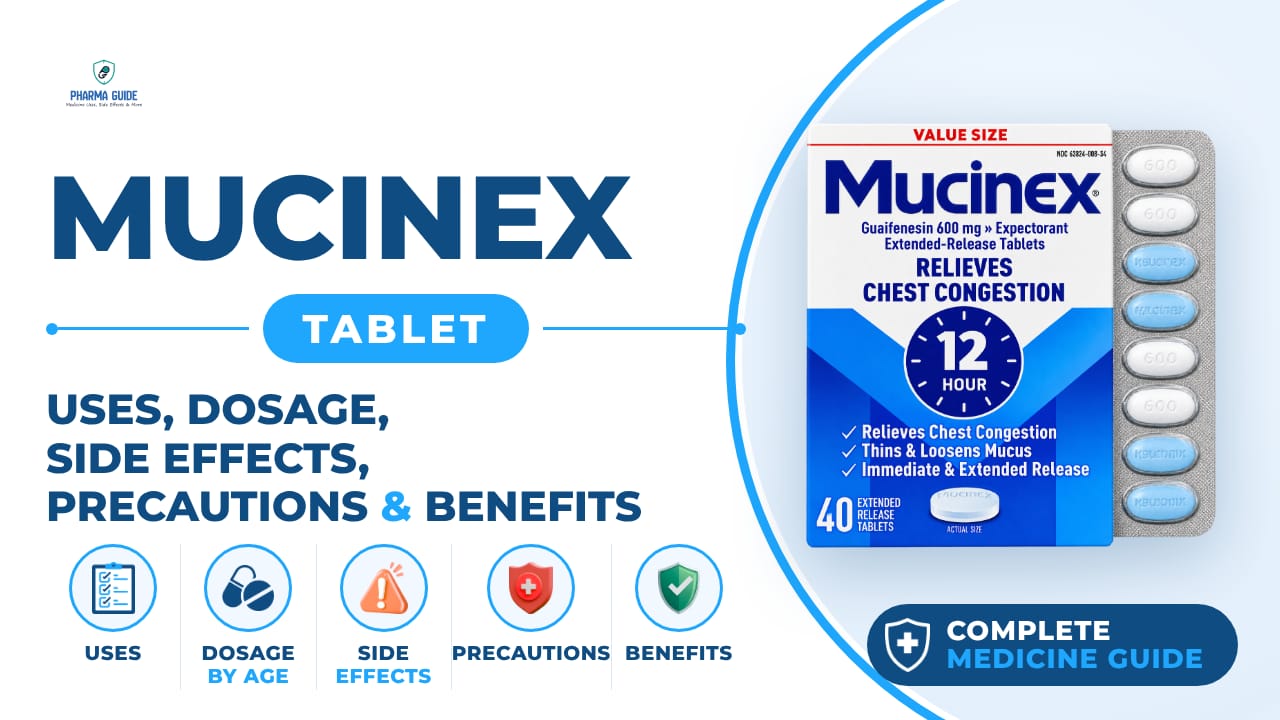
Mucinex Tablet: Uses, Dosage, Side Effects, Precautions and Alternates
| Generic name | guaifenesin |
|---|---|
| Drug class | Expectorants |
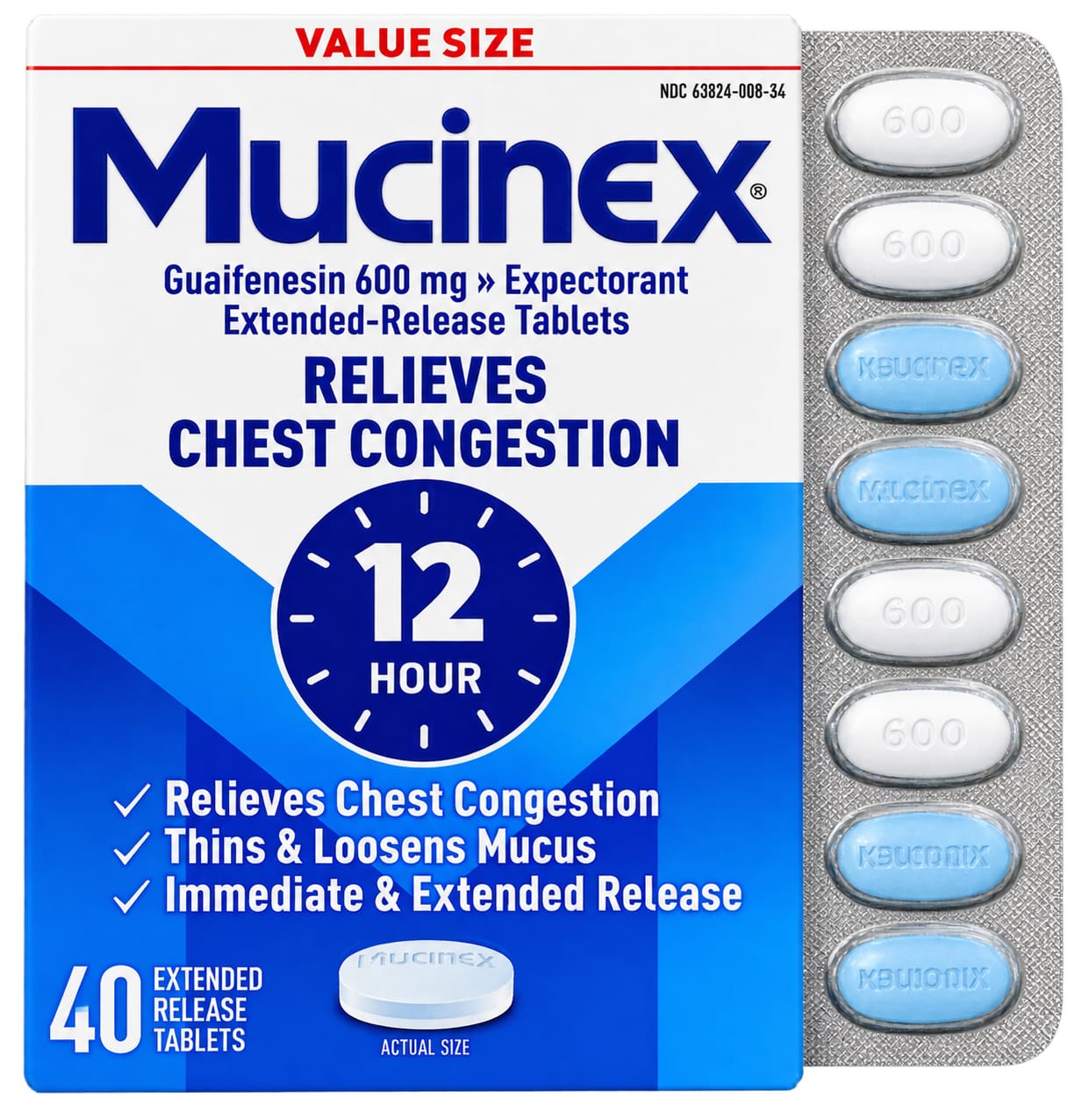
| Forms | Tablet, Extended-release tablet, Mini Melts packet, Solution, Syrup |
Quick overview
Mucinex Tablet (guaifenesin) is an expectorant used to relieve chest congestion and coughs caused by the common cold, infections, allergies, bronchitis, and other breathing illnesses. It works by increasing fluid in the airways to thin mucus, making coughs more productive and breathing easier. It is available in several forms, including regular and extended-release tablets, and should be used exactly as directed.
What is Mucinex Tablet
Mucinex is an expectorant medicine. It helps loosen mucus and congestion in the chest and throat so it is easier to cough it out.
Mucinex Tablet uses
- Reduces chest congestion caused by the common cold, infections, or allergies
- Temporary relief of coughs caused by the common cold, bronchitis, and other breathing illnesses
- May also be used for purposes not listed in this medication guide
Benefits of Mucinex Tablet
- Helps loosen mucus so coughs become more productive
- Clears congestion and makes breathing easier
- Helps lubricate the throat when combined with extra fluids
- Loosens thick mucus/phlegm in the airways
- Thins mucus, making it easier to cough up
- Helps relieve chest congestion associated with colds and respiratory illnesses
- Helps make a productive cough more effective at clearing mucus
How Mucinex Tablet works
Guaifenesin works by increasing fluid in the airways, which thins mucus and helps the body clear congestion, making it easier to cough out and breathe.
Mucinex Tablet dosage
Use exactly as directed on the label or as prescribed by your doctor; do not use in larger or smaller amounts or for longer than recommended. Cough medicine is usually taken only for a short time until symptoms clear up. Do not crush, chew, or break an extended-release tablet; swallow it whole with a full glass of water. Take with food if it upsets your stomach. This product can be taken without regard to meal timing. Drink extra fluids to help loosen congestion and lubricate the throat while taking this medication. Stop using and call your doctor if cough lasts more than 7 days, comes back, or occurs with fever, rash, or persistent headache. If a dose is missed, take it as soon as remembered, but skip it if it is almost time for the next dose; do not double up.
| Age group | Dose |
|---|---|
| Under 12 years | Not recommended unless directed by a doctor |
| 12 years & older | 600–1,200 mg every 12 hours |
| Adults | 600–1,200 mg every 12 hours |
Available forms and strengths
- Tablet
- Extended-release tablet
- Mini Melts packet
- Solution
- Syrup
Side effects of Mucinex Tablet
Common
- Dizziness
- Headache
- Rash
- Nausea
- Vomiting
- Stomach upset
- Drowsiness
- Gastrointestinal irritation
Serious
- Signs of an allergic reaction: hives, difficult breathing, swelling of the face, lips, tongue, or throat
Warnings and precautions
- Do not use Mucinex if you are allergic to guaifenesin.
- Ask a doctor or pharmacist before using if you have a persistent or chronic cough, such as from smoking, asthma, chronic bronchitis, or emphysema, or a cough with too much mucus.
- Do not give Mucinex to a child without medical advice.
- Do not crush, chew, or break an extended-release tablet, since this can release all the drug at once and increase the risk of side effects.
- Ask a doctor or pharmacist before using any other cold or cough medicine, since many combination products also contain guaifenesin and taking them together can cause too much of the drug.
- Cough-and-cold products have not been shown to be safe or effective in children younger than 6 years, and sustained-release forms are not recommended for children under 12 unless a doctor directs it.
- It is not known whether Mucinex will harm an unborn baby. Ask a doctor before using this medicine if you are pregnant.
- It is not known whether guaifenesin passes into breast milk or if it could harm a nursing baby. Ask a doctor before using this medicine if you are breast-feeding.
- Do not exceed the recommended dose if you have kidney concerns.
- Swallow extended-release tablets whole; do not crush, chew, or break them, particularly if you have liver concerns.
- If breastfeeding, avoid products with high alcohol content.
- Mucinex may impair your thinking or reactions. Be careful if you drive or do anything that requires you to be alert.
Storage
- Store at room temperature away from moisture, heat, and light
- Do not store in the bathroom
- Keep all medications away from children and pets
- Do not flush medications down the toilet or pour them into a drain unless instructed to do so
- Properly discard this product when it is expired or no longer needed; consult your pharmacist or local waste disposal company
When to see a doctor
- Get emergency medical help if you have signs of an allergic reaction: hives, difficulty breathing, or swelling of the face, lips, tongue, or throat.
- Stop using this medicine and call your doctor if your cough lasts more than 7 days, comes back, or occurs with a fever, rash, or persistent headache.
- Seek emergency medical attention if you think you have taken too much of this medicine.
- Stop the medicine and seek urgent care if you develop facial swelling, hives, severe rash, or trouble breathing, or if cough or congestion does not improve, gets worse, or comes with fever, chest pain, or breathing difficulty.
Alternatives
- Robitussin Chest Congestion
- Tussin (Tussin DM)
- Mucus Relief
- Mucinex Maximum Strength
- Diabetic Tussin Chest Congestion
- Bidex-400
- Guiatuss
- Allfen
- Numobid
- Mucinex DM
Watch the video
FAQs
What is Mucinex Tablet used for?
It is used to reduce chest congestion and relieve coughs caused by the common cold, infections, allergies, bronchitis, and other breathing illnesses.
How does Mucinex Tablet work?
Guaifenesin works by increasing fluid in the airways, which thins mucus and helps the body clear congestion, making it easier to cough out and breathe.
What is the dosage of Mucinex Tablet for adults?
Adults and those 12 years and older typically take 600–1,200 mg every 12 hours, used exactly as directed on the label or by a doctor.
Can I crush an extended-release Mucinex tablet?
No, extended-release tablets should not be crushed, chewed, or broken; they should be swallowed whole with a full glass of water, as crushing can release the drug all at once and increase side effects.
When should I stop taking Mucinex and see a doctor?
Stop using it and call your doctor if your cough lasts more than 7 days, comes back, or occurs with fever, rash, or persistent headache.
General information, not medical advice
Your prescriber and the leaflet in your pack know your situation. This page does not.
- Follow your prescriber and the leaflet
- Don't start, stop, or change a dose on your own
- Doses and warnings differ by country and product
Sources
Video
Related medicines

Injectafer Injection: Uses, Dosage, Side Effects, Precautions and Alternates
Iron products
Injectafer (ferric carboxymaltose) treats iron deficiency anemia and heart failure-related iron deficiency via IV. Learn uses, dosage, side effects, and

Gliclazide Tablet: Uses, Dosage, Side Effects, Precautions and Alternates
Sulfonylurea (hypoglycemic/antidiabetic agent)
Gliclazide Tablet is a sulfonylurea for type 2 diabetes that boosts insulin release. Learn about dosage, side effects, warnings, and precautions.