
Safety
General information, not medical advice
Your prescriber and the leaflet in your pack know your situation. This page does not.
- Follow your prescriber and the leaflet
- Don't start, stop, or change a dose on your own
- Doses and warnings differ by country and product
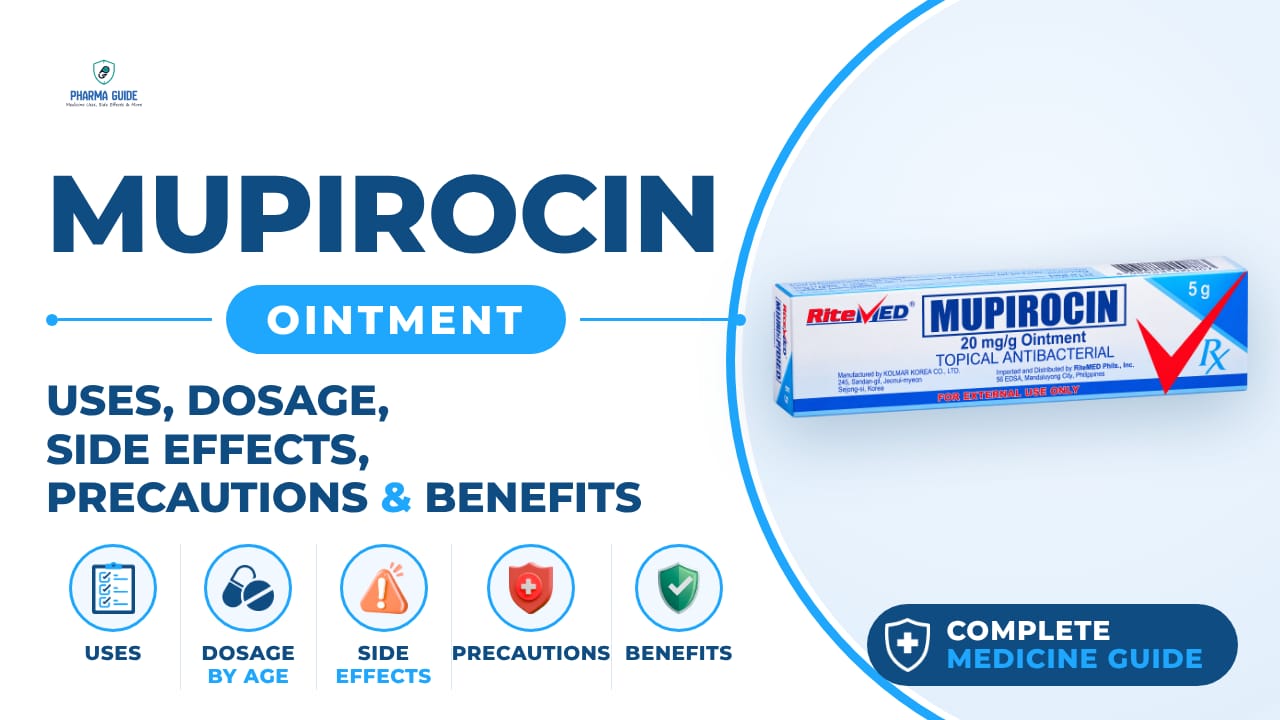
Mupirocin Ointment: Uses, Dosage, Side Effects, Precautions and Alternates
| Generic name | Mupirocin |
|---|---|
| Drug class | Topical antibiotic (RNA synthetase inhibitor antibacterial) |
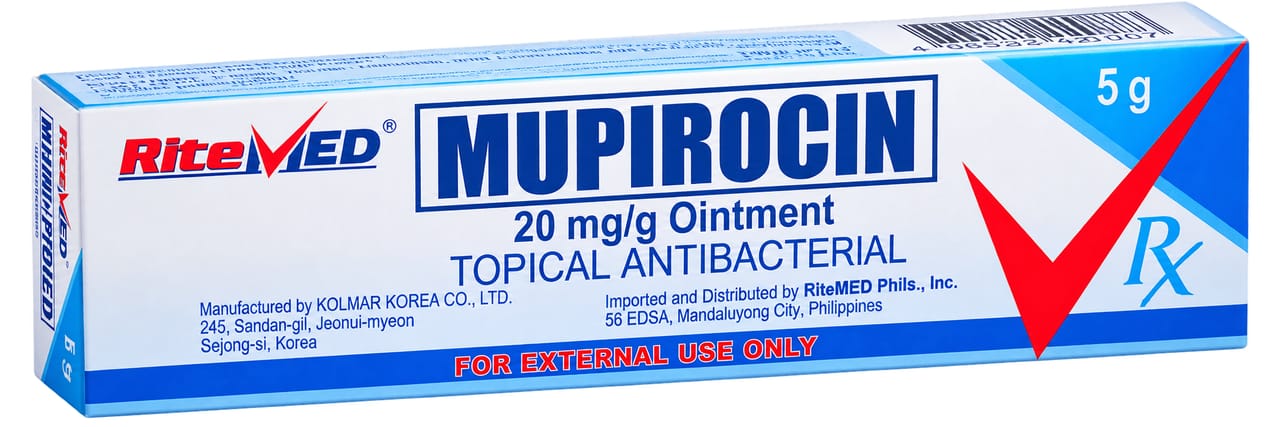
| Forms | Ointment (2%) |
Quick overview
Mupirocin Ointment is a prescription topical antibiotic used to treat impetigo, a skin infection caused by Staphylococcus aureus and Streptococcus pyogenes. It works by stopping bacteria from making the proteins they need to survive, which kills the bacteria and helps clear the infection. It is applied to the skin only, typically three times a day for up to 10 days, and is available as a 2% ointment.
What is Mupirocin Ointment
Mupirocin ointment is a prescription medicine applied to the skin to treat a skin infection called impetigo caused by certain bacteria (Staphylococcus aureus and Streptococcus pyogenes). Its generic name is mupirocin, and it belongs to the drug class of topical antibiotics (RNA synthetase inhibitor antibacterials).
Mupirocin Ointment uses
- Topical treatment of impetigo caused by susceptible Staphylococcus aureus and Streptococcus pyogenes
- Treatment of secondarily infected traumatic skin lesions (cream form)
- Sometimes used off-label for infected wounds
Benefits of Mupirocin Ointment
- Clears bacterial skin infections like impetigo by killing the bacteria that cause them
- Studies showed higher clinical cure and bacteria clearance rates compared to placebo, and similar effectiveness compared to an oral antibiotic (erythromycin)
How Mupirocin Ointment works
Mupirocin works by blocking bacteria from making the proteins they need to survive, which kills the bacteria.
Mupirocin Ointment dosage
This ointment is for use on the skin only; do not use it in the eyes, nose, mouth, or vagina. Wash your hands before and after applying the ointment. Apply a small amount to the affected area using a cotton swab or gauze pad, rubbing it in gently. The treated area may be covered with a gauze dressing if desired, but do not use a bandage or covering that blocks air unless told to by your doctor. Do not apply the ointment along with other lotions, creams, or ointments on the same area.
Use the full course of treatment even if symptoms improve before finishing, to make sure the infection is fully cleared. Contact your healthcare provider if the skin does not improve within 3 to 5 days of treatment. If you miss a dose, apply it as soon as you remember, but skip it if it is almost time for the next dose. If breastfeeding and treating the breast or nipple area, wash the area thoroughly before nursing your child.
| Age group | Dose |
|---|---|
| Under 2 months | Not routinely recommended; use only if specifically prescribed by a doctor. |
| 2 months–16 years | Apply a small/thin amount to the affected skin 3 times daily, usually for up to 10 days. |
| 17 years and older | Apply a small/thin amount to the affected skin 3 times daily, usually for up to 10 days. |
Available forms and strengths
- Ointment (2%)
Side effects of Mupirocin Ointment
Common
- Burning
- Stinging or pain
- Itching
- Rash
- Nausea
- Redness (erythema)
- Dry skin
- Tenderness
- Swelling
- Contact dermatitis
- Increased discharge from the skin (exudate)
Serious
- Severe allergic reactions, including hives, swelling of the face, lips, mouth, or tongue, rash over the whole body, trouble breathing or wheezing, dizziness, or fast or pounding heartbeat
- Eye irritation if the ointment gets into the eyes
- Severe itching, rash, or irritation at the application site
- A type of severe diarrhea called Clostridium difficile-associated diarrhea (CDAD), which can range from mild to severe and, in rare cases, be fatal
- Increased risk of infection at intravenous (IV) sites if used near them
- Kidney problems from absorption of an ingredient (polyethylene glycol) if used on open wounds or damaged skin, especially in people with kidney problems
- Unusual skin blistering or peeling
- Signs of a new skin infection
Warnings and precautions
- Serious allergic reactions such as anaphylaxis, hives, swelling, and widespread rash have happened in people using mupirocin.
- Avoid getting the ointment in your eyes. If it happens, rinse well with water.
- If the skin becomes very irritated or sensitive to the medicine, stop using it and get other treatment for the infection.
- Diarrhea linked to antibiotic use (CDAD) can occur, even up to two months after stopping the medicine, and may range from mild to life-threatening.
- Using this ointment for a long time may allow other germs, including fungi, to grow that aren't killed by the medicine.
- This ointment is not made for use inside the nose or other mucous surfaces; a different nasal formulation exists for that purpose.
- Do not use this ointment with IV lines or at central IV sites because it may increase the risk of fungal infections and antibiotic resistance.
- Do not use this ointment on cuts, scrapes, or burns; if it gets on these areas, rinse it off right away with water.
- There isn't enough information in humans to know if mupirocin ointment is harmful during pregnancy, but very little of the medicine is absorbed into the body through the skin.
- It isn't known if mupirocin passes into breast milk, but very little is absorbed into the body, so exposure to a breastfeeding child is not expected.
- If you apply it to your breast or nipple, wash the area well before breastfeeding.
- People with moderate or severe kidney problems should be cautious because an ingredient in the ointment (polyethylene glycol) can be absorbed through open wounds or damaged skin and is removed from the body by the kidneys.
Storage
- Store at room temperature between 68°F to 77°F (20°C to 25°C)
- Keep mupirocin ointment and all medicines out of the reach of children
- Store the medicine in a closed container, away from heat, moisture, and direct light
- Keep from freezing
When to see a doctor
- Get emergency help right away for signs of a severe allergic reaction, such as hives, swelling of the face, lips, mouth, or tongue, a rash all over the body, or trouble breathing or wheezing.
- Call your healthcare provider or go to the emergency room right away if you get diarrhea while using or after stopping this medicine.
- Stop using the ointment and call your healthcare provider if you develop irritation, severe itching, or a rash where you applied it.
- Contact your healthcare provider if your skin infection hasn't improved after 3 to 5 days of treatment.
- Seek medical attention if someone accidentally swallows the medication, as an overdose is not expected to be dangerous but should still be checked.
Alternatives
- Mupirocin nasal ointment
Watch the video
FAQs
What is Mupirocin Ointment used for?
It is a prescription topical antibiotic used to treat impetigo, a skin infection caused by Staphylococcus aureus and Streptococcus pyogenes.
How is Mupirocin Ointment applied?
Apply a small amount to the affected skin area using a cotton swab or gauze pad, rubbing it in gently, typically three times a day for up to 10 days. It is for use on the skin only and should not be used in the eyes, nose, mouth, or vagina.
What should I do if I miss a dose of Mupirocin Ointment?
Apply it as soon as you remember, but skip it if it is almost time for the next dose.
What are the common side effects of Mupirocin Ointment?
Common side effects include burning, stinging or pain, itching, rash, nausea, redness, dry skin, tenderness, swelling, contact dermatitis, and increased discharge from the skin.
When should I contact a doctor while using Mupirocin Ointment?
Contact your healthcare provider if your skin infection hasn't improved after 3 to 5 days of treatment, or if you develop irritation, severe itching, rash, or diarrhea during or after use.
General information, not medical advice
Your prescriber and the leaflet in your pack know your situation. This page does not.
- Follow your prescriber and the leaflet
- Don't start, stop, or change a dose on your own
- Doses and warnings differ by country and product
Sources
- Mupirocin Ointment Prescribing Information, Teva Pharmaceuticals USA, Inc., Revised 5/2022
- Mayo Clinic - Mupirocin (topical route)
- Drugs.com - Mupirocin Ointment
Video
Related medicines

Bactroban Cream: Uses, Dosage, Side Effects, Precautions and Alternates
Topical antibiotic (RNA synthetase inhibitor antibacterial)
Bactroban Cream (mupirocin) treats infected cuts, scrapes, and mild impetigo caused by bacteria. Learn dosage, side effects, and precautions before use.

Injectafer Injection: Uses, Dosage, Side Effects, Precautions and Alternates
Iron products
Injectafer (ferric carboxymaltose) treats iron deficiency anemia and heart failure-related iron deficiency via IV. Learn uses, dosage, side effects, and