
Safety
General information, not medical advice
Your prescriber and the leaflet in your pack know your situation. This page does not.
- Follow your prescriber and the leaflet
- Don't start, stop, or change a dose on your own
- Doses and warnings differ by country and product
Myambutol Tablet: Uses, Dosage, Side Effects, Precautions and Alternates
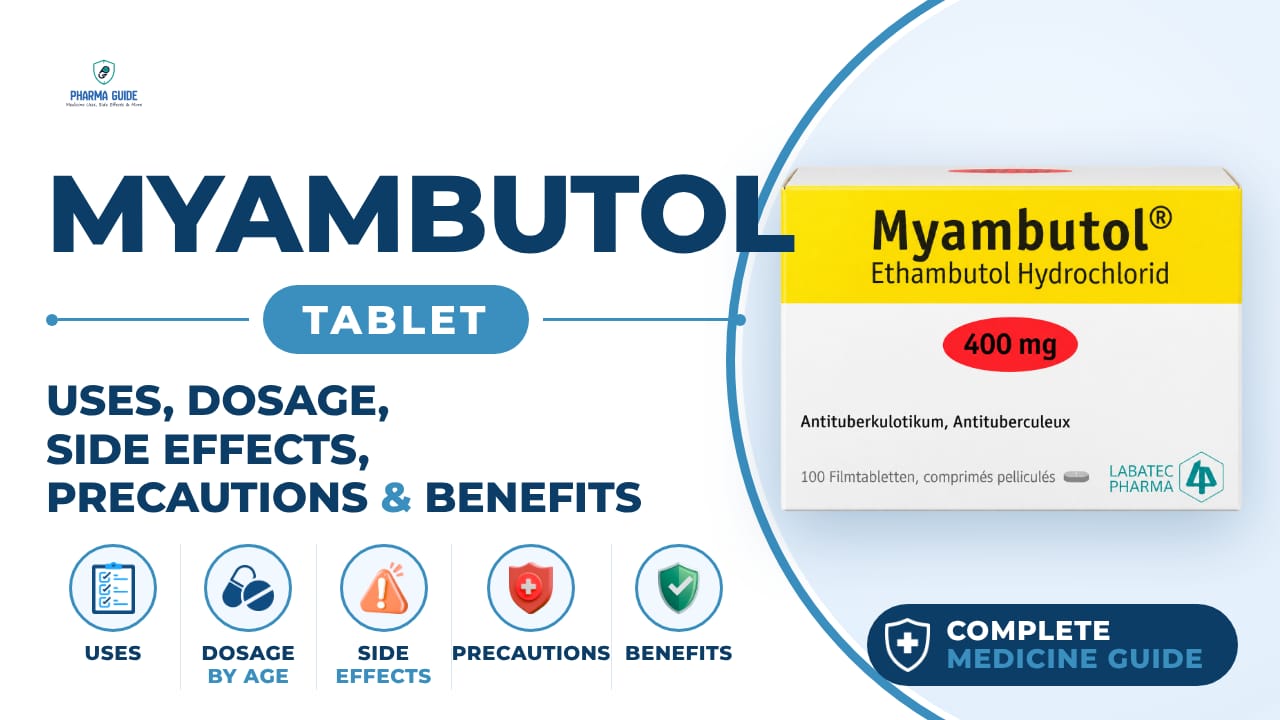
| Generic name | ethambutol hydrochloride |
|---|---|
| Drug class | Antitubercular agent (miscellaneous antituberculosis agent) |
| Forms | Tablet |
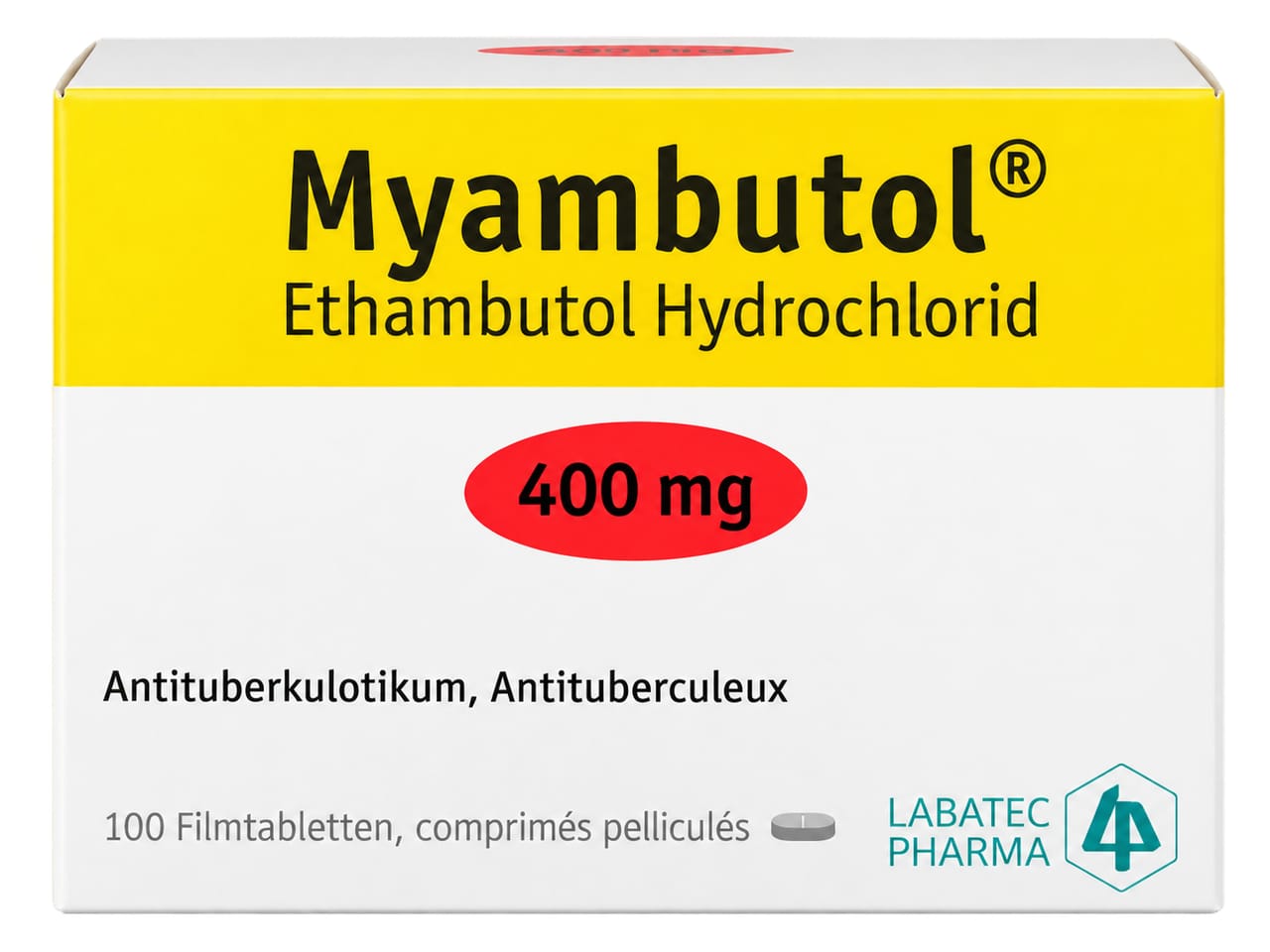
Quick overview
Myambutol Tablet contains ethambutol hydrochloride, an antitubercular agent used to treat pulmonary tuberculosis (TB) as part of combination therapy with at least one other TB medicine. It may also be used off-label for certain other mycobacterial infections, such as Mycobacterium avium complex (MAC), as decided by a doctor. It is taken once daily, with or without food, and works by stopping TB bacteria from growing and multiplying. It can cause side effects, including effects on the eyes and liver, so regular monitoring and following your doctor's instructions are important.
What is Myambutol Tablet
Myambutol is an antibiotic that prevents the growth of the bacteria that cause tuberculosis (TB). It belongs to the antitubercular drug class and is available as a tablet.
Myambutol Tablet uses
- Treatment of pulmonary tuberculosis (TB), used together with at least one other TB medicine
- May be used off-label for some other mycobacterial infections, such as Mycobacterium avium complex (MAC), as decided by a doctor
Benefits of Myambutol Tablet
- One of the main medications used to treat TB
- Can be taken with or without food
- Taken once a day
- Active against Mycobacterium tuberculosis
- Helps prevent development of resistance when used in combination TB therapy
- Commonly forms part of multidrug TB treatment
How Myambutol Tablet works
Myambutol gets inside the TB bacteria and blocks them from making substances they need to build their protective outer covering. This stops the bacteria from growing and multiplying, and eventually kills them.
Myambutol Tablet dosage
Take this medicine once every 24 hours, at the same time each day. You can take it with or without food; taking it with food may help if it upsets your stomach. Always take it together with at least one other tuberculosis medicine, never alone.
Tell your doctor if you have had tuberculosis treatment before, since your dose may differ. Tell your doctor about any changes in your body weight, since the dose is based on weight. Keep taking the full course of treatment even if you start feeling better; stopping early can let the infection come back and become harder to treat.
Do not take aluminum-hydroxide-containing antacids within 4 hours of taking this medicine, as they can reduce how well it is absorbed. This medicine is not recommended for children younger than 13 years old.
If you miss a dose, take it as soon as you remember, but skip it if it is almost time for your next dose; do not double up.
| Age group | Dose |
|---|---|
| 13–17 years | 15 mg/kg once daily for initial TB treatment, as part of combination therapy |
| 18–64 years | 15 mg/kg once daily for initial treatment |
Available forms and strengths
- Tablet
Side effects of Myambutol Tablet
Common
- Itching or rash
- Joint pain
- Headache, dizziness
- Nausea, vomiting, stomach pain, indigestion, loss of appetite
- Blurry vision
- Fever, feeling unwell
Serious
- Allergic reaction: hives, difficulty breathing, swelling of face, lips, tongue, or throat
- Vision problems, including possible permanent vision loss: blurred vision, trouble focusing, loss of vision in one eye lasting an hour or longer, increased light sensitivity, loss of color vision, pain with eye movement or behind the eyes
- New or worsening cough with fever, trouble breathing
- Numbness or tingling in hands or feet
- Confusion, hallucinations
- Fever, swollen glands, painful mouth sores, skin sores, cold or flu symptoms, general ill feeling
- Easy bruising or bleeding (nosebleeds, bleeding gums)
- Chest pain or shortness of breath with mild exertion
- Little or no urinating
- Liver problems: upper stomach pain, dark urine, clay-colored stools, yellowing of skin or eyes
- Severe skin reaction: fever, sore throat, swelling of face or tongue, burning eyes, skin pain followed by a spreading red or purple rash with blistering and peeling
Warnings and precautions
- This medicine can cause vision problems, including a condition called optic neuritis, and in rare cases the vision loss can be permanent.
- Do not use this medicine if you are allergic to it, have known optic neuritis (unless your doctor decides it's appropriate), or if you cannot recognize or report changes in your vision, such as young children or patients who are unconscious.
- This medicine should never be used as the only drug to treat tuberculosis; it must always be combined with at least one other TB medicine.
- This medicine is not recommended for children younger than 13 years old because its safety in that age group has not been established.
- Avoid taking antacids that contain aluminum hydroxide within 4 hours of taking this medicine, since they can reduce how well your body absorbs it.
- There is not enough information to know for certain if this medicine is safe during pregnancy. It should only be used if the expected benefit outweighs the possible risk to the baby.
- This medicine passes into breast milk and could affect a nursing baby, so talk to your doctor before breastfeeding while taking it.
- People with reduced kidney function need a lower dose, since this medicine is mainly removed from the body by the kidneys.
- This medicine can cause liver problems, including rare fatal cases. Your doctor should check your liver function before and during treatment.
- Alcohol is best avoided or limited during TB treatment, particularly because several TB medicines can affect the liver.
- Ethambutol can affect vision; avoid driving if visual acuity or color vision changes.
Storage
- Store at room temperature (18-25 Celsius)
- Store at controlled room temperature 20° to 25°C (68° to 77°F)
- Keep medicine away from excessive light, moisture, and children
- Please do not flush medicines down the toilet
- Please read the leaflet provided with the medicine for further storage guidance
When to see a doctor
- Get emergency help right away if you have signs of an allergic reaction, such as hives, difficulty breathing, or swelling of your face, lips, tongue, or throat.
- Stop taking this medicine and call your doctor right away if you notice any problems with your eyes, such as blurred vision, trouble focusing, loss of vision in one eye lasting an hour or more, increased light sensitivity, loss of color vision, or pain with eye movement or behind your eyes.
- Call your doctor right away if you have a new or worsening cough with fever or trouble breathing, numbness or tingling in your hands or feet, confusion or hallucinations, fever with swollen glands or mouth sores, easy bruising or bleeding, chest pain or shortness of breath, little or no urination, or signs of liver problems like dark urine or yellowing skin or eyes.
- Seek medical help right away for a severe skin reaction with fever, sore throat, facial or tongue swelling, burning eyes, and skin pain followed by a spreading red or purple rash with blistering and peeling.
Alternatives
- Rifampin
- Isoniazid
- Pyrazinamide
Watch the video
FAQs
What is Myambutol Tablet used for?
Myambutol Tablet is used to treat pulmonary tuberculosis (TB) as part of combination therapy with at least one other TB medicine. It may also be used off-label for other mycobacterial infections, such as Mycobacterium avium complex (MAC), as decided by a doctor.
How should Myambutol Tablet be taken?
It is taken once every 24 hours, at the same time each day, with or without food, and always together with at least one other tuberculosis medicine, never alone. The full course should be completed even if you start feeling better.
What are the serious side effects of Myambutol Tablet?
Serious side effects include vision problems (possibly permanent vision loss), allergic reactions, liver problems, numbness or tingling in hands or feet, confusion or hallucinations, easy bruising or bleeding, and severe skin reactions.
Can Myambutol Tablet affect vision?
Yes, Myambutol can cause vision problems, including a condition called optic neuritis, and in rare cases the vision loss can be permanent. You should stop the medicine and call your doctor right away if you notice any changes in vision.
Is Myambutol Tablet safe for children?
Myambutol is not recommended for children younger than 13 years old because its safety in that age group has not been established.
General information, not medical advice
Your prescriber and the leaflet in your pack know your situation. This page does not.
- Follow your prescriber and the leaflet
- Don't start, stop, or change a dose on your own
- Doses and warnings differ by country and product
Sources
Video
Related medicines

Injectafer Injection: Uses, Dosage, Side Effects, Precautions and Alternates
Iron products
Injectafer (ferric carboxymaltose) treats iron deficiency anemia and heart failure-related iron deficiency via IV. Learn uses, dosage, side effects, and

Gliclazide Tablet: Uses, Dosage, Side Effects, Precautions and Alternates
Sulfonylurea (hypoglycemic/antidiabetic agent)
Gliclazide Tablet is a sulfonylurea for type 2 diabetes that boosts insulin release. Learn about dosage, side effects, warnings, and precautions.