
Safety
General information, not medical advice
Your prescriber and the leaflet in your pack know your situation. This page does not.
- Follow your prescriber and the leaflet
- Don't start, stop, or change a dose on your own
- Doses and warnings differ by country and product
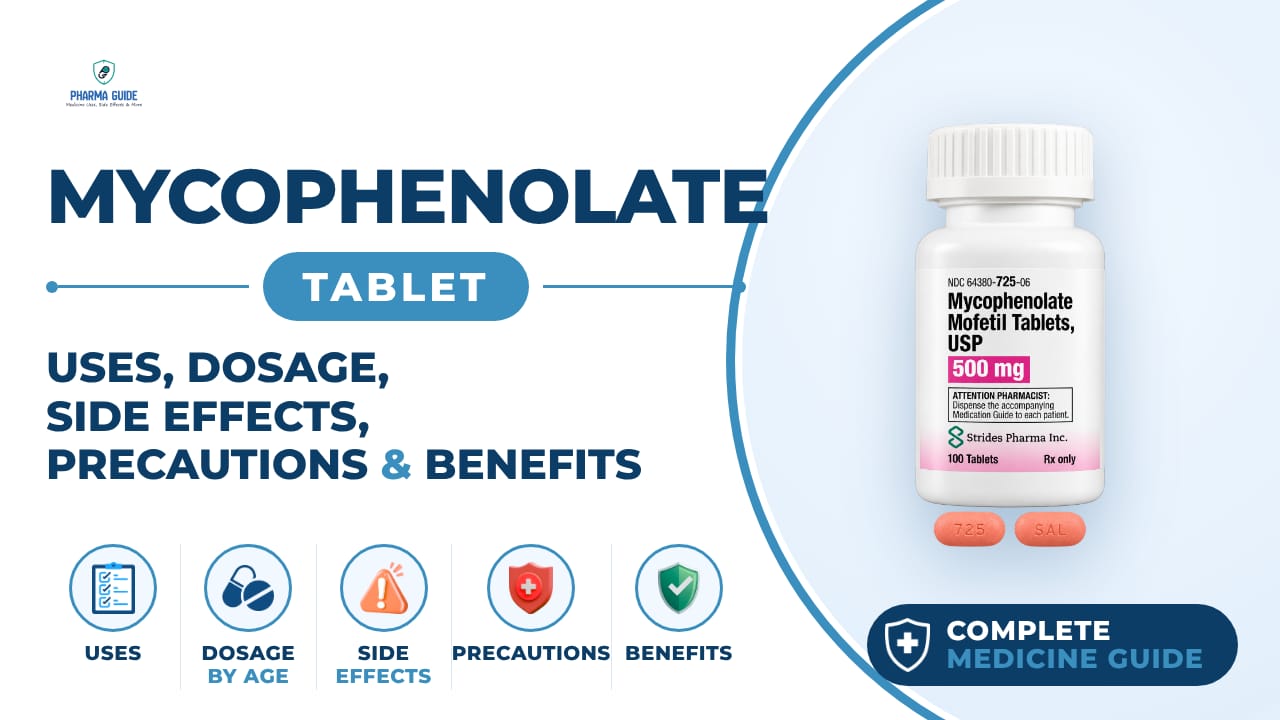
Mycophenolate Tablet: Uses, Dosage, Side Effects, Precautions and Alternates
| Generic name | Mycophenolate mofetil |
|---|---|
| Drug class | Disease-modifying anti-rheumatic drug (DMARD) / Immunosuppressant |
| Forms | Capsule, Tablet, Injectable infusion, Oral solution |
Quick overview
Mycophenolate Tablet (generic name mycophenolate mofetil) is a disease-modifying anti-rheumatic drug (DMARD) and immunosuppressant. It reduces the activity of the immune system and is used to help control conditions such as arthritis and lupus, as well as to prevent organ rejection after a transplant. It is taken by mouth, usually starting once a day and increasing to twice a day, and requires regular monitoring by your doctor.
What is Mycophenolate Tablet
Mycophenolate is a medicine that reduces the activity of your immune system. It is used as a DMARD to help control conditions like arthritis and lupus, and is also used after organ transplants to stop the body rejecting the new organ.
Mycophenolate Tablet uses
- Lupus and other connective tissue disorders, including scleroderma
- Rheumatoid arthritis
- Psoriatic arthritis
- Vasculitis and other conditions with inflammation of blood vessels
- Inflammatory conditions affecting the eye (uveitis)
- Inflammatory bowel conditions such as Crohn's disease
- Preventing organ rejection after kidney, heart, or liver transplant
Benefits of Mycophenolate Tablet
- Helps control the underlying disease activity rather than just treating symptoms
- Can reduce damage to joints and organs such as lungs, kidneys and blood vessels
- Helps prevent the body from rejecting a transplanted organ
How Mycophenolate Tablet works
Mycophenolate reduces the activity of the immune system. Normally the immune system fights infection, but in some conditions it mistakenly attacks the body's own tissues; in transplants, it can attack the new organ. By calming this immune activity, mycophenolate helps control disease activity or prevent organ rejection.
Mycophenolate Tablet dosage
Mycophenolate is taken once a day for the first week, then usually increased to twice a day as your dose is adjusted. Swallow capsules or tablets whole; do not crush or chew them. Take with food and water to help prevent feeling sick and stomach pain.
Keep taking it even if it doesn't seem to be working right away, and continue even when symptoms improve, since this helps control the condition. It may take up to four months to notice any benefit. Space your two daily doses evenly, about 12 hours apart.
Take care not to let any powder from a broken capsule touch your skin, eyes, or mouth; rinse with water or wash with soap and water if this happens.
| Age group | Dose |
|---|---|
| Under 3 months | Doctor/specialist-directed |
| 3 months–17 years | 600 mg/m² twice daily for kidney transplant; specialist-directed |
| 18–64 years | 1,000 mg twice daily for kidney transplant |
| 65+ years | Individualized; specialist-directed |
Available forms and strengths
- Capsule
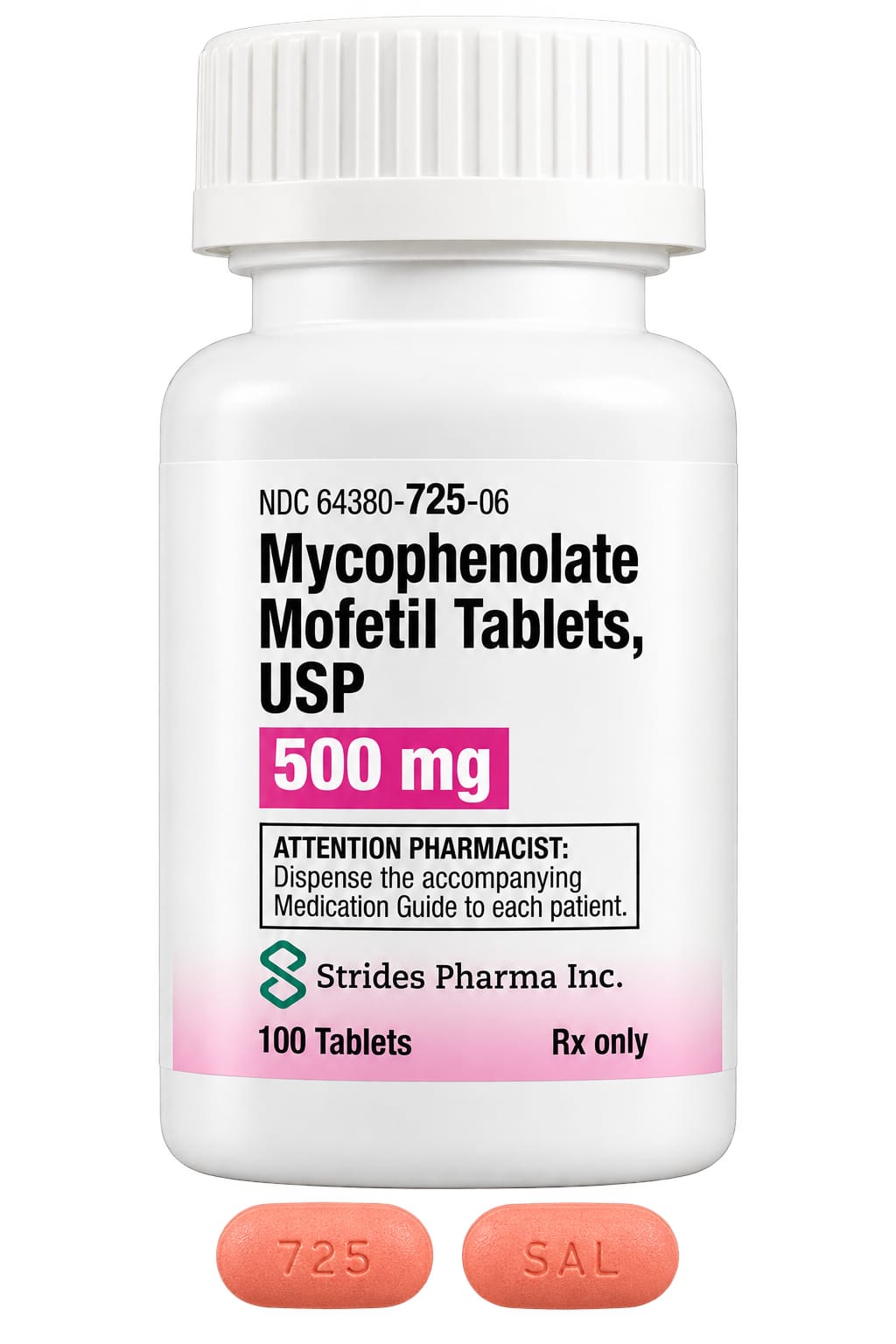
- Tablet
- Injectable infusion
- Oral solution
Side effects of Mycophenolate Tablet
Common
- Feeling sick (nausea)
- Diarrhoea
- Vomiting
- Stomach pains
Serious
- Sore throat
- Fever
- Flu-like symptoms
- Constant cough or problems breathing
- Sensation that your heart is beating unusually
- Sudden weight loss
- Unexplained bruising or bleeding
- Unexplained changes in mood
- Headaches, particularly if you don't usually get them
- Acne or a skin rash
- Swollen gums or an unusual taste in your mouth
Warnings and precautions
- You should not take mycophenolate while pregnant, trying to become pregnant, or if you think you might be pregnant, as it can harm the unborn baby and cause miscarriage or birth defects.
- A pregnancy test is needed before starting treatment, and effective contraception must be used during and after treatment.
- You should not breastfeed while taking mycophenolate, as the drug may pass into breast milk and could harm the baby.
- Mycophenolate can sometimes cause kidney problems, and your doctor will monitor you with regular blood tests as a precaution.
- Mycophenolate can sometimes cause liver problems, so your doctor will check your blood regularly while you take it.
- Mycophenolate and alcohol can both affect your liver, so you should only drink alcohol in small amounts and discuss your intake with your care team.
- Mycophenolate is not likely to affect your ability to drive or use machines, but you should be cautious if you feel unwell on the medicine.
- If you come into contact with someone who has shingles or chickenpox, or get them yourself, see a doctor as soon as possible, since these infections can affect you badly while on mycophenolate.
- There is a slightly increased risk of certain cancers, such as skin cancer, while using mycophenolate. Protect your skin with sunscreen and check your skin regularly for changes.
- A rare but serious brain and spinal cord condition called PML can occur. See your doctor immediately if you notice symptoms such as pins and needles, weakness, unsteadiness, sight loss, speech problems, mood or behaviour changes, or difficulty moving your face, arms, or legs.
- Avoid live vaccines while taking mycophenolate unless your doctor advises otherwise, as the medicine lowers your immune defences.
- Do not take over-the-counter medicines or herbal remedies without checking with your doctor, nurse, or pharmacist first, since some drugs can interact with mycophenolate.
Storage
- Do not store above 25°C
- Store in the original package to protect from moisture
- Keep out of the sight and reach of children
- Do not use if you notice visible signs of deterioration
- Do not use after the expiry date on the carton, blister, or bottle
- Do not throw away medicines via wastewater or household waste; ask your pharmacist how to dispose of medicines you no longer need
When to see a doctor
- Tell your doctor or nurse straight away if you develop a sore throat, fever, flu-like symptoms, constant cough or breathing problems, an unusual heartbeat sensation, sudden weight loss, unexplained bruising or bleeding, mood changes, unusual headaches, acne or rash, or swollen gums or taste changes.
- See your doctor immediately if you notice pins and needles, weakness, shaky movements or unsteadiness, sight loss, speech problems, mood or behaviour changes, or difficulty moving your face, arms, or legs, as these could be signs of a rare but serious brain condition.
- If you think you or your partner may be pregnant while taking mycophenolate, contact your doctor immediately for advice.
- If you think you have taken too much mycophenolate, contact your care team or emergency services right away for advice.
Alternatives
- Tacrolimus
- Azathioprine
- Everolimus
Watch the video
FAQs
What is Mycophenolate Tablet used for?
It is used to treat conditions such as lupus, rheumatoid arthritis, psoriatic arthritis, vasculitis, uveitis, and Crohn's disease, and to prevent organ rejection after kidney, heart, or liver transplant.
How should I take Mycophenolate Tablet?
It is taken once a day for the first week, then usually increased to twice a day. Swallow capsules or tablets whole with food and water, without crushing or chewing them, and space doses about 12 hours apart.
How long does it take for Mycophenolate Tablet to work?
It may take up to four months to notice any benefit, so it's important to keep taking it even if it doesn't seem to be working right away.
Can I take Mycophenolate Tablet while pregnant?
No, you should not take it while pregnant, trying to become pregnant, or if you think you might be pregnant, as it can cause miscarriage or birth defects. A pregnancy test is needed before starting, and effective contraception must be used.
What are the serious side effects of Mycophenolate Tablet?
Serious side effects include sore throat, fever, flu-like symptoms, constant cough or breathing problems, unusual heartbeat sensations, sudden weight loss, unexplained bruising or bleeding, mood changes, unusual headaches, acne or rash, and swollen gums or taste changes.
General information, not medical advice
Your prescriber and the leaflet in your pack know your situation. This page does not.
- Follow your prescriber and the leaflet
- Don't start, stop, or change a dose on your own
- Doses and warnings differ by country and product
Sources
Video
Related medicines

Injectafer Injection: Uses, Dosage, Side Effects, Precautions and Alternates
Iron products
Injectafer (ferric carboxymaltose) treats iron deficiency anemia and heart failure-related iron deficiency via IV. Learn uses, dosage, side effects, and

Gliclazide Tablet: Uses, Dosage, Side Effects, Precautions and Alternates
Sulfonylurea (hypoglycemic/antidiabetic agent)
Gliclazide Tablet is a sulfonylurea for type 2 diabetes that boosts insulin release. Learn about dosage, side effects, warnings, and precautions.