
Safety
General information, not medical advice
Your prescriber and the leaflet in your pack know your situation. This page does not.
- Follow your prescriber and the leaflet
- Don't start, stop, or change a dose on your own
- Doses and warnings differ by country and product
Mylotarg Injection: Uses, Dosage, Side Effects, Precautions and Alternates
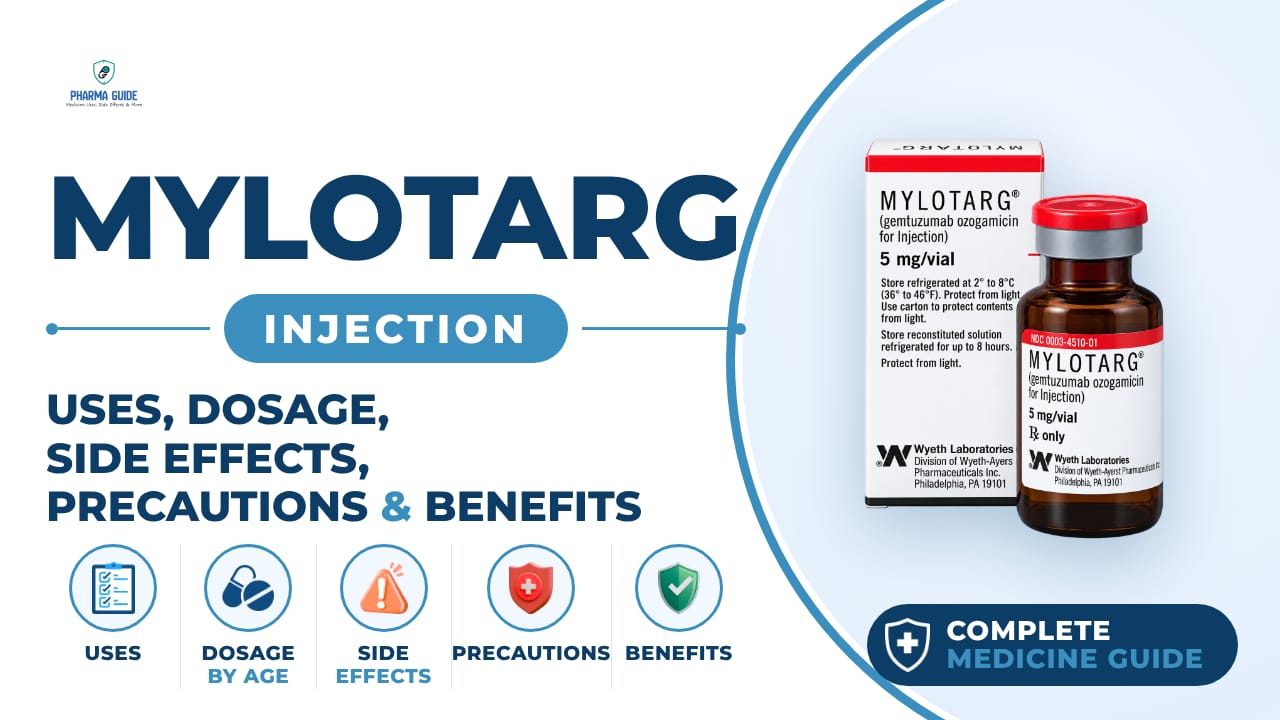
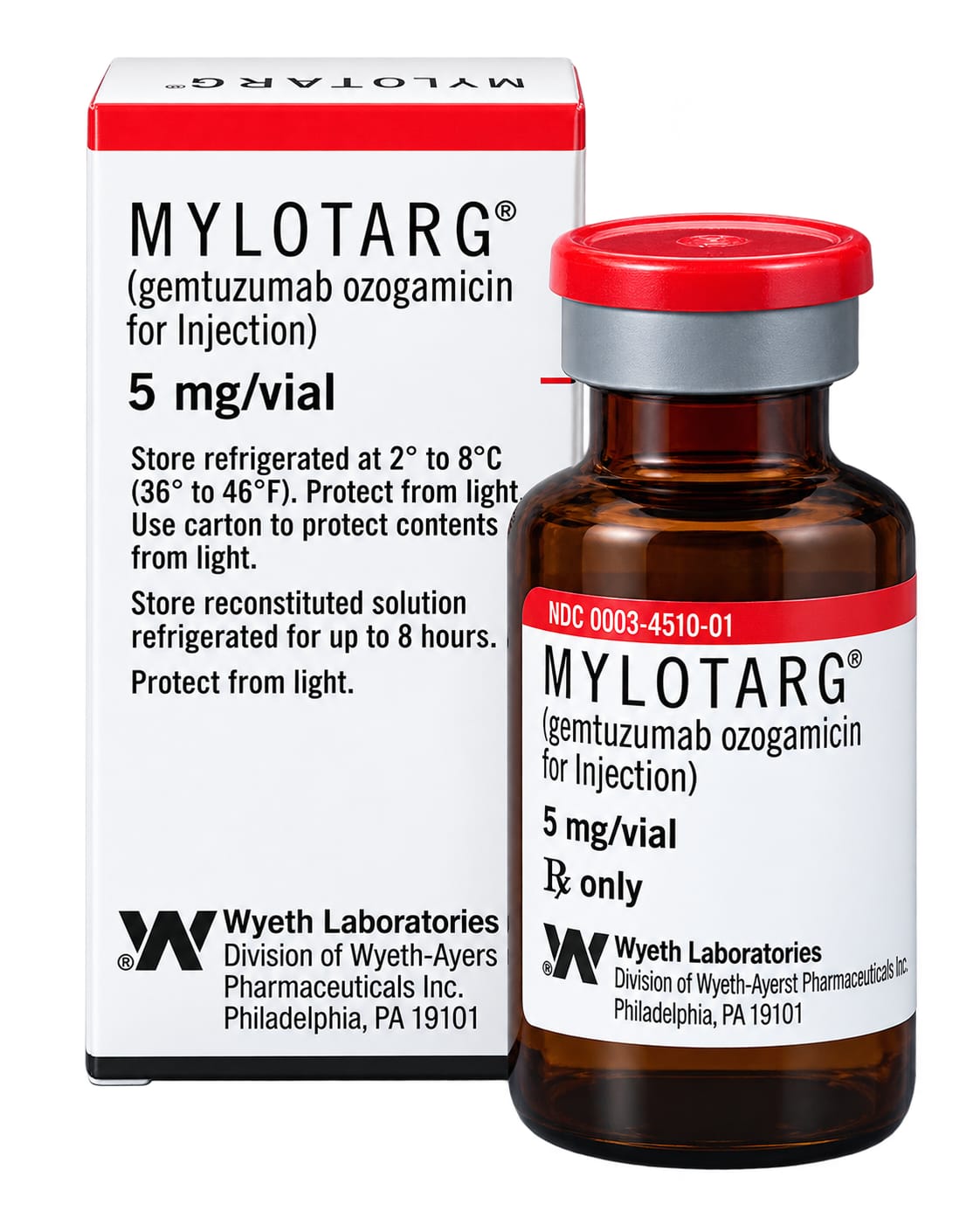
| Generic name | gemtuzumab ozogamicin |
|---|---|
| Drug class | CD33 monoclonal antibodies (antibody-drug conjugate) |
| Forms | Powder for injection/infusion, mixed into a liquid solution and given intravenously (IV) |
Quick overview
Mylotarg Injection (gemtuzumab ozogamicin) is a CD33-directed monoclonal antibody drug conjugate used to treat certain types of acute myeloid leukemia (AML). It is given as an intravenous infusion by a healthcare provider and works by targeting and destroying CD33-positive leukemia cells while aiming to spare healthy cells. Mylotarg carries a boxed warning for severe liver damage and requires close monitoring during treatment.
What is Mylotarg Injection
Mylotarg is a monoclonal antibody linked to a chemotherapy drug. It is made to target and destroy only certain cancer cells, which may help protect healthy cells from damage. It is given as an infusion into a vein by a healthcare provider.
Mylotarg Injection uses
- Treatment of a certain type (CD33-positive) of newly-diagnosed acute myeloid leukemia (AML) in adults and children at least 1 month old
- Treatment of CD33-positive AML after other treatments did not work or have stopped working, in adults and children at least 2 years old
Benefits of Mylotarg Injection
- Helps destroy abnormal white blood cells crowding the bone marrow
- Can significantly prolong event-free survival in patients with newly diagnosed AML
- Targets cancer cells directly, which may help protect healthy cells from the chemotherapy
How Mylotarg Injection works
The antibody part of the medicine attaches to a protein called CD33 found on leukemia cells. Once attached, the medicine is taken up into the cancer cell and releases its chemotherapy component, which damages the cell's DNA and kills it. Healthy, mature blood cells do not have this CD33 protein, so they are not affected.
Mylotarg Injection dosage
Mylotarg is given as an infusion into a vein by a healthcare provider at a doctor's office, hospital, or infusion center. It is given only on certain days of each treatment cycle, and your doctor will determine how long you need treatment. The infusion is given slowly, taking at least 2 hours to complete, and you will be watched closely for at least 1 hour afterward to check for a reaction.
You will be given other medications beforehand, such as a pain/fever reliever, an antihistamine, and a steroid, to help prevent infusion reactions; take these exactly as prescribed. You will need frequent blood tests and other medical tests, and treatment may be delayed based on the results. Mylotarg can be used alone or together with other chemotherapy drugs depending on the type of AML being treated.
Use exactly as prescribed by your doctor or pharmacist.
Available forms and strengths
- Powder for injection/infusion, mixed into a liquid solution and given intravenously (IV)
Side effects of Mylotarg Injection
Common
- Fever and chills
- Nausea, vomiting, and constipation
- Infection or low white blood cell counts
- Bruising and bleeding
- Sore mouth or throat (mucositis)
- Rash or skin itching
- Fatigue and loss of appetite
- Headache
- Abnormal liver function tests
- Decreased appetite
Serious
- Severe or fatal liver damage, including veno-occlusive disease (VOD)
- Severe infusion reactions (fever, chills, trouble breathing, fast heartbeat, low blood pressure)
- Severe bleeding, including bleeding in the brain
- Serious infections due to low blood cell counts
- Prolonged QT interval (abnormal heart rhythm)
- Severe allergic reaction (hives, trouble breathing, swelling of face, lips, tongue, or throat)
Warnings and precautions
- Mylotarg carries a boxed warning (the FDA's most serious warning) for severe liver damage, including veno-occlusive disease (VOD), a condition where small blood vessels in the liver become blocked.
- This can be severe or fatal and has occurred when the drug is used alone or with chemotherapy.
- Mylotarg can increase the risk of serious bleeding or liver damage, either of which may be life-threatening
- Infusion reactions can happen during or shortly after the IV infusion, with symptoms like fever, chills, rash, or trouble breathing
- Mylotarg can cause a heart rhythm problem called prolonged QT interval, especially in people with a personal or family history of this condition or with electrolyte imbalances
- People who have had a stem cell transplant may have a higher risk of serious liver problems (VOD) with this medicine
- Mylotarg is not safe to use during pregnancy. It can harm an unborn baby or cause birth defects if either the mother or father is using it.
- A pregnancy test may be needed before starting treatment, and effective birth control should be used during treatment and for a period after the last dose.
- Breastfeeding should be avoided during treatment and for at least one month after the last dose, since it is not known if the drug passes into breast milk but it could harm a breastfed child.
- Kidney function should be reviewed as part of overall oncology monitoring.
- People with liver disease should tell their doctor before starting treatment, since Mylotarg can cause serious or life-threatening liver problems, including a condition where blood vessels in the liver become blocked. Liver function requires close monitoring throughout treatment.
- There are no known interactions between Mylotarg and alcohol, but heavy drinking can slow the immune response and may make it harder for the body to fight cancer.
- Alcohol could also worsen side effects such as nausea, headache, or diarrhea, and may make liver problems worse.
Storage
- Mylotarg is usually given by a healthcare provider in a hospital or clinic, so you will not store it at home.
When to see a doctor
- Call your doctor right away if you have upper stomach pain, yellowing of the skin or eyes, rapid weight gain, swelling in your midsection, sudden numbness or weakness, problems with speech or vision, a severe headache, or unusual bleeding (bleeding gums, vaginal bleeding, blood in urine or stools, coughing up blood)
- Get emergency medical help if you have signs of an allergic reaction: hives, difficulty breathing, or swelling of the face, lips, tongue, or throat
- Tell your caregiver right away if you feel cold, itchy, feverish, light-headed, or short of breath during or within an hour after your infusion
- Seek care for signs of bleeding in the brain, such as sudden numbness or weakness (especially on one side of the body), a sudden severe headache, or problems with speech or vision
- Call your doctor right away if you have signs of low blood cell counts such as fever, flu-like symptoms, swollen gums, skin sores, cough, trouble breathing, pale skin, or unusual tiredness
- Call your doctor right away for signs of liver problems, including right-sided upper stomach pain, yellowing of the skin or eyes, rapid weight gain, swelling in the arms or legs, or painful swelling in the midsection
Alternatives
- Decitabine
- Azacitidine
- Vyxeos
- Daunorubicin + cytarabine
Watch the video
FAQs
What is Mylotarg Injection used for?
Mylotarg treats newly-diagnosed CD33-positive AML in adults and children at least 1 month old, and CD33-positive AML that has not responded to or has stopped responding to other treatments in adults and children at least 2 years old.
How is Mylotarg given?
Mylotarg is given as a slow intravenous infusion by a healthcare provider, taking at least 2 hours, with monitoring for at least 1 hour afterward. It is given on certain days of each treatment cycle, and premedications like a pain/fever reliever, antihistamine, and steroid are given beforehand to help prevent infusion reactions.
What is the boxed warning for Mylotarg?
Mylotarg carries a boxed warning for severe or fatal liver damage, including veno-occlusive disease (VOD), a condition where small blood vessels in the liver become blocked. This risk occurs whether the drug is used alone or with chemotherapy.
What are the serious side effects of Mylotarg?
Serious side effects include severe or fatal liver damage including VOD, severe infusion reactions, severe bleeding including bleeding in the brain, serious infections from low blood cell counts, prolonged QT interval, and severe allergic reactions.
Is Mylotarg safe during pregnancy?
No, Mylotarg is not safe during pregnancy and can harm an unborn baby or cause birth defects if either the mother or father is using it. A pregnancy test may be needed before starting, and effective birth control should be used during treatment and for a period after the last dose.
General information, not medical advice
Your prescriber and the leaflet in your pack know your situation. This page does not.
- Follow your prescriber and the leaflet
- Don't start, stop, or change a dose on your own
- Doses and warnings differ by country and product
Sources
Video
Related medicines

Injectafer Injection: Uses, Dosage, Side Effects, Precautions and Alternates
Iron products
Injectafer (ferric carboxymaltose) treats iron deficiency anemia and heart failure-related iron deficiency via IV. Learn uses, dosage, side effects, and

Gliclazide Tablet: Uses, Dosage, Side Effects, Precautions and Alternates
Sulfonylurea (hypoglycemic/antidiabetic agent)
Gliclazide Tablet is a sulfonylurea for type 2 diabetes that boosts insulin release. Learn about dosage, side effects, warnings, and precautions.