
Safety
General information, not medical advice
Your prescriber and the leaflet in your pack know your situation. This page does not.
- Follow your prescriber and the leaflet
- Don't start, stop, or change a dose on your own
- Doses and warnings differ by country and product
Naloxone Injection: Uses, Dosage, Side Effects, Precautions and Alternates
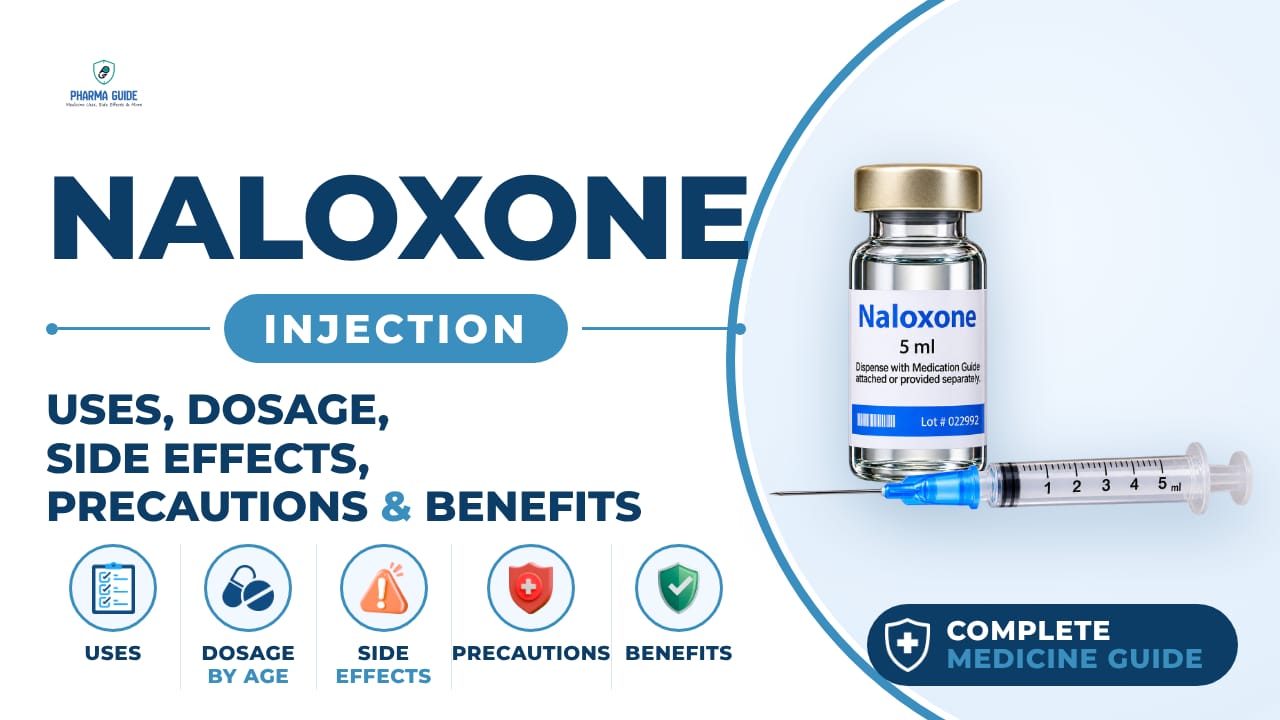
| Generic name | Naloxone hydrochloride |
|---|---|
| Drug class | Opioid antagonist |
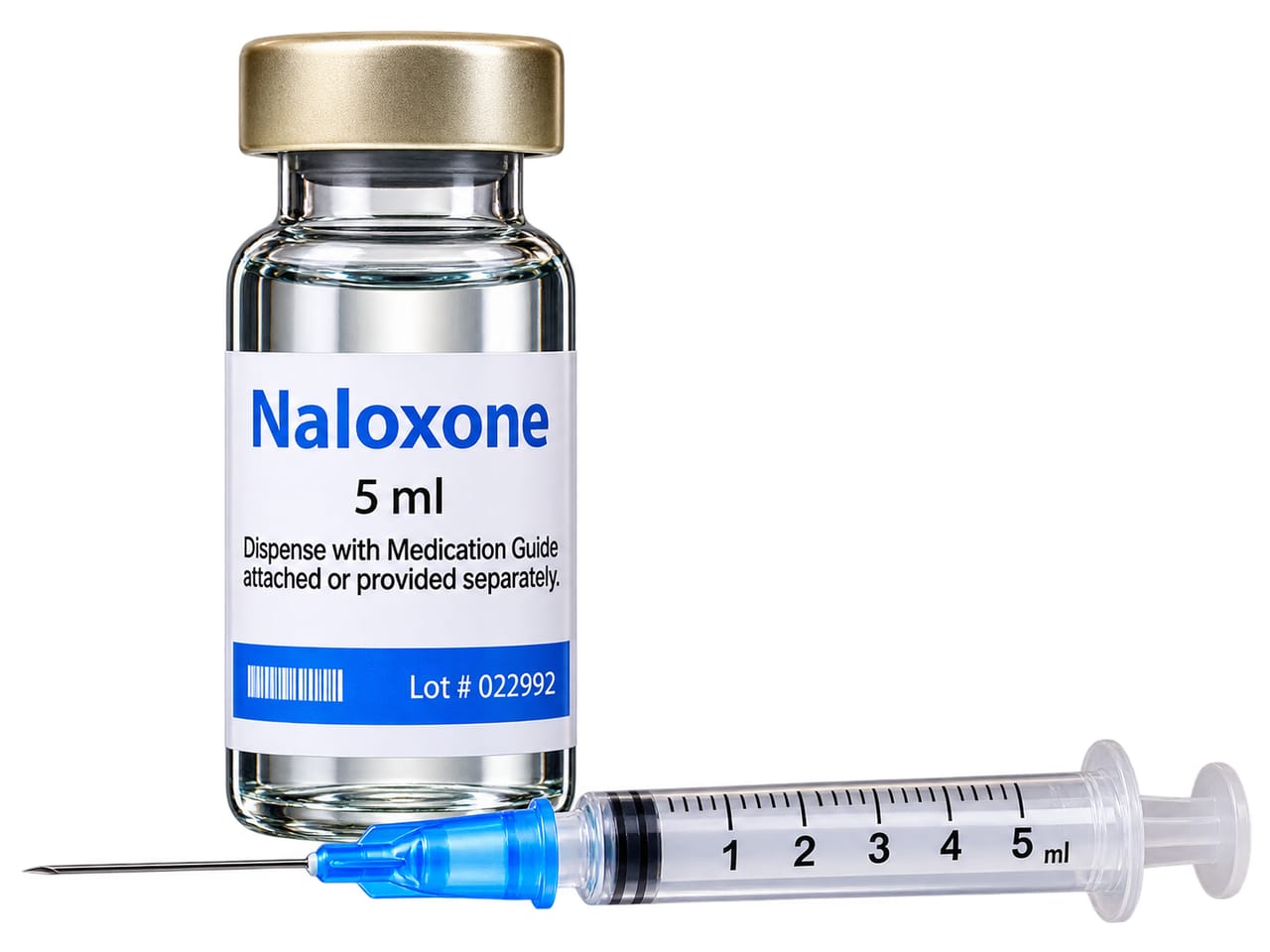
| Forms | Prefilled syringe for intramuscular or subcutaneous injection (5 mg/0.5 mL), Single-dose vial for intravenous, intramuscular, or subcutaneous injection (0.4 mg/mL) |
Quick overview
Naloxone Injection (naloxone hydrochloride) is an opioid antagonist given as an emergency treatment to reverse the effects of a known or suspected opioid overdose. It is supplied as a prefilled syringe or single-dose vial and is injected into the muscle or under the skin, typically in the outer thigh. It works by displacing opioids from receptors in the brain and nervous system, reversing slowed breathing and severe drowsiness. It is used in both adults and children.
What is Naloxone Injection
Naloxone is an injectable medicine used in emergencies to reverse the effects of an opioid overdose. It comes in a prefilled syringe and is injected into the muscle or under the skin of the outer thigh.
Naloxone Injection uses
- Emergency treatment of known or suspected opioid overdose, shown by slowed or stopped breathing and/or severe drowsiness or unresponsiveness
- Used in both adults and children
Benefits of Naloxone Injection
- Rapidly reverses opioid overdose
- Can restore breathing
- Reverses opioid-induced sedation
- Works against many prescription and illicit opioids
- Can be life-saving when given promptly
How Naloxone Injection works
Opioid drugs attach to certain receptors in the brain and nervous system that control pain and breathing. Naloxone works by attaching to these same receptors instead, which pushes the opioid off and blocks its effects, reversing breathing problems, severe sleepiness, and low blood pressure caused by the overdose.
Naloxone Injection dosage
Naloxone Injection is meant to be given by a caregiver or bystander, not by the person experiencing the overdose. It is intended to be given by people 12 years of age or older; younger people or those with limited hand strength may find the device difficult to use.
Inject into the outer thigh; this can be done through clothing if necessary. Place the patient on their back before injecting, then turn them onto their side (recovery position) afterward. In children under 1 year old, the caregiver should pinch the thigh muscle while giving the injection.
Get emergency medical help right away after giving the first dose, even if the person seems to wake up. Keep the person under close watch until emergency help arrives, because symptoms can return. Additional doses may be given every 2 to 3 minutes using a new syringe if the person does not respond or symptoms return. Each syringe holds only one dose and cannot be reused.
It is normal to see a drop of liquid on the needle when the cap is removed, and for some liquid to remain in the syringe after use. After giving the injection, slide the safety guard over the needle using one hand with fingers behind the needle; never use two hands or put fingers over the exposed needle. Place the used syringe in its case and give it to a healthcare provider for proper disposal, and tell them where the injection was given.
| Age group | Dose |
|---|---|
| Newborns | 0.01 mg/kg IV, IM, or SC; may be repeated as medically directed |
| Infants and children | 0.1 mg/kg IV, IM, or SC, up to 2 mg per dose |
| Adults 18–64 years | 0.4–2 mg IV, IM, or SC, repeated every 2–3 minutes if needed |
Available forms and strengths
- Prefilled syringe for intramuscular or subcutaneous injection (5 mg/0.5 mL)
- Single-dose vial for intravenous, intramuscular, or subcutaneous injection (0.4 mg/mL)
Side effects of Naloxone Injection
Common
- Nausea
- Dizziness or lightheadedness
- Increased bilirubin (a blood breakdown product) found on blood tests
- Sweating
- Fast heartbeat
- Increased blood pressure
- Feeling shaky
Serious
- Sudden opioid withdrawal symptoms: body aches, fever, sweating, runny nose, sneezing, goose bumps, yawning, weakness, shivering or trembling, nervousness, restlessness or irritability, diarrhea, nausea or vomiting, stomach cramping, increased blood pressure, increased heart rate
- In infants under 4 weeks old, sudden opioid withdrawal that may be life-threatening, with seizures, excessive crying, and increased reflexes
- Allergic reactions: skin rash, itching, hives, swelling of the face, lips, tongue, or throat
- Heart problems: low or high blood pressure, irregular or fast heartbeat, fluid buildup in the lungs, and in rare cases cardiac arrest
- Seizures (uncommon, and it's not fully clear if naloxone causes them)
- Accidental needlestick injury, which may expose a person to blood-borne infections
Warnings and precautions
- Because naloxone wears off faster than most opioids, breathing problems and severe drowsiness can return after the first dose. Always get emergency medical help right away, keep watching the person closely, and give repeat doses as needed until help arrives.
- If the overdose is caused by certain opioids like buprenorphine or pentazocine, naloxone may not fully reverse the breathing problems, and larger or repeated doses may be needed.
- In people who regularly use opioids, naloxone can cause sudden and severe withdrawal symptoms. In newborns, this withdrawal can be life-threatening if not recognized and treated quickly.
- Sudden reversal of opioid effects after surgery can cause serious heart-related problems, especially in people with existing heart conditions.
- After use, the needle stays exposed until the safety guard is slid over it, so there is a risk of an accidental needlestick. Learn how to use the device safely before an emergency happens.
- Naloxone should only be used in pregnant women if clearly needed. Opioid overdose is dangerous for both mother and baby, so treatment should not be withheld out of concern for the baby. If used, the unborn baby should be checked by a doctor afterward because withdrawal symptoms could occur.
- It isn't known whether naloxone passes into breast milk, but it is unlikely to affect a breastfed baby.
- No routine emergency dose adjustment is generally required for kidney function. Older adults may process naloxone differently if they have reduced liver, kidney, or heart function, which can lead to higher levels of the drug in the body.
- Naloxone does not reverse an overdose caused by alcohol or other non-opioid substances, but giving naloxone to someone who has not taken opioids is unlikely to cause harm.
- Do not drive after an opioid overdose or naloxone administration; emergency medical evaluation is needed.
Storage
- Store in the outer case provided to protect from light
- Store below 77°F (25°C); brief exposure up to 104°F (40°C) is allowed
- Do not freeze or expose to excessive heat above 104°F (40°C)
- Periodically check the solution through the viewing window; if discolored (yellow or brown), cloudy, or containing particles, replace with a new one
- Replace before the expiration date
- Keep out of the reach of children
- Dispose of expired or used syringes by taking them in their case to a healthcare provider or hospital emergency room
When to see a doctor
- Get emergency medical help immediately after giving the first dose of naloxone, even if the person seems to wake up, because naloxone does not replace emergency medical care.
- If an accidental needlestick happens while giving the injection, seek medical attention right away because of the risk of blood-borne infections.
- If the person's symptoms come back or they do not respond within a few minutes, give another dose and keep watching them closely until help arrives.
Alternatives
- Naloxone nasal spray
- Nalmefene nasal spray
- Nalmefene injection
Watch the video
FAQs
How is Naloxone Injection given?
It is injected into the muscle or under the skin of the outer thigh, often through clothing, by a caregiver or bystander rather than the person experiencing the overdose.
How often can additional doses of Naloxone Injection be given?
Additional doses may be given every 2 to 3 minutes using a new syringe if the person does not respond or symptoms return, since each syringe holds only one dose.
Why is emergency medical help needed after giving Naloxone Injection?
Naloxone wears off faster than most opioids, so breathing problems and severe drowsiness can return after the first dose, making immediate emergency care and close monitoring essential.
Can Naloxone Injection cause withdrawal symptoms?
Yes, in people who regularly use opioids it can cause sudden and severe withdrawal symptoms, and in newborns this withdrawal can be life-threatening if not quickly recognized and treated.
Does Naloxone Injection work on non-opioid overdoses?
No, it does not reverse an overdose caused by alcohol or other non-opioid substances, but giving it to someone who has not taken opioids is unlikely to cause harm.
General information, not medical advice
Your prescriber and the leaflet in your pack know your situation. This page does not.
- Follow your prescriber and the leaflet
- Don't start, stop, or change a dose on your own
- Doses and warnings differ by country and product
Sources
Video
Related medicines
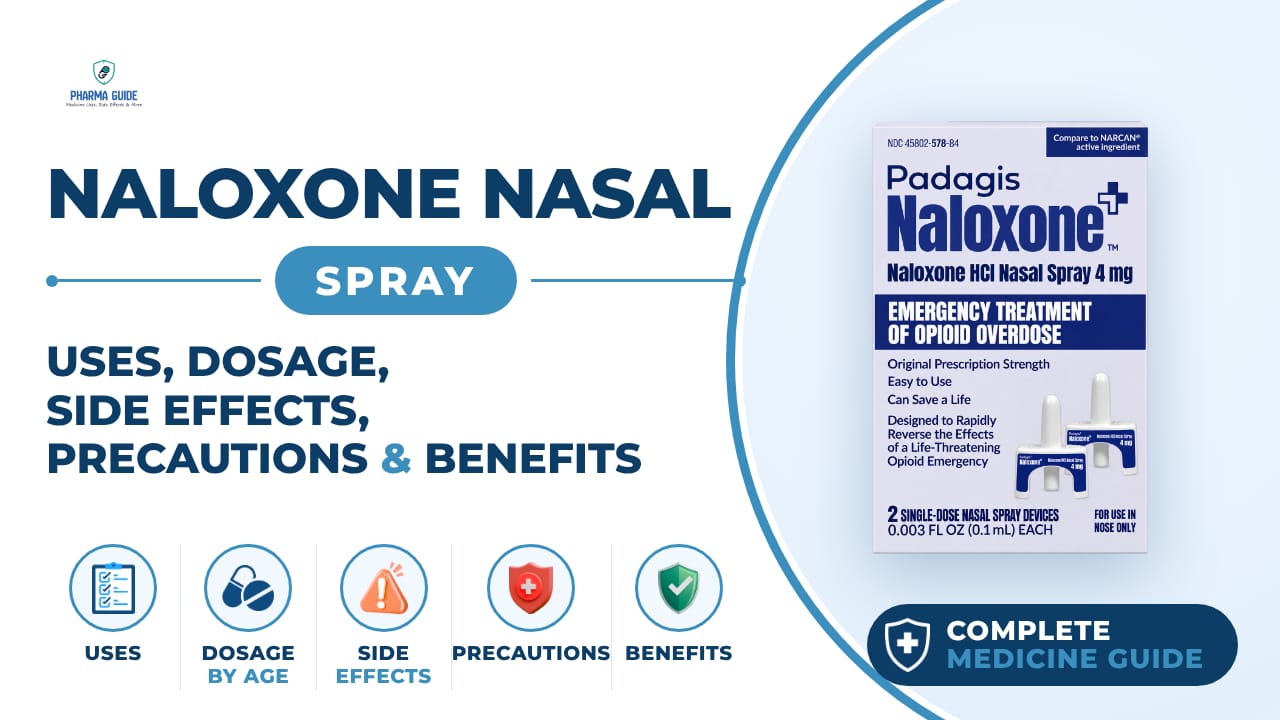
Naloxone Nasal Spray: Uses, Dosage, Side Effects, Precautions and Alternates
Opioid antagonist
Naloxone Nasal Spray reverses opioid overdose by blocking opioid receptors. Learn how it works, dosage steps, side effects, warnings, and storage tips.
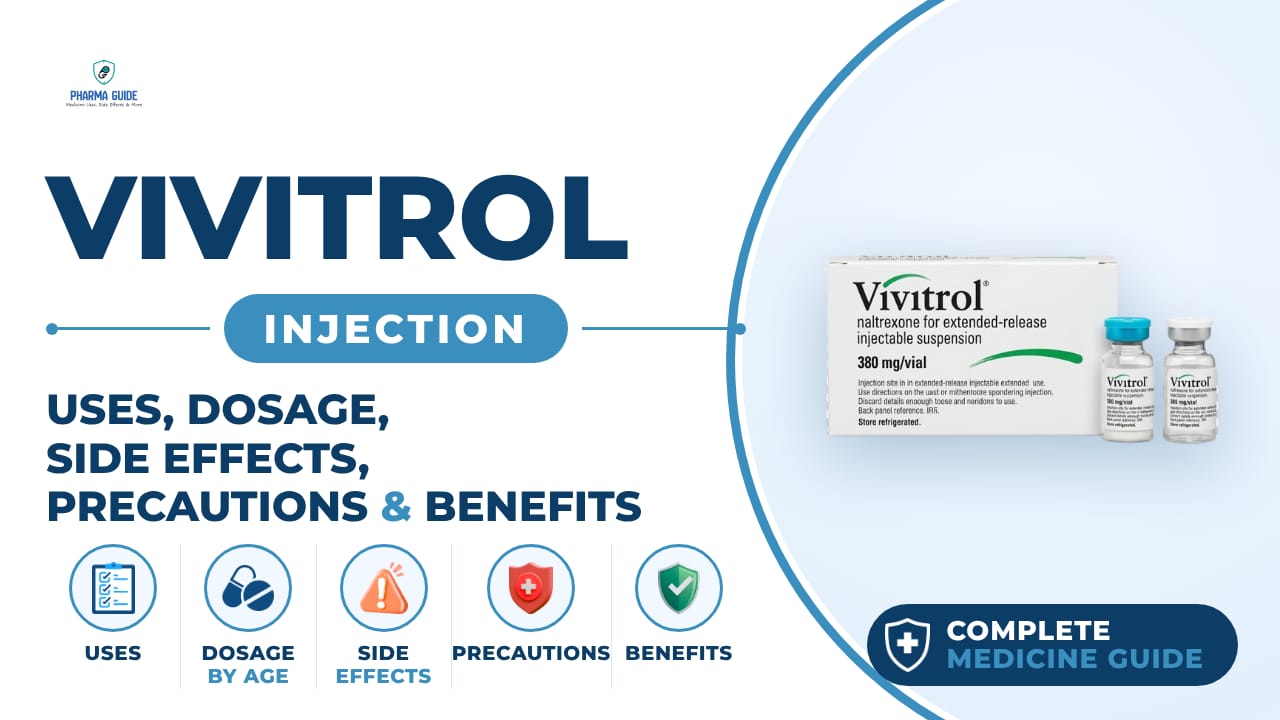
Vivitrol Injection: Uses, Dosage, Side Effects, Precautions and Alternates
opioid antagonist
Vivitrol is a monthly naltrexone injection used to treat alcohol dependence and prevent opioid relapse after detox. Learn dosage, side effects, and warnings.