
Safety
General information, not medical advice
Your prescriber and the leaflet in your pack know your situation. This page does not.
- Follow your prescriber and the leaflet
- Don't start, stop, or change a dose on your own
- Doses and warnings differ by country and product
Naloxone Nasal Spray: Uses, Dosage, Side Effects, Precautions and Alternates
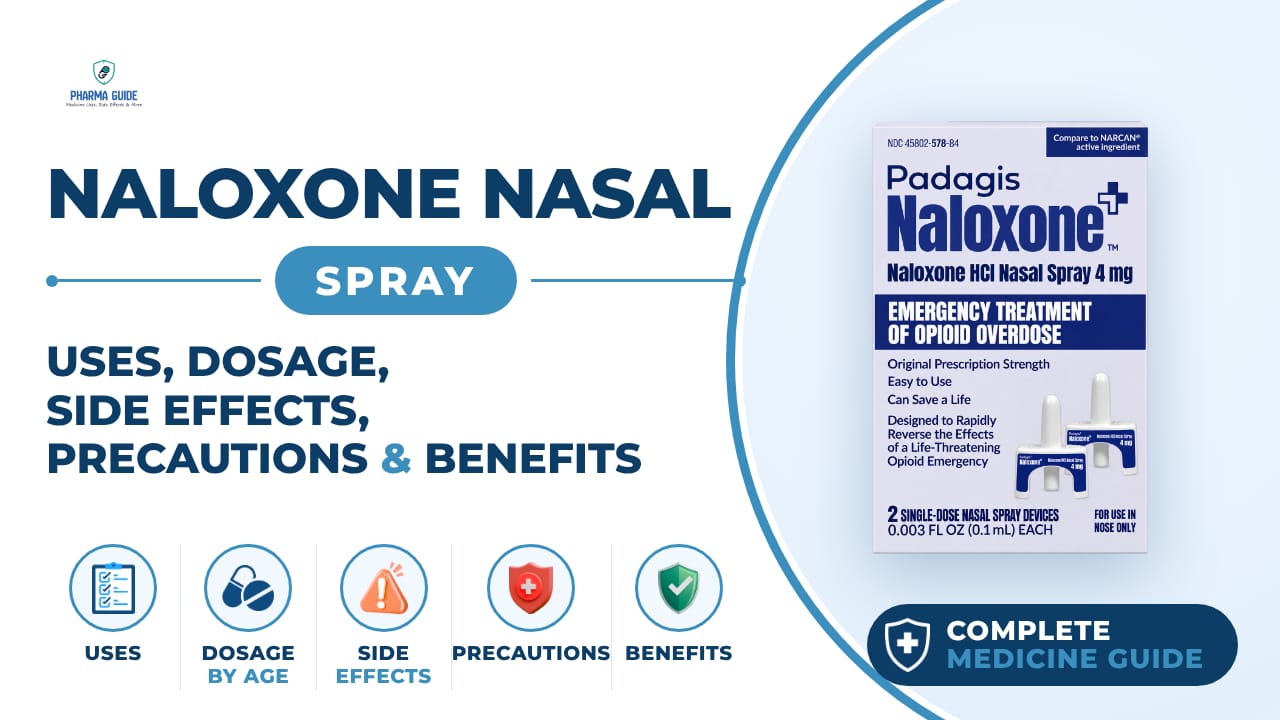
| Generic name | naloxone hydrochloride |
|---|---|
| Drug class | Opioid antagonist |
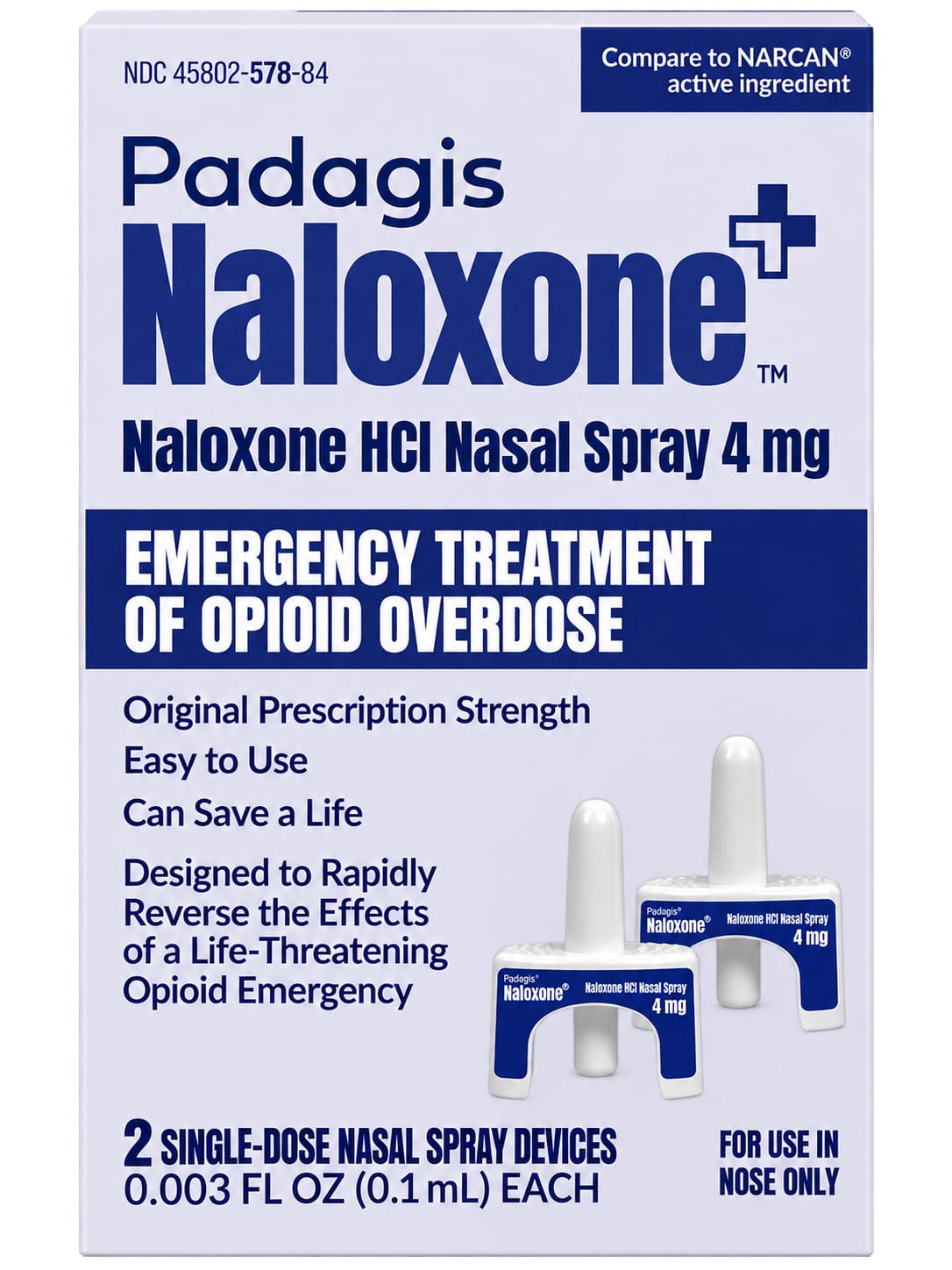
| Forms | Nasal spray (single-dose device), 2 mg/0.1 mL, Nasal spray (single-dose device), 4 mg/0.1 mL |
Quick overview
Naloxone Nasal Spray (naloxone hydrochloride) is an opioid antagonist sprayed into the nose to reverse the effects of a known or suspected opioid overdose. It can be given by a bystander without medical training, but it does not replace emergency medical care and must always be used together with calling for emergency help. It works by blocking opioids from attaching to receptors in the brain and nervous system, reversing breathing problems and severe sedation caused by an overdose.
What is Naloxone Nasal Spray
Naloxone Nasal Spray is a medicine sprayed into the nose that is used in emergencies to reverse the effects of an opioid overdose. It does not replace emergency medical care and must be used along with calling for emergency help.
Naloxone Nasal Spray uses
- Emergency treatment of a known or suspected opioid overdose, shown by trouble breathing and/or severe depression of the brain and nervous system
- Can be given by a bystander (someone without medical training) before emergency medical help arrives
Benefits of Naloxone Nasal Spray
- Rapidly reverses opioid overdose
- Helps restore breathing
- Reverses severe opioid-induced sedation
- Needle-free and easy to administer
- Can be life-saving when given promptly
How Naloxone Nasal Spray works
Opioid drugs attach to certain receptors in the brain and nervous system to reduce pain, but this can also slow or stop breathing if too much is taken. Naloxone works by blocking opioids from attaching to those receptors, which reverses the overdose symptoms. It has little to no effect in people who have not taken opioids.
Naloxone Nasal Spray dosage
This spray is for use in the nose only and does not need to be tested, primed, or assembled before use. Each device holds a single dose and cannot be reused. Lay the person on their back, tilt their head back, and support the back of the neck before giving the spray. Insert the nozzle into one nostril and press the plunger firmly to give the dose. After giving the dose, remove the nozzle and turn the person onto their side (recovery position). Give repeat doses in alternating nostrils every 2 to 3 minutes if the person does not respond or relapses, using a new device each time. In young children, make sure the nozzle fully seals the nostril since it may not fit snugly. Always call for emergency medical help immediately, before or while giving the spray, since it is not a substitute for medical care.
Use exactly as prescribed by your doctor or pharmacist.
Available forms and strengths
- Nasal spray (single-dose device), 2 mg/0.1 mL
- Nasal spray (single-dose device), 4 mg/0.1 mL
Side effects of Naloxone Nasal Spray
Common
- Swelling in the nose
- Dryness in the nose
- Congested nose
- Runny nose
- Nose pain
- Headache
- Dizziness
- Muscle spasms
- Muscle/musculoskeletal pain
- Toothache
- Constipation
- Increased blood pressure
- Dry skin
Serious
- Sudden opioid withdrawal symptoms: body aches, fever, sweating, runny nose, sneezing, goose bumps, yawning, weakness, shivering or trembling, nervousness, restlessness, irritability, aggressive behavior, diarrhea, nausea or vomiting, stomach cramps, increased heart rate, increased blood pressure
- Seizures or convulsions
- Heart problems such as heart attack, irregular heartbeat, or increased heart rate
- In people who recently had surgery: high or low blood pressure, rapid irregular heartbeat, fluid build-up in the lungs, and in rare cases cardiac arrest
- Life-threatening opioid withdrawal in newborns under 4 weeks old, including seizures, excessive crying, and increased reflexes
- Allergic reactions such as rash, itching, hives, or swelling of the face, lips, tongue, or throat
Warnings and precautions
- Always call for emergency medical help immediately when an opioid overdose is suspected or known, before giving naloxone.
- The person must be watched closely after getting naloxone, and more doses may be needed until emergency help arrives, since the opioid may last longer than the naloxone.
- The person may react with aggression, shaking, or vomiting after getting naloxone, and caregivers should be ready to help. Extra care is needed for newborns under four weeks old or pregnant women, since reactions can be life-threatening for a baby.
- Naloxone does not work against overdoses from non-opioid drugs such as barbiturates, benzodiazepines, stimulants, alcohol, or sedatives, but giving it to someone who does not need it is unlikely to cause harm.
- Overdose symptoms can return after naloxone wears off because many opioids last longer than naloxone's effects, so repeated doses and continued monitoring are important.
- Giving naloxone to someone who is dependent on opioids can trigger a sudden and sometimes severe withdrawal reaction, which can be life-threatening in newborns.
- Reversal of overdose caused by partial opioid agonists like buprenorphine or pentazocine may be incomplete, and higher or repeated doses of naloxone may be needed.
- Naloxone should only be used during pregnancy if clearly needed, because it may trigger opioid withdrawal in an opioid-dependent pregnant woman, which could lead to early labor or fetal distress. The baby should be checked by a healthcare provider right after use.
- It is not known if naloxone passes into breast milk, but studies suggest it does not affect certain breastfeeding-related hormones.
- No routine emergency dose adjustment is generally required for kidney function.
- Naloxone is broken down by the liver, so this may affect how it is processed in the body, though specific liver precautions are not detailed.
- Naloxone does not reverse the effects of an overdose caused by alcohol.
- Do not drive after an opioid overdose or naloxone use.
Storage
- Keep in its box until ready to use
- Store between 15°C to 25°C
- May be stored for short periods up to 40°C
- Do not store in a car on hot summer days
- Do not freeze or leave in a car during winter
- May not work as well if not stored properly — replace it if it has been frozen or exposed to high heat for a long time
- Only discard a potentially damaged device once you have a replacement for it; if no replacement is available, use it anyway if needed in an overdose
- Store in a dark place and protect from light
- Replace before the expiration date on the box
- If only an expired device is available in an overdose situation, it should still be used
- Keep out of reach and sight of children
When to see a doctor
- Call for emergency medical help immediately if you suspect an opioid overdose, before or while giving naloxone.
- If the person does not wake up, respond to touch or voice, or breathe normally within 2 to 3 minutes after a dose, give another dose in the other nostril, and keep repeating every 2 to 3 minutes if more doses are available, until help arrives.
- If a person who was given naloxone shows signs of a heart problem, such as chest pain, irregular heartbeat, or trouble breathing, they need urgent medical attention.
- Watch newborns closely for signs of severe opioid withdrawal, such as seizures or excessive crying, which can be life-threatening if not treated right away.
Alternatives
- Naloxone injection
- Nalmefene nasal spray
- Nalmefene injection
Watch the video
FAQs
What is Naloxone Nasal Spray used for?
It is used for emergency treatment of a known or suspected opioid overdose, shown by trouble breathing and/or severe depression of the brain and nervous system, and can be given by a bystander without medical training before emergency help arrives.
How do you give Naloxone Nasal Spray?
Lay the person on their back, tilt the head back, insert the nozzle into one nostril, and press the plunger firmly to give the dose. After dosing, turn the person onto their side and give repeat doses in alternating nostrils every 2 to 3 minutes if they do not respond, using a new device each time.
Does Naloxone Nasal Spray work for all overdoses?
No, it does not work against overdoses from non-opioid drugs such as barbiturates, benzodiazepines, stimulants, alcohol, or sedatives, but giving it to someone who does not need it is unlikely to cause harm.
What are the serious side effects of Naloxone Nasal Spray?
Serious effects include sudden opioid withdrawal symptoms, seizures or convulsions, heart problems like heart attack or irregular heartbeat, and in newborns under 4 weeks old, life-threatening opioid withdrawal including seizures and excessive crying.
How should Naloxone Nasal Spray be stored?
Keep it in its box until ready to use, store between 15°C to 25°C, avoid freezing or exposure to high heat, protect from light, and replace it before the expiration date on the box.
General information, not medical advice
Your prescriber and the leaflet in your pack know your situation. This page does not.
- Follow your prescriber and the leaflet
- Don't start, stop, or change a dose on your own
- Doses and warnings differ by country and product
Sources
Video
Related medicines
Naloxone Injection: Uses, Dosage, Side Effects, Precautions and Alternates
Opioid antagonist
Naloxone Injection reverses opioid overdose by blocking opioid receptors. Learn dosage, injection steps, side effects, warnings, and emergency guidance.
Vivitrol Injection: Uses, Dosage, Side Effects, Precautions and Alternates
opioid antagonist
Vivitrol is a monthly naltrexone injection used to treat alcohol dependence and prevent opioid relapse after detox. Learn dosage, side effects, and warnings.