
Safety
General information, not medical advice
Your prescriber and the leaflet in your pack know your situation. This page does not.
- Follow your prescriber and the leaflet
- Don't start, stop, or change a dose on your own
- Doses and warnings differ by country and product
Naltrexone Tablet: Uses, Dosage, Side Effects, Precautions and Alternates
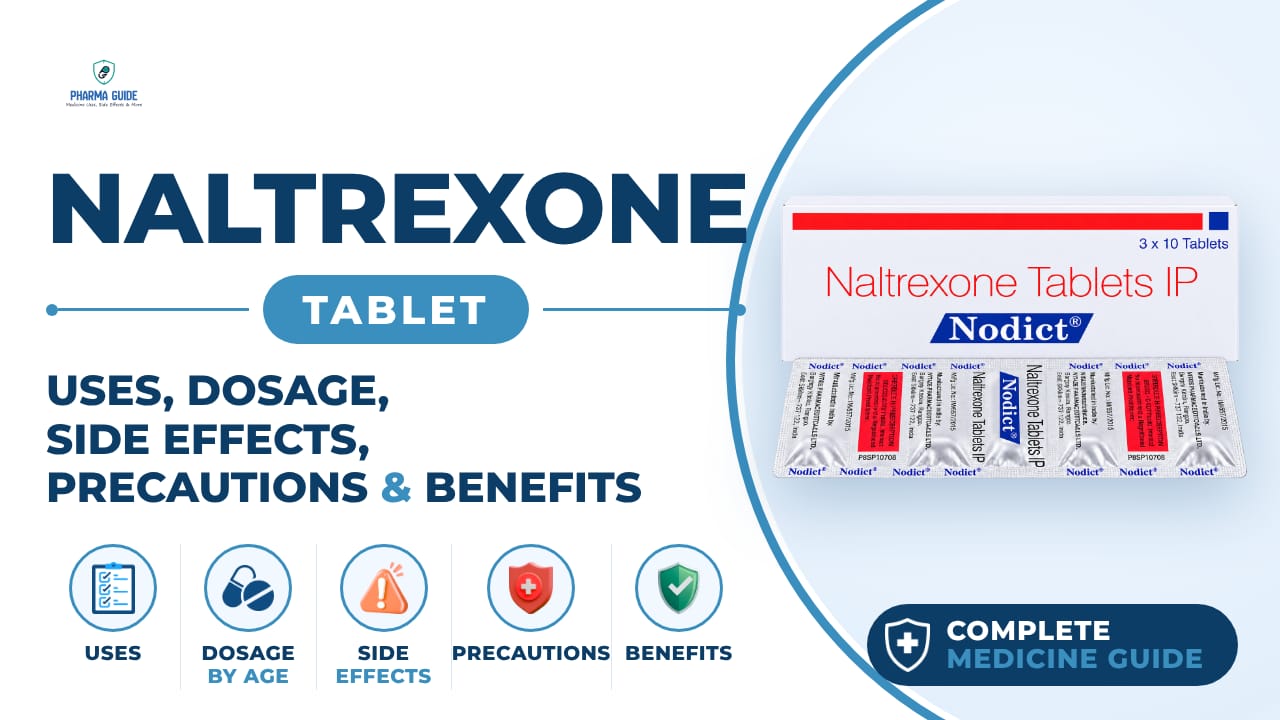
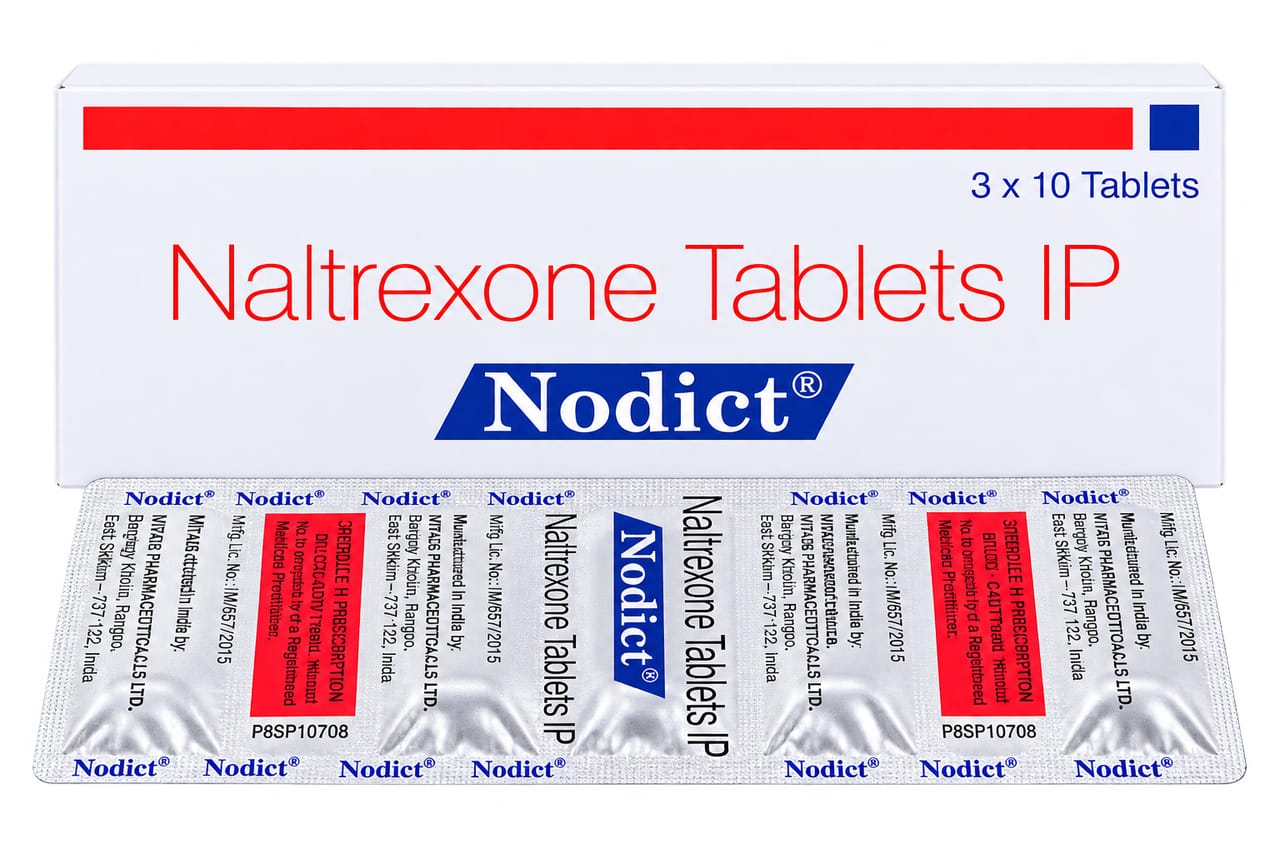
| Generic name | Naltrexone |
|---|---|
| Drug class | Antidotes; opiate antagonist; drugs used in alcohol dependence |
| Forms | Oral tablet, Intramuscular injection (extended-release) |
Quick overview
Naltrexone Tablet is a prescription medicine used to treat alcohol dependence and to help prevent relapse to opioid dependence after detoxification. It works by blocking opioid receptors in the brain, which reduces cravings and stops opioids and alcohol from producing their usual rewarding effects. It is not addictive and does not cause a high. The tablet is taken once daily by mouth as directed by a doctor.
What is Naltrexone Tablet
Naltrexone is a prescription tablet used to treat alcohol dependence and to help people stay off opioids after they have gone through detox. It blocks the effects of opioids and alcohol in the brain, which helps reduce cravings and lowers the chance of relapse. It is not addictive and does not cause a high.
Naltrexone Tablet uses
- Treating alcohol dependence to reduce cravings and help prevent relapse
- Blocking the effects of opioids after opioid detoxification to help prevent relapse to opioid dependence
- Used off-label at low doses for conditions such as fibromyalgia, Crohn's disease, multiple sclerosis, and complex regional pain syndrome (not FDA-approved for these uses)
Benefits of Naltrexone Tablet
- Helps reduce alcohol craving
- Can reduce the rewarding effects of opioids
- Supports treatment of alcohol use disorder
- Supports relapse prevention in opioid use disorder after opioid withdrawal
- Is non-opioid and does not produce an opioid high
How Naltrexone Tablet works
Naltrexone blocks opioid receptors in the brain, which stops opioids and alcohol from producing their usual pleasurable or "high" effect. This helps reduce cravings and interrupts the reward cycle that drives substance use. It also affects the way certain brain and hormone systems work together to reduce how much alcohol a person drinks.
Naltrexone Tablet dosage
Always take this medicine exactly as your doctor has told you. Take the tablet once a day by mouth as your doctor tells you to, and swallow the tablet with a glass of water. You must not have taken any opioid medicine for seven to ten days before starting this medicine. Do not stop taking naltrexone without talking to your doctor first. Food and drink do not interfere with how naltrexone works. This medicine should not be used in children and adolescents under 18 years.
If you miss a dose, take it as soon as you remember, but if it is almost time for your next dose, skip the missed dose and continue your regular schedule — do not take a double dose.
| Age group | Dose |
|---|---|
| 18–64 years | Common oral maintenance dose: 50 mg once daily |
Available forms and strengths
- Oral tablet
- Intramuscular injection (extended-release)
Side effects of Naltrexone Tablet
Common
- Nausea and vomiting
- Loss of appetite
- Joint pain, muscle cramps, or stiffness
- Headache
- Dizziness or drowsiness
- Sleep problems (insomnia)
- Cold-like symptoms such as stuffy nose, sneezing, or sore throat
- Feeling anxious or nervous
- Abdominal pain
- Increased sweating or watery/teary eyes
- Increased thirst
- Palpitations (fast heartbeat)
Serious
- Signs of an allergic reaction: hives, difficulty breathing, swelling of face, lips, tongue, or throat
- Weak or shallow breathing
- Cough that does not go away, or signs of an allergic pneumonia (new or worsening cough, wheezing, trouble breathing)
- Severe nausea, vomiting, or diarrhea
- Severe pain, swelling, blistering, skin changes, a dark scab, or a hard lump at an injection site
- Signs of liver problems: upper right stomach pain, dark urine, tiredness, vomiting, loss of appetite, clay-colored stools, yellowing of skin or eyes
- Symptoms of depression: unusual mood or behavior changes, loss of interest in activities, crying, new sleep problems, thoughts of hurting yourself
- Sudden opioid withdrawal symptoms if opioids were used too recently before starting treatment
- Thoughts of suicide, attempted suicide, or hallucinations (rare but serious)
- Breakdown of skeletal muscle tissue (very rare)
Warnings and precautions
- There is a risk of opioid overdose. Do not take large amounts of opioids to try to overcome the blocking effect of naltrexone — this can cause serious injury, coma, or death. You may also become more sensitive to lower amounts of opioids after treatment.
- You must not use any opioids, including street drugs, pain medicines, or cough/cold/diarrhea medicines containing opioids, for at least 7 to 14 days before starting naltrexone, or you may suddenly go into severe opioid withdrawal.
- Naltrexone can cause liver damage or hepatitis. Tell your doctor right away if you notice stomach pain lasting more than a few days, dark urine, yellowing of the eyes, or tiredness.
- You must tell every doctor or dentist who treats you that you are taking naltrexone, especially before any anesthetic or emergency opioid treatment, since you may need different doses and may be more sensitive to side effects like breathing or circulation problems.
- Do not take naltrexone if you are currently addicted to opioids, going through opioid withdrawal, taking any opioid pain medicine, or have tested positive for opioids — it can cause severe withdrawal.
- Tell your doctor if you are pregnant or planning to become pregnant. It isn't known if naltrexone could harm an unborn baby, so it should only be used in pregnancy if the benefits outweigh the possible risks.
- Breastfeeding is not recommended while taking naltrexone, since the medicine passes into breast milk and its effects on a baby are not known.
- People with severe kidney problems should not take naltrexone.
- Naltrexone can cause liver damage or hepatitis, and should not be used by people with severe liver problems or acute hepatitis. Your doctor may do liver tests before and during treatment.
- Naltrexone will not cause an unpleasant reaction if you drink alcohol, and it will not stop you from getting drunk or reduce the effects of alcohol on coordination and judgment.
- Naltrexone may make you feel dizzy or drowsy, so do not drive or use machinery until you know how the medicine affects you.
Storage
- Store naltrexone tablets at 20° to 25°C
- Do not use this medicine after the expiry date which is stated on the carton and blister after "Exp"
- Do not store above 25 °C. Store in the original package in order to protect from moisture
- Keep this medicine out of the sight and reach of children
- Do not throw away any medicines via wastewater or household waste. Ask your pharmacist how to throw away medicines you no longer use
When to see a doctor
- Get emergency medical help right away if you or someone with you has trouble breathing, becomes very drowsy with slowed breathing, has slow shallow breathing, or feels faint, very dizzy, confused, or has other unusual symptoms — this could be an opioid overdose
- Get emergency help immediately if you have signs of a serious allergic reaction, such as hives, difficulty breathing, or swelling of your face, lips, tongue, or throat
- Contact your doctor right away if you notice intense pain, hardness, large swelling, lumps, blisters, an open wound, or a dark scab at an injection site
- If you experience thoughts of depression, suicidal thoughts, or hallucinations, contact your doctor or pharmacist immediately for help
- If you notice dark urine or yellowing of the skin or eyes (jaundice), stop taking naltrexone and speak to your doctor immediately
- If you take more naltrexone than you should, tell your doctor or pharmacist, or contact your nearest hospital emergency department immediately
Alternatives
- Acamprosate
- Disulfiram
- Buprenorphine
Watch the video
FAQs
What is Naltrexone Tablet used for?
It is used to treat alcohol dependence by reducing cravings and to help prevent relapse to opioid dependence after detoxification.
How does Naltrexone Tablet work?
It blocks opioid receptors in the brain, stopping opioids and alcohol from producing their usual pleasurable or high effect, which reduces cravings and interrupts the reward cycle.
What is the usual dose of Naltrexone Tablet?
For adults aged 18 to 64 years, the common oral maintenance dose is 50 mg once daily, taken by mouth with a glass of water as directed by a doctor.
How long must I avoid opioids before starting Naltrexone?
You must not have taken any opioid medicine for seven to ten days before starting treatment, as using opioids too recently can cause sudden, severe withdrawal symptoms.
Does Naltrexone stop the effects of alcohol?
No, naltrexone will not cause an unpleasant reaction if you drink alcohol, and it will not stop you from getting drunk or reduce alcohol's effects on coordination and judgment.
General information, not medical advice
Your prescriber and the leaflet in your pack know your situation. This page does not.
- Follow your prescriber and the leaflet
- Don't start, stop, or change a dose on your own
- Doses and warnings differ by country and product
Sources
Video
Related medicines

Injectafer Injection: Uses, Dosage, Side Effects, Precautions and Alternates
Iron products
Injectafer (ferric carboxymaltose) treats iron deficiency anemia and heart failure-related iron deficiency via IV. Learn uses, dosage, side effects, and

Gliclazide Tablet: Uses, Dosage, Side Effects, Precautions and Alternates
Sulfonylurea (hypoglycemic/antidiabetic agent)
Gliclazide Tablet is a sulfonylurea for type 2 diabetes that boosts insulin release. Learn about dosage, side effects, warnings, and precautions.