
Safety
General information, not medical advice
Your prescriber and the leaflet in your pack know your situation. This page does not.
- Follow your prescriber and the leaflet
- Don't start, stop, or change a dose on your own
- Doses and warnings differ by country and product
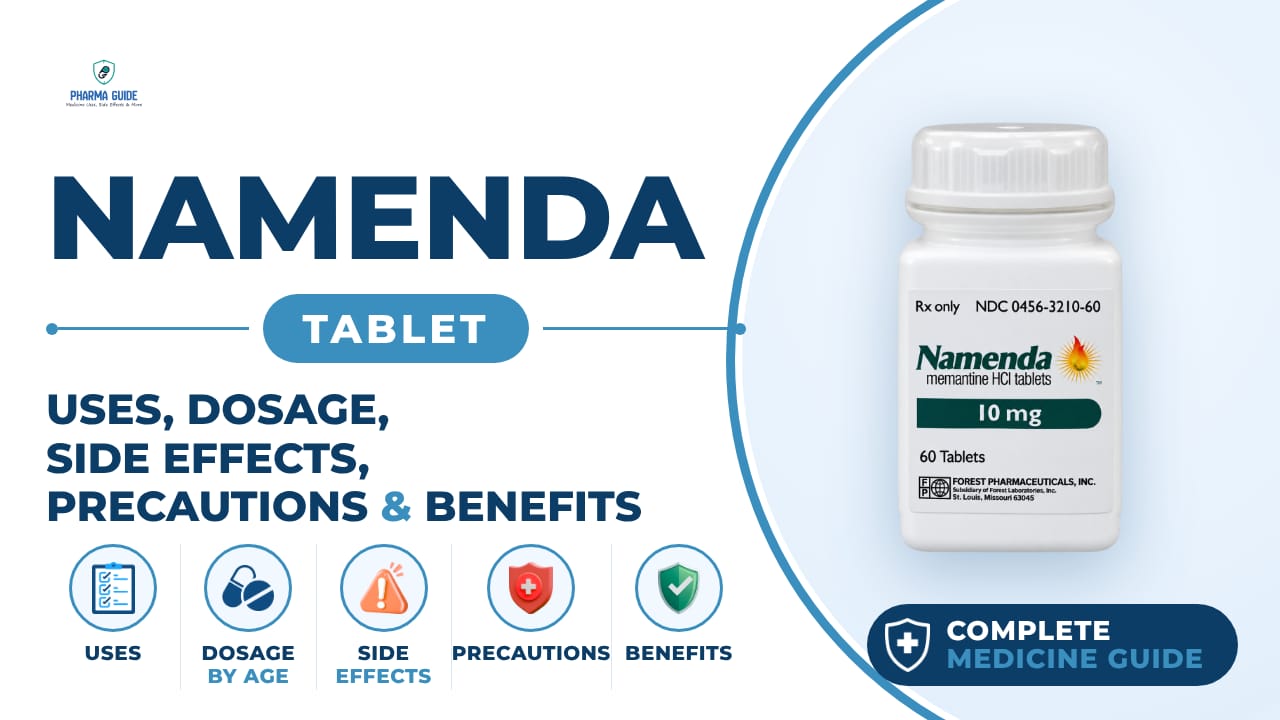
Namenda Tablet: Uses, Dosage, Side Effects, Precautions and Alternates
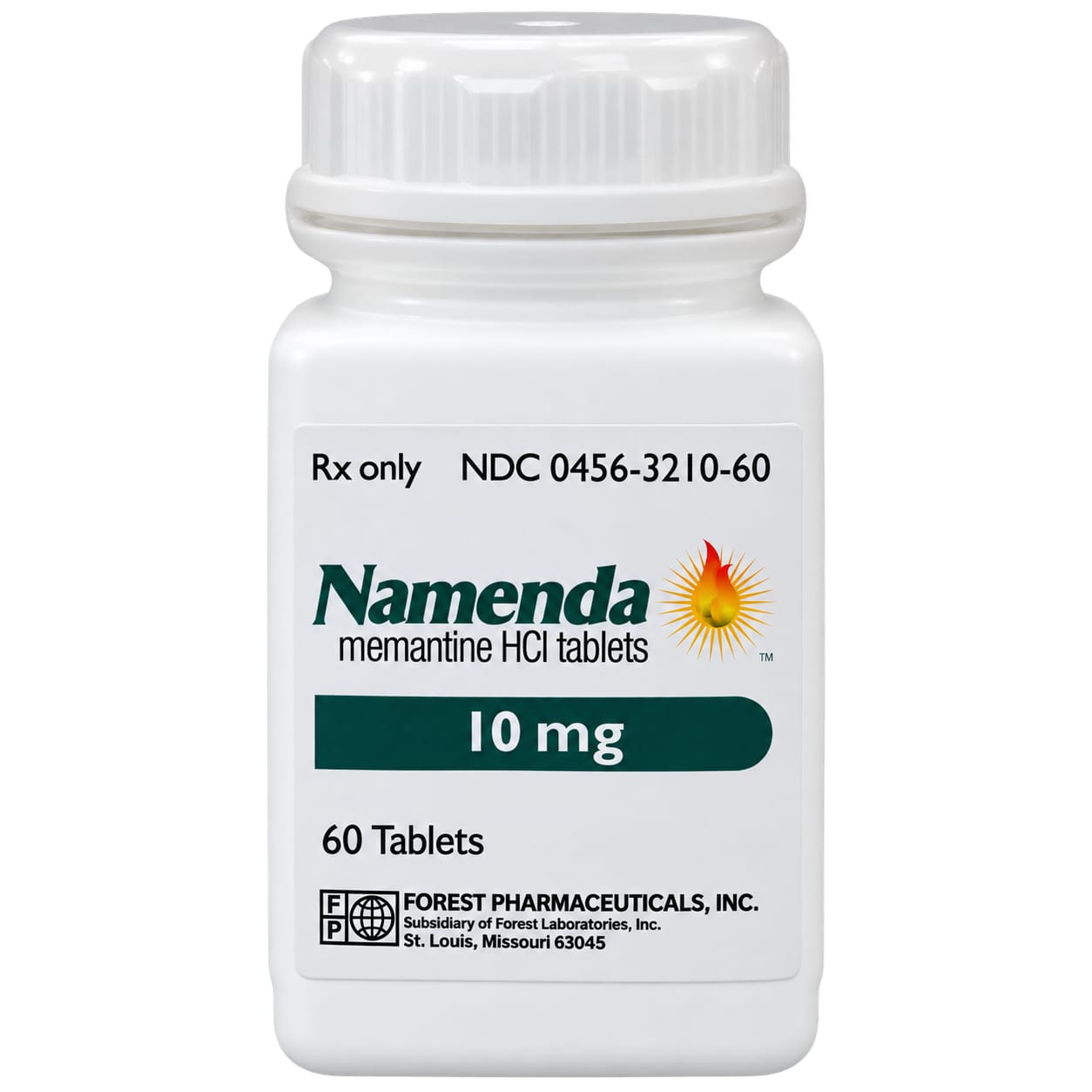
| Generic name | memantine |
|---|---|
| Drug class | NMDA (N-methyl-D-aspartate) receptor antagonist |
| Forms | Immediate-release oral tablets (5 mg, 10 mg), Extended-release capsules (Namenda XR: 7 mg, 14 mg, 21 mg, 28 mg) |
Quick overview
Namenda Tablet (memantine) is a prescription NMDA receptor antagonist used to treat moderate to severe dementia caused by Alzheimer's disease. It is not a cure and does not stop the disease from getting worse, but it may help manage certain symptoms. It can be taken alone or along with other Alzheimer's medications, and dosing is typically started low and increased gradually under a doctor's guidance.
What is Namenda Tablet
Namenda is a prescription medicine used to treat moderate to severe dementia caused by Alzheimer's disease. It is not a cure for Alzheimer's and does not stop the disease from getting worse.
Namenda Tablet uses
- Treats moderate to severe dementia of the Alzheimer's type
Benefits of Namenda Tablet
- May help improve memory and thinking skills in some people with Alzheimer's
- Helps reduce symptoms of Alzheimer's dementia, making everyday activities easier
- Can be used along with other Alzheimer's medications for better results
How Namenda Tablet works
In Alzheimer's disease, a brain chemical called glutamate can become overactive and damage brain cells. Namenda works by blocking certain receptors (called NMDA receptors) that glutamate attaches to, which may help protect brain cells from further damage. It does not stop or slow the underlying disease.
Namenda Tablet dosage
Take Namenda exactly as prescribed by your doctor and follow your prescription label. Namenda can be taken with or without food. Immediate-release tablets must be swallowed whole and should not be crushed, chewed, or split unless your doctor says it's okay. Extended-release capsules should be swallowed whole; do not crush, chew, break, or divide them. If you have trouble swallowing the extended-release capsule, you can open it and sprinkle the contents on a spoonful of applesauce, then swallow right away without chewing; do not save the mixture for later.
Try to take your dose around the same time each day to keep a steady level of medicine in your body. Use the medicine regularly to get the most benefit, and refill your prescription before you run out. If you miss a dose, take it as soon as you remember, but skip it if it's almost time for your next dose; do not take a double dose. If you miss several days of doses in a row, talk to your doctor before starting the medicine again, as they may need to restart you at a lower dose.
| Age group | Dose |
|---|---|
| Under 18 years | Not recommended |
| 18–64 years | 5 mg once daily initially; increase gradually to 10 mg twice daily |
| 65+ years | 5 mg once daily initially; increase gradually to 10 mg twice daily |
Available forms and strengths
- Immediate-release oral tablets (5 mg, 10 mg)
- Extended-release capsules (Namenda XR: 7 mg, 14 mg, 21 mg, 28 mg)
Side effects of Namenda Tablet
Common
- Dizziness
- Headache
- Confusion
- Constipation
- Diarrhea
- Vomiting
- Pain (such as back pain)
- Fatigue
- Sleepiness
- Cough
- Shortness of breath
- High blood pressure
- Weight gain
- Urinary retention
Serious
- Mental health changes such as anxiety, depression, hallucinations, or suicidal thoughts and behaviors
- Severe allergic reaction with swelling of the face, lips, tongue, or throat, or trouble breathing
- Seizures (uncommon)
Warnings and precautions
- Conditions that make your urine less acidic (more alkaline), such as a urinary tract infection, kidney disease, certain medicines, or diet changes, can cause your body to remove Namenda more slowly. This can lead to more of the drug building up in your blood than expected.
- Namenda has not been carefully studied in people with seizure disorders. Seizures were reported in a small number of patients during clinical trials.
- Before taking Namenda, tell your doctor if you have or have had seizures, liver disease, kidney disease, problems passing urine, or a bladder or kidney infection.
- Taking Namenda together with other NMDA-blocking medicines like amantadine, ketamine, or dextromethorphan (found in some cough medicines) has not been carefully studied and should be done cautiously.
- It is not known if Namenda will harm an unborn baby. If you are pregnant or planning to become pregnant, talk to your doctor before taking this medicine.
- It is not known if Namenda passes into breast milk or if it could harm a nursing baby. Talk to your doctor about the best way to feed your baby if you take Namenda.
- People with kidney problems may need a lower dose, since the body removes Namenda mainly through the kidneys. Severe kidney impairment can cause more of the drug to build up in the blood.
- Namenda should be used with caution in people with severe liver problems. No dose change is needed for mild or moderate liver problems.
- Alcohol is not known to directly interact with Namenda, but alcohol can make dementia symptoms worse, so your doctor may recommend limiting how much you drink.
- Namenda can cause side effects like dizziness or confusion that may affect your thinking or reactions. Be careful if you drive or do anything that requires you to be alert.
Storage
- Store Namenda at room temperature between 59°F to 77°F (15°C to 30°C) away from moisture and heat.
- Do not use any tablets of NAMENDA that are damaged or show signs of tampering.
- Keep NAMENDA and all medicines out of the reach of children.
When to see a doctor
- Get emergency medical help right away if you have signs of a serious allergic reaction, such as hives, trouble breathing, or swelling of your face, lips, tongue, or throat.
- Call your doctor right away if you notice mood changes, loss of interest in activities, anxiety, trouble sleeping, or seeing or hearing things that are not real.
- If you think you or someone else has taken too much Namenda, seek emergency medical attention or contact a poison control center right away. Signs of overdose can include weakness, slow or unsteady movements, sleepiness, slow heartbeat, confusion, dizziness, hallucinations, vomiting, agitation, restlessness, or loss of consciousness.
- If you have thoughts of suicide or self-harm, seek support immediately by calling a crisis helpline or emergency services.
Alternatives
- Donepezil
- Memantine ER
- Memantine + Donepezil
Watch the video
FAQs
What is Namenda Tablet used for?
Namenda treats moderate to severe dementia caused by Alzheimer's disease. It does not cure Alzheimer's or stop the disease from getting worse, but it may help manage certain symptoms.
How does Namenda work?
Namenda works by blocking NMDA receptors that an overactive brain chemical called glutamate attaches to, which may help protect brain cells from further damage. It does not stop or slow the underlying disease.
What is the dosage of Namenda for adults?
For adults aged 18-64 and 65+, the typical starting dose is 5 mg once daily, increased gradually to 10 mg twice daily. It is not recommended for those under 18 years.
What are the common side effects of Namenda?
Common side effects include dizziness, headache, confusion, constipation, diarrhea, vomiting, pain, fatigue, sleepiness, cough, shortness of breath, high blood pressure, weight gain, and urinary retention.
Can Namenda be taken with other Alzheimer's medications?
Yes, Namenda can be taken alone or along with other Alzheimer's medications for better results.
General information, not medical advice
Your prescriber and the leaflet in your pack know your situation. This page does not.
- Follow your prescriber and the leaflet
- Don't start, stop, or change a dose on your own
- Doses and warnings differ by country and product
Sources
Video
Related medicines

Injectafer Injection: Uses, Dosage, Side Effects, Precautions and Alternates
Iron products
Injectafer (ferric carboxymaltose) treats iron deficiency anemia and heart failure-related iron deficiency via IV. Learn uses, dosage, side effects, and

Gliclazide Tablet: Uses, Dosage, Side Effects, Precautions and Alternates
Sulfonylurea (hypoglycemic/antidiabetic agent)
Gliclazide Tablet is a sulfonylurea for type 2 diabetes that boosts insulin release. Learn about dosage, side effects, warnings, and precautions.