
Safety
General information, not medical advice
Your prescriber and the leaflet in your pack know your situation. This page does not.
- Follow your prescriber and the leaflet
- Don't start, stop, or change a dose on your own
- Doses and warnings differ by country and product
Naratriptan Tablet: Uses, Dosage, Side Effects, Precautions and Alternates
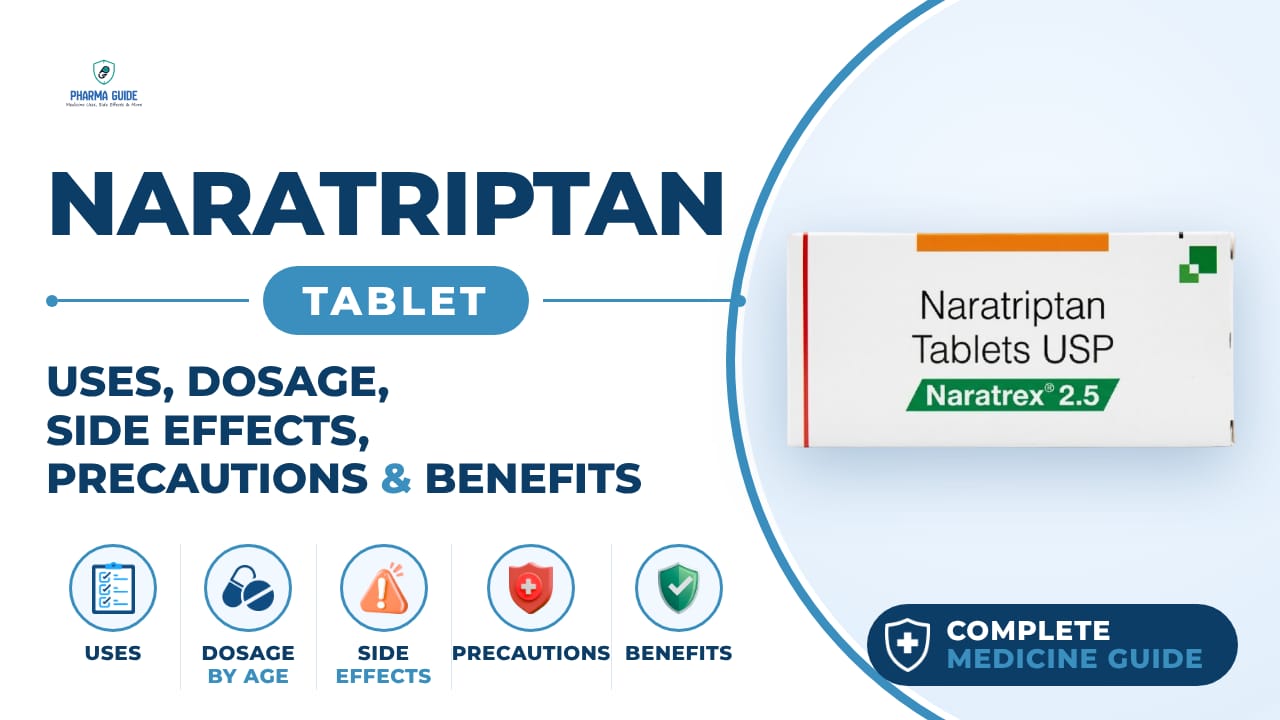
| Generic name | Naratriptan hydrochloride |
|---|---|
| Drug class | 5-HT1 receptor agonist (triptan) |
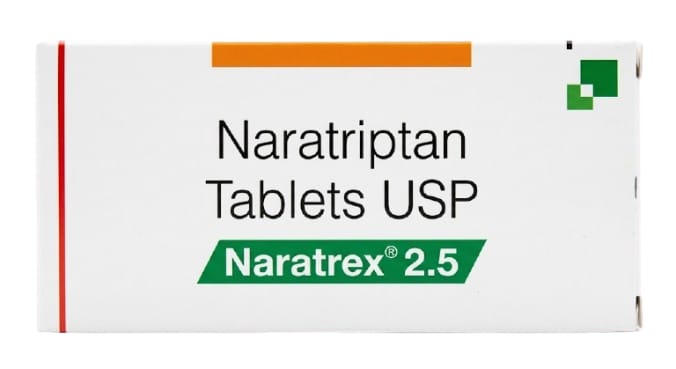
| Forms | Tablet (1 mg), Tablet (2.5 mg) |
Quick overview
Naratriptan Tablet, generically known as naratriptan hydrochloride, is a prescription triptan medicine used for the acute treatment of migraine attacks with or without aura in adults. It is not used to prevent migraines and is not intended for cluster headache or certain rare migraine types. It works by narrowing widened blood vessels in the head and blocking the release of pain-causing chemicals, relieving headache pain along with nausea, light sensitivity, and sound sensitivity.
What is Naratriptan Tablet
Naratriptan is a prescription migraine medicine belonging to the triptan class. It is used only to treat a migraine attack that has already started, not to prevent migraines.
Naratriptan Tablet uses
- Acute treatment of migraine attacks with or without aura in adults
- Not for prevention of migraine
- Not for cluster headache, hemiplegic, basilar, or ophthalmoplegic migraine
Benefits of Naratriptan Tablet
- Relieves migraine headache pain
- Reduces nausea associated with migraine
- Reduces sensitivity to light (photophobia)
- Reduces sensitivity to sound (phonophobia)
How Naratriptan Tablet works
Migraine headache is thought to be caused by widening of blood vessels in the head and release of certain chemicals that cause inflammation and pain. Naratriptan narrows these blood vessels and blocks the release of these pain-causing chemicals, which relieves the headache and other migraine symptoms.
Naratriptan Tablet dosage
Naratriptan can be taken with or without food. Swallow the tablet whole with water. Take it as soon as possible after migraine symptoms begin, but it can still work if taken later. If the first dose does not work, do not take a second dose for the same attack without talking to your doctor. If the headache comes back or only partly improves, a second dose may be taken after waiting at least 4 hours. Do not use more than recommended in a 24-hour period.
This medicine is not recommended for use in children or adolescents under 18 years of age or for adults over 65 years of age. If you have kidney or liver disease, take only as directed by your doctor. Avoid taking within 24 hours of another migraine medicine such as other triptans or ergotamine-type medicines.
| Age group | Dose |
|---|---|
| Under 18 years | Not recommended |
| 18–64 years | 2.5 mg, once/day |
| 65+ years | 1 mg, once/day |
Available forms and strengths
- Tablet (1 mg)
- Tablet (2.5 mg)
Side effects of Naratriptan Tablet
Common
- Dizziness
- Drowsiness/sleepiness
- Nausea
- Vomiting
- Flushing (warmth, redness, or tingly feeling)
- Pain or tightness in jaw, neck, or throat
- Feeling weak, tired, or unwell
- Numbness or tingling (paresthesia)
- Headache
- Dry mouth
- Ear, nose, and throat infections
Serious
- Chest pain, pressure, or heaviness, which may signal a heart problem
- Fast, pounding, or irregular heartbeats
- Signs of a heart attack such as chest pain spreading to jaw or shoulder, shortness of breath, sweating, nausea
- Signs of a stroke such as sudden weakness on one side of the body, slurred speech, vision problems, or severe headache
- Numbness, tingling, or pale/blue color in fingers or toes (poor circulation)
- Severe stomach pain, bloody diarrhea, constipation, fever, or weight loss (bowel blood flow problems)
- Dangerously high blood pressure with symptoms like severe headache, blurred vision, chest pain, confusion, or nosebleed
- Serotonin syndrome: agitation, hallucinations, fast heartbeat, loss of coordination, fever, nausea, vomiting, diarrhea
- Severe allergic reaction: hives, difficulty breathing, swelling of face, lips, tongue, or throat
- Medication overuse headache with frequent use
Warnings and precautions
- Do not take this medicine if you have heart disease, a history of heart attack, stroke, uncontrolled high blood pressure, or certain blood vessel or circulation problems, because of risk of serious heart events.
- Do not take naratriptan within 24 hours before or after taking another triptan or an ergotamine-type medicine, as this can cause dangerous additive effects on blood vessels.
- Taking this medicine with certain antidepressants (SSRIs or SNRIs) can cause a rare but life-threatening condition called serotonin syndrome.
- Using migraine medicine too often can actually make headaches worse or more frequent.
- This medicine is not recommended for people over 65 or for children and teenagers under 18, as safety and effectiveness have not been established in these groups.
- It is not known if naratriptan is safe to use during pregnancy. It should only be used if the potential benefit to the mother outweighs the possible risk to the baby, and only after discussing this with your doctor.
- It is not known if naratriptan passes into human breast milk, so caution is advised if considering use while breastfeeding.
- People with severe kidney problems should not take this medicine. Those with mild to moderate kidney impairment need a lower dose and should use caution.
- People with severe liver problems should not take this medicine. Those with mild to moderate liver impairment need a lower dose and should use caution.
- Studies did not find an interaction between naratriptan and alcohol, but alcohol may still trigger migraines in some people.
- This medicine can cause drowsiness and affect alertness or coordination. Do not drive or operate machinery until you know how it affects you.
Storage
- Store between 15-30°C, away from heat and light
- Keep in a safe place where children cannot see or reach it
- If your medication has expired, do not use it; throw it away
- If your doctor decides to stop your treatment, do not keep any leftover medicine unless your doctor tells you to
- Dispose of unused medicine carefully, such as through a medication take-back program
When to see a doctor
- Get emergency help right away if you have signs of a heart attack, such as chest pain or pressure, pain spreading to the jaw or shoulder, shortness of breath, sweating, or nausea.
- Get emergency help right away if you notice signs of a stroke, such as sudden numbness or weakness especially on one side of the body, sudden severe headache, or slurred speech.
- Seek medical help right away if you have symptoms of a serious allergic reaction, including swelling of the face, lips, mouth, or throat, trouble breathing, or hives.
- Get medical help if you develop signs of serotonin syndrome, such as agitation, hallucinations, fast heartbeat, fever, loss of coordination, or severe nausea and vomiting.
- Seek medical care if you experience sudden or severe stomach pain, bloody diarrhea, or other signs of reduced blood flow to the bowel.
- Contact your doctor if your blood pressure rises or you have symptoms of dangerously high blood pressure, such as severe headache, chest pain, or vision changes.
- In case of a suspected overdose, contact a health care provider or your local poison control center right away, even if there are no symptoms yet.
Alternatives
- Zolmitriptan
- Rizatriptan
- Sumatriptan
Watch the video
FAQs
What is Naratriptan Tablet used for?
It is used for the acute treatment of migraine attacks with or without aura in adults. It is not used to prevent migraines and is not intended for cluster headache or certain rare migraine types.
How does Naratriptan Tablet work?
It narrows widened blood vessels in the head and blocks the release of pain-causing chemicals, which relieves headache pain along with nausea, light sensitivity, and sound sensitivity.
What is the dosage of Naratriptan Tablet?
Adults aged 18–64 years take 2.5 mg once daily, while those 65+ take 1 mg once daily. If the headache returns or only partly improves, a second dose may be taken after waiting at least 4 hours, without exceeding the recommended 24-hour limit.
Who should not take Naratriptan Tablet?
It should not be taken by people with heart disease, a history of heart attack or stroke, uncontrolled high blood pressure, certain blood vessel or circulation problems, or severe kidney or liver problems. It is also not recommended for children under 18 or adults over 65.
Can Naratriptan Tablet cause serious side effects?
Yes, serious side effects include chest pain, signs of heart attack or stroke, poor circulation in fingers or toes, bowel blood flow problems, dangerously high blood pressure, serotonin syndrome, and severe allergic reactions.
General information, not medical advice
Your prescriber and the leaflet in your pack know your situation. This page does not.
- Follow your prescriber and the leaflet
- Don't start, stop, or change a dose on your own
- Doses and warnings differ by country and product
Sources
Video
Related medicines

Injectafer Injection: Uses, Dosage, Side Effects, Precautions and Alternates
Iron products
Injectafer (ferric carboxymaltose) treats iron deficiency anemia and heart failure-related iron deficiency via IV. Learn uses, dosage, side effects, and

Gliclazide Tablet: Uses, Dosage, Side Effects, Precautions and Alternates
Sulfonylurea (hypoglycemic/antidiabetic agent)
Gliclazide Tablet is a sulfonylurea for type 2 diabetes that boosts insulin release. Learn about dosage, side effects, warnings, and precautions.