
Safety
General information, not medical advice
Your prescriber and the leaflet in your pack know your situation. This page does not.
- Follow your prescriber and the leaflet
- Don't start, stop, or change a dose on your own
- Doses and warnings differ by country and product
Nateglinide Tablet: Uses, Dosage, Side Effects, Precautions and Alternates
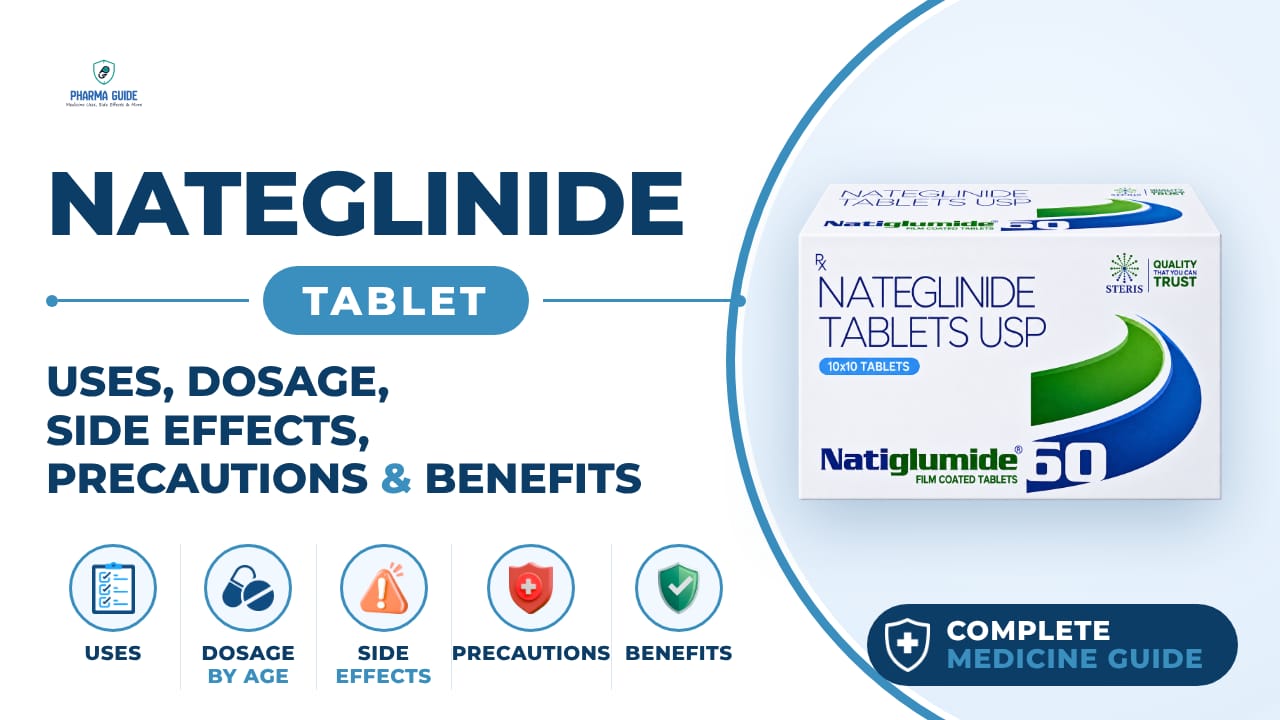
| Generic name | Nateglinide |
|---|---|
| Drug class | Oral Antidiabetic Agent (meglitinide/glinide) |
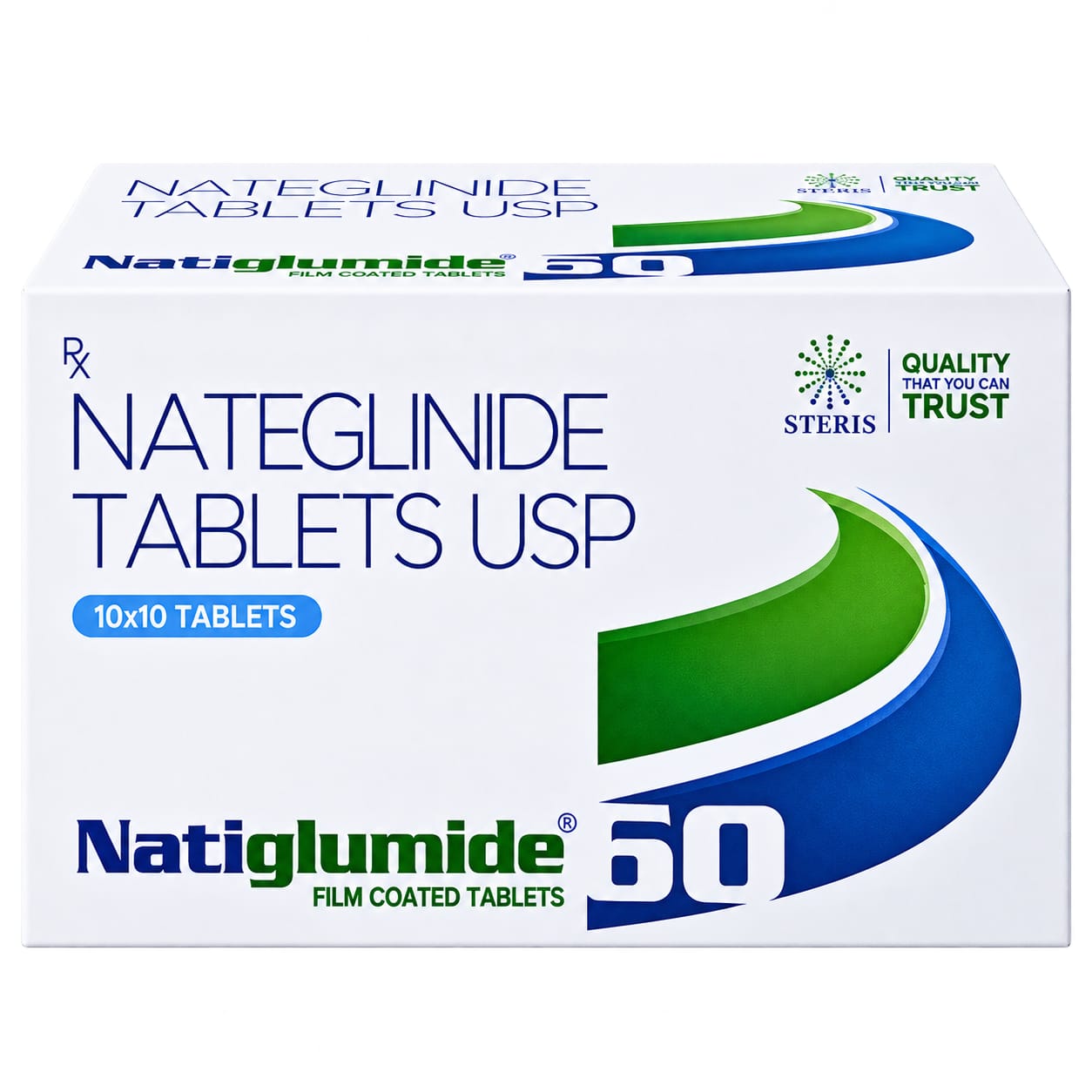
| Forms | 60 mg tablets, 120 mg tablets |
Quick overview
Nateglinide Tablet (generic name: Nateglinide) is an oral antidiabetic agent from the meglitinide (glinide) class. It is used in adults with type 2 diabetes to help lower blood sugar, usually when diet and exercise alone are not enough. It may be used alone or together with metformin, and is taken before meals to control blood sugar spikes that occur after eating.
What is Nateglinide Tablet
Nateglinide is a medicine used to lower blood sugar in adults with type 2 diabetes. It is taken by mouth and is usually used when diet and exercise alone do not control blood sugar well enough. It may be used alone or together with metformin.
Nateglinide Tablet uses
- Type 2 diabetes mellitus, used along with diet and exercise to lower blood sugar
- Used in combination with metformin when diet, exercise, and one medicine alone are not enough to control blood sugar
Benefits of Nateglinide Tablet
- Helps restore the body's early insulin release after meals
- Lowers blood sugar spikes that happen after eating
- Can improve long-term blood sugar control as measured by HbA1c
- May work well together with metformin for added blood sugar control
How Nateglinide Tablet works
After you eat, your pancreas normally releases insulin quickly to keep blood sugar from rising too high. In type 2 diabetes, this quick insulin release is lost. Nateglinide works by making the pancreas release insulin faster after a meal, which helps control the rise in blood sugar that happens after eating.
Nateglinide Tablet dosage
Take the tablet by mouth, swallowed whole with a glass of water. Take it before a meal, usually right before eating, but it can be taken anytime in the 30 minutes before the meal starts. If you skip a meal, skip the dose for that meal — do not take it without eating.
Take it at the same time with each main meal (usually breakfast, lunch, and dinner) for best results and to help you remember. If you miss a dose, skip it and take your next dose before your next meal — do not double up to make up for a missed dose. Keep taking it every day as your doctor tells you; do not stop without talking to your doctor first.
| Age group | Dose |
|---|---|
| Under 18 years | Safety and effectiveness are not established; no standard pediatric dose |
| 18–64 years | Usually 120 mg three times daily before meals |
| 65–74 years | Same adult dosing may be used, with closer monitoring for hypoglycemia |
| 75 years and older | Individualized cautiously because low blood sugar may be harder to recognize and manage |
Available forms and strengths
- 60 mg tablets
- 120 mg tablets
Side effects of Nateglinide Tablet
Common
- Hypoglycemia (low blood sugar)
- Hyperglycemia (high blood sugar)
- Visual disturbance
- Abdominal pain
- Nausea
- Vomiting
- Constipation
- Diarrhea
- Headache
- Runny or stuffy nose
- Joint pain
- Back pain
- Dizziness
- Upper respiratory tract infection
Serious
- Liver dysfunction
- Allergic reaction such as rash, itching, or hives
- Sudden severe headache or worsening headache, dizziness, fatigue, or increased sweating
- Severe hypoglycemia with loss of consciousness or seizures
Warnings and precautions
- This medicine is not for people with type 1 diabetes or diabetic ketoacidosis — it will not work for these conditions and may make them worse.
- Do not take this medicine if you are allergic to nateglinide or any of its ingredients.
- Elderly people, malnourished people, and those with certain gland or kidney problems are more likely to get low blood sugar from this medicine.
- Low blood sugar can be harder to notice in elderly patients and in people taking certain blood pressure medicines called beta-blockers.
- If you get a fever, infection, injury, or have surgery, your blood sugar may rise and your treatment may need to be changed temporarily.
- This medicine contains lactose (milk sugar); tell your doctor if you have severe lactose intolerance.
- Nateglinide should not be used during pregnancy. If you become pregnant while taking it, contact your doctor right away.
- Nateglinide should not be used while breastfeeding, since it's not known whether it passes into human breast milk.
- No dose change is usually needed for people with mild to severe kidney problems, but tell your doctor if you have kidney disease.
- This medicine should be used carefully in people with moderate to severe liver disease, since it hasn't been well studied in these patients.
- Avoid alcohol while taking this medicine, since it can increase the risk of very low blood sugar and other side effects.
- If you have symptoms of low blood sugar, do not drive or use machinery, since this can affect your concentration and alertness.
Storage
- Keep out of the reach and sight of children
- Store in the original package
- Store between 15-30°C
- Do not use after the expiry date shown on the box
- Do not use any pack that is damaged or shows signs of tampering
When to see a doctor
- Get emergency help right away if you have a severe low blood sugar reaction with loss of consciousness or seizures.
- If you think you've taken too much of this medicine, contact poison control or go to an emergency room right away, even if you have no symptoms.
- Seek medical help right away for signs of an allergic reaction such as rash, itching, hives, or swelling of the face, lips, tongue, or throat.
- Tell your doctor right away if you have signs of low blood sugar such as shaking, sweating, confusion, dizziness, or a fast heartbeat.
Alternatives
- Repaglinide
- Glimepiride
- Gliclazide
Watch the video
FAQs
What is Nateglinide Tablet used for?
It is used in adults with type 2 diabetes to lower blood sugar, usually when diet and exercise alone are not enough. It may be used alone or combined with metformin.
How should I take Nateglinide Tablet?
Swallow the tablet whole with water before a meal, usually right before eating or anytime within 30 minutes before the meal starts. If you skip a meal, skip that dose.
What is the usual dose of Nateglinide Tablet?
Adults aged 18–64 usually take 120 mg three times daily before meals. Older adults may use the same dosing but with closer monitoring, and dosing is individualized cautiously in those 75 and older.
What are the common side effects of Nateglinide Tablet?
Common side effects include hypoglycemia, hyperglycemia, visual disturbance, abdominal pain, nausea, vomiting, constipation, diarrhea, headache, runny or stuffy nose, joint pain, back pain, dizziness, and upper respiratory tract infection.
Can Nateglinide Tablet be used during pregnancy or breastfeeding?
No, it should not be used during pregnancy, and if you become pregnant while taking it you should contact your doctor right away. It should also not be used while breastfeeding since it's not known if it passes into breast milk.
General information, not medical advice
Your prescriber and the leaflet in your pack know your situation. This page does not.
- Follow your prescriber and the leaflet
- Don't start, stop, or change a dose on your own
- Doses and warnings differ by country and product
Sources
Video
Related medicines

Injectafer Injection: Uses, Dosage, Side Effects, Precautions and Alternates
Iron products
Injectafer (ferric carboxymaltose) treats iron deficiency anemia and heart failure-related iron deficiency via IV. Learn uses, dosage, side effects, and

Gliclazide Tablet: Uses, Dosage, Side Effects, Precautions and Alternates
Sulfonylurea (hypoglycemic/antidiabetic agent)
Gliclazide Tablet is a sulfonylurea for type 2 diabetes that boosts insulin release. Learn about dosage, side effects, warnings, and precautions.