
Safety
General information, not medical advice
Your prescriber and the leaflet in your pack know your situation. This page does not.
- Follow your prescriber and the leaflet
- Don't start, stop, or change a dose on your own
- Doses and warnings differ by country and product
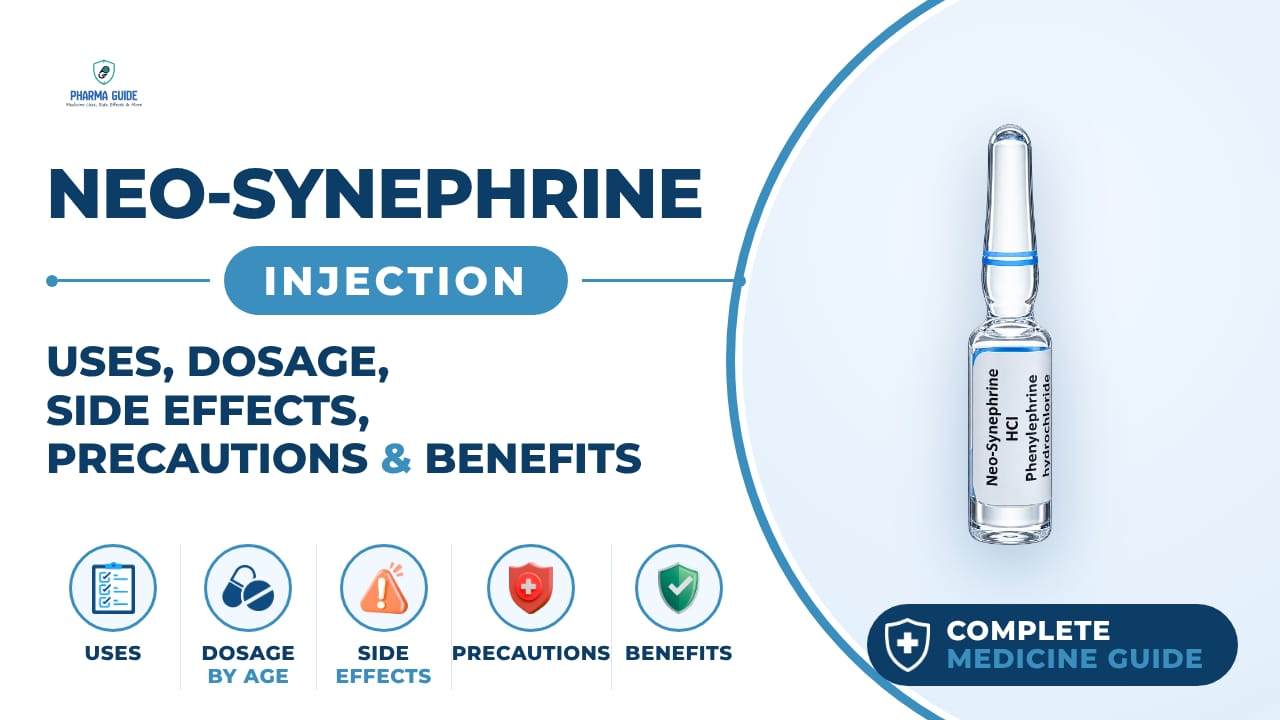
Neo-Synephrine Injection: Uses, Dosage, Side Effects, Precautions and Alternates
| Generic name | Phenylephrine hydrochloride |
|---|---|
| Drug class | Vasoconstrictor / Vasopressor |
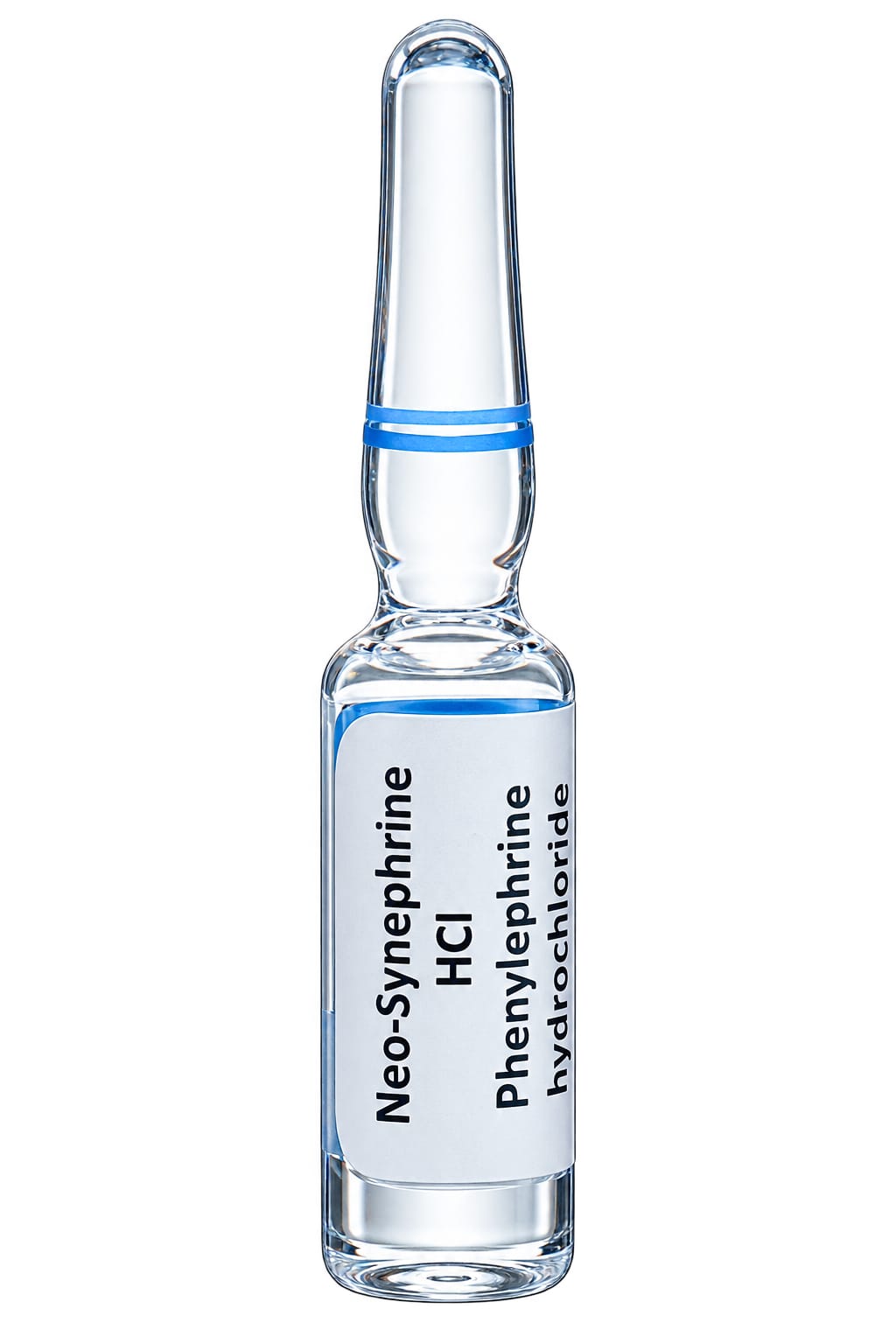
| Forms | Solution for injection (ampoules) |
Quick overview
Neo-Synephrine Injection contains phenylephrine hydrochloride, a man-made vasoconstrictor and vasopressor medicine that acts like adrenaline. It is given by a doctor or nurse in a hospital or clinical setting to raise blood pressure during surgery, anesthesia, or shock, and to help manage certain fast heart rhythms. It works by narrowing blood vessels, and it requires close monitoring along with certain precautions.
What is Neo-Synephrine Injection
Neo-Synephrine Injection contains phenylephrine hydrochloride, a man-made medicine that acts like adrenaline. It belongs to a group of medicines called vasoconstrictors and is given by a doctor or nurse in a hospital or clinical setting.
Neo-Synephrine Injection uses
- Used to raise blood pressure during surgery or anesthesia, or in states of shock
- Used for the maintenance of blood pressure during spinal and inhalation anesthesia
- Used to treat vascular failure in shock, shock-like states, and drug-induced low blood pressure
- Used to help manage sudden fast heartbeats called paroxysmal supraventricular tachycardia
- Used to prolong the effect of spinal anesthesia
- Used as a vasoconstrictor added to regional anesthesia
Benefits of Neo-Synephrine Injection
- Helps raise dangerously low blood pressure
- Helps slow a fast heart rate
- Narrows blood vessels to support circulation during surgery or shock
- Provides rapid blood-pressure support
- Can be administered as an IV bolus or continuous infusion
- Primarily increases vascular tone through alpha-1 receptor stimulation
How Neo-Synephrine Injection works
This medicine narrows blood vessels, which raises blood pressure. Unlike similar medicines, it tends to slow the heart rate instead of speeding it up, and it does not usually cause irregular heartbeats.
Neo-Synephrine Injection dosage
This medicine must only be given by a doctor or nurse. It can be given as a slow injection or infusion (drip) into a vein, as a deep injection into a muscle, or as an injection just under the skin. It is sometimes diluted and given with fluids into a vein. Your doctor will decide how and when you receive this medicine, depending on your condition. Tell your medical team right away if you feel burning or pain when it is injected.
| Age group | Dose |
|---|---|
| 18–64 years | For anesthesia-related hypotension: 0.05–0.25 mg IV bolus; continuous infusion may be 0.5–1.4 mcg/kg/min |
Available forms and strengths
- Solution for injection (ampoules)
Side effects of Neo-Synephrine Injection
Common
- Headache
- Restlessness or feeling nervous/excited
- Nausea or vomiting
- Tingling in the hands or feet
Serious
- Fast or irregular heartbeats (palpitations)
- Very slow pulse
- Sensation of fullness in the head
- Severe allergic reaction: shortness of breath, wheezing, swelling of face, lips or tongue, rash, itching or hives
- Pale skin, severe shortness of breath, wheezing, cough with foamy mucus
- Severe headache, blurred vision, pounding in neck or ears
- Chest pain or pressure, pain spreading to jaw or shoulder, nausea
- Pain, burning, irritation, or skin changes where the injection was given
- Numbness, tingling, or burning pain in hands or feet
- Dizziness
- Tremors
- Sweating or flushing
- Kidney problems - swelling, urinating less, feeling tired or short of breath
Warnings and precautions
- Do not use this medicine if you are allergic to phenylephrine hydrochloride, sodium metabisulfite, or any other ingredient in it.
- Do not use this medicine if you have very high blood pressure or a very fast heartbeat.
- This medicine contains sodium metabisulfite, a sulfite that can cause allergic-type reactions, including severe asthma attacks, in some sensitive people.
- This medicine should be used with extra caution in elderly patients and in people with an overactive thyroid, a slow heart rate, partial heart block, heart muscle disease, or severe hardening of the arteries.
- Certain medicines, such as some antidepressants, halothane anesthetics, and medicines used to stimulate labor, can interfere with how this medicine works.
- If used together with certain labor-stimulating drugs, this medicine's blood pressure-raising effect can be made stronger, and severe high blood pressure or even a ruptured blood vessel in the brain could occur after childbirth.
- It is not known whether this medicine can harm an unborn baby. Your doctor will discuss the risks and benefits with you if you are pregnant or planning to become pregnant.
- It is not known if this medicine passes into breast milk, so caution is needed if you are breastfeeding. Talk to your doctor if you are breastfeeding or plan to breastfeed.
- Tell your doctor if you have kidney disease, since your kidney function may need to be checked closely during treatment.
- Tell your doctor if you have liver disease before receiving this medicine.
- Tell your doctor if you drink alcohol, as there is no clear information on how it may interact with this medicine.
- Be careful before driving or using machines until you know how this medicine affects you.
Storage
- NEOSYNEPHRINE will be stored in the hospital, where the temperature stays below 25°C.
- Protect from light if removed from the packaging.
- Store below 25°C.
- If you no longer need to use this medicine or if it is out of date, the hospital will dispose of it safely.
- Do not use this medicine after the expiry date.
- Any unused medicine or waste material should be disposed of in accordance with local requirements.
When to see a doctor
- Get emergency help right away if you have signs of a serious allergic reaction, such as hives, difficulty breathing, or swelling of your face, lips, tongue, or throat.
- Tell your medical caregivers right away if you have pale skin, severe shortness of breath, wheezing, or cough with foamy mucus; a fast, slow, or uneven heart rate; severe headache, blurred vision, or pounding in your neck or ears; chest pain or pressure spreading to your jaw or shoulder; or kidney problems such as swelling, reduced urination, or feeling tired or short of breath.
- Call your doctor right away or go to the nearest emergency department if you notice fast or irregular heartbeats, a very slow pulse, a feeling of fullness in the head, or tingling in your hands or feet.
- If you think you have been given too much of this medicine, seek urgent medical attention right away, even if you feel fine.
Alternatives
- Norepinephrine
- Epinephrine
- Vasopressin
Watch the video
FAQs
What is Neo-Synephrine Injection used for?
It is used to raise blood pressure during surgery or anesthesia, treat vascular failure in shock or drug-induced low blood pressure, help manage paroxysmal supraventricular tachycardia, and prolong the effect of spinal anesthesia.
How does Neo-Synephrine Injection work?
It narrows blood vessels, which raises blood pressure. Unlike similar medicines, it tends to slow the heart rate instead of speeding it up and does not usually cause irregular heartbeats.
Who should not receive Neo-Synephrine Injection?
It should not be used in people allergic to phenylephrine hydrochloride, sodium metabisulfite, or other ingredients, or in those with very high blood pressure or a very fast heartbeat.
What are the common side effects of Neo-Synephrine Injection?
Common side effects include headache, restlessness or feeling nervous, nausea or vomiting, and tingling in the hands or feet.
How is Neo-Synephrine Injection given?
It is given only by a doctor or nurse, as a slow injection or infusion into a vein, a deep injection into a muscle, or an injection just under the skin, depending on the patient's condition.
General information, not medical advice
Your prescriber and the leaflet in your pack know your situation. This page does not.
- Follow your prescriber and the leaflet
- Don't start, stop, or change a dose on your own
- Doses and warnings differ by country and product
Sources
Video
Related medicines

Injectafer Injection: Uses, Dosage, Side Effects, Precautions and Alternates
Iron products
Injectafer (ferric carboxymaltose) treats iron deficiency anemia and heart failure-related iron deficiency via IV. Learn uses, dosage, side effects, and

Gliclazide Tablet: Uses, Dosage, Side Effects, Precautions and Alternates
Sulfonylurea (hypoglycemic/antidiabetic agent)
Gliclazide Tablet is a sulfonylurea for type 2 diabetes that boosts insulin release. Learn about dosage, side effects, warnings, and precautions.