
Safety
General information, not medical advice
Your prescriber and the leaflet in your pack know your situation. This page does not.
- Follow your prescriber and the leaflet
- Don't start, stop, or change a dose on your own
- Doses and warnings differ by country and product
Nesina Tablet: Uses, Dosage, Side Effects, Precautions and Alternates
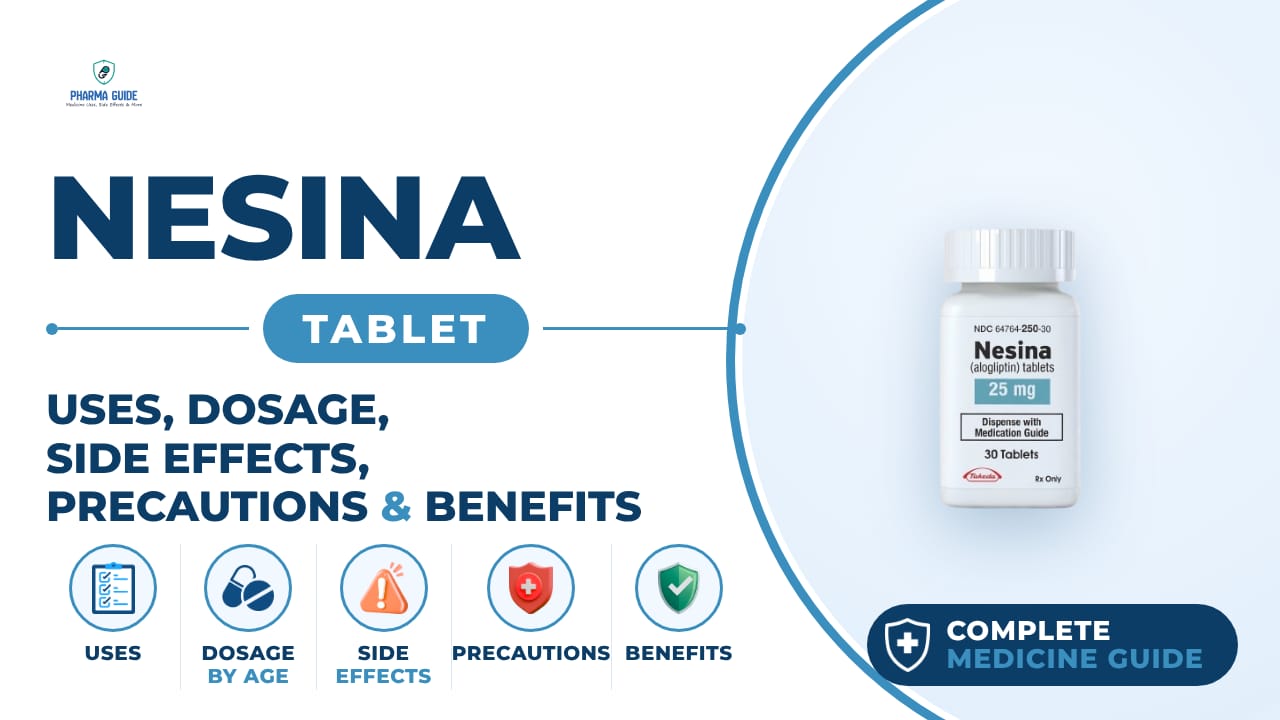
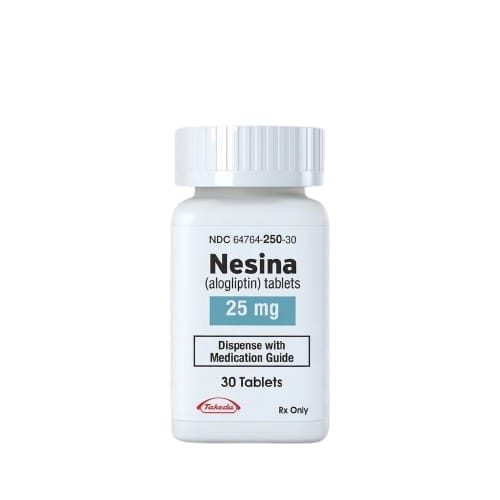
| Generic name | alogliptin |
|---|---|
| Drug class | Dipeptidyl peptidase-4 (DPP-4) inhibitor |
| Forms | Film-coated tablets (6.25 mg, 12.5 mg, and 25 mg) |
Quick overview
Nesina Tablet contains alogliptin, a dipeptidyl peptidase-4 (DPP-4) inhibitor. It is a prescription oral medicine used along with diet and exercise to help control blood sugar in adults with type 2 diabetes. It works by helping the body manage insulin levels after meals.
What is Nesina Tablet
Nesina is a prescription oral medicine used along with diet and exercise to help control blood sugar in adults with type 2 diabetes. It works by helping the body manage insulin levels after meals.
Nesina Tablet uses
- Type 2 diabetes.
- High blood sugar in adults with type 2 diabetes.
- Improving glucose control with diet and exercise.
- Additional glucose control alongside other diabetes medicines.
- Diabetes management when a single medicine is insufficient.
Benefits of Nesina Tablet
- Helps lower blood sugar.
- Improves glucose control.
- Supports diabetes management.
- Helps regulate blood sugar after meals.
- May improve long-term blood sugar control.
How Nesina Tablet works
Nesina blocks an enzyme called DPP-4, which lets natural gut hormones stay active longer after you eat. These hormones tell the pancreas to release more insulin and tell the liver to make less sugar, which lowers blood sugar mainly after meals.
Nesina Tablet dosage
Take it once a day, with or without food. Swallow the tablet whole with a glass of water; do not split the tablet. Try to take it at about the same time each day. If you miss a dose, take it as soon as you remember, but if it's almost time for your next dose, skip the missed one — do not take two doses at the same time. Keep following your diet and exercise plan and check your blood sugar as your doctor advises. Do not skip meals while taking this medicine.
| Age group | Dose |
|---|---|
| Under 18 years | Not recommended |
| 18–64 years | 25 mg, once/day |
| 65+ years | 25 mg, once/day |
Available forms and strengths
Film-coated tablets (6.25 mg, 12.5 mg, and 25 mg).
Side effects of Nesina Tablet
Common
- Headache
- Cold-like symptoms such as stuffy or runny nose, sore throat, sinus pain, or sinus infection
- Stomach pain, indigestion, or heartburn
- Nausea, vomiting, diarrhea, or constipation
- Joint pain
- Rash or itchy skin
Serious
- Pancreatitis: severe pain in the upper stomach that spreads to the back, sometimes with nausea and vomiting
- Heart failure: increasing shortness of breath, rapid weight gain, swelling of feet, ankles, or legs, unusual tiredness
- Liver problems: nausea, loss of appetite, stomach pain, dark urine, unusual tiredness, yellowing of skin or eyes
- Serious allergic reactions: swelling of face, lips, throat, or tongue, difficulty swallowing or breathing, hives, skin rash, itching, flaking, or peeling, including Stevens-Johnson syndrome
- Low blood sugar (hypoglycemia), especially when combined with insulin or a sulfonylurea: shaking, sweating, hunger, headache, mood change, fast heartbeat, vision changes, confusion, dizziness
- Severe and disabling joint pain
- Bullous pemphigoid: blisters or breakdown of the outer layer of skin
- Rhabdomyolysis (muscle breakdown): muscle spasms, weakness, tea-colored urine
Warnings and precautions
- Nesina may cause pancreatitis (inflammation of the pancreas), which can be severe. Stop the medicine and get medical help right away if you have ongoing, severe stomach pain, especially if it spreads to your back.
- Nesina can increase the risk of heart failure, especially in people who've had heart failure before or have kidney problems. Watch for symptoms like shortness of breath, rapid weight gain, or swelling in your legs.
- Serious allergic reactions can occur, including swelling of the face, lips, throat, or severe skin reactions. Stop taking the medicine and get medical help right away if this happens.
- Rare but serious liver problems, including liver failure, have been reported. Your doctor may check your liver function with blood tests.
- Some people taking this type of medicine have developed severe and disabling joint pain, which can start anywhere from a day to years after starting the drug.
- A serious skin condition called bullous pemphigoid, which causes blistering and may need hospital treatment, has been reported with this type of medicine.
- If you take Nesina together with insulin or a sulfonylurea medicine, your risk of low blood sugar is higher, and your doctor may need to lower those other doses.
- Tell your doctor if you are pregnant or planning to become pregnant. It isn't known if Nesina can harm an unborn baby, so your doctor will help you find the best way to manage your blood sugar during pregnancy.
- It isn't known whether Nesina passes into breast milk, so talk to your doctor about the best way to feed your baby if you're taking this medicine.
- Tell your doctor if you have kidney problems. Your dose may need to be lowered depending on how well your kidneys work, and your doctor will check your kidney function before and during treatment.
- Tell your doctor if you have liver problems. Rare cases of serious, sometimes fatal, liver injury have been reported with this medicine.
- Be careful with alcohol, since it can increase the risk of your blood sugar dropping too low.
- Be careful driving or using machinery until you know how this medicine affects you, since low blood sugar can cause dizziness or slower reaction times.
Storage
- Store at room temperature between 68°F to 77°F (20°C to 25°C)
- Keep in a cool, dry place where the temperature stays below 25°C, away from moisture, heat, and light
- Keep tablets in the blister pack until it is time to take them
- Keep out of the reach and sight of children
- If you no longer need the medicine or it is out of date, take it to a pharmacy for safe disposal; do not use after the expiry date
When to see a doctor
- Get emergency help right away if you have signs of a serious allergic reaction, such as hives, difficulty breathing, or swelling of your face or throat, or a severe skin reaction with fever, sore throat, burning eyes, or skin blistering and peeling.
- Stop the medicine and call your doctor right away if you have severe, ongoing stomach pain that spreads to your back, with or without vomiting — this could be pancreatitis.
- Call your doctor immediately if you notice signs of heart problems, such as shortness of breath (even lying down), rapid weight gain, or swelling in your feet, legs, or midsection.
- Call your doctor right away if you notice signs of liver problems, such as nausea, stomach pain, tiredness, loss of appetite, dark urine, or yellowing of your skin or eyes.
- Seek medical attention right away if you think you have taken too much Nesina, even if you don't notice any symptoms.
- Tell your doctor right away if you develop blisters or peeling skin, as this could be a sign of a serious skin reaction called bullous pemphigoid.
Alternatives
- Janumet
- Tradjenta
- Januvia
Watch the video
FAQs
What is Nesina Tablet used for?
Nesina is a prescription oral medicine used along with diet and exercise to help control blood sugar in adults with type 2 diabetes, either alone or alongside other diabetes medicines.
How does Nesina Tablet work?
Nesina blocks an enzyme called DPP-4, which lets natural gut hormones stay active longer after you eat. These hormones tell the pancreas to release more insulin and the liver to make less sugar, lowering blood sugar mainly after meals.
What is the dosage of Nesina Tablet?
Nesina is taken once a day, with or without food, swallowed whole with water. The usual dose for adults 18 years and older is 25 mg once daily. It is not recommended for people under 18 years.
What are the common side effects of Nesina Tablet?
Common side effects include headache, cold-like symptoms such as stuffy or runny nose and sore throat, stomach pain, indigestion, nausea, vomiting, diarrhea, constipation, joint pain, and rash or itchy skin.
What serious warnings are associated with Nesina Tablet?
Nesina may cause pancreatitis, increase the risk of heart failure, cause serious allergic reactions, rare liver problems, severe joint pain, and a skin condition called bullous pemphigoid. Combining it with insulin or a sulfonylurea increases the risk of low blood sugar.
General information, not medical advice
Your prescriber and the leaflet in your pack know your situation. This page does not.
- Follow your prescriber and the leaflet
- Don't start, stop, or change a dose on your own
- Doses and warnings differ by country and product
Sources
Video
Related medicines
Linagliptin Tablet: Uses, Dosage, Side Effects, Precautions and Alternates
Dipeptidyl peptidase-4 (DPP-4) inhibitor
Linagliptin Tablet is a DPP-4 inhibitor used with diet and exercise to control blood sugar in type 2 diabetes. Learn dosage, benefits, side effects, and
Onglyza Tablet: Uses, Dosage, Side Effects, Precautions and Alternates
dipeptidyl peptidase-4 (DPP-4) inhibitor
Onglyza Tablet (saxagliptin) helps control blood sugar in adults with type 2 diabetes. Learn uses, dosage, side effects, warnings, and precautions.