
Safety
General information, not medical advice
Your prescriber and the leaflet in your pack know your situation. This page does not.
- Follow your prescriber and the leaflet
- Don't start, stop, or change a dose on your own
- Doses and warnings differ by country and product
Netarsudil Eye Drops: Uses, Dosage, Side Effects, Precautions and Alternates
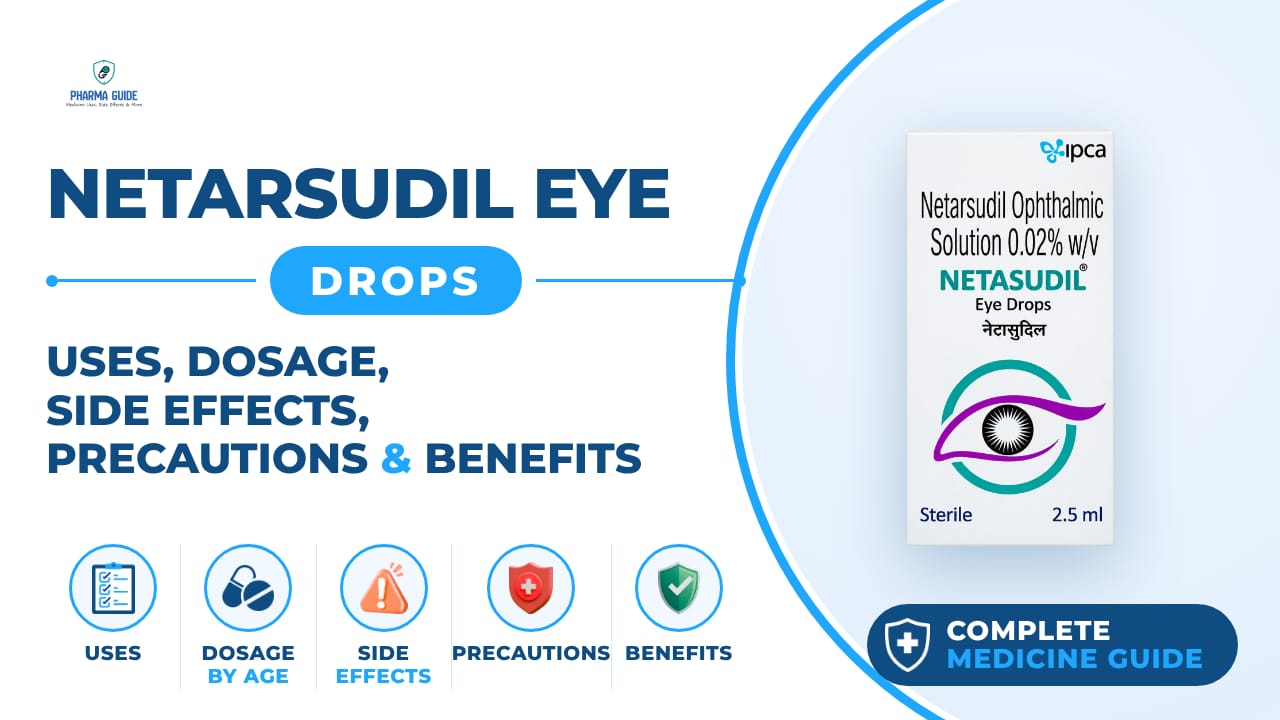
| Generic name | Netarsudil |
|---|---|
| Drug class | Rho kinase inhibitor |
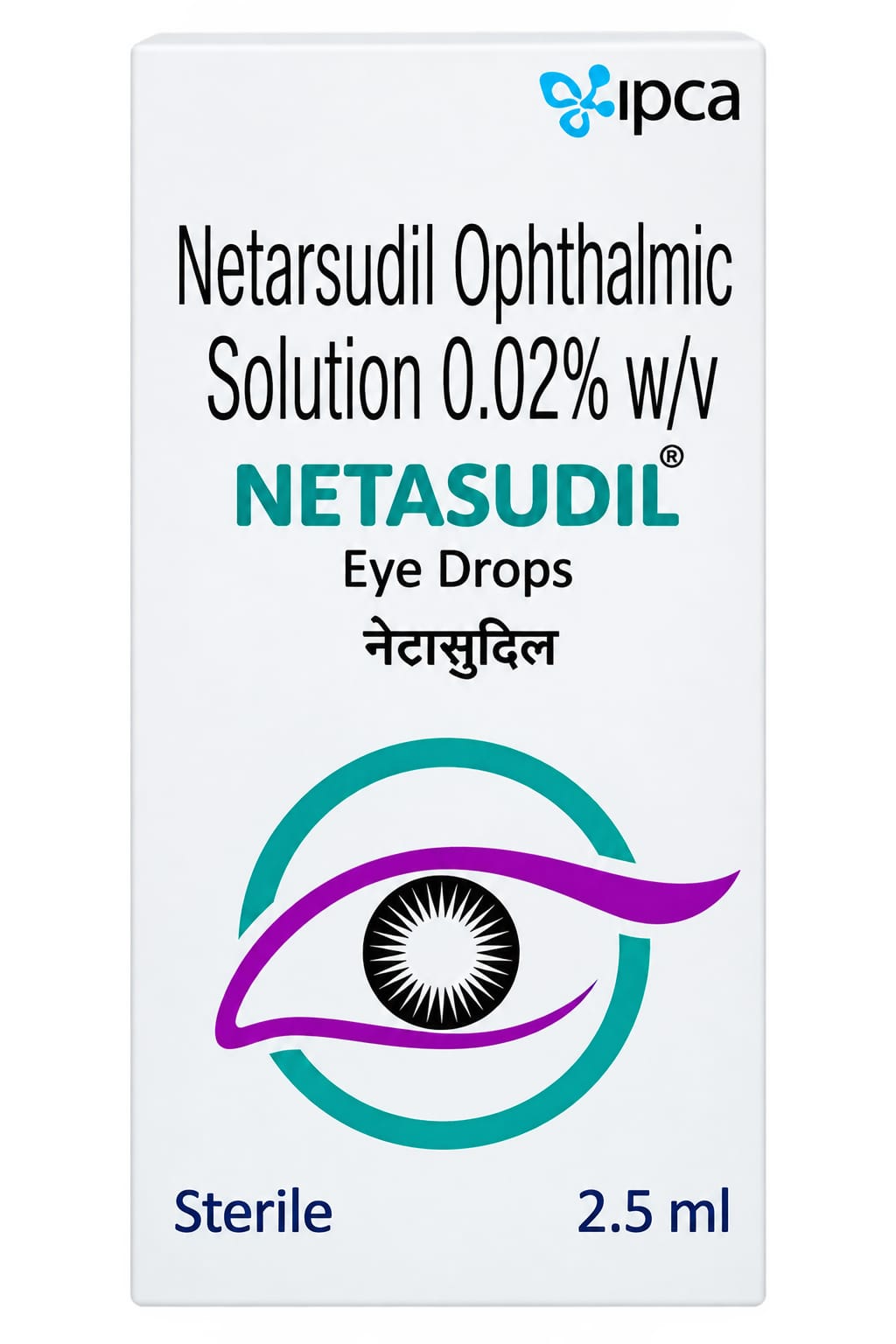
| Forms | Ophthalmic solution (eye drops) |
Quick overview
Netarsudil Eye Drops contain the medicine netarsudil, a rho kinase inhibitor used to treat glaucoma and ocular hypertension. These conditions involve increased pressure inside the eye, which can damage vision over time. The drops come as a liquid solution placed directly into the eye, typically once daily in the evening, and work by helping fluid drain more easily from the eye.
What is Netarsudil Eye Drops
Netarsudil eye drops are a prescription medicine used to treat glaucoma and ocular hypertension, conditions in which pressure inside the eye is too high. It comes as a liquid solution that you place in the eye.
Netarsudil Eye Drops uses
- Treats glaucoma (a condition where increased eye pressure can gradually damage vision)
- Treats ocular hypertension (a condition that causes increased pressure in the eye)
- Reduces elevated intraocular pressure in patients with open-angle glaucoma or ocular hypertension
Benefits of Netarsudil Eye Drops
- Effectively lowers eye pressure
- Prevents vision loss due to glaucoma
- Improves eye fluid outflow
- Can be used alone or with other eye pressure-lowering medications
How Netarsudil Eye Drops works
Netarsudil works by blocking an enzyme called rho kinase, which helps more fluid drain out of the eye. This lowers the pressure inside the eye and helps protect the optic nerve.
Netarsudil Eye Drops dosage
Place the drops in the affected eye or eyes once a day in the evening, at around the same time every day. Use exactly as directed by your doctor; do not use more or less often than prescribed. This medicine controls glaucoma and ocular hypertension but does not cure them, so do not stop using it without talking to your doctor first.
If you use another eye medicine, wait at least 5 minutes before or after using this one. If you wear contact lenses, take them out before using the drops and wait 15 minutes before putting them back in. If you forget a dose, skip it and continue your regular evening schedule; do not use two doses in one day or double up to make up for a missed dose.
| Age group | Dose |
|---|---|
| Under 18 years | Safety and effectiveness not established |
| 18–64 years | 1 drop in affected eye(s) once daily in the evening |
| 65+ years | 1 drop in affected eye(s) once daily in the evening |
Available forms and strengths
- Ophthalmic solution (eye drops)
Side effects of Netarsudil Eye Drops
Common
- Burning, stinging, or eye pain after instilling the medication
- Discoloration of the eye
- Eye redness
- Blurred vision
- Eye irritation or discomfort
- Increased tear production
- Corneal deposits (rare)
Serious
- Eye pain
- Changes in vision (blurriness, difficulty seeing)
- Eye sensitivity to light
- Teary eyes
- Eye or eyelid redness
Warnings and precautions
Tell your doctor if you have any other eye problems before using this medicine. If you have an eye injury or develop an eye or eyelid infection while using this medicine, check with your doctor before continuing to use it. If you are having eye surgery, tell your doctor that you are using this medicine.
Using contaminated eye drop bottles can raise the risk of a serious eye infection called bacterial keratitis, especially in contact lens wearers, so keep the dropper tip clean and avoid touching it to your eye or other surfaces. Do not use the eye drops if the solution has changed color or has particles in it.
Tell your doctor if you are pregnant or planning to become pregnant. There isn't enough research on using this medicine during pregnancy, and animal studies raised concerns, so it should generally be avoided, especially in the first trimester.
Tell your doctor if you are breastfeeding. Because very little of the drug enters the bloodstream, it is thought to be unlikely to affect a nursing infant, but caution is still advised since this hasn't been fully studied.
There is no information available on how this medicine affects people with kidney problems or liver problems.
Avoid driving right after using the drops if your vision becomes temporarily blurred.
Storage
Keep this medication in the bottle it came in, tightly closed, and out of reach of children. Store unopened bottles in the refrigerator. You may store opened bottles of the medication in the refrigerator until after the expiration date printed on the package has passed, or you may store the medication at room temperature (up to 77°F [25°C]) for up to 6 weeks.
Keep all medication out of sight and reach of children as many containers are not child-resistant. Always lock safety caps. Place the medication in a safe location – one that is up and away and out of their sight and reach.
Dispose of unneeded medications in a way so that pets, children, and other people cannot take them. Do not flush this medication down the toilet. Use a medicine take-back program. Talk to your pharmacist about take-back programs in your community.
When to see a doctor
Call your doctor right away if you have eye pain, changes in vision such as blurriness or trouble seeing, eye sensitivity to light, teary eyes, or redness of the eye or eyelid. Call your doctor if you become pregnant while using this medicine.
Alternatives
- Latanoprost eye drops
- Timolol eye drops
- Dorzolamide eye drops
Watch the video
FAQs
What is Netarsudil Eye Drops used for?
It is a prescription medicine used to treat glaucoma and ocular hypertension, conditions in which pressure inside the eye is too high.
How often should I use Netarsudil Eye Drops?
Place one drop in the affected eye or eyes once a day in the evening, at around the same time every day, exactly as directed by your doctor.
How does Netarsudil Eye Drops work?
It works by blocking an enzyme called rho kinase, which helps more fluid drain out of the eye, lowering eye pressure and helping protect the optic nerve.
Can I wear contact lenses while using Netarsudil Eye Drops?
If you wear contact lenses, take them out before using the drops and wait 15 minutes before putting them back in.
What should I do if I miss a dose of Netarsudil Eye Drops?
If you forget a dose, skip it and continue your regular evening schedule; do not use two doses in one day or double up to make up for a missed dose.
General information, not medical advice
Your prescriber and the leaflet in your pack know your situation. This page does not.
- Follow your prescriber and the leaflet
- Don't start, stop, or change a dose on your own
- Doses and warnings differ by country and product
Sources
Video
Related medicines

Injectafer Injection: Uses, Dosage, Side Effects, Precautions and Alternates
Iron products
Injectafer (ferric carboxymaltose) treats iron deficiency anemia and heart failure-related iron deficiency via IV. Learn uses, dosage, side effects, and

Gliclazide Tablet: Uses, Dosage, Side Effects, Precautions and Alternates
Sulfonylurea (hypoglycemic/antidiabetic agent)
Gliclazide Tablet is a sulfonylurea for type 2 diabetes that boosts insulin release. Learn about dosage, side effects, warnings, and precautions.