
Safety
General information, not medical advice
Your prescriber and the leaflet in your pack know your situation. This page does not.
- Follow your prescriber and the leaflet
- Don't start, stop, or change a dose on your own
- Doses and warnings differ by country and product
Neurogab Capsule: Uses, Dosage, Side Effects, Precautions and Alternates
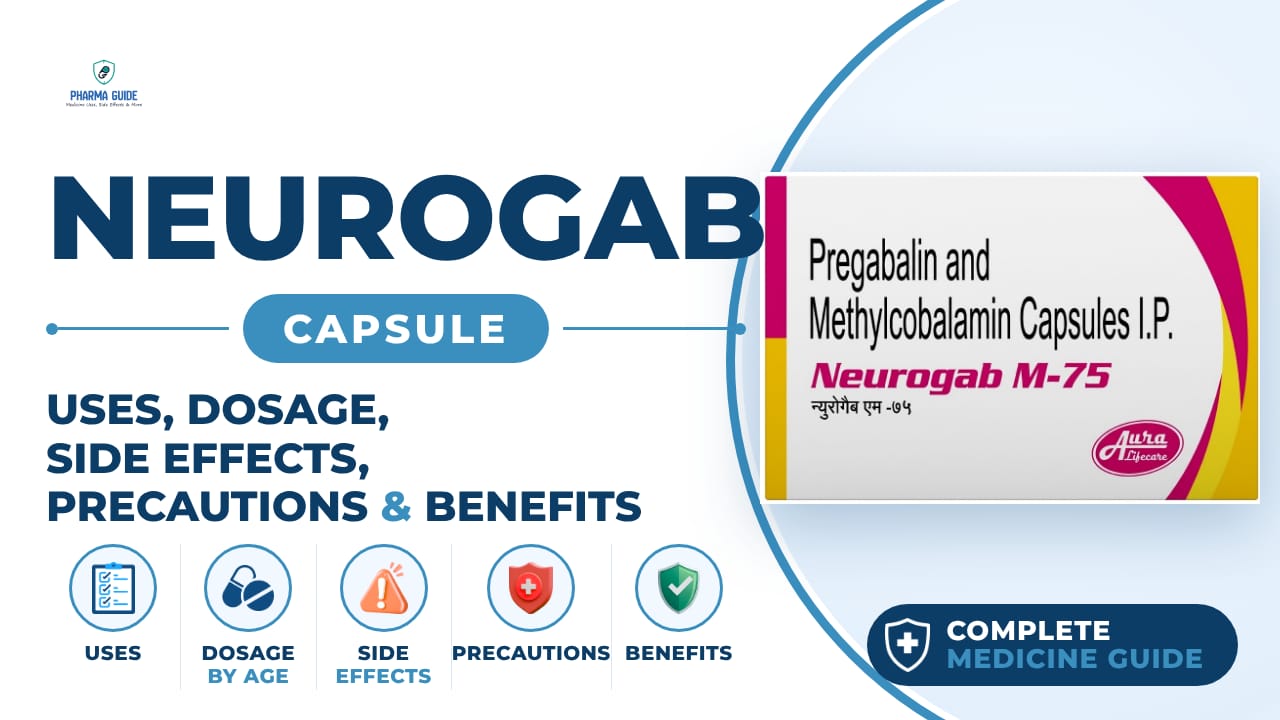
| Generic name | Gabapentin |
|---|---|
| Drug class | Anti-epileptic |
| Forms | Capsule, Tablet, Extended-release tablet, Oral solution (liquid) |

Quick overview
Neurogab Capsule contains Gabapentin, an anti-epileptic medicine. It is used along with other medicines to help control certain types of seizures in people with epilepsy and to relieve nerve pain, including neuralgia and neuropathic pain. It works by stabilizing electrical activity in the brain and changing the way nerves send messages. It is available in several forms, including capsules, tablets, extended-release tablets, and oral solution.
What is Neurogab Capsule
Neurogab 100mg capsule contains Gabapentin, a medicine used to help control certain types of seizures and to relieve nerve pain. It is used along with other medicines to treat seizures in people with epilepsy and to relieve neuralgia pain.
Neurogab Capsule uses
- Helps control certain types of seizures in people with epilepsy (used along with other medicines)
- Relieves the pain of neuralgia (nerve pain)
- Treats neuropathic pain
- Used in combination with other medicines to treat partial seizures with or without secondary generalization in patients not satisfactorily controlled by or intolerant to other anticonvulsants
Benefits of Neurogab Capsule
- Helps relieve nerve pain
- Helps control certain seizures
- May reduce burning and tingling sensations
- May improve sleep disrupted by nerve pain
How Neurogab Capsule works
Gabapentin works by stabilizing electrical activity in the brain and changing the way nerves send messages to the brain.
Neurogab Capsule dosage
Neurogab is usually taken with a full glass of water, with or without food, three times a day. It should be taken at evenly spaced times throughout the day and night, with no more than 12 hours between doses. If using the extended-release tablet, swallow it whole; do not cut, chew, or crush it. Follow the directions on your prescription label carefully and take exactly as directed. Try to take it at the same time every day to help you remember. Do not increase the amount you take or take it more often than directed.
| Age group | Dose |
|---|---|
| Under 18 years | Not recommended |
| 18–64 years | 300 mg, once/day |
| 65+ years | 300 mg, once/day |
Available forms and strengths
- Capsule (100mg)
- Tablet
- Extended-release tablet
- Oral solution (liquid)
Side effects of Neurogab Capsule
Common
- Dizziness
- Fatigue
- Tremors
- Somnolence (extreme sleepiness)
- Ataxia (loss of control of full body movements)
- Drowsiness
- Gastrointestinal issues
Serious
- Dizziness
- Drowsiness
- Fatigue
- Blurred vision
- Swelling in hands or feet
Warnings and precautions
- People with kidney problems, those on kidney dialysis, or those with a history of psychotic illness should talk to their doctor before using gabapentin.
- Do not use gabapentin if you are allergic to it.
- Gabapentin can cause drowsiness, so avoid activities that need full attention, such as driving or operating machinery, and avoid alcohol, which can make drowsiness worse and increase the risk of falls or accidents.
- Talk to your doctor before using gabapentin if you are pregnant, so they can give you proper advice.
- Talk to your doctor before using gabapentin if you are breastfeeding, so they can give you proper advice.
- Talk to your doctor before using gabapentin if you have kidney disease.
- Talk to your doctor before using gabapentin if you have liver disease.
- Limit or avoid alcohol while using gabapentin.
- Gabapentin can cause severe dizziness, so avoid driving while using it.
Storage
- Keep gabapentin out of the reach of children.
- Store the gabapentin at room temperature.
- Keep gabapentin away from sunlight.
- Store this medication in its original container or packaging, tightly closed.
- Follow the storage instructions provided on the pack or label.
- When you no longer need the medicine, properly dispose of any unused portion.
- Prevent access to the medication by pets, children, and other individuals.
When to see a doctor
- If your condition continues or gets worse, or if you think you may have a serious medical problem, get medical help right away.
- If you experience dizziness, fatigue, tremors, extreme sleepiness, or loss of body movement control, contact your doctor right away.
Alternatives
- Nortriptyline
- Amitriptyline
- Duloxetine
- Pregabalin
Watch the video
FAQs
What is Neurogab Capsule used for?
Neurogab Capsule contains Gabapentin and is used along with other medicines to help control certain types of seizures in people with epilepsy, and to relieve nerve pain such as neuralgia and neuropathic pain.
How does Neurogab Capsule work?
Gabapentin works by stabilizing electrical activity in the brain and changing the way nerves send messages to the brain.
How should Neurogab Capsule be taken?
It is usually taken with a full glass of water, with or without food, three times a day at evenly spaced times, with no more than 12 hours between doses. Extended-release tablets should be swallowed whole and not cut, chewed, or crushed.
What are the common side effects of Neurogab Capsule?
Common side effects include dizziness, fatigue, tremors, somnolence, ataxia, drowsiness, and gastrointestinal issues.
What precautions should be taken with Neurogab Capsule?
People with kidney problems, those on dialysis, or with a history of psychotic illness should consult their doctor before use. It can cause drowsiness and dizziness, so avoid driving or operating machinery and limit alcohol intake. Pregnant or breastfeeding women should also talk to their doctor before using it.
General information, not medical advice
Your prescriber and the leaflet in your pack know your situation. This page does not.
- Follow your prescriber and the leaflet
- Don't start, stop, or change a dose on your own
- Doses and warnings differ by country and product
Sources
Video
Related medicines

Injectafer Injection: Uses, Dosage, Side Effects, Precautions and Alternates
Iron products
Injectafer (ferric carboxymaltose) treats iron deficiency anemia and heart failure-related iron deficiency via IV. Learn uses, dosage, side effects, and

Gliclazide Tablet: Uses, Dosage, Side Effects, Precautions and Alternates
Sulfonylurea (hypoglycemic/antidiabetic agent)
Gliclazide Tablet is a sulfonylurea for type 2 diabetes that boosts insulin release. Learn about dosage, side effects, warnings, and precautions.