
Safety
General information, not medical advice
Your prescriber and the leaflet in your pack know your situation. This page does not.
- Follow your prescriber and the leaflet
- Don't start, stop, or change a dose on your own
- Doses and warnings differ by country and product
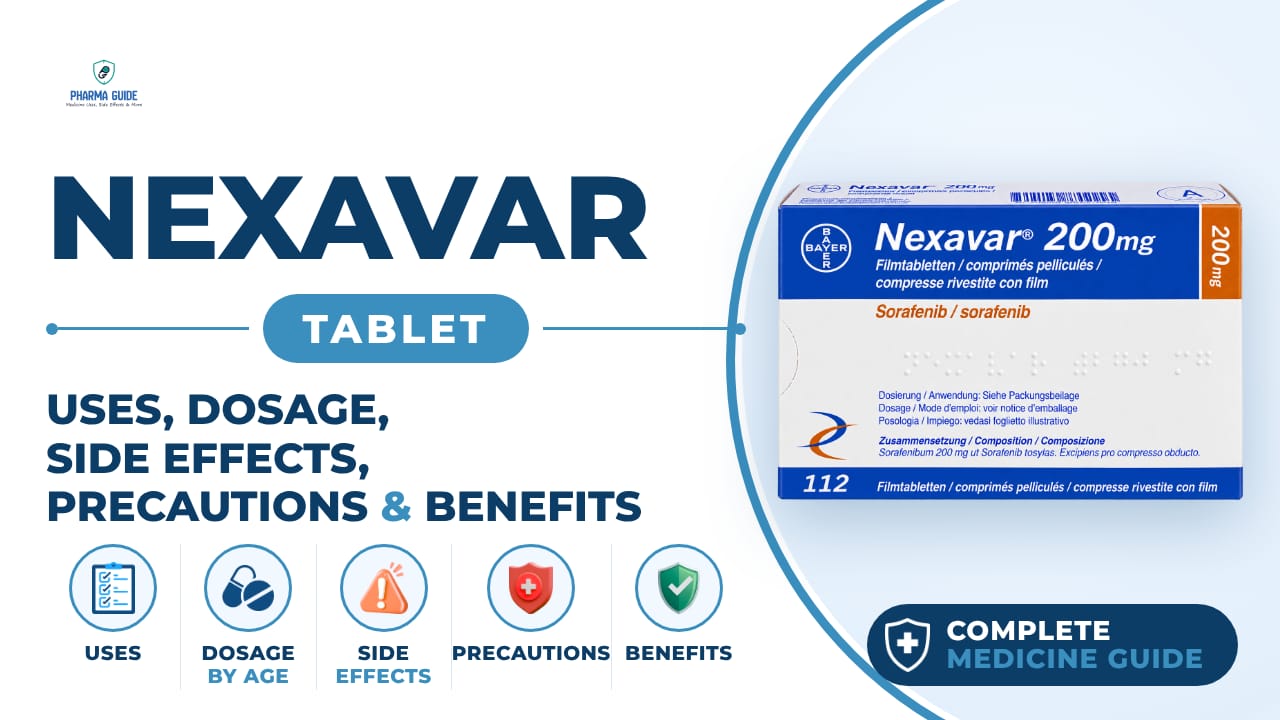
Nexavar Tablet: Uses, Dosage, Side Effects, Precautions and Alternates
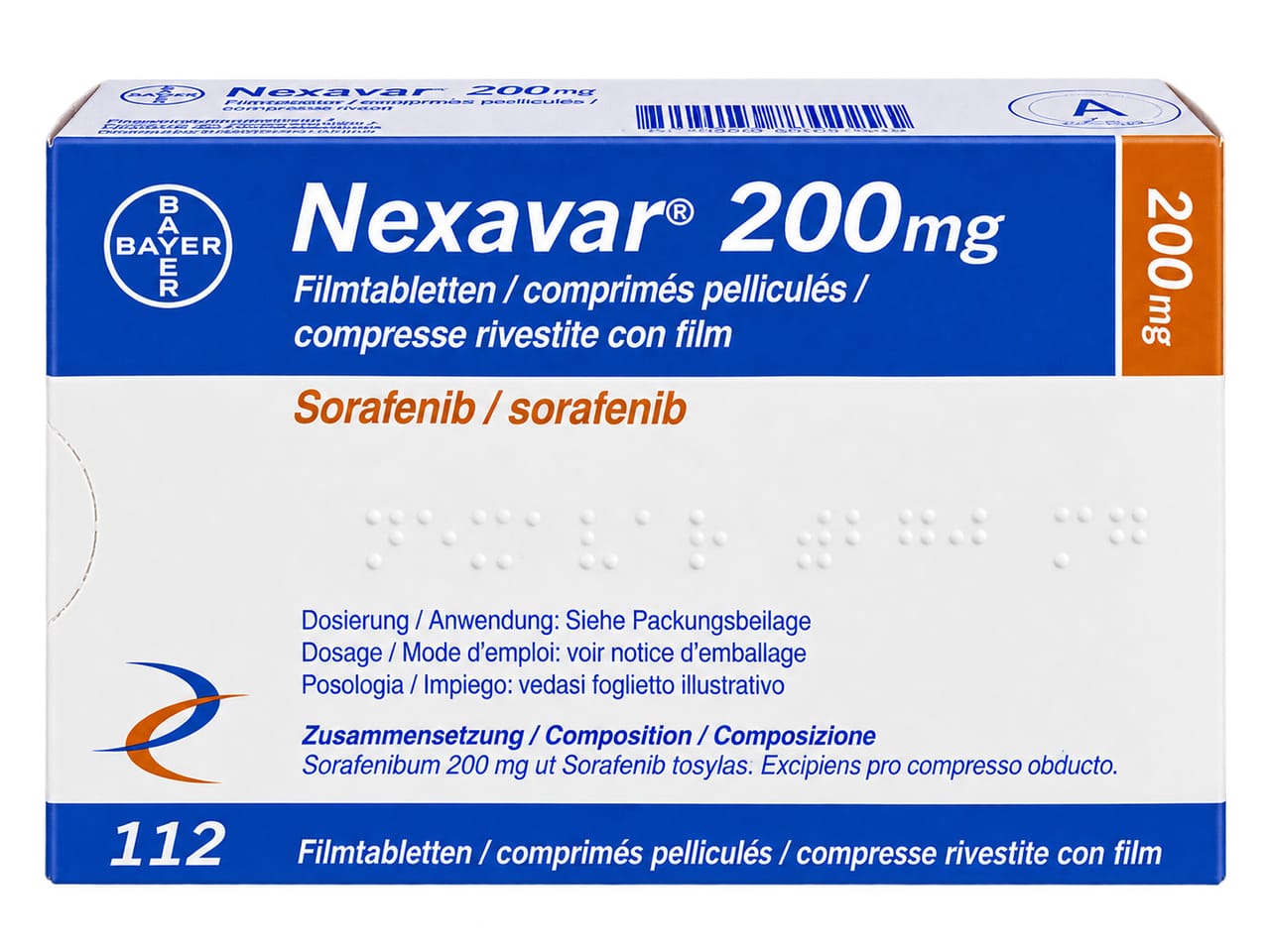
| Generic name | sorafenib (sorafenib tosylate) |
|---|---|
| Drug class | Multikinase inhibitor / antineoplastic agent (VEGF/VEGFR inhibitor) |
| Forms | Tablet (film-coated, 200 mg) |
Quick overview
Nexavar Tablet contains sorafenib (sorafenib tosylate), a multikinase inhibitor used to treat advanced liver cancer, advanced kidney cancer, and certain thyroid cancers that no longer respond to radioactive iodine treatment. It works by blocking proteins that cancer cells use to grow and by cutting off the blood supply tumors need. It is taken as a film-coated tablet, usually twice daily, and requires monitoring for side effects such as high blood pressure, bleeding, and skin reactions.
What is Nexavar Tablet
Nexavar is a prescription cancer medicine that contains the active ingredient sorafenib tosilate. It is used to treat certain types of liver, kidney, and thyroid cancer.
Nexavar Tablet uses
- Advanced liver cancer (hepatocellular carcinoma) that cannot be removed by surgery
- Advanced kidney cancer (renal cell carcinoma)
- Thyroid cancer (differentiated thyroid carcinoma) that no longer responds to radioactive iodine treatment
Benefits of Nexavar Tablet
- Can slow down the growth and spread of cancer cells
- Can cut off the blood supply that tumors need to keep growing
- Shown to extend overall survival and delay tumor progression in clinical studies of liver and kidney cancer
- Provides an oral targeted-therapy option
How Nexavar Tablet works
Nexavar is a multi-kinase inhibitor. It blocks several proteins (kinases) that cancer cells use to multiply and that blood vessels use to grow toward tumors. By blocking these signals, it slows tumor cell growth and cuts off the new blood supply that feeds the tumor.
Nexavar Tablet dosage
Swallow the tablets whole with a full glass of water; do not chew or crush them. Take at the same time each day, usually once in the morning and once in the evening, to help you remember. The tablets can be taken without food or with a meal that is low in fat or has a moderate amount of fat. Avoid taking with high-fat meals, as this may make the medicine less effective. Some other sources recommend taking it on an empty stomach, at least 1 hour before or 2 hours after eating.
Keep taking it regularly until your doctor tells you to stop. If you miss a dose, take it as soon as you remember, unless it is almost time for your next dose — in that case skip the missed dose and continue your normal schedule. Do not take a double dose to make up for a missed one. Tell your doctor or dentist you are taking this medicine before any surgery or dental procedure, as treatment may need to be paused.
| Age group | Dose |
|---|---|
| Under 18 years | Safety and effectiveness have not been established |
| 18–64 years | 400 mg twice daily |
| 65 years and older | Usually 400 mg twice daily, with individualized oncology monitoring and dose adjustment if toxicity occurs |
Available forms and strengths
- Tablet (film-coated, 200 mg)
Side effects of Nexavar Tablet
Common
- Diarrhea
- Nausea and/or vomiting
- Feeling weak or tired
- Fever, flu-like illness
- Constipation
- Dry mouth, difficulty swallowing, hoarseness
- Indigestion/heartburn
- Loss of appetite, weight loss
- Ringing in the ears (tinnitus)
- Pain (mouth, abdomen, headache, bone, joint, muscle)
- Hair thinning or patchy hair loss
- Flushing
- Redness, pain, swelling or blistering on palms or soles (hand-foot skin reaction)
- Tingling or numbness in fingers and toes
- Muscle cramps, weakness or spasms
- Frothy urine or swelling from high protein in urine
- Dry, scaly or peeling skin
- Acne
- Itching or rash
- Depression
- Erection problems
- Increased blood pressure
- Infection
- Distortion of taste
- Runny nose
Serious
- Chest pain, abnormal or fast heart rhythm
- Severe headache, confusion, seizures, vision loss
- Vomiting blood or material like coffee grounds, bleeding from the back passage, black sticky stools, or bloody diarrhea
- Shortness of breath, difficulty breathing, swelling of feet or legs from fluid build-up
- Severe abdominal pain with nausea, vomiting, fever or chills (possible bowel perforation)
- Sudden signs of severe allergic reaction: rash, hives, swelling of face/lips/mouth/tongue/throat, difficulty breathing or swallowing
- Severe blistering and bleeding of lips, eyes, mouth, nose and genitals (Stevens-Johnson syndrome)
- Sunburn-like rash on skin previously treated with radiotherapy (radiation recall dermatitis)
- Nausea, irregular heartbeat, muscle cramps, seizure, cloudy urine and tiredness (tumour lysis syndrome)
- Signs of a heart attack or heart failure
- Signs of liver injury: loss of appetite, stomach pain, dark urine, yellowing skin or eyes
Warnings and precautions
- This medicine can cause high blood pressure, which your doctor will monitor and treat if needed.
- There is an increased risk of bleeding, especially if you take blood thinners like warfarin.
- This medicine can affect wound healing, so treatment is usually paused before and after surgery.
- This medicine may cause heart problems including chest pain or heart attack, and your doctor may need to stop treatment if this occurs.
- This medicine may affect your heart rhythm if you have a condition called prolonged QT interval.
- Skin reactions, including rashes and hand-foot skin reaction, are common and may require treatment or stopping the medicine.
- A serious condition where cancer cells break down rapidly (tumour lysis syndrome) has been reported, which can affect the kidneys.
- Serious and sometimes fatal liver inflammation (drug-induced hepatitis) has been reported with this medicine.
- A hole (perforation) in the stomach or intestine is an uncommon but serious risk.
- Women should not become pregnant while taking this medicine, as it may harm an unborn baby. Both men and women should use effective birth control during treatment. This medicine is not recommended while breastfeeding because it could harm the baby.
- No dose adjustment is generally required for kidney problems not requiring dialysis, but this medicine has not been studied in patients on dialysis. People with severe liver problems may have more severe side effects, and this medicine has not been studied in patients with the most severe liver impairment.
- It is not known if this medicine affects your ability to drive or operate machinery, but if you feel light-headed you should stop the activity and talk to your doctor.
Storage
- Store it in a cool dry place away from moisture, heat or sunlight
- Do not store in the bathroom, near a sink, in the car, or on window sills
- Keep it where young children cannot reach it
- If you no longer need the medicine or it is out of date, take it to a pharmacy for safe disposal
- Do not use this medicine after the expiry date
When to see a doctor
- Get emergency help right away for symptoms of a heart attack, such as chest pain, fast heartbeat, sweating, nausea, trouble breathing, or feeling light-headed.
- Call your doctor straight away or go to the emergency department for chest pain, abnormal heart rhythm, severe headache, confusion, seizures, or vision loss.
- Seek urgent help if you vomit blood or material like coffee grounds, have bleeding from the back passage, black sticky stools, or bloody diarrhea.
- Seek urgent help for severe abdominal pain that gets worse with movement, along with nausea, vomiting, fever or chills, as this may be a bowel perforation.
- Seek urgent help for signs of a severe allergic reaction, such as rash, swelling of the face, lips, tongue or throat, or difficulty breathing.
- Seek urgent help for severe blistering and bleeding of the lips, eyes, mouth, nose and genitals, which may be a rare but serious skin reaction.
- If you think you have taken too much of this medicine, get urgent medical attention even if you feel fine.
Alternatives
- Lenvatinib
- Cabozantinib
- Regorafenib
Watch the video
FAQs
What is Nexavar Tablet used for?
Nexavar is used to treat advanced liver cancer (hepatocellular carcinoma) that cannot be removed by surgery, advanced kidney cancer (renal cell carcinoma), and thyroid cancer that no longer responds to radioactive iodine treatment.
How does Nexavar Tablet work?
Nexavar is a multi-kinase inhibitor that blocks proteins cancer cells use to multiply and blocks the growth of new blood vessels that feed tumors, slowing tumor growth and cutting off its blood supply.
What is the usual dose of Nexavar Tablet?
The usual dose for adults aged 18-64 is 400 mg twice daily, taken whole with water. Those 65 and older usually take the same dose with individualized monitoring and adjustment if toxicity occurs.
How should Nexavar Tablet be taken with food?
Tablets can be taken without food or with a low-fat or moderate-fat meal. Avoid taking with high-fat meals, as this may reduce the medicine's effectiveness. Some sources recommend taking it on an empty stomach, at least 1 hour before or 2 hours after eating.
What are the serious side effects of Nexavar Tablet?
Serious side effects include chest pain or abnormal heart rhythm, severe headache or seizures, signs of bleeding such as vomiting blood or black stools, bowel perforation symptoms, severe allergic reactions, Stevens-Johnson syndrome, tumour lysis syndrome, and signs of liver injury.
General information, not medical advice
Your prescriber and the leaflet in your pack know your situation. This page does not.
- Follow your prescriber and the leaflet
- Don't start, stop, or change a dose on your own
- Doses and warnings differ by country and product
Sources
Video
Related medicines

Injectafer Injection: Uses, Dosage, Side Effects, Precautions and Alternates
Iron products
Injectafer (ferric carboxymaltose) treats iron deficiency anemia and heart failure-related iron deficiency via IV. Learn uses, dosage, side effects, and

Gliclazide Tablet: Uses, Dosage, Side Effects, Precautions and Alternates
Sulfonylurea (hypoglycemic/antidiabetic agent)
Gliclazide Tablet is a sulfonylurea for type 2 diabetes that boosts insulin release. Learn about dosage, side effects, warnings, and precautions.