
Safety
General information, not medical advice
Your prescriber and the leaflet in your pack know your situation. This page does not.
- Follow your prescriber and the leaflet
- Don't start, stop, or change a dose on your own
- Doses and warnings differ by country and product
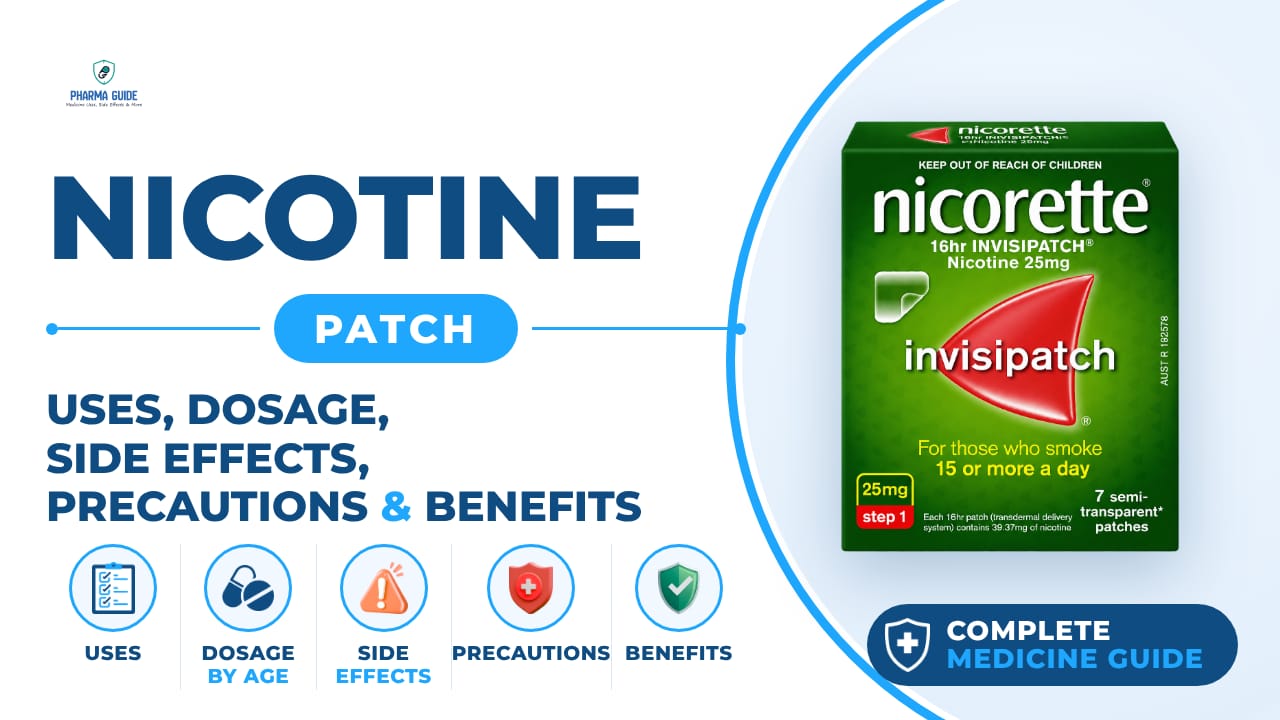
Nicotine Patch: Uses, Dosage, Side Effects, Precautions and Alternates
| Generic name | Nicotine transdermal system |
|---|---|
| Drug class | Nicotine replacement therapy (NRT) |
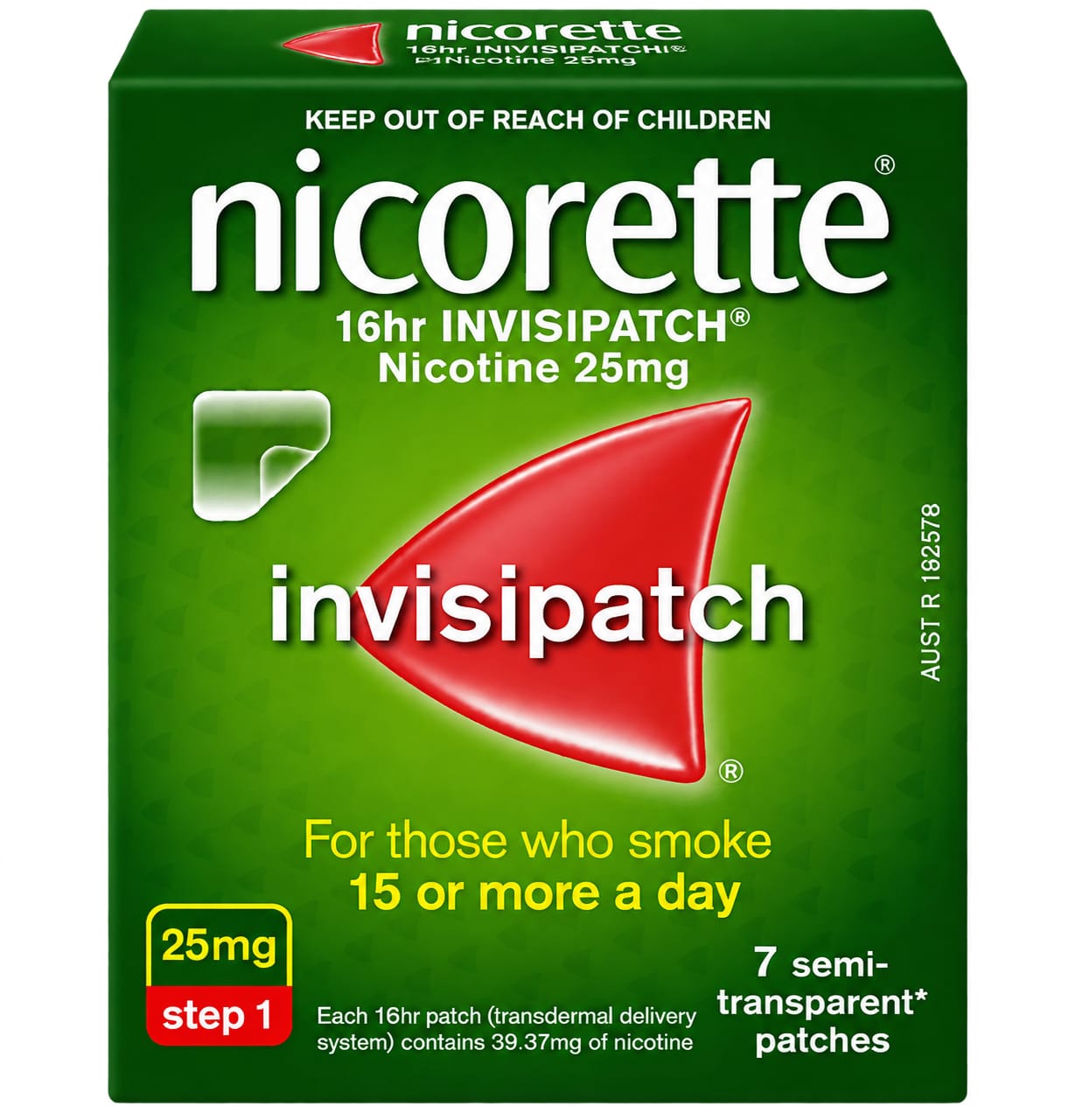
| Forms | Transdermal patch (16-hour day patch), Transdermal patch (24-hour day-and-night patch) |
Quick overview
Nicotine Patch (nicotine transdermal system) is a nicotine replacement therapy that delivers nicotine through the skin to help control withdrawal symptoms and cravings when quitting smoking. It is often used along with a faster-acting nicotine product such as gum or lozenge. The patch is available without a prescription and comes in 16-hour and 24-hour forms. It should generally be used for at least eight weeks, with strength adjusted as nicotine intake decreases.
What is Nicotine Patch
A nicotine patch is a small adhesive patch that sticks to your skin like a band-aid and slowly releases nicotine into your body through the skin. It is a type of nicotine replacement therapy used to help people quit smoking by giving the body a controlled, clean source of nicotine instead of cigarettes.
Nicotine Patch uses
- Helps control nicotine withdrawal symptoms and cravings when quitting smoking
- Often used together with a faster-acting nicotine product (gum, lozenge, mouth spray, or inhalator) for better results
Benefits of Nicotine Patch
- Reduces cravings and cigarette withdrawal symptoms such as irritability, restlessness, anxiety, and trouble concentrating
- Considered safer than continuing to smoke cigarettes
- Available without a prescription
How Nicotine Patch works
The patch delivers nicotine through the skin into the bloodstream, replacing some of the nicotine a person would normally get from smoking. This helps reduce cravings and eases withdrawal feelings like irritability and restlessness, though it can take a few hours after applying the patch for nicotine levels to reach a comfortable level.
Nicotine Patch dosage
Press the patch onto a dry, hairless area of skin for about 20 seconds; it can be applied to the chest, arm, or back. Use a different area of skin each day and avoid using the same spot more than once a week to reduce skin irritation. After applying, you can shower, bathe, or swim without it coming off; rinse your hands with water after application.
If using a 16-hour day patch, remove it before bed; if using a 24-hour day-and-night patch, remove and replace it first thing in the morning. A faster-acting nicotine product can be used alongside the patch to help with cravings while the patch takes effect. Use for at least eight weeks; the strength of the patch can be kept the same or reduced over time depending on individual needs.
Apply one new patch every 24 hours to dry, clean, hairless skin, and do not wear a single patch for more than 24 hours. Reducing caffeine intake, especially in the evening, may help lessen vivid dreams while using the patch.
| Age group | Dose |
|---|---|
| Under 18 Years | Use only under medical supervision |
| Adults (18+ Years) | Usually 21 mg patch once daily initially for heavier nicotine dependence; lower strengths such as 14 mg or 7 mg are used as nicotine intake decreases |
| Older Adults (65+ Years) | Same adult dosing; medical advice recommended based on health condition |
Available forms and strengths
- Transdermal patch (16-hour day patch)
- Transdermal patch (24-hour day-and-night patch)
Side effects of Nicotine Patch
Common
- Skin irritation such as itching, burning, rash, redness, or discoloration
- Trouble sleeping
- Vivid dreams
- Dizziness
- Headaches
- Nausea
- Muscle aches
- Heartburn
- Withdrawal symptoms after stopping use of the patch
Serious
- High blood pressure
- Fast heart rate
- Abnormal heartbeat (arrhythmia)
- Dependence and misuse
- Seizures, especially in people with a history of epilepsy
- Symptoms of nicotine overdose, such as vomiting, weakness, and fast heartbeat
Warnings and precautions
- People with an allergy to adhesive tape or skin conditions such as eczema or psoriasis should talk with a healthcare professional before using nicotine patches, since these conditions may raise the risk of skin irritation.
- People with an irregular heartbeat, high blood pressure, or a recent heart attack should talk to a healthcare professional before starting nicotine replacement therapy.
- Nicotine patches should not be used indefinitely because of the risk of dependence; manufacturers recommend about 8 weeks of treatment, though longer use is usually considered safe under medical guidance.
- Nicotine patches may cause palpitations and abnormal heart rate, so they should be used cautiously by people taking medications for abnormal heart rhythm.
- Do not use if you continue smoking regularly unless advised by a healthcare professional.
- Avoid applying the patch to irritated, damaged, or inflamed skin.
- Change the application site regularly to reduce skin irritation.
- Inform your doctor if you have heart disease, recent heart problems, or irregular heartbeat.
- Remove the patch before certain medical procedures if advised.
- Avoid using multiple nicotine replacement products together without medical guidance.
Storage
- Store at room temperature, between 20°C and 25°C (68°F to 77°F)
When to see a doctor
- Get emergency care if you have difficulty breathing after applying a patch, since this can be a sign of an allergic reaction.
- Contact your healthcare professional if skin irritation from the patch does not go away after 4 days, or if you develop a rash or skin swelling.
- Call your healthcare professional right away if you notice signs of heart problems such as heart palpitations, shortness of breath, chest pain, or a very high blood pressure reading; seek emergency care if symptoms are severe or if blood pressure reads 180/120 mmHg or higher.
- Stop using nicotine patches and get emergency care if you have severe side effects, including severe chest pain or shortness of breath.
Alternatives
- Nicotine Gum
- Nicotine Inhaler
- Varenicline Tablets
Watch the video
FAQs
How long should I use the nicotine patch?
The patch should generally be used for at least eight weeks, with strength adjusted as nicotine intake decreases. It should not be used indefinitely because of the risk of dependence.
What is the difference between the 16-hour and 24-hour nicotine patch?
The 16-hour day patch should be removed before bed, while the 24-hour day-and-night patch should be removed and replaced first thing in the morning.
Can I use the nicotine patch with other nicotine products?
Yes, a faster-acting nicotine product such as gum, lozenge, mouth spray, or inhalator can be used alongside the patch for better results and to help with cravings while the patch takes effect, but multiple nicotine replacement products should not be combined without medical guidance.
What are the common side effects of the nicotine patch?
Common side effects include skin irritation (itching, burning, rash, redness, or discoloration), trouble sleeping, vivid dreams, dizziness, headaches, nausea, muscle aches, heartburn, and withdrawal symptoms after stopping use.
How should I apply the nicotine patch?
Press the patch onto a dry, hairless area of skin such as the chest, arm, or back for about 20 seconds, using a different area each day and avoiding the same spot more than once a week to reduce skin irritation.
General information, not medical advice
Your prescriber and the leaflet in your pack know your situation. This page does not.
- Follow your prescriber and the leaflet
- Don't start, stop, or change a dose on your own
- Doses and warnings differ by country and product
Sources
- GoodRx Health - 8 Nicotine Patch Side Effects To Know About (goodrx.com)
- Tobacco Induced Diseases - Adverse events associated with nicotine replacement therapy (NRT) for smoking cessation (pmc.ncbi.nlm.nih.gov)
- MedicineNet - Nicotine Patch information page (medicinenet.com)
Video
Related medicines

Injectafer Injection: Uses, Dosage, Side Effects, Precautions and Alternates
Iron products
Injectafer (ferric carboxymaltose) treats iron deficiency anemia and heart failure-related iron deficiency via IV. Learn uses, dosage, side effects, and

Gliclazide Tablet: Uses, Dosage, Side Effects, Precautions and Alternates
Sulfonylurea (hypoglycemic/antidiabetic agent)
Gliclazide Tablet is a sulfonylurea for type 2 diabetes that boosts insulin release. Learn about dosage, side effects, warnings, and precautions.