
Safety
General information, not medical advice
Your prescriber and the leaflet in your pack know your situation. This page does not.
- Follow your prescriber and the leaflet
- Don't start, stop, or change a dose on your own
- Doses and warnings differ by country and product
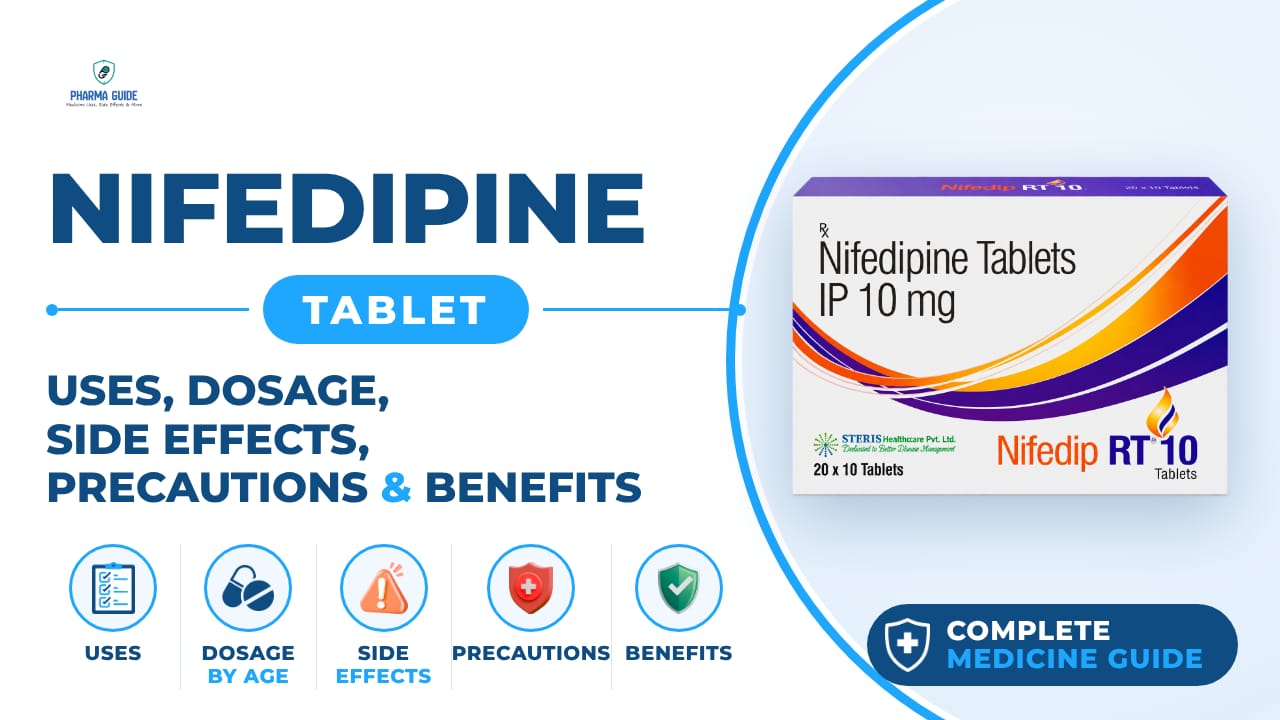
Nifedipine Tablet: Uses, Dosage, Side Effects, Precautions and Alternates
| Generic name | nifedipine |
|---|---|
| Drug class | Antianginal/Antihypertensive Agent (dihydropyridine calcium channel blocker) |
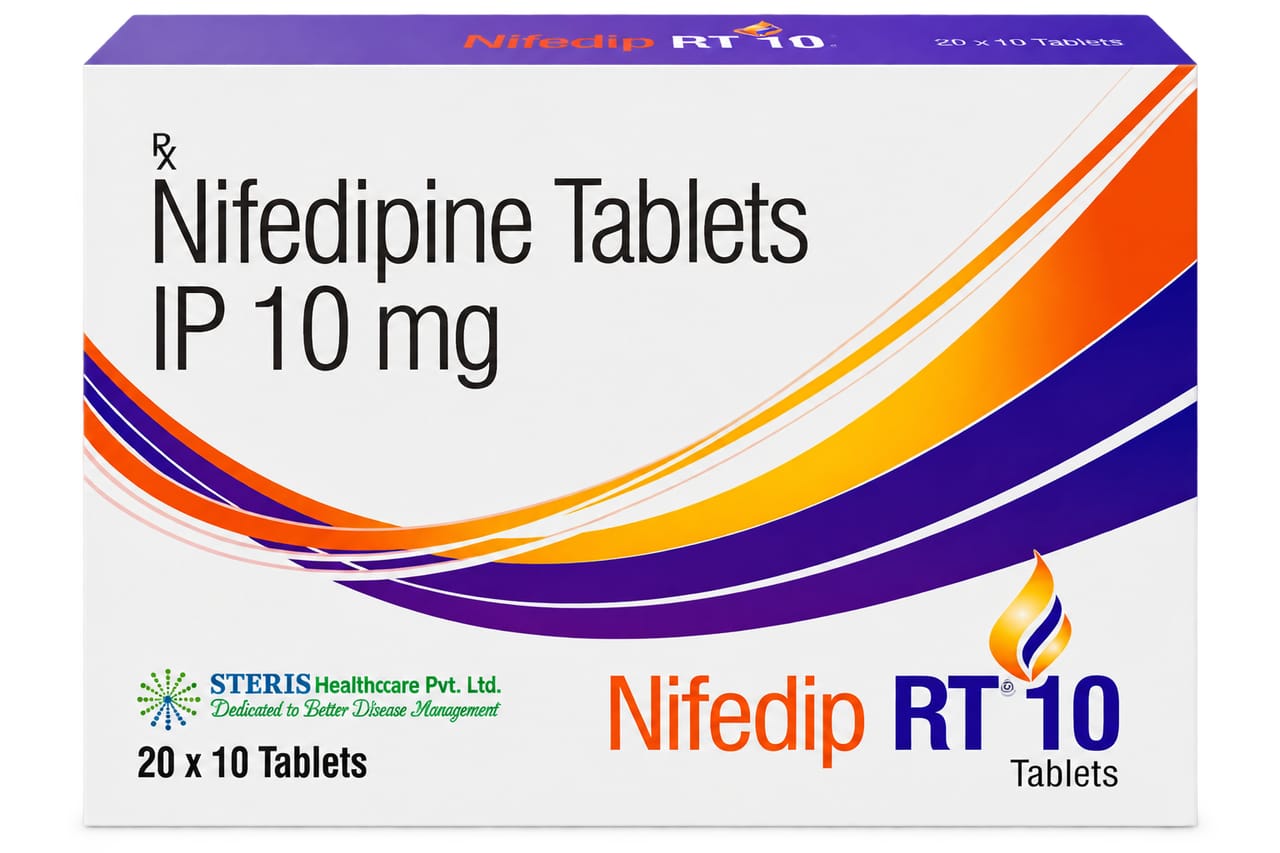
| Forms | Extended-release tablets (20 mg, 30 mg, 60 mg), Capsules |
Quick overview
Nifedipine is a calcium channel blocker used to treat high blood pressure and certain types of chest pain (angina) by relaxing and widening blood vessels. It is used for chronic stable angina, particularly when beta blockers and/or nitrates alone are not enough or not tolerated, and for mild to moderate high blood pressure. It is available as extended-release tablets and capsules.
What is Nifedipine Tablet
Nifedipine is a calcium channel blocker used to treat high blood pressure and certain types of chest pain (angina) by relaxing and widening blood vessels.
Nifedipine Tablet uses
- Chronic stable angina (chest pain that most often occurs with physical activity or emotional stress), used when beta blockers and/or nitrates alone are not enough or not tolerated
- Mild to moderate high blood pressure (essential hypertension)
Benefits of Nifedipine Tablet
- Can be used with other chest pain medicines when those medicines do not provide enough benefit on their own
- May help increase your ability to exercise and decrease the frequency of chest pain attacks
- Combination with a diuretic has shown added blood-pressure-lowering effect
How Nifedipine Tablet works
Nifedipine belongs to a group of medicines called calcium channel blockers. It relaxes and widens blood vessels so blood flows more easily, which lowers blood pressure and reduces strain on the heart. It also relaxes and widens the arteries that supply the heart, allowing more blood and oxygen to reach the heart, which can make angina attacks less severe and less frequent.
Nifedipine Tablet dosage
Take exactly as directed by your healthcare professional. Swallow the extended-release tablets whole; do not bite, chew, divide, or crush them, as this can release all the medicine at once and increase the risk of side effects. Do not change your dose or stop taking this medicine without talking to your healthcare professional first. Never share your medicine with anyone, and avoid eating grapefruit or drinking grapefruit juice while taking this medicine.
If a dose is missed, take it as soon as you remember unless it is almost time for the next dose, in which case skip the missed dose; do not take two doses together to make up for a missed one. Some product information suggests taking capsules with or without food, while extended-release tablets may be taken on an empty stomach depending on the product; follow your healthcare professional's specific instructions.
| Age group | Dose |
|---|---|
| Under 18 years | Doctor/specialist supervision required |
| 18 years & older | 30 mg once daily initially |
| Adults | 30–60 mg once daily; may be adjusted by doctor |
| Older adults | Usually 30 mg once daily initially, with gradual adjustment |
Available forms and strengths
- Extended-release tablets (20 mg, 30 mg, 60 mg)
- Capsules
Side effects of Nifedipine Tablet
Common
- Headache
- Swelling (edema) of the hands, ankles, feet, or legs
- Dizziness
- Fatigue/weakness
- Anxiety, nervousness, insomnia
- Loss of sensation or burning/prickling sensation in hands, arms, legs, or feet
- Confusion
- Nausea, upset stomach, indigestion, dry mouth
- Enlargement of the gums
- Muscle or joint pain, leg cramps, back pain
- Rash, itch, sensitivity to the sun
- Impotence, breast enlargement in men, menstrual disorder in women
- Increased urination, need to urinate at night, lack of urine or incontinence
- Eye pain
- Flushing
- Palpitations
- Constipation
Serious
- Hypotension (low blood pressure): dizziness, fainting, light-headedness, blurred vision, nausea, vomiting, fatigue
- Angina pectoris (chest pain) or heart attack: chest pain or pressure, discomfort in shoulder, arms, back, throat, jaw or teeth
- Intestinal obstruction: cramping abdominal pain, bloating, loss of appetite, nausea and vomiting, constipation or diarrhea
- Allergic reaction/angioedema: difficulty breathing or swallowing, rash or hives, swelling of face, throat, tongue, lips, eyes, hands, feet, ankles, or lower legs
- Liver disorder (including hepatitis and cholestasis): yellowing of skin or eyes, dark urine, pale stools, abdominal pain, nausea, vomiting, loss of appetite
- Toxic epidermal necrolysis and Stevens-Johnson syndrome: redness, blistering and/or peeling of large areas of skin, especially mouth and eyes
- Agranulocytosis and leukopenia (serious blood disorders)
- Irregular or fast heartbeat
- Wheezing or trouble breathing
Warnings and precautions
- Do not use this medicine if you have very low blood pressure, are going into cardiogenic shock, have a Kock pouch, moderate to severe liver disease, or severe intestinal obstruction.
- Low blood pressure can occur after the first dose or after a dose increase, and the risk may be greater if you also take beta blockers.
- In rare cases, this medicine can cause new or worse chest pain, or a heart attack, after the first dose or a dose increase. If chest pain occurs, stop taking the medicine and seek medical help right away.
- The outer shell of the tablet does not dissolve, which may rarely increase the risk of intestinal blockage, especially if you have had severe bowel problems. Surgery may be required in some cases.
- If you have diabetes, this medicine may affect your blood sugar control, so monitor your blood sugar closely.
- This medicine may affect a man's ability to father a child.
- Do not take with rifampicin, as this combination is not recommended and could cause serious side effects.
- Avoid grapefruit or grapefruit juice while taking this medicine, as it can increase drug levels and side effects.
- This medicine is contraindicated during pregnancy and in women of childbearing potential unless the patient and healthcare professional have decided treatment is appropriate.
- This medicine is contraindicated during breastfeeding according to the product monograph, though small amounts pass into breast milk and other sources note it may be used under medical supervision.
- The pharmacokinetics of nifedipine are not significantly affected by kidney impairment, but caution and monitoring may still be advised in some situations.
- Use with caution if you have mild liver disease, as a dose reduction may be necessary. This medicine should not be used if you have moderate or severe liver disease.
- Combining this medicine with alcohol can affect your ability to drive or operate machinery and may increase blood-pressure-lowering effects.
- This medicine can decrease blood pressure, causing light-headedness, dizziness, and fainting, especially after the first dose, after a dose increase, or with alcohol. Wait until you know how you respond before driving or doing tasks that require alertness.
Storage
- Store between 15°C and 30°C
- Protect from light and humidity
- Keep out of reach and sight of children
- Ask your healthcare professional about the best way to dispose of any expired medicine or medicine no longer needed
When to see a doctor
- Get immediate medical help if you have wheezing or trouble breathing.
- Stop taking the drug and get immediate medical help if you have chest pain or pressure, discomfort in the shoulder, arms, back, throat, jaw, or teeth (angina pectoris).
- Get medical help for irregular or fast heartbeat.
- Stop taking the drug and get immediate medical help for signs of an allergic reaction or angioedema, including difficulty breathing or swallowing, rash or hives, or swelling of the face, throat, tongue, lips, eyes, hands, feet, ankles, or lower legs.
- Get medical help right away for signs of a heart attack, including pressure or squeezing pain between the shoulder blades, in the chest, jaw, left arm, or upper abdomen, along with shortness of breath, dizziness, or sweating.
- Stop taking the drug and seek medical help right away for signs of a severe skin reaction (Toxic Epidermal Necrolysis), such as redness, blistering, and/or peeling of large areas of skin, especially in the mouth and eyes.
- Stop taking the drug and get immediate medical help for signs of intestinal obstruction, such as sudden cramping abdominal pain, bloating, loss of appetite, nausea and vomiting, or constipation or diarrhea.
- Contact a healthcare professional, hospital emergency department, or poison control immediately if you think you or someone you are caring for has taken too much of this medicine, even without symptoms.
Alternatives
- Nifedipine extended-release tablets (for patients switching from capsules)
- ADALAT XL
- Amlodipine
- Felodipine
Watch the video
FAQs
What is Nifedipine Tablet used for?
Nifedipine is used to treat chronic stable angina (chest pain), especially when beta blockers and/or nitrates alone are not enough or not tolerated, and to treat mild to moderate high blood pressure (essential hypertension).
How should I take Nifedipine extended-release tablets?
Swallow the extended-release tablets whole; do not bite, chew, divide, or crush them, as this can release all the medicine at once and increase the risk of side effects. Take exactly as directed by your healthcare professional and avoid grapefruit or grapefruit juice while taking this medicine.
What should I do if I miss a dose of Nifedipine?
If a dose is missed, take it as soon as you remember unless it is almost time for the next dose, in which case skip the missed dose. Do not take two doses together to make up for a missed one.
What are the common side effects of Nifedipine Tablet?
Common side effects include headache, swelling of the hands, ankles, feet, or legs, dizziness, fatigue, anxiety, nausea, enlargement of the gums, muscle or joint pain, flushing, and palpitations.
Can I drink alcohol or eat grapefruit while taking Nifedipine?
Avoid grapefruit or grapefruit juice while taking this medicine, as it can increase drug levels and side effects. Combining this medicine with alcohol can affect your ability to drive or operate machinery and may increase blood-pressure-lowering effects.
General information, not medical advice
Your prescriber and the leaflet in your pack know your situation. This page does not.
- Follow your prescriber and the leaflet
- Don't start, stop, or change a dose on your own
- Doses and warnings differ by country and product
Sources
Video
Related medicines

Injectafer Injection: Uses, Dosage, Side Effects, Precautions and Alternates
Iron products
Injectafer (ferric carboxymaltose) treats iron deficiency anemia and heart failure-related iron deficiency via IV. Learn uses, dosage, side effects, and

Gliclazide Tablet: Uses, Dosage, Side Effects, Precautions and Alternates
Sulfonylurea (hypoglycemic/antidiabetic agent)
Gliclazide Tablet is a sulfonylurea for type 2 diabetes that boosts insulin release. Learn about dosage, side effects, warnings, and precautions.