
Safety
General information, not medical advice
Your prescriber and the leaflet in your pack know your situation. This page does not.
- Follow your prescriber and the leaflet
- Don't start, stop, or change a dose on your own
- Doses and warnings differ by country and product
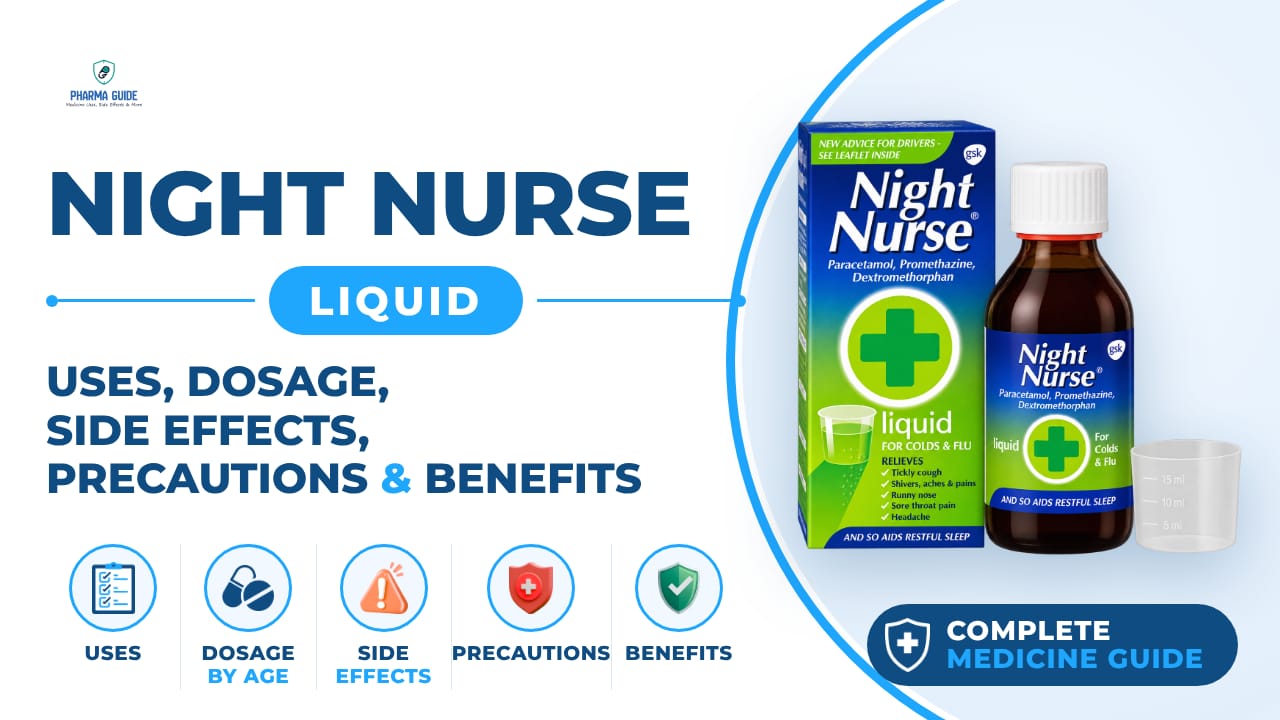
Night Nurse Liquid: Uses, Dosage, Side Effects, Precautions and Alternates
| Generic name | Paracetamol, Promethazine Hydrochloride, Dextromethorphan Hydrobromide |
|---|---|
| Drug class | Combination cold and flu remedy (painkiller/antipyretic, sedating antihistamine, cough suppressant) |
| Forms | Liquid (oral), Capsules |
Quick overview
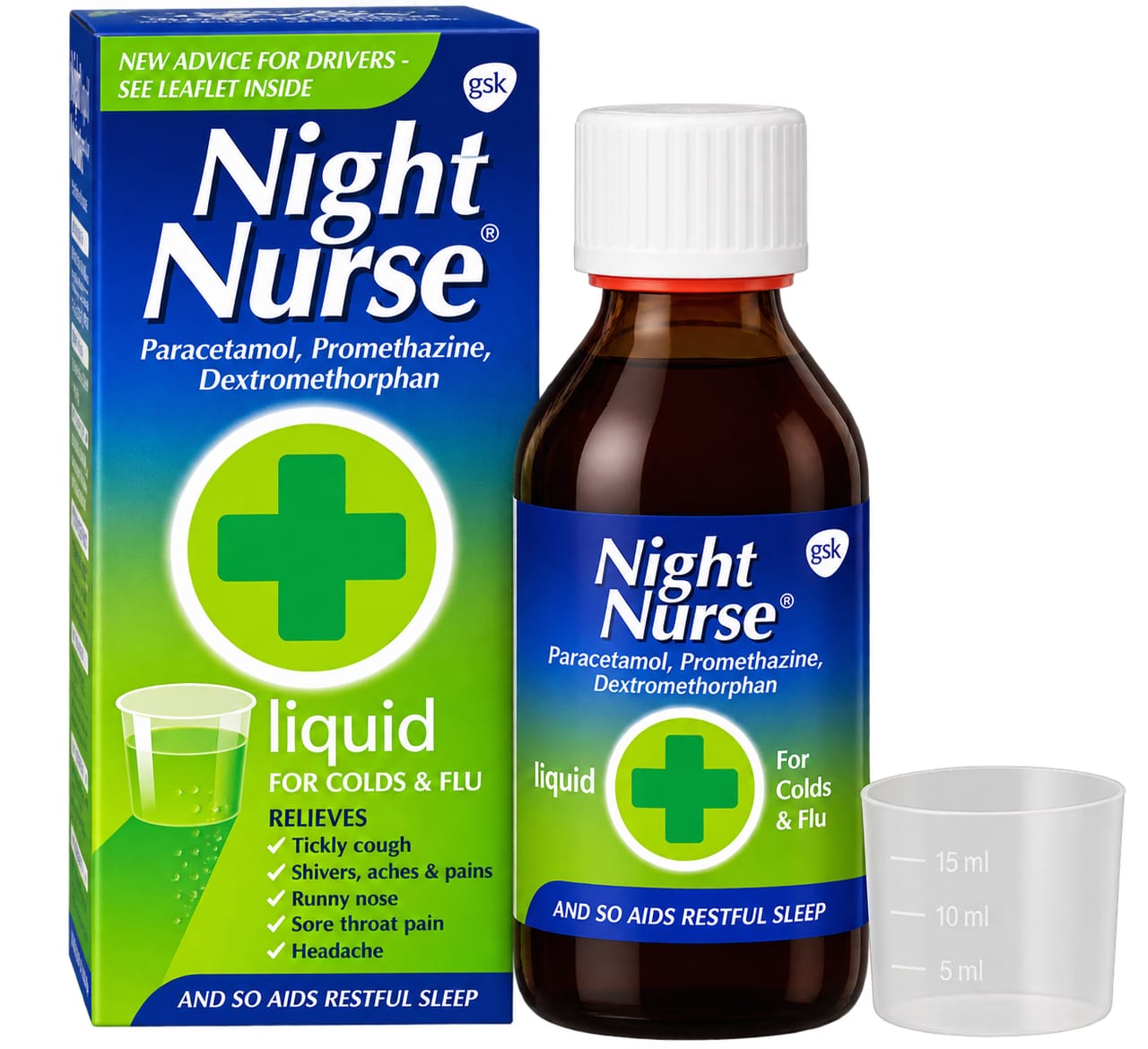
Night Nurse Liquid is a night-time combination medicine containing paracetamol, promethazine hydrochloride and dextromethorphan hydrobromide. It is used for the relief of cold, chill and flu symptoms such as cough, sore throat, runny nose, aches, fever and headache. It is intended for adults and children aged 16 years and over, taken as a single dose at bedtime.
What is Night Nurse Liquid
Night Nurse Liquid is a night-time medicine for the symptoms of colds and flu. It contains three active ingredients: paracetamol, promethazine hydrochloride and dextromethorphan hydrobromide.
Night Nurse Liquid uses
- Night-time relief of the major symptoms of colds, chills and flu
- Tickly or dry cough
- Sore throat
- Runny nose
- Aches and pains
- Fever
- Headache
Benefits of Night Nurse Liquid
- Provides night-time relief from cold, chills, and flu symptoms.
- Paracetamol helps reduce fever, headache, and body aches.
- Dextromethorphan helps suppress a dry or tickly cough.
- Promethazine helps reduce a runny nose and sneezing.
- Its sedating antihistamine effect can help promote more restful sleep when cold or flu symptoms are disturbing sleep.
- Combines pain relief, cough suppression, and antihistamine effects in a single night-time medicine.
How Night Nurse Liquid works
Paracetamol relieves pain and reduces fever. Promethazine is an antihistamine that dries up a runny nose and helps you sleep. Dextromethorphan suppresses the cough reflex to ease a dry or tickly cough.
Night Nurse Liquid dosage
For oral use only. This medicine is for adults and children aged 16 years and over. Fill the measuring cup to the marked level before taking your dose. Take at bedtime only, and only take one dose per night. Do not take for more than 3 days without checking with a doctor or pharmacist. Do not take if you have already taken a paracetamol-containing product in the last 24 hours up to the maximum daily amount. Not to be given to children under 16 years of age. Do not take other cough or cold medicines, or other products containing antihistamines, including those used on the skin, at the same time.
| Age group | Dose |
|---|---|
| Under 16 years | Do not use |
| 16–17 years | 20 mL at bedtime |
| Adults | 20 mL at bedtime |
| 65+ years | Use with caution; pharmacist/doctor advice is advisable because sedation and other side effects may be greater |
| Maximum | One 20 mL dose per night |
Available forms and strengths
- Liquid (oral)
- Capsules
Side effects of Night Nurse Liquid
Common
- Drowsiness
- Dizziness
- Blurred vision
- Difficulty concentrating
- Unsteadiness
- Clumsiness
- Headache
- Dry mouth
- Stomach upset
Serious
- Severe allergic reactions such as skin rash, itching, swelling of the mouth or face, or shortness of breath
- Skin rash or peeling or mouth ulcers
- Breathing problems, especially if you have had them before with other painkillers
- Unexplained bruising and bleeding
- Confusion, restlessness, sweating, shaking, shivering, sudden muscle jerks, or increased blood pressure
- Difficulty passing urine
- Nausea, vomiting, stomach ache, sudden weight loss, loss of appetite, and yellowing of the eyes and skin
- Restlessness, nervousness, irritability, increased energy and sleep disturbances, especially in children
Warnings and precautions
- Do not take Night Nurse if you are pregnant.
- Do not take Night Nurse if you are breastfeeding.
- Ask your doctor before taking this medicine if you have kidney problems.
- Ask your doctor before taking this medicine if you have liver problems.
- Do not drink alcohol while taking this medicine, as the product itself contains alcohol and this could be harmful, especially for people with alcohol problems, liver disease, epilepsy, or if pregnant or breastfeeding.
- This medicine can affect your ability to drive because it may cause drowsiness, dizziness, difficulty concentrating, movement difficulties, or blurred vision. Do not drive until you know how the medicine affects you.
- Do not take if you have already taken the maximum daily amount of a paracetamol-containing product in 24 hours.
- Do not take if you have a chest infection, worsening asthma, or severe respiratory problems.
- Do not take if you have taken medicines for depression called MAOIs in the last two weeks.
- Do not take if you are having a pregnancy test using a urine sample, as this medicine can affect the result.
- Carers should not give this medicine to elderly patients with confusion, as older people are more likely to have side effects including confusion.
- Long-term or excessive use of this medicine can lead to dependence, even at normal doses, particularly in people with a history of substance misuse or certain mental health conditions.
Storage
- Store below 25°C (77°F) or as directed on the product label.
- Keep in a cool, dry place away from excessive heat.
- Protect from direct sunlight and extreme temperatures.
- Keep the bottle tightly closed in its original packaging.
- Do not freeze and avoid storing in hot or humid areas.
- Keep out of reach and sight of children.
When to see a doctor
- Talk to a doctor at once if you take too much of this medicine, even if you feel well, because too much paracetamol can cause delayed, serious liver damage.
- See your doctor if your symptoms are accompanied by a high temperature, skin rash, or persistent headache.
- See your doctor if your symptoms persist.
- Stop taking this medicine and tell your doctor immediately if you experience a severe allergic reaction, skin rash or peeling, mouth ulcers, breathing problems, unexplained bruising and bleeding, confusion, restlessness, sweating, shaking, muscle jerks, increased blood pressure, difficulty passing urine, nausea, vomiting, stomach ache, unexplained weight loss, loss of appetite, or yellowing of the eyes and skin.
Alternatives
- Dextromethorphan
- Lemsip Max Cold & Flu
- Benylin 4 Flu
- Day & Night Nurse Capsules
Watch the video
FAQs
What is Night Nurse Liquid used for?
It is used for night-time relief of cold, chill and flu symptoms such as cough, sore throat, runny nose, aches, fever and headache.
What are the active ingredients in Night Nurse Liquid?
It contains paracetamol, promethazine hydrochloride and dextromethorphan hydrobromide.
What is the dosage of Night Nurse Liquid?
Adults and children aged 16 years and over take 20 mL at bedtime, as a single dose once per night, for no more than 3 days without checking with a doctor or pharmacist.
Can I take Night Nurse Liquid if I am pregnant or breastfeeding?
No, you should not take Night Nurse if you are pregnant or breastfeeding.
Can Night Nurse Liquid affect my ability to drive?
Yes, it can affect your ability to drive because it may cause drowsiness, dizziness, difficulty concentrating, movement difficulties, or blurred vision, so you should not drive until you know how it affects you.
General information, not medical advice
Your prescriber and the leaflet in your pack know your situation. This page does not.
- Follow your prescriber and the leaflet
- Don't start, stop, or change a dose on your own
- Doses and warnings differ by country and product
Sources
- Night Nurse Patient Information Leaflet (medicines.org.uk / emc)
- postmymeds.co.uk product page
- weldricks.co.uk guide
- healthwords.ai article
- PillSorted product page
Video
Related medicines

Injectafer Injection: Uses, Dosage, Side Effects, Precautions and Alternates
Iron products
Injectafer (ferric carboxymaltose) treats iron deficiency anemia and heart failure-related iron deficiency via IV. Learn uses, dosage, side effects, and

Gliclazide Tablet: Uses, Dosage, Side Effects, Precautions and Alternates
Sulfonylurea (hypoglycemic/antidiabetic agent)
Gliclazide Tablet is a sulfonylurea for type 2 diabetes that boosts insulin release. Learn about dosage, side effects, warnings, and precautions.