
Safety
General information, not medical advice
Your prescriber and the leaflet in your pack know your situation. This page does not.
- Follow your prescriber and the leaflet
- Don't start, stop, or change a dose on your own
- Doses and warnings differ by country and product
Nimenrix Injection: Uses, Dosage, Side Effects, Precautions and Alternates
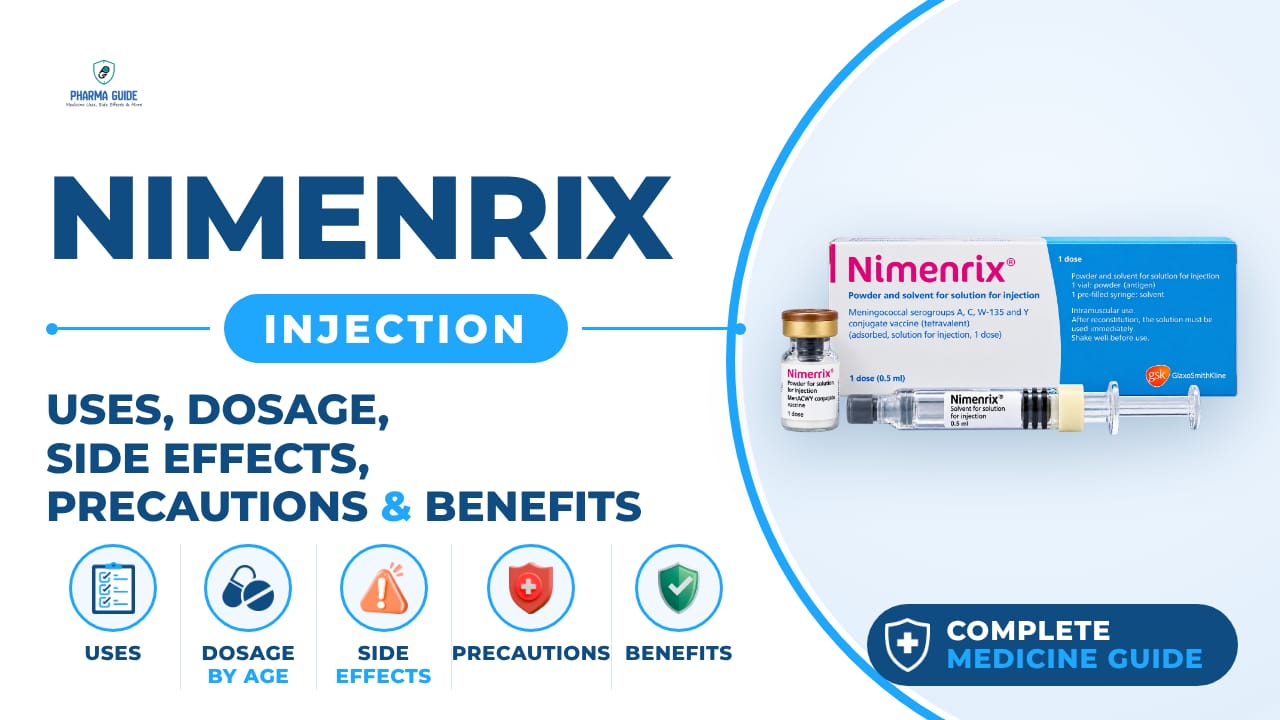
| Generic name | Meningococcal groups A, C, W-135 and Y conjugate vaccine |
|---|---|
| Drug class | Vaccine (meningococcal conjugate vaccine) |
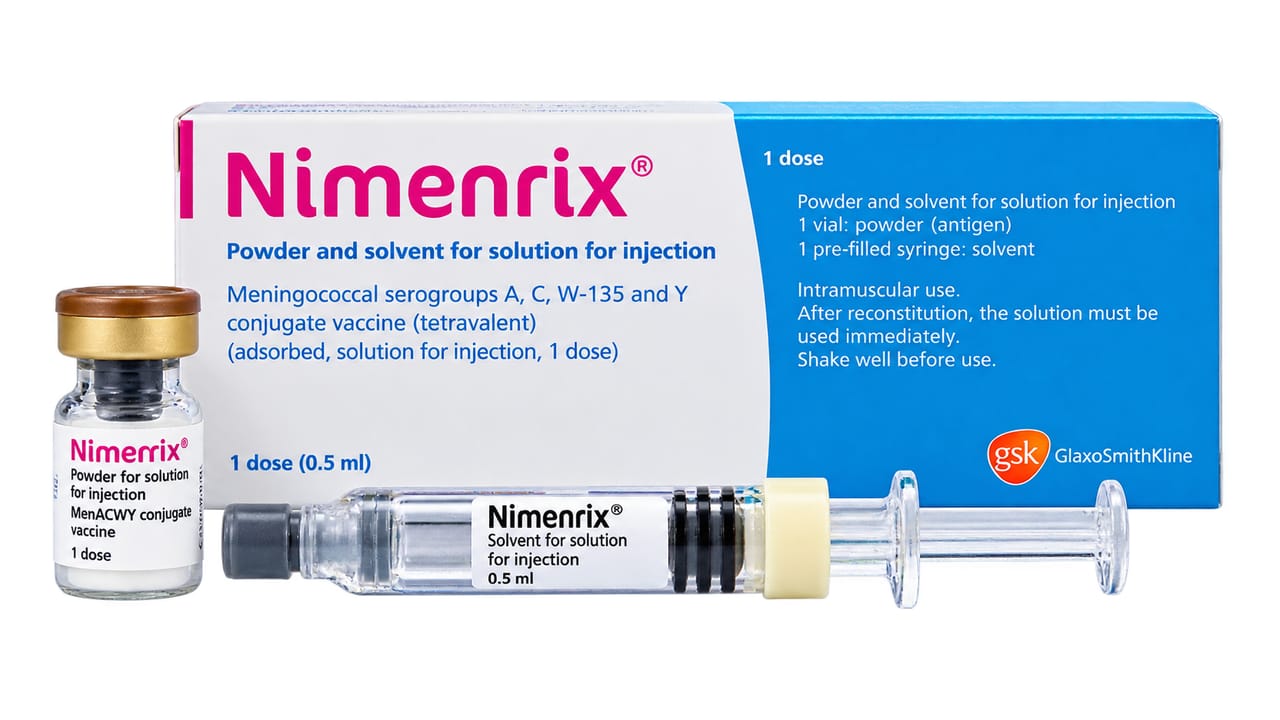
| Forms | Powder and solvent for solution for injection, Powder in a vial with solvent in a pre-filled syringe or ampoule |
Quick overview
Nimenrix is a vaccine containing parts of the outer coat of Neisseria meningitidis groups A, C, W-135, and Y, used to protect adults, adolescents and children from 6 weeks of age against invasive meningococcal disease caused by these four groups. It is given as an intramuscular injection by a doctor or nurse and can be used for both primary and booster vaccination. Common side effects include injection site reactions, fever, and irritability, while serious allergic reactions require immediate medical attention.
What is Nimenrix Injection
Nimenrix is a vaccine used to protect adults, adolescents and children from the age of 6 weeks against invasive meningococcal disease caused by four groups of the bacterium Neisseria meningitidis (group A, C, W-135, and Y). The vaccine contains substances from the outer coat of the bacterium N. meningitidis.
Nimenrix Injection uses
- Active immunisation of individuals from the age of 6 weeks against invasive meningococcal disease caused by Neisseria meningitidis groups A, C, W-135, and Y
- Recommended for travellers to countries where meningococcal A, C, W or Y disease outbreaks may happen
- Recommended for close contacts of people with meningococcal A, C, W or Y disease
- Recommended for people with medical conditions that make them more likely to get meningococcal disease
- Can be used as a booster vaccine in people already vaccinated with Nimenrix or another meningococcal vaccine
Benefits of Nimenrix Injection
- Helps protect against invasive meningococcal disease caused by meningococcal groups A, C, W-135, and Y
- Helps prevent meningococcal meningitis, a serious infection of the lining around the brain and spinal cord
- Helps reduce the risk of meningococcal septicaemia (bloodstream infection)
- Can be used for primary vaccination and booster vaccination according to official recommendations
- In Europe, it is licensed for individuals from 6 weeks of age onward
How Nimenrix Injection works
The vaccine contains small parts of the outer coat of the meningococcal bacteria attached to a carrier protein. The immune system recognizes these parts as foreign and makes antibodies against them, so that if the person is later exposed to the real bacteria, the immune system is ready to fight it off.
Nimenrix Injection dosage
Nimenrix is given as an injection into muscle, usually in the thigh for babies, or in the thigh or arm muscle for children from 12 months of age and adults. This vaccine can only be given by a doctor or nurse. If you or your child have had a serious reaction to any vaccine, fainted with a previous vaccine, or had any vaccine in the last 4 weeks, tell your doctor before vaccination.
If a dose is missed, contact your doctor or nurse and arrange another visit as soon as possible. Keep a record of vaccinations and update it after each injection, and keep any follow-up visits with your doctor or clinic.
| Age group | Dose |
|---|---|
| 6 weeks–<6 months | 0.5 mL IM per dose; primary series according to the local immunization schedule |
| 6–11 months | 0.5 mL IM; additional/booster dosing depends on age at first vaccination and local schedule |
| 12–23 months | Usually 0.5 mL IM as a single dose; booster may be recommended for ongoing risk |
| 2–17 years | Usually 0.5 mL IM as a single dose |
| 18 years and older | Usually 0.5 mL IM as a single dose; boosters may be required if risk continues |
Available forms and strengths
- Powder and solvent for solution for injection
- Powder in a vial with solvent in a pre-filled syringe or ampoule
Side effects of Nimenrix Injection
Common
- Loss of appetite
- Irritability
- Drowsiness or feeling tired
- Headache
- Fever
- Swelling at injection site
- Pain at injection site
- Redness at injection site
- Diarrhoea
- Vomiting
- Nausea
- Bruising at the injection site
- Rash (in infants)
Serious
- Serious allergic reaction with swelling of limbs, face, eyes, inside of nose, mouth or throat
- Shortness of breath, breathing or swallowing difficulties
- Hives, itching (especially of the hands or feet), reddening of skin (especially around the ears), or severe skin reactions
- Unusual tiredness or weakness that is sudden and severe
- High temperature with fits or seizures
- Large swelling of the vaccinated limb associated with redness
Warnings and precautions
- Do not use this vaccine if you or your child are allergic to it or any of its ingredients, or have a severe infection with a high temperature
- Talk to your doctor first if you or your child have had a serious reaction to any vaccine, fainted with a previous vaccine, have a bleeding disorder, or have a weakened immune system
- This vaccine should be given with caution to people with low platelets or a bleeding disorder, since bleeding may occur after the injection
- People with a weakened immune system may not develop full protection from the vaccine, and people with certain complement deficiencies remain at increased risk of meningococcal disease even after vaccination
- This vaccine only protects against meningococcal disease caused by groups A, C, W-135, and Y, and may not protect everyone who is vaccinated
- There is limited experience using this vaccine in pregnant women. It should be used during pregnancy only when clearly needed, weighing possible benefits against potential risks to the baby.
- It is not known whether this vaccine passes into breast milk, and it should only be used while breastfeeding when the possible benefits outweigh the potential risks.
- No specific kidney-related dose adjustment is listed. People with significant kidney disease or weakened immunity should discuss vaccination with their doctor. No specific liver-related dose adjustment is listed.
- Be careful when drinking alcohol until you know how this vaccine affects you. Be careful driving or using machines until you know how this vaccine affects you, since it can cause dizziness or lightheadedness in some people.
Storage
- Store refrigerated at 2–8°C (36–46°F)
- Keep in the original package to protect from light
- Do not freeze; discard if the vaccine has been frozen
- After reconstitution, use promptly, following the product instructions
- Do not use after the expiry date or if proper storage conditions were not maintained
- Keep securely stored and out of reach of children
When to see a doctor
- Call your doctor right away, or go straight to the Emergency Department at your nearest hospital, if you notice signs of a serious allergic reaction, such as swelling of the limbs, face, eyes, mouth or throat, shortness of breath, breathing or swallowing difficulties, hives, itching, severe skin reactions, or sudden severe tiredness or weakness
- Tell your doctor or nurse before vaccination if you or your child have previously become unwell after being given this vaccine
Alternatives
- NeisVac-C
- Menjugate
- Menactra
- Menveo
- MenQuadfi (MenACWY)
Watch the video
FAQs
What is Nimenrix Injection used for?
Nimenrix is a vaccine used for active immunisation against invasive meningococcal disease caused by Neisseria meningitidis groups A, C, W-135, and Y in individuals from 6 weeks of age, including travellers, close contacts of infected people, and those at higher risk.
How is Nimenrix given?
Nimenrix is given as an intramuscular injection, usually in the thigh for babies, or in the thigh or arm muscle for children from 12 months of age and adults. It can only be given by a doctor or nurse.
What are the common side effects of Nimenrix?
Common side effects include loss of appetite, irritability, drowsiness, headache, fever, pain, swelling, redness or bruising at the injection site, diarrhoea, vomiting, nausea, and rash in infants.
Can Nimenrix be used as a booster vaccine?
Yes, Nimenrix can be used for both primary vaccination and as a booster in people already vaccinated with Nimenrix or another meningococcal vaccine, according to official recommendations.
Is Nimenrix safe during pregnancy?
There is limited experience using Nimenrix in pregnant women, so it should be used during pregnancy only when clearly needed, weighing possible benefits against potential risks to the baby.
General information, not medical advice
Your prescriber and the leaflet in your pack know your situation. This page does not.
- Follow your prescriber and the leaflet
- Don't start, stop, or change a dose on your own
- Doses and warnings differ by country and product
Sources
Video
Related medicines

Injectafer Injection: Uses, Dosage, Side Effects, Precautions and Alternates
Iron products
Injectafer (ferric carboxymaltose) treats iron deficiency anemia and heart failure-related iron deficiency via IV. Learn uses, dosage, side effects, and

Gliclazide Tablet: Uses, Dosage, Side Effects, Precautions and Alternates
Sulfonylurea (hypoglycemic/antidiabetic agent)
Gliclazide Tablet is a sulfonylurea for type 2 diabetes that boosts insulin release. Learn about dosage, side effects, warnings, and precautions.