
Safety
General information, not medical advice
Your prescriber and the leaflet in your pack know your situation. This page does not.
- Follow your prescriber and the leaflet
- Don't start, stop, or change a dose on your own
- Doses and warnings differ by country and product
Nitrest Tablet: Uses, Dosage, Side Effects, Precautions and Alternates
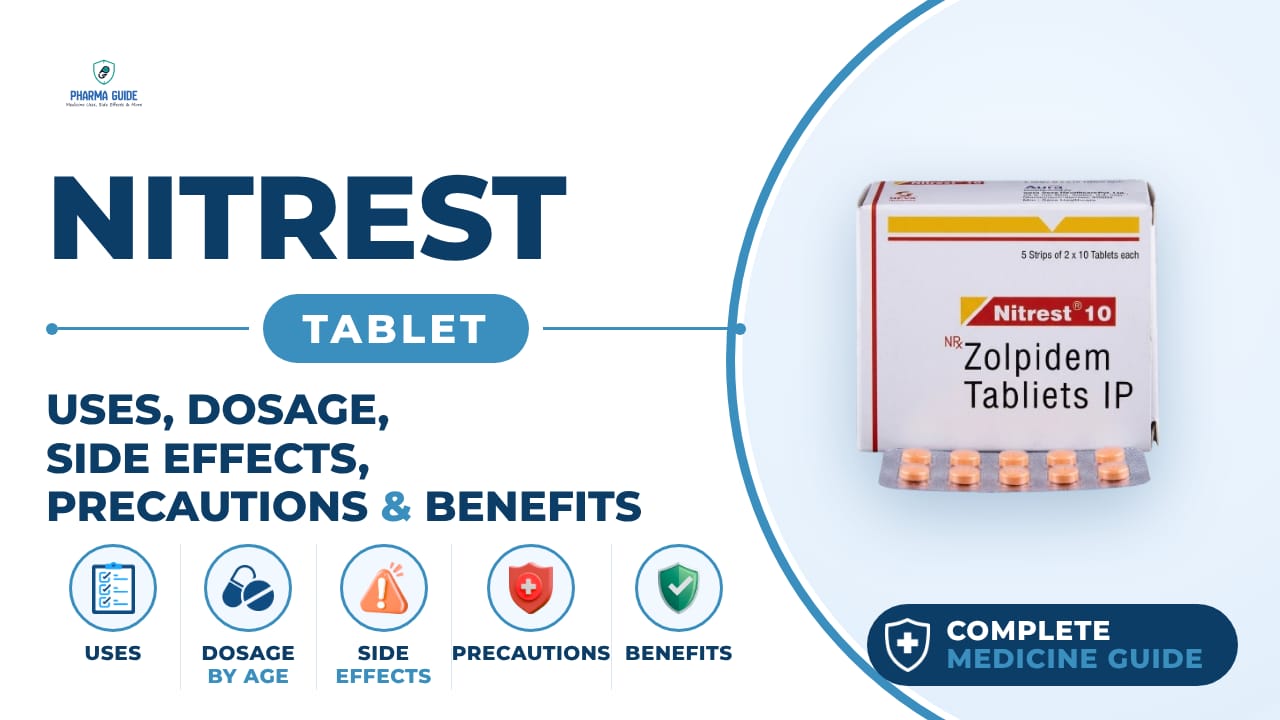
| Generic name | Zolpidem |
|---|---|
| Drug class | Sedative hypnotic |
| Forms | Tablet |
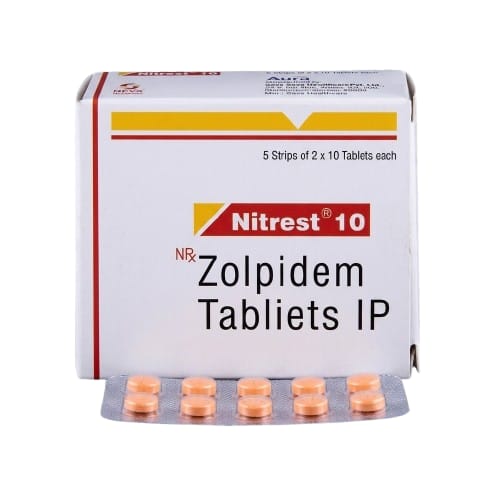
Quick overview
Nitrest Tablet contains zolpidem, a sedative hypnotic medicine used for the short-term treatment of insomnia. It helps people fall asleep faster, stay asleep through the night, and improves overall sleep quality when used for a short period. It should be taken exactly as prescribed and used only for the short duration advised by a doctor.
What is Nitrest Tablet
Nitrest is a sleeping pill containing zolpidem. It is used for the short-term treatment of insomnia, a condition where people have trouble falling asleep or staying asleep.
Nitrest Tablet uses
- Insomnia (difficulty falling or staying asleep)
- Helps people fall asleep faster
- Helps people stay asleep through the night
- Improves overall sleep quality for short-term use
Benefits of Nitrest Tablet
- Improves quality of sleep
- Relaxes muscles and reduces anxiety
- Helps you sleep faster and sleep throughout the night
How Nitrest Tablet works
Zolpidem increases the activity of a calming brain chemical called GABA, which slows down brain activity and produces a calming, sleep-inducing effect.
Nitrest Tablet dosage
Take it on an empty stomach, not with or right after a meal, since food may delay how fast it starts working. Swallow the tablet whole with water; do not crush or chew it. Take it right before bedtime, only when you are ready to sleep or having trouble falling asleep, and try to take it at the same time each day. Use it only for a short time, as advised by your doctor, usually about one to two weeks.
If you miss a dose, skip it if it's already daytime and continue your regular schedule the next night at bedtime; do not take it during the day. Do not stop taking this medicine suddenly without talking to your doctor, as this can cause withdrawal symptoms. It is not recommended for people under 18 years of age, and lower doses are often recommended for elderly patients.
| Age group | Dose |
|---|---|
| Under 18 years | Not recommended |
| 18–60 years | 5–10 mg once daily |
| 60+ years | 5 mg once daily |
Available forms and strengths
- Tablet
Side effects of Nitrest Tablet
Common
- Dizziness
- Headache
- Drowsiness
- Dry mouth
- Nausea or vomiting
- Back pain
- Unsteadiness
- Confusion
- Fast heartbeat
- Blurred vision
- Loss of appetite
- Stomach pain
- Vertigo
- Agitation
Serious
- Memory problems
- Hallucinations
- Depression
- Sleepwalking
- Abnormal behavior
- Allergic reactions
Warnings and precautions
Stopping Nitrest suddenly can cause withdrawal symptoms like seizures, behavior changes, tremors, and anxiety. Your dose should be reduced gradually under a doctor's care.
This medicine should be used carefully because it may increase the risk of suicidal thoughts. Watch for any changes in mood or behavior.
Nitrest can be habit-forming, especially with long-term use or higher doses. People with a history of alcohol or drug abuse need extra caution, and the dose should be tapered off slowly when stopping.
Should not be used by people with depression, angioedema, suicidal tendencies, or chronic obstructive pulmonary disease (COPD) unless a doctor says it is okay.
Not recommended for people with myasthenia gravis, due to a higher risk of serious side effects, or for those with severe liver problems.
There have been reports of people doing activities like sleepwalking or driving while not fully awake, with no memory of the event afterward. Avoid alcohol and other sedating medicines, which raise this risk.
This medicine may cause serious reactions when combined with certain other drugs, including some antibiotics, cough medicines, and pain relievers, which can increase side effects.
Nitrest is not recommended during pregnancy unless absolutely necessary, as it can have harmful effects. Discuss the risks and benefits with your doctor before taking it.
Nitrest is not recommended while breastfeeding unless absolutely necessary, since it's not known for sure if it passes into breast milk and could affect the baby.
Nitrest is generally safe for people with kidney disease, and no dose change is usually needed, but tell your doctor if you have kidney problems.
Use caution if you have liver disease, as the medicine may build up in your body and have stronger effects due to slower removal from the body. It is not recommended for people with severe liver impairment.
Do not drink alcohol while taking Nitrest, as it can cause excessive drowsiness and other serious side effects.
Nitrest can reduce alertness, affect your vision, or cause drowsiness and dizziness. Avoid driving or using machinery if you feel any of these effects.
Storage
- Store Nitrest at room temperature, away from moisture and light.
- Keep it in a tightly closed container to protect it from damage.
- Avoid storing it in humid places like bathrooms, as moisture can affect its effectiveness.
- Keep out of reach of children to prevent accidental ingestion.
- Check the expiration date regularly and properly dispose of any unused or expired medication.
- To dispose of it, take it to a drug take-back program or collection site at a pharmacy or hospital, or mix it with something undesirable like used coffee grounds, seal it in a bag, and throw it in the trash. Do not flush it down the toilet.
When to see a doctor
Get emergency medical help right away if you think you have taken too much of this medicine. If you notice any unusual sleep behaviors, such as sleepwalking, stop taking the medicine and contact your doctor right away. If you have an allergic reaction, or symptoms like confusion, depression, or suicidal thoughts, consult your doctor right away.
Alternatives
- Zolfresh
- Stilnoct
- Inzofresh
Watch the video
FAQs
What is Nitrest Tablet used for?
Nitrest Tablet is used for the short-term treatment of insomnia. It helps people fall asleep faster, stay asleep through the night, and improves overall sleep quality when used for a short period.
How should Nitrest Tablet be taken?
Take it on an empty stomach, not with or right after a meal, as food may delay how fast it works. Swallow the tablet whole with water right before bedtime, only when you are ready to sleep. It should be used only for a short time, usually about one to two weeks, as advised by your doctor.
What are the common side effects of Nitrest Tablet?
Common side effects include dizziness, headache, drowsiness, dry mouth, nausea or vomiting, back pain, unsteadiness, confusion, fast heartbeat, blurred vision, loss of appetite, stomach pain, vertigo, and agitation.
Can I drink alcohol while taking Nitrest Tablet?
No, you should not drink alcohol while taking Nitrest, as it can cause excessive drowsiness and other serious side effects.
Is Nitrest Tablet habit-forming?
Yes, Nitrest can be habit-forming, especially with long-term use or higher doses. People with a history of alcohol or drug abuse need extra caution, and the dose should be tapered off slowly when stopping.
General information, not medical advice
Your prescriber and the leaflet in your pack know your situation. This page does not.
- Follow your prescriber and the leaflet
- Don't start, stop, or change a dose on your own
- Doses and warnings differ by country and product
Sources
- US Food and Drug Administration (FDA) [Internet]. Maryland. USA; Package leaflet information for the user; Ambien® (zolpidem tartrate)
- KD Tripathi. Seventh Edition. New Delhi, India: Jaypee Brothers Medical Publishers; 2013: Page No 406-407
- April Hazard Vallerand, Cynthia A. Sanoski. Sixteenth Edition. Philadelphia, China: F. A. Davis Company; 2019: Page No 1296-1298
Video
Related medicines

Injectafer Injection: Uses, Dosage, Side Effects, Precautions and Alternates
Iron products
Injectafer (ferric carboxymaltose) treats iron deficiency anemia and heart failure-related iron deficiency via IV. Learn uses, dosage, side effects, and

Gliclazide Tablet: Uses, Dosage, Side Effects, Precautions and Alternates
Sulfonylurea (hypoglycemic/antidiabetic agent)
Gliclazide Tablet is a sulfonylurea for type 2 diabetes that boosts insulin release. Learn about dosage, side effects, warnings, and precautions.