
Safety
General information, not medical advice
Your prescriber and the leaflet in your pack know your situation. This page does not.
- Follow your prescriber and the leaflet
- Don't start, stop, or change a dose on your own
- Doses and warnings differ by country and product
Nootropil Tablet: Uses, Dosage, Side Effects, Precautions and Alternates
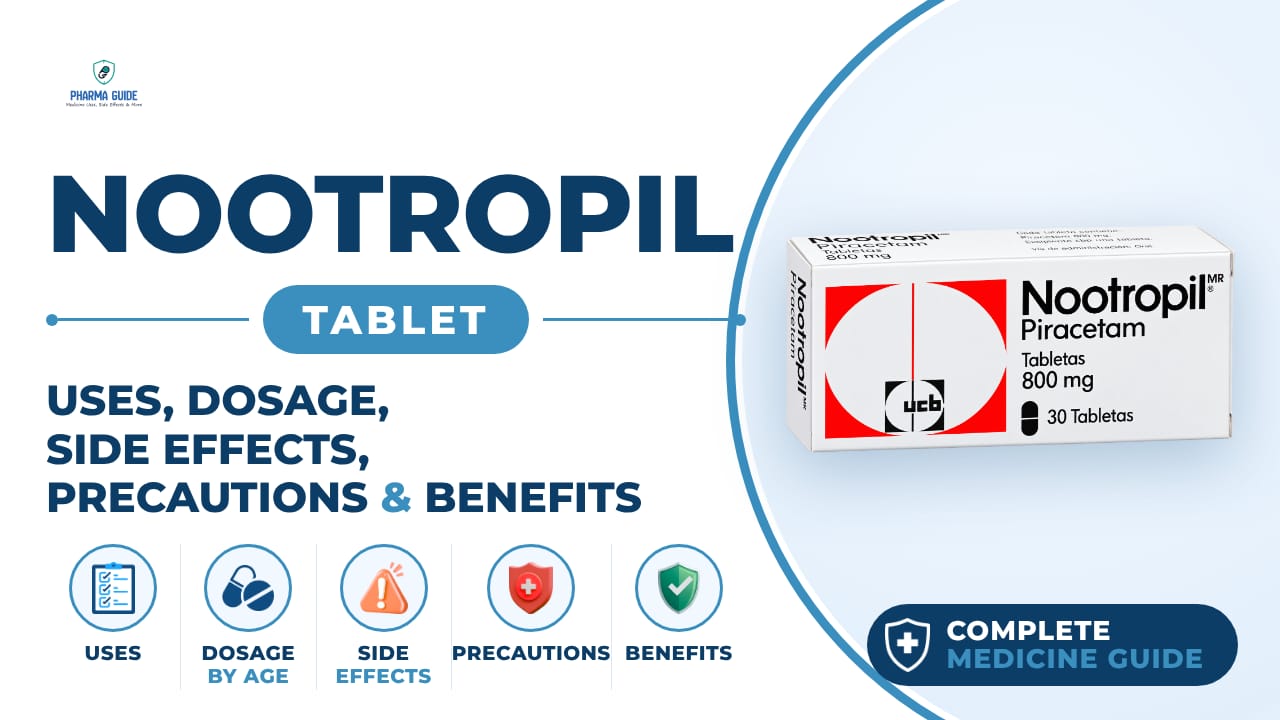
| Generic name | Piracetam |
|---|---|
| Drug class | Nootropic (GABA analogue) |
| Forms | Tablet, Granules, Injection, Syrup, Capsule |
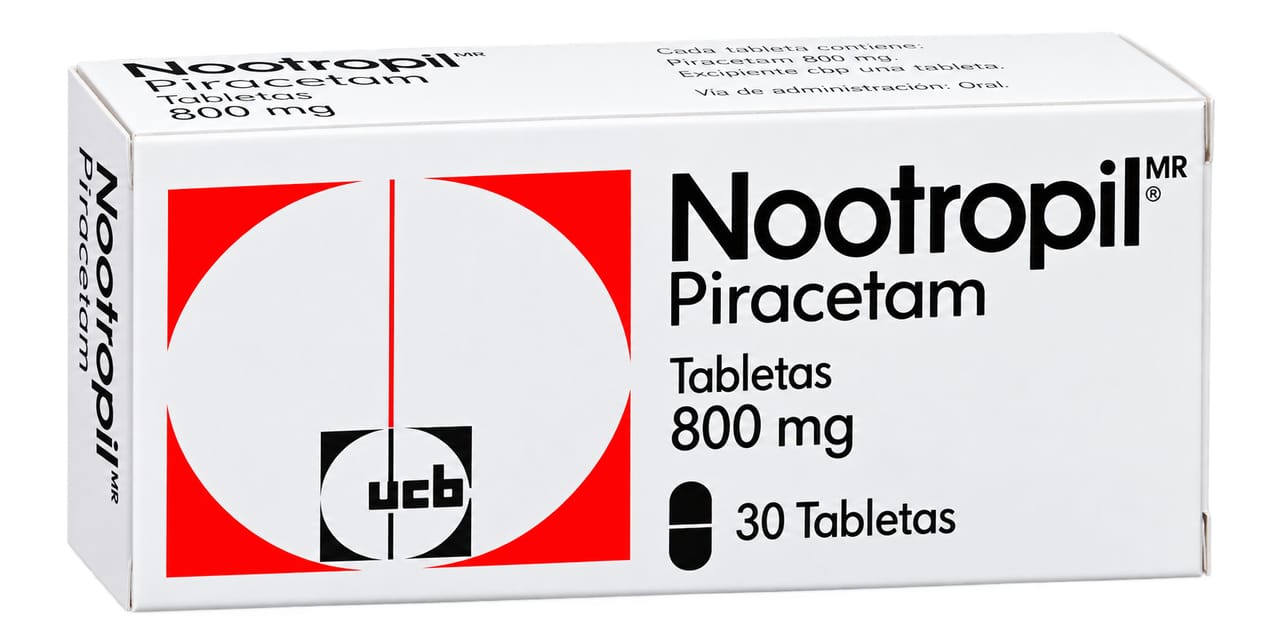
Quick overview
Nootropil Tablet contains the active ingredient piracetam, a nootropic medicine related to GABA. It is used to help control involuntary muscle jerks, support memory and concentration, aid recovery after head injury, and assist with conditions such as Alzheimer's disease, Parkinsonism, and stroke-related difficulties with speech, walking, or understanding. It works by supporting blood and oxygen supply to the brain and helping protect the cerebral cortex. It is available in several forms and should be used exactly as directed by a doctor.
What is Nootropil Tablet
Nootropil is a brand-name medicine containing the active ingredient piracetam. It belongs to a group of medicines called nootropics, which protect brain tissue and help nerve cells communicate with each other.
Nootropil Tablet uses
- Controlling involuntary muscle jerks, shakes, or spasms (cortical myoclonus), usually alongside other medicines
- Managing memory loss, poor concentration, and vertigo linked to aging
- Supporting recovery from brain dysfunction or symptoms like dizziness or headaches after a head injury
- Alzheimer's disease
- Parkinsonism (tremors and involuntary movements)
- Stroke-related difficulty speaking, walking, or understanding
Benefits of Nootropil Tablet
- Improves blood and oxygen supply to the brain to support cell function
- Helps protect the cerebral cortex, the part of the brain responsible for thoughts, actions, movement, reasoning, perception, and recognition
How Nootropil Tablet works
Piracetam acts on the brain and nervous system. It is thought to protect the cerebral cortex, the part of the brain in charge of thoughts and actions, from a lack of oxygen.
Nootropil Tablet dosage
This medicine can be taken with or without food, or before or after meals. Swallow tablets whole with a drink of water; do not break or chew them, as the medicine has a bitter taste. Take your doses at the same times each day to help you remember and to keep a steady level in your body. It is usually taken two or three times a day.
If you forget a dose, take it as soon as you remember, unless it is almost time for the next dose — in that case skip the missed dose and do not double up. Keep taking this medicine until your doctor tells you to stop; finish the full course even if you feel better. Do not stop taking it suddenly, as this may cause your symptoms to come back or trigger withdrawal effects like headache, anxiety, or seizures.
| Age group | Dose |
|---|---|
| Under 18 years | No approved pediatric dosage for cortical myoclonus under current UK labeling; specialist assessment required |
| 18–74 years | Cortical myoclonus: 7,200 mg daily initially; specialist maximum 24,000 mg daily, divided into 2–3 doses |
| 75 years and older | No separate age-specific dosage; adult reference starts at 7,200 mg daily, but kidney function and tolerability determine suitability and dose |
Available forms and strengths
- Tablet
- Granules
- Injection
- Syrup
- Capsule
Side effects of Nootropil Tablet
Common
- Nervousness or feeling shaky
- Weight gain
- Sleep changes (trouble sleeping or feeling drowsy)
- Nausea, stomach pain, or diarrhea
- Dizziness
Serious
- Difficulty breathing
- Swelling of face, lips, eyelids, tongue, hands, and feet
- Unusual bleeding or bruising
- Worsening seizures or muscle spasms if the medicine is stopped suddenly
- Hallucinations
Warnings and precautions
- This medicine is not recommended during pregnancy. Talk to your doctor before taking it.
- This medicine is not recommended while breastfeeding because it passes into breast milk and could harm the baby. Talk to your doctor before using it.
- Use this medicine with caution if you have kidney problems, since it is removed from the body through the kidneys and could build up, raising the risk of kidney damage. Your doctor may adjust your dose.
- Tell your doctor or pharmacist if you have problems with your liver before starting this medicine.
- It is not known how this medicine interacts with alcohol. Check with your doctor before drinking alcohol while taking it.
- This medicine can cause drowsiness in some people. Avoid driving or using tools or machinery if it affects you this way.
- Do not stop taking this medicine suddenly, as it can cause withdrawal symptoms such as headache, anxiety, or seizures with abnormal behavior and uncontrolled body movements. Your doctor may help you reduce the dose gradually.
- Use with caution if you have heart conditions like heart attack, cardiac arrest, stroke, or high blood pressure, due to a higher risk of serious side effects.
- Older adults should use this medicine with caution because of a higher risk of serious side effects.
- Tell your doctor you are taking this medicine if you need surgery, as it may increase the risk of bleeding.
- Use with extreme caution if you have a bleeding disorder, as this medicine can make it worse.
- Before starting this medicine, tell your doctor if you have a blood clotting problem, unusual bleeding, recent surgery, a past brain hemorrhage, Huntington's chorea, kidney or liver problems, are on a controlled salt diet, or are taking thyroid hormones.
Storage
- Keep all medicines out of the reach and sight of children
- Store in a cool, dry place, away from direct heat and light
- Do not keep out-of-date or unwanted medicine; take it to your local pharmacy for safe disposal
When to see a doctor
- Get emergency medical help right away if you think you or someone else has taken too much of this medicine. Bring the medicine container with you, even if it's empty.
- Tell your doctor right away if you notice difficulty breathing or swelling of the face, lips, eyelids, tongue, hands, or feet, as these can be signs of a serious allergic reaction.
- Contact your doctor if your symptoms get worse or do not improve while taking this medicine.
Alternatives
- Valproate
- Clonazepam
- Levetiracetam
Watch the video
FAQs
What is Nootropil Tablet used for?
It is used to control involuntary muscle jerks, manage memory loss and concentration issues, support recovery after head injury, and help with Alzheimer's disease, Parkinsonism, and stroke-related difficulties with speech, walking, or understanding.
How does Nootropil Tablet work?
It contains piracetam, which acts on the brain and nervous system by supporting blood and oxygen supply to the brain and helping protect the cerebral cortex from lack of oxygen.
How should I take Nootropil Tablet?
Swallow the tablets whole with water, without breaking or chewing them, and take doses at the same times each day. It is usually taken two or three times a day, with or without food.
What are the common side effects of Nootropil Tablet?
Common side effects include nervousness or shakiness, weight gain, sleep changes, nausea, stomach pain, diarrhea, and dizziness.
Can I stop taking Nootropil Tablet suddenly?
No, you should not stop suddenly as it can cause withdrawal symptoms like headache, anxiety, or seizures; your doctor may help you reduce the dose gradually.
General information, not medical advice
Your prescriber and the leaflet in your pack know your situation. This page does not.
- Follow your prescriber and the leaflet
- Don't start, stop, or change a dose on your own
- Doses and warnings differ by country and product
Sources
Video
Related medicines

Injectafer Injection: Uses, Dosage, Side Effects, Precautions and Alternates
Iron products
Injectafer (ferric carboxymaltose) treats iron deficiency anemia and heart failure-related iron deficiency via IV. Learn uses, dosage, side effects, and

Gliclazide Tablet: Uses, Dosage, Side Effects, Precautions and Alternates
Sulfonylurea (hypoglycemic/antidiabetic agent)
Gliclazide Tablet is a sulfonylurea for type 2 diabetes that boosts insulin release. Learn about dosage, side effects, warnings, and precautions.