
Safety
General information, not medical advice
Your prescriber and the leaflet in your pack know your situation. This page does not.
- Follow your prescriber and the leaflet
- Don't start, stop, or change a dose on your own
- Doses and warnings differ by country and product
Noradrenaline Injection: Uses, Dosage, Side Effects, Precautions and Alternates
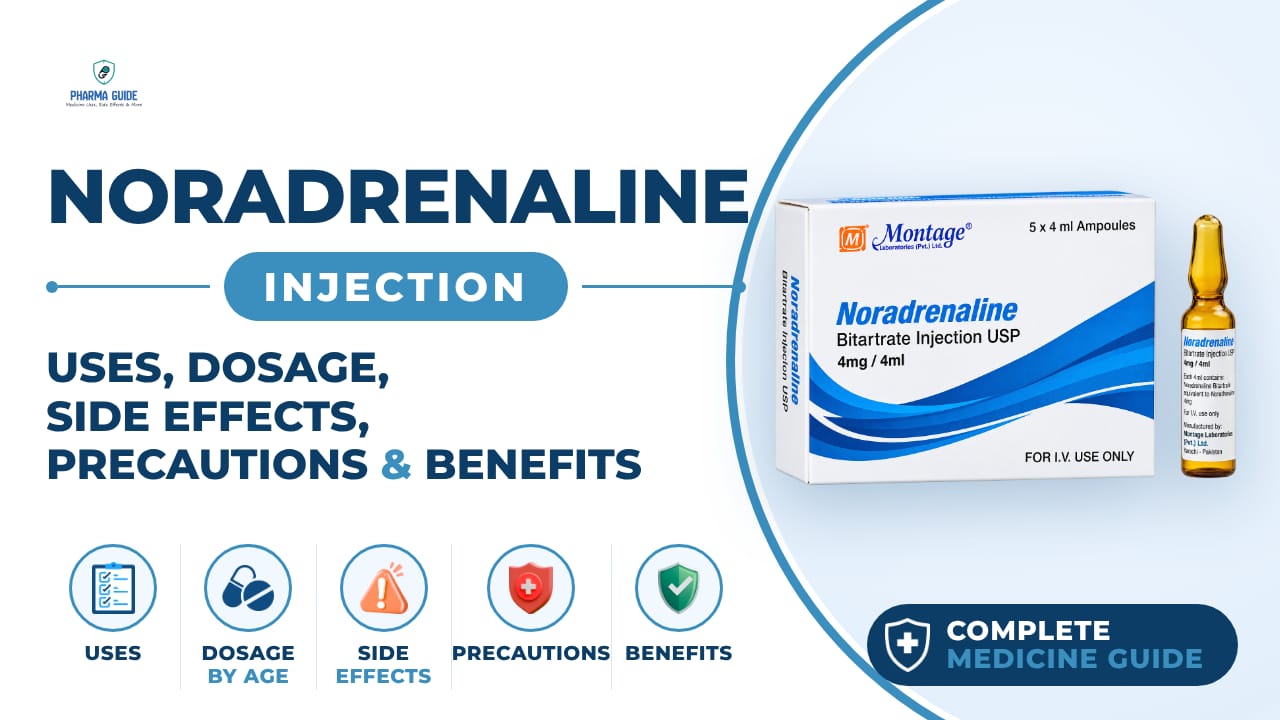
| Generic name | Noradrenaline (Norepinephrine) |
|---|---|
| Drug class | Sympathomimetic amine (vasopressor) |
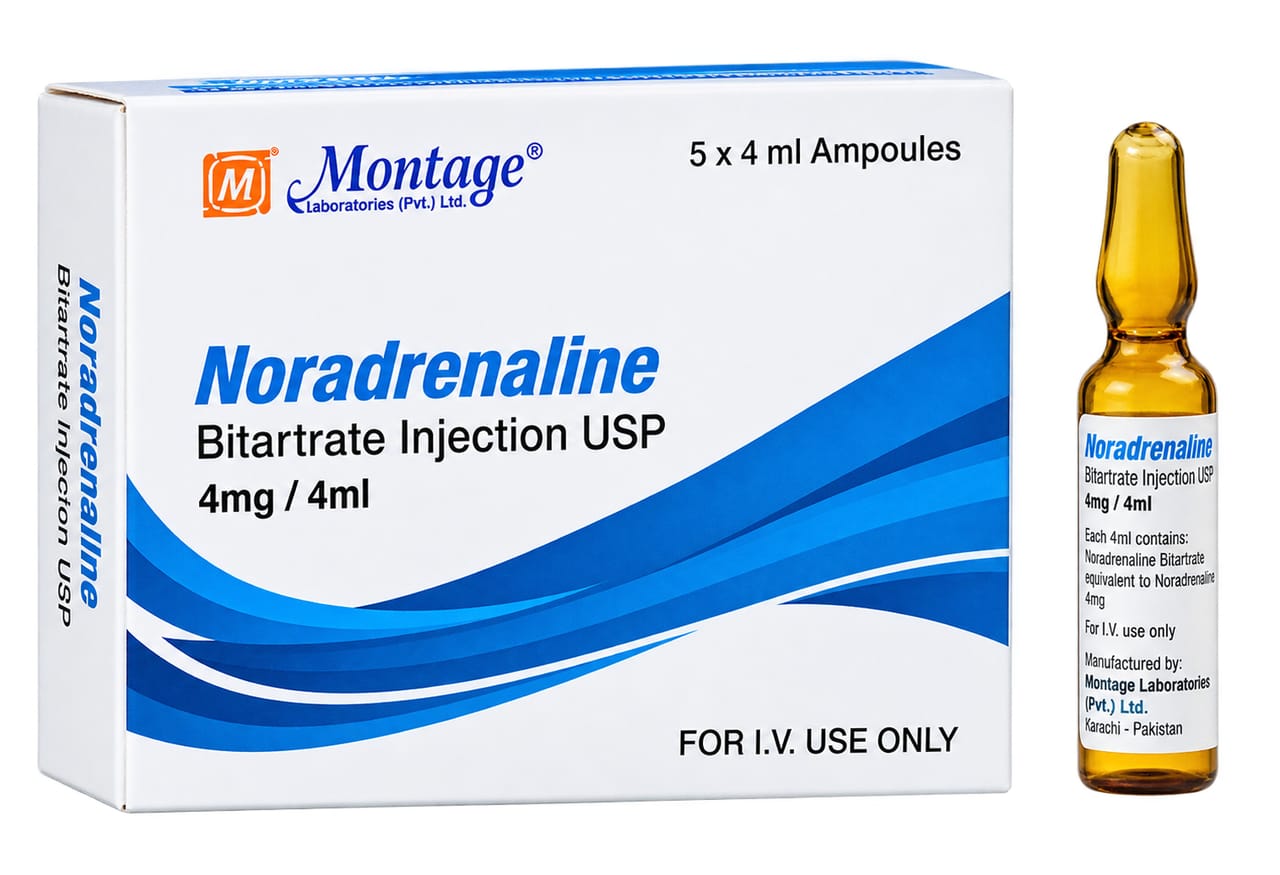
| Forms | Injection |
Quick overview
Noradrenaline Injection, also called norepinephrine, is a strong vasopressor medicine given by injection to raise blood pressure. It is only given by doctors or nurses in a hospital, usually in an emergency when blood pressure has dropped dangerously low. It works by making the heart beat more forcefully and by narrowing blood vessels, which raises blood pressure and increases blood flow to the heart and other organs.
What is Noradrenaline Injection
Noradrenaline (norepinephrine) is a strong medicine given by injection that raises blood pressure. It is only given by doctors or nurses in a hospital, usually in an emergency when blood pressure has dropped dangerously low.
Noradrenaline Injection uses
- Treating a sudden, serious drop in blood pressure (such as from a heart attack, a severe blood infection, a severe reaction to a drug, a severe reaction to a blood transfusion, or an allergic reaction)
- Managing shock, including septic shock and cardiogenic shock
- Supporting blood pressure during cardiac arrest
- Treating slow heart rate (bradycardia) and anaphylactic shock
- Helping with regional anesthesia
Benefits of Noradrenaline Injection
- Restores blood pressure back to normal
- Increases blood flow to the heart and other organs of the body
How Noradrenaline Injection works
Noradrenaline works by making the heart beat more forcefully and by narrowing (constricting) blood vessels. This raises blood pressure and increases blood flow to the heart and other organs.
Noradrenaline Injection dosage
This medicine is given only by a doctor or nurse in a hospital setting, never at home. It is diluted and given slowly as a drip (infusion) into a large vein, usually through a central line. The dose is adjusted based on how it affects your blood pressure and how your body responds. When stopping the infusion, the rate is reduced gradually; stopping it suddenly can cause a sharp drop in blood pressure. Your doctor may limit what you eat or drink during treatment depending on your medical situation.
| Age group | Dose |
|---|---|
| Under 18 years | Not established |
| 18–60 years | 2–4 mg/day |
| 60+ years | 2–4 mg/day |
Available forms and strengths
- Injection
Side effects of Noradrenaline Injection
Common
- Anxiety
- Headache
- Dizziness
- Increased heart rate
- Nervousness
- Nausea
- Pale skin
Serious
- Skin and tissue damage near the injection site
- Difficulty breathing and shortness of breath
- Low or irregular heartbeat
- Tingling or numbness in the feet
- Coldness, numbness or discoloration of the limbs
- Bradycardia (slow heart rate as a reflex to higher blood pressure)
- Arrhythmias (irregular heart rhythms)
- Reduced blood flow (ischaemia) to the heart muscle, gut, kidneys or limbs
- Tissue damage if the medicine leaks out of the vein (extravasation)
Warnings and precautions
- This medicine should not be given to people with low blood pressure caused by low blood volume, except as an emergency measure, because continuing it without replacing lost blood volume can cause severe narrowing of blood vessels, reduced kidney function and urine output, poor blood flow despite seemingly normal blood pressure, and tissue damage.
- It should not be given to patients with blood clots in certain vessels unless the doctor decides it is necessary to save the patient's life, because of the risk of worsening tissue damage.
- Using this medicine with certain anesthesia drugs is generally avoided because it can cause dangerous heart rhythm problems.
- Stopping the infusion suddenly can cause a sharp, dangerous drop in blood pressure; it should be slowed down gradually instead.
- Blood pressure and infusion rate must be checked often during treatment to avoid causing high blood pressure.
- In elderly patients, this medicine should not be infused into leg veins.
- Giving too much too quickly can cause a dangerous rise in blood pressure, which can lead to stroke, heart attack, or other heart and blood vessel problems.
- If the medicine leaks out of the vein into surrounding tissue, it can cause severe local tissue damage.
- If you are pregnant or planning to become pregnant, your doctor needs to check with you before using this medicine. Talk to your doctor if you are breastfeeding or planning to breastfeed. Tell your doctor if you have kidney problems or liver problems before using this medicine.
- Be careful before driving or using machines until you know how this medicine affects you, since its effects on these abilities haven't been fully studied.
Storage
- Store below 25°C, protect from light
- This product contains no antimicrobial preservative, to reduce microbiological hazard, use as soon as practicable after preparation. If storage is necessary, hold at 2 to 8°C for not more than 24 hours
- Noradrenaline (norepinephrine) is for single use in one patient only. Discard any residue. Discoloured solutions or those containing a precipitate should not be used. Avoid contact with iron salts, alkalis or oxidising agents
- Keep out of reach of children
- If you no longer need to use this medicine or it is out of date, take it to any pharmacy for safe disposal
- Do not use this medicine after the expiry date
When to see a doctor
- Get medical help right away if you have difficulty breathing, shortness of breath, swelling of the face, lips, tongue or other body parts, or a rash, itching or hives — these can be signs of an allergic reaction.
- Call your doctor straight away, or go straight to the Emergency Department, if you notice skin or tissue damage near the injection site, difficulty breathing, an irregular or low heartbeat, tingling or numbness in the feet, or coldness, numbness or discoloration of your limbs.
- If you think too much of this medicine has been given, seek urgent medical attention even if you feel fine, since symptoms of overdose can include extreme drowsiness, confusion, dizziness, weakness, or becoming unconscious.
Alternatives
- Adrenaline Injection
- Vasopressin Injection
- Dobutamine Injection
Watch the video
FAQs
What is Noradrenaline Injection used for?
It is used to treat a sudden, serious drop in blood pressure, manage shock (including septic and cardiogenic shock), support blood pressure during cardiac arrest, treat bradycardia and anaphylactic shock, and help with regional anesthesia.
How does Noradrenaline Injection work?
It works by making the heart beat more forcefully and by narrowing blood vessels, which raises blood pressure and increases blood flow to the heart and other organs.
Can Noradrenaline Injection be given at home?
No, it is given only by a doctor or nurse in a hospital setting, never at home, usually as a slow drip into a large vein through a central line.
What are the common side effects of Noradrenaline Injection?
Common side effects include anxiety, headache, dizziness, increased heart rate, nervousness, nausea, and pale skin.
Why is it dangerous to stop Noradrenaline Injection suddenly?
Stopping the infusion suddenly can cause a sharp, dangerous drop in blood pressure, so the rate should be reduced gradually instead.
General information, not medical advice
Your prescriber and the leaflet in your pack know your situation. This page does not.
- Follow your prescriber and the leaflet
- Don't start, stop, or change a dose on your own
- Doses and warnings differ by country and product
Sources
Video
Related medicines

Injectafer Injection: Uses, Dosage, Side Effects, Precautions and Alternates
Iron products
Injectafer (ferric carboxymaltose) treats iron deficiency anemia and heart failure-related iron deficiency via IV. Learn uses, dosage, side effects, and

Gliclazide Tablet: Uses, Dosage, Side Effects, Precautions and Alternates
Sulfonylurea (hypoglycemic/antidiabetic agent)
Gliclazide Tablet is a sulfonylurea for type 2 diabetes that boosts insulin release. Learn about dosage, side effects, warnings, and precautions.