
Safety
General information, not medical advice
Your prescriber and the leaflet in your pack know your situation. This page does not.
- Follow your prescriber and the leaflet
- Don't start, stop, or change a dose on your own
- Doses and warnings differ by country and product
Norethisterone Tablet: Uses, Dosage, Side Effects, Precautions and Alternates
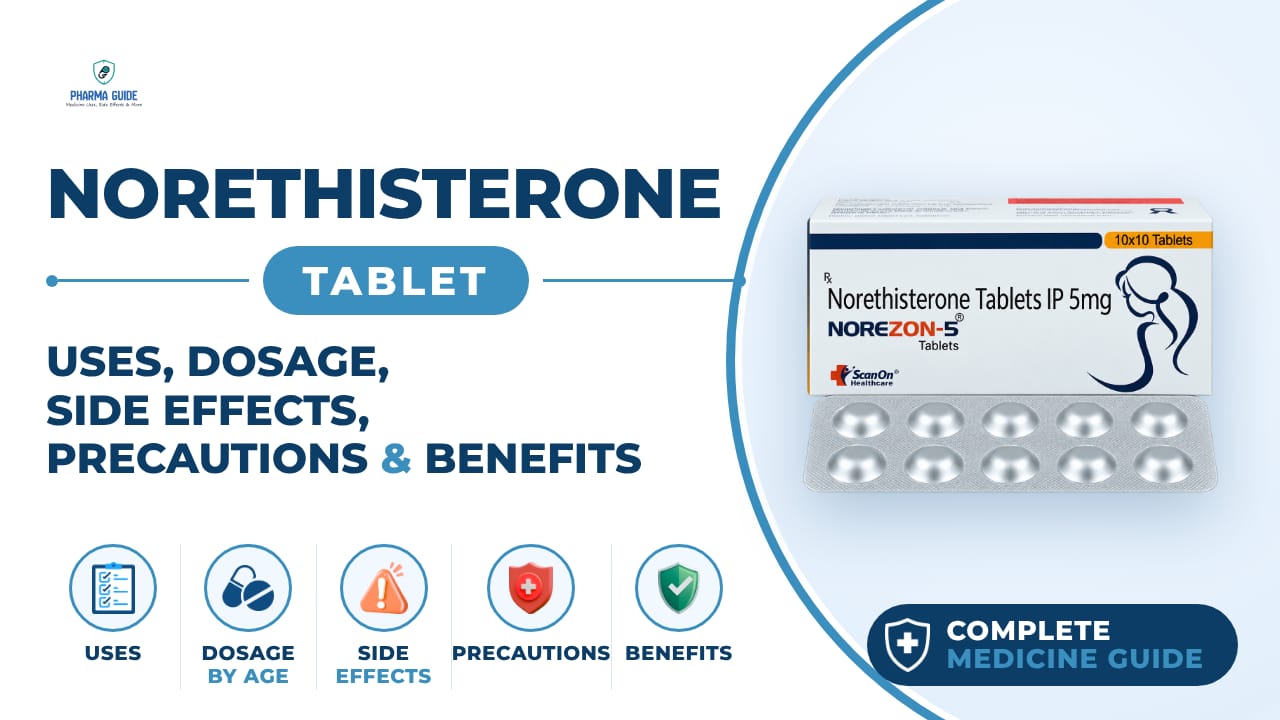
| Generic name | Norethisterone |
|---|---|
| Drug class | Progestin (synthetic progesterone) |
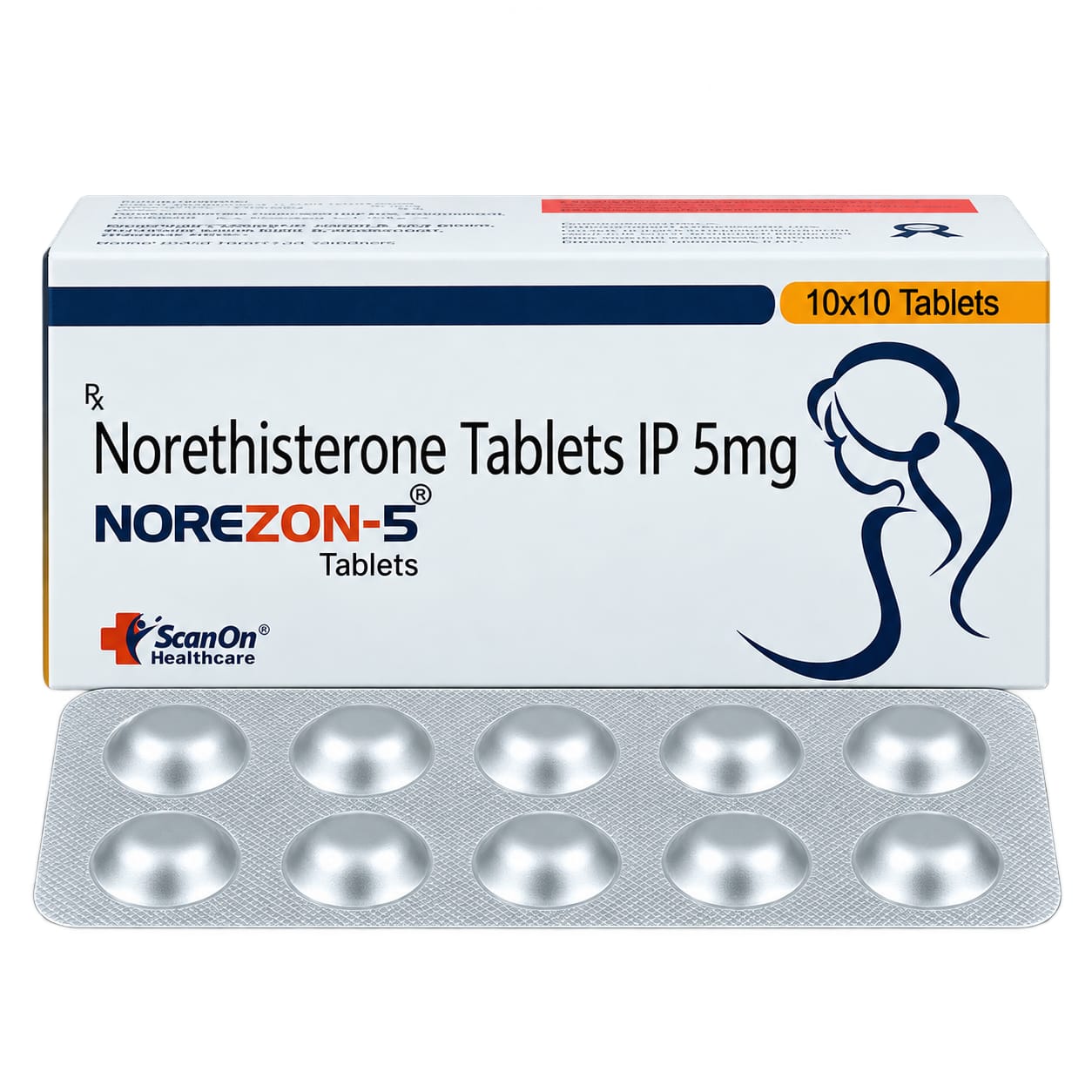
| Forms | Tablet |
Quick overview
Norethisterone Tablet contains norethisterone, a synthetic form of progesterone belonging to the progestin class. It is used to manage menstrual problems such as heavy, painful, or irregular periods, to manage endometriosis, and to delay periods when needed. It works by mimicking the body's natural progesterone to regulate the menstrual cycle.
What is Norethisterone Tablet
Norethisterone is a man-made version of progesterone, a natural female hormone. It helps control ovulation and the menstrual cycle, and is used to treat menstrual problems and delay periods.
Norethisterone Tablet uses
- Manage heavy periods
- Relieve painful periods
- Treat irregular periods
- Relieve premenstrual tension
- Manage endometriosis
- Delay periods
- Management of breast cancer (in some cases, at higher doses)
- Protecting against endometrial hyperplasia during hormone replacement therapy
Benefits of Norethisterone Tablet
- Helps control heavy menstrual bleeding
- Can help manage painful or irregular periods
- Treats symptoms associated with endometriosis
- May help manage premenstrual symptoms
- Can be prescribed to delay menstruation
- Helps regulate certain hormone-related menstrual disorders
How Norethisterone Tablet works
Norethisterone acts like the body's natural progesterone. It thickens the mucus at the entrance to the womb so sperm have a harder time getting through, and it changes the lining of the womb so it's harder for a fertilized egg to implant. It also stops the brain from releasing the hormones that trigger ovulation, which helps regulate the menstrual cycle.
Norethisterone Tablet dosage
Take at the same time each day to keep hormone levels steady. For period delay, start taking it a few days before your expected period and stop when you no longer need the delay; your period should return a few days after you stop. For irregular bleeding or menstrual disorders, it is usually taken for a short course of days, with bleeding starting several days after the last dose. For endometriosis, it is often taken daily for several months, with your doctor adjusting treatment as needed. Follow your doctor's specific instructions, since the way you take it depends on why it was prescribed.
| Age group | Dose |
|---|---|
| 18–49 years | Commonly 5 mg 1–3 times daily, depending on the condition being treated |
| 50–64 years | Individualized; usually 5 mg-based regimens when clinically appropriate |
Available forms and strengths
- Tablet
Side effects of Norethisterone Tablet
Common
- Changes in your period, such as breakthrough bleeding, spotting, or periods stopping
- Headache
- Nausea and vomiting
- Dizziness
- Increased urination
- Excess thirst
- Pelvic pain
- Breast tenderness or lumps
- Hair loss
- Depression
- Weight gain or changes
- Trouble sleeping
- Breast pain and swelling
- Vaginal itching or discharge
- Reduced sex drive
- Mood changes
Serious
- Shortness of breath
- Liver problems such as loss of appetite, dark urine, yellowing of skin or eyes (jaundice), and stomach pain
- Signs of a blood clot, such as sudden weakness or numbness, trouble speaking or seeing, chest pain, difficulty breathing, or swelling or redness in an arm or leg
- Allergic reactions
Warnings and precautions
- Do not use Norethisterone if you are pregnant or trying to become pregnant, as it can harm the baby.
- Check with your doctor before using Norethisterone while breastfeeding. One source notes it may not be advised in some situations, while another says it is generally considered safe after six weeks postpartum.
- Tell the clinician about significant kidney disease; treatment should be individualized.
- Use with caution if you have liver disease, and avoid it if you have a liver tumour or liver sickness.
- No major direct interaction with alcohol is established, but excessive alcohol may worsen some side effects. Avoid during pregnancy.
- This medicine usually does not impair driving, but avoid driving if dizziness or visual symptoms occur.
- Do not use Norethisterone if you have a liver tumour, breast cancer, liver disease, or unexplained vaginal bleeding.
- You may not be able to use this medicine if you have had a blood clot, stroke, or heart attack in the past.
- Avoid this medicine if you have a history of deep vein thrombosis, stroke, or heart problems.
- Avoid this medicine if you have had breast or uterine (hormone-sensitive) cancer.
- Women over 35 who smoke should avoid this medicine, since smoking raises the risk of heart-related side effects.
- This medicine may make migraines or severe headaches worse.
- Your doctor should check your blood pressure, liver function, and any menstrual changes while you take this medicine.
- Never take two doses at once to make up for a missed one.
Storage
- Norethisterone should be stored at room temperature, away from light and moisture.
- Keep it out of reach of children and pets.
- Your norethisterone should be kept at room temperature between 15°C and 30°C in a cool, dry place, away from children.
When to see a doctor
- Get emergency medical help right away if you think you have taken too much of this medicine, since an overdose can cause nausea, vomiting, and vaginal bleeding.
- Stop taking this medicine and get medical help right away if you notice yellowing of the skin or eyes, vision problems, severe headaches, or signs of a blood clot.
- Call your doctor if you experience any side effects or feel uncomfortable while taking this medicine.
Alternatives
- Medroxyprogesterone acetate
- Micronized progesterone
- Drospirenone
Watch the video
FAQs
What is Norethisterone Tablet used for?
It is used to manage heavy, painful, or irregular periods, relieve premenstrual tension, manage endometriosis, delay periods, and in some cases help manage breast cancer or protect against endometrial hyperplasia during hormone replacement therapy.
How does Norethisterone Tablet work?
It acts like natural progesterone by thickening cervical mucus, altering the womb lining to prevent implantation, and stopping the brain from releasing hormones that trigger ovulation, helping regulate the menstrual cycle.
How is Norethisterone Tablet taken to delay a period?
For period delay, you start taking it a few days before your expected period and stop when you no longer need the delay; your period should return a few days after stopping.
What are the common side effects of Norethisterone Tablet?
Common side effects include changes in periods like breakthrough bleeding or spotting, headache, nausea, dizziness, breast tenderness, weight changes, mood changes, and reduced sex drive.
Who should avoid taking Norethisterone Tablet?
Avoid it if you are pregnant, have a liver tumour, liver disease, breast or hormone-sensitive cancer, unexplained vaginal bleeding, or a history of blood clots, stroke, or heart problems. Women over 35 who smoke should also avoid it.
General information, not medical advice
Your prescriber and the leaflet in your pack know your situation. This page does not.
- Follow your prescriber and the leaflet
- Don't start, stop, or change a dose on your own
- Doses and warnings differ by country and product
Sources
Video
Related medicines

Injectafer Injection: Uses, Dosage, Side Effects, Precautions and Alternates
Iron products
Injectafer (ferric carboxymaltose) treats iron deficiency anemia and heart failure-related iron deficiency via IV. Learn uses, dosage, side effects, and

Gliclazide Tablet: Uses, Dosage, Side Effects, Precautions and Alternates
Sulfonylurea (hypoglycemic/antidiabetic agent)
Gliclazide Tablet is a sulfonylurea for type 2 diabetes that boosts insulin release. Learn about dosage, side effects, warnings, and precautions.